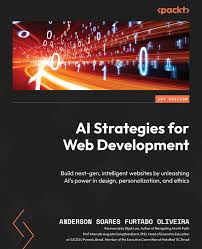
Artificial Intelligence is changing the role of the business website from a largely static information and marketing asset into an intelligent digital business platform.
Traditional websites primarily publish information. Modern AI-enabled websites can understand customer questions, recommend products, personalize content, generate and optimize content, assist employees, detect security anomalies, analyze behavior, automate testing, and connect customer interactions with CRM and business processes.
The uploaded baseline paper identifies six important AI applications: AI chatbots, automated web design, AI-enhanced SEO and content optimization, AI-assisted coding, personalized user experiences, and automated testing and quality assurance.
AI-Driven Web Development, Digital Transformation and Intelligent Ecommerce
A Strategic Research White Paper for SMEs
KeenComputer.com | IAS-Research.com | KeenDirect.com
Executive Summary
Artificial Intelligence is changing the role of the business website from a largely static information and marketing asset into an intelligent digital business platform.
Traditional websites primarily publish information. Modern AI-enabled websites can understand customer questions, recommend products, personalize content, generate and optimize content, assist employees, detect security anomalies, analyze behavior, automate testing, and connect customer interactions with CRM and business processes.
The uploaded baseline paper identifies six important AI applications: AI chatbots, automated web design, AI-enhanced SEO and content optimization, AI-assisted coding, personalized user experiences, and automated testing and quality assurance.
The opportunity for SMEs is broader than simply "adding AI to a website."
The strategic objective should be to create an AI-enabled digital operating system for the business, connecting:
Brand → Website → Ecommerce → Content → Customer → CRM → Operations → Analytics → AI → Continuous Improvement
This creates a platform in which the website becomes both a customer-facing interface and an intelligence-gathering business system.
KeenComputer.com can provide implementation and operational services. IAS-Research.com can provide research, architecture, AI/engineering strategy, feasibility studies and advanced innovation. KeenDirect.com can provide the ecommerce and technology-product supply component.
Together, the three organizations can create a practical SME pathway from:
Website modernization → Ecommerce → AI integration → Automation → Data intelligence → Continuous digital transformation.
1. Introduction
Web development has historically progressed through several stages.
Web 1.0 — Information
The website was primarily a digital brochure.
Web 2.0 — Interaction
Websites became interactive applications incorporating:
- databases
- customer accounts
- ecommerce
- social interaction
- online forms
- CMS platforms
- analytics.
Web 3.x — Intelligent Digital Platforms
The emerging model combines:
- AI
- machine learning
- generative AI
- large language models
- RAG
- recommendation systems
- automation
- agentic workflows
- predictive analytics
- cybersecurity
- personalization.
The resulting website is no longer simply a collection of pages.
It becomes an intelligent interface to the organization.
2. The Strategic Problem Facing SMEs
Many SMEs operate with fragmented digital infrastructure.
A typical organization may have:
- Joomla or WordPress website
- Magento or WooCommerce ecommerce
- separate hosting
- email marketing
- CRM
- accounting software
- spreadsheets
- social-media accounts
- analytics
- customer-support tools
- product databases
- technical documentation.
These systems frequently operate independently.
The result is a fragmented digital business.
AI creates an opportunity to connect these systems.
For example:
Website visitor
↓
AI assistant
↓
Product/service information
↓
Lead qualification
↓
CRM
↓
Email automation
↓
Salesperson
↓
Order
↓
Customer support
↓
Analytics
↓
AI-generated business insight
The website therefore becomes a business-process gateway rather than simply a marketing channel.
3. The AI Web Development Architecture
A mature AI-enabled SME website can be understood as several layers.
Layer 1 — Digital Experience
- Joomla
- WordPress
- Magento
- WooCommerce
- custom applications
- mobile interfaces.
Layer 2 — Content
- product information
- technical articles
- manuals
- FAQs
- videos
- documentation
- case studies
- research papers.
Layer 3 — Intelligence
- LLMs
- embeddings
- RAG
- recommendation engines
- classification
- summarization
- prediction.
Layer 4 — Knowledge
- databases
- vector databases
- knowledge graphs
- CRM
- product catalogs
- documentation repositories.
Layer 5 — Automation
- n8n
- CRM workflows
- email automation
- lead routing
- reporting
- agentic workflows.
Layer 6 — Governance and Security
- identity
- access control
- logging
- backups
- vulnerability management
- privacy
- AI governance.
This layered architecture is important because SMEs should avoid treating AI as an isolated plugin.
4. AI-Powered Conversational Websites
The original paper identifies AI chatbots as a major application for customer support, contextual interaction and lead capture.
The next generation goes beyond conventional FAQ chatbots.
4.1 Website AI Assistant
An AI assistant can answer questions about:
- products
- services
- pricing
- documentation
- policies
- installation
- troubleshooting
- shipping
- returns
- technical specifications.
Instead of simply generating answers from a general-purpose model, the system should preferably use business-approved knowledge.
This leads naturally to a RAG architecture.
5. Retrieval-Augmented Generation
RAG can connect an LLM to an organization's private knowledge.
For example:
Customer question
↓
Query processing
↓
Knowledge retrieval
↓
Relevant documents
↓
LLM reasoning/generation
↓
Grounded response
↓
Source/reference
This reduces the risk of an AI system answering exclusively from generalized model knowledge.
Potential SME knowledge sources include:
- manuals
- PDFs
- websites
- product catalogs
- policies
- service documentation
- CRM information
- engineering documents
- FAQs.
This approach is particularly relevant to technical businesses.
6. AI-Powered Ecommerce
AI can transform ecommerce from a catalog into an interactive purchasing assistant.
Traditional ecommerce:
Customer searches → product page → cart → checkout.
AI-enabled ecommerce:
Customer describes requirement → AI understands requirement → identifies suitable products → explains alternatives → compares specifications → answers questions → assists purchase.
For a computer-components business, for example:
"I need a workstation for CAD, AI development and virtualization."
An AI system could interpret:
- workload
- CPU requirements
- GPU requirements
- memory
- storage
- networking
- budget
- upgrade requirements.
It can then retrieve products from the ecommerce catalog.
7. AI Product Recommendation
Recommendation systems can use:
- customer history
- product attributes
- browsing behavior
- previous purchases
- compatibility rules
- inventory
- product relationships.
A sophisticated recommendation engine can move beyond:
"Customers who bought X also bought Y."
toward:
"Given your stated workload, these components are compatible with your requirements."
This is especially valuable in technical ecommerce.
8. AI-Assisted Web Design
The baseline paper identifies AI-enabled design platforms and adaptive interfaces as emerging applications.
AI can assist throughout the design lifecycle.
Discovery
AI can analyze:
- target audience
- competitors
- customer questions
- existing content.
Information architecture
AI can help organize:
- navigation
- categories
- landing pages
- service pages
- product structures.
Content design
AI can generate initial:
- page structures
- headlines
- FAQs
- calls to action
- metadata.
UX optimization
Analytics can identify:
- high-exit pages
- confusing navigation
- search failures
- abandoned carts.
AI can then suggest experiments.
9. AI and SEO
The original paper identifies intelligent keyword analysis, automated content generation and predictive SEO as major applications.
However, an SME AI SEO strategy should not become a simple AI article-generation factory.
The strategic objective should be:
Create useful, authoritative, technically strong and genuinely differentiated information.
AI can support:
- keyword discovery
- search-intent analysis
- content clustering
- internal linking
- metadata
- schema markup
- content auditing
- duplicate-content detection
- content gap analysis
- technical SEO.
Human expertise remains important for:
- original research
- technical accuracy
- business experience
- case studies
- proprietary knowledge
- editorial judgment.
10. AI Content Operations
An SME can develop a structured content pipeline.
Research
↓
Topic selection
↓
Knowledge retrieval
↓
Draft
↓
Expert review
↓
SEO optimization
↓
Publication
↓
Analytics
↓
Update
This transforms content creation into a continuous knowledge-management process.
IAS-Research.com can play a particularly important role here by turning engineering and research expertise into authoritative content.
11. AI-Assisted Software Engineering
The uploaded paper identifies automated code generation, debugging, refactoring and predictive development as important AI applications.
AI-assisted software engineering can support:
- requirements analysis
- architecture
- coding
- code review
- debugging
- testing
- documentation
- migration
- refactoring
- DevOps.
The strategic principle should be:
AI assists engineers; engineering governance remains responsible for the result.
For SME software projects, this can reduce repetitive work while allowing experienced engineers to focus on architecture and business-critical decisions.
12. AI-Enabled Testing and QA
The baseline paper identifies AI-powered bug detection, automated testing, A/B testing and performance optimization.
An AI-enabled QA pipeline can include:
Code
→ static analysis
→ unit tests
→ integration tests
→ API tests
→ browser tests
→ security testing
→ performance testing
→ deployment
→ monitoring.
AI can help identify patterns across failures and prioritize defects.
13. AI and Cybersecurity
AI should not only be used to improve the website.
It should also help defend it.
Potential applications include:
- anomaly detection
- suspicious login detection
- traffic analysis
- vulnerability prioritization
- log analysis
- malware detection
- security-event correlation
- incident investigation.
For an SME running Joomla, WordPress, Magento or custom applications, AI can become part of a broader security operations strategy.
The correct model is:
AI + conventional security controls + human oversight.
AI does not replace:
- patching
- backups
- firewalls
- MFA
- access control
- secure configuration
- monitoring.
14. AI for Website Operations
AI can analyze operational data from:
- Nginx
- Apache
- PHP
- MariaDB
- Redis
- OpenSearch
- application logs
- server metrics
- monitoring systems.
It can help identify:
- unusual traffic
- repeated errors
- slow pages
- resource exhaustion
- suspicious requests
- failed jobs.
This creates the possibility of an AI-assisted MSP model.
15. AI and CRM
The website should connect to the CRM.
A potential workflow is:
Visitor
→ AI assistant
→ lead qualification
→ CRM record
→ segmentation
→ marketing automation
→ salesperson
→ opportunity
→ customer.
AI can classify leads according to:
- industry
- requirements
- urgency
- budget
- technology
- project type.
The objective is not merely collecting more leads.
It is improving the quality and context of each business conversation.
16. AI Marketing Automation
AI can help coordinate:
- newsletters
- email campaigns
- follow-ups
- content recommendations
- lead nurturing
- abandoned-cart communication
- customer education.
A workflow engine such as n8n can connect:
Website → CRM → AI → Email → Analytics
This creates an automated digital marketing infrastructure.
17. Personalization
The baseline paper highlights recommendation engines and adaptive interfaces.
Personalization can occur at several levels.
Anonymous personalization
Based on:
- page viewed
- search terms
- session behavior.
Known-customer personalization
Based on:
- account history
- previous purchases
- preferences.
Contextual personalization
Based on:
- industry
- business requirements
- product interests.
Personalization must be designed carefully around privacy and consent.
18. AI Analytics
Traditional analytics tells the business:
What happened?
AI analytics can help investigate:
Why did it happen?
and potentially:
What should we investigate next?
Useful data includes:
- traffic
- conversions
- search behavior
- ecommerce transactions
- customer-support questions
- campaign performance
- CRM activity.
This enables a continuous improvement cycle:
Measure → Understand → Experiment → Improve → Measure again
19. AI Governance
The original paper correctly emphasizes Trust, Risk and Security Management, bias mitigation, privacy and compliance.
A mature SME AI program should define:
Data governance
What information may AI access?
Model governance
Which models are approved?
Access governance
Who can access AI systems?
Output governance
Which outputs require human review?
Privacy governance
What customer information may be processed?
Security governance
How are AI systems protected?
Auditability
Can important AI decisions be traced?
20. Human-in-the-Loop AI
One of the most important principles is:
Automate routine decisions; retain human control over consequential decisions.
Examples:
AI can automatically:
- classify leads
- summarize tickets
- generate drafts
- recommend products
- identify potential anomalies.
Humans should review:
- contracts
- security incidents
- financial commitments
- major architectural changes
- sensitive customer decisions
- high-impact communications.
21. Agentic AI
The next stage beyond AI assistants is agentic workflow automation.
An AI agent may:
- receive a business objective
- retrieve information
- use tools
- perform analysis
- generate an action plan
- execute approved operations
- report results.
For example:
"Find outdated product pages and prepare recommendations."
The agent could:
- crawl content
- identify outdated information
- compare product data
- generate recommendations
- create tasks
- request human approval.
This moves AI from answering questions toward performing controlled business workflows.
22. The Three-Company Strategic Model
KeenComputer.com
KeenComputer can serve as the implementation and digital transformation organization.
Potential services include:
- website development
- Joomla
- WordPress
- Magento
- ecommerce
- hosting
- security
- SEO
- AI integration
- CRM
- automation
- managed IT
- monitoring.
Its role is:
Design → Build → Deploy → Operate
IAS-Research.com
IAS-Research.com can function as the research, architecture and innovation organization.
Potential services include:
- AI research
- RAG
- LLM architecture
- systems engineering
- software engineering
- VLSI
- embedded systems
- power systems
- feasibility studies
- technical white papers
- advanced engineering.
Its role is:
Research → Architect → Validate → Innovate
KeenDirect.com
KeenDirect.com can become the product and technology commerce organization.
Potential areas include:
- computers
- components
- networking
- accessories
- technology products
- engineering hardware
- AI infrastructure.
Its role is:
Source → Package → Sell → Support
23. The Combined Business Flywheel
The three organizations can create a connected ecosystem.
IAS Research
↓
Innovation and knowledge
↓
KeenComputer
↓
Implementation and services
↓
KeenDirect
↓
Technology products
↓
Customers
↓
Operational data and feedback
↓
IAS Research
This creates a continuous innovation loop.
24. SME Digital Transformation Roadmap
Phase 1 — Digital Foundation
Audit:
- website
- hosting
- security
- DNS
- backups
- CMS
- ecommerce
- analytics
- CRM.
Deliverable:
SME Digital Transformation Assessment
Phase 2 — Website Modernization
Improve:
- information architecture
- UX
- mobile experience
- performance
- SEO
- security
- conversion paths.
Phase 3 — Ecommerce
Implement:
- product catalog
- search
- payments
- shipping
- inventory
- customer accounts
- analytics.
Phase 4 — AI Integration
Introduce:
- AI assistant
- RAG
- recommendations
- AI content workflow
- AI SEO
- AI analytics.
Phase 5 — Automation
Connect:
- CRM
- website
- ecommerce
- AI
- workflows.
Phase 6 — Intelligent Operations
Add:
- AI monitoring
- predictive analytics
- automated reporting
- security intelligence
- agentic workflows.
25. Recommended AI Web Architecture
CUSTOMER │ ▼ ┌─────────────────┐ │ Website/Ecommerce│ └────────┬────────┘ │ ┌────────▼────────┐ │ AI Assistant │ └────────┬────────┘ │ ┌────────────▼────────────┐ │ AI / LLM Layer │ │ RAG • Agents • Analytics│ └────────────┬────────────┘ │ ┌───────────────┼────────────────┐ ▼ ▼ ▼ Knowledge CRM Products Base │ │ │ ▼ ▼ └──────────► Automation ◄──── Ecommerce │ ▼ Analytics │ ▼ Continuous Improvement
26. Business Model
The AI-enabled web strategy can support multiple SME service models.
Assessment
Fixed-price digital assessment.
Implementation
Project-based website/ecommerce development.
AI Integration
Implementation of AI assistants, RAG and automation.
Managed Services
Monthly:
- hosting
- monitoring
- security
- backups
- updates
- SEO
- AI optimization.
Research and Engineering
IAS-Research-led:
- feasibility studies
- architecture
- R&D
- prototypes
- technical validation.
Product Commerce
KeenDirect-led:
- computers
- components
- networking
- technology infrastructure.
27. Key Performance Indicators
AI transformation should be measurable.
Website
- organic traffic
- engagement
- conversion rate
- page performance
- search success.
Ecommerce
- conversion
- average order value
- abandoned carts
- repeat purchases
- product-search success.
AI
- questions answered
- escalation rate
- answer quality
- retrieval accuracy
- human-review rate.
Marketing
- qualified leads
- lead-to-opportunity conversion
- email engagement
- customer acquisition cost.
Operations
- support resolution time
- development cycle time
- deployment frequency
- incident response time.
28. Risks
AI adoption introduces risks.
Hallucination
AI may generate incorrect information.
Privacy
Customer and business data may be exposed if systems are poorly designed.
Security
AI systems create additional attack surfaces.
Vendor dependency
Businesses may become dependent on external AI providers.
Poor content quality
Large-scale automated content can create low-value information.
Automation errors
Agents can execute incorrect actions if permissions are excessive.
Therefore:
AI adoption must be governed as an engineering and business transformation program—not merely as a software purchase.
29. Future Direction
The baseline paper identifies generative AI, AI-enabled CI/CD, neural rendering and AI-optimized WebAssembly as emerging directions.
The broader trajectory is toward:
- multimodal AI
- RAG
- knowledge graphs
- autonomous agents
- AI coding
- AI security operations
- AI ecommerce
- predictive analytics
- intelligent search
- voice interfaces
- AI-powered business processes.
The website becomes an increasingly important orchestration layer between humans, information and business systems.
30. Strategic Positioning
The combined message should not be:
"We use AI."
It should be:
We help SMEs turn their website, ecommerce platform, business knowledge and digital infrastructure into an intelligent business system.
This distinction is important.
AI becomes a means rather than the product itself.
The business outcome is:
better customer experience + better information + better automation + better operational visibility + better digital infrastructure.
31. Action Plan
Step 1 — Audit
Assess the existing:
- website
- ecommerce
- hosting
- security
- SEO
- analytics
- CRM.
Step 2 — Define Business Objectives
Identify:
- revenue objectives
- customer-service problems
- operational bottlenecks
- marketing gaps.
Step 3 — Build the Knowledge Base
Collect:
- website content
- documentation
- product information
- FAQs
- policies
- research.
Step 4 — Modernize the Website
Fix:
- UX
- navigation
- performance
- security
- SEO.
Step 5 — Add Ecommerce
Create a structured product and purchasing environment.
Step 6 — Introduce AI
Start with:
- AI assistant
- RAG
- search
- recommendations.
Step 7 — Connect CRM
Capture and enrich customer interactions.
Step 8 — Automate
Connect website, CRM, ecommerce, email and analytics.
Step 9 — Measure
Create business KPIs.
Step 10 — Continuously Improve
Use data and AI to identify the next improvement opportunity.
32. Conclusion
AI is transforming web development from a discipline focused primarily on creating websites into a broader discipline concerned with intelligent digital business systems.
The original paper establishes the foundation through AI chatbots, AI design, SEO, coding assistance, personalization and automated QA.
The expanded strategy extends that foundation into:
- RAG
- AI ecommerce
- intelligent search
- recommendation systems
- CRM
- marketing automation
- cybersecurity
- analytics
- agentic workflows
- governance
- continuous digital transformation.
For SMEs, the practical opportunity is not to pursue AI for its own sake.
It is to systematically connect people, knowledge, technology, customers and business processes.
KeenComputer.com
Builds and operates the digital infrastructure.
IAS-Research.com
Researches, architects and develops advanced technology.
KeenDirect.com
Provides the technology products and ecommerce channel.
Together, they can create an integrated SME technology ecosystem:
Research → Strategy → Website → Ecommerce → AI → Automation → Operations → Innovation
This provides a foundation for moving from conventional digital presence toward an AI-enabled, continuously improving digital enterprise.
References
The original paper's references should be retained as the starting bibliography, including the Packt AI web-development material, software-development AI resources, Vendasta, Acropolium, Ahex, DigitalOcean, Webstacks, Leanpub, Google Cloud and the cited academic material.
- NIST AI Risk Management Framework
- OWASP security guidance
- W3C web standards
- Google Search documentation
- major LLM/RAG research
- AI software-engineering research
- ecommerce personalization research
- privacy and data-governance standards
- current generative-AI and agentic-AI research.
References:
[1] https://github.com/PacktPublishing/AI-Strategies-for-Web-Development
[2] https://www.packtpub.com/en-us/learning/how-to-tutorials/how-to-integrate-ai-into-software-development-teams
[3] https://www.vendasta.com/blog/ai-web-development/
[4] https://acropolium.com/blog/ai-and-web-development-why-and-how-to-leverage-ai-for-digital-solutions/
[5] https://tsigalko18.github.io/assets/pdf/2019-Stocco-Proweb.pdf
[6] https://ahex.co/ai-in-web-development-guide/
[7] https://techreviewer.co/blog/practical-uses-of-ai-in-web-development
[8] https://www.digitalocean.com/resources/articles/ai-tools-web-development
[9] https://www.webstacks.com/blog/ai-website-design-examples-inspiration
[10] https://leanpub.com/ai-assistedprogrammingforwebandmachinelearning
[11] https://uk.linkedin.com/company/packt-publishing
[12] https://www.linkedin.com/pulse/ai-strategy-fundamentals-how-prepare-your-business-anderson-nahzf
[13] https://www.packtpub.com/en-us/web-development
[14] https://cloud.google.com/transform/101-real-world-generative-ai-use-cases-from-industry-leaders
[15] https://kth.diva-portal.org/smash/get/diva2:1885497/FULLTEXT01.pdf