Small and medium-sized enterprises (SMEs) represent one of the most important engines of employment, entrepreneurship, innovation and economic development in India, the United Kingdom and Canada. Yet SMEs face a common problem: they must innovate while operating with constrained capital, limited technical resources, intense competition and rapidly changing technology.
This paper proposes a Smart Startup and SME Innovation Framework based on the principle:
Problem → Opportunity → Validation → MVP → Customer → Revenue → Innovation → Scale
The framework combines entrepreneurship, Lean experimentation, digital transformation, artificial intelligence, e-commerce, engineering innovation, financial discipline and internationalization.
The paper also introduces a three-organization implementation ecosystem:
- KeenComputer.com — digital transformation, IT infrastructure, cloud, DevOps, websites, e-commerce engineering and SME technology implementation.
- IAS-Research.com — research, engineering innovation, AI/ML, RAG-LLM, IoT, embedded systems, Industry 4.0, feasibility studies and technology strategy.
- KeenDirect.com — e-commerce commercialization, digital marketing, SEO/GEO, customer acquisition, conversion optimization and online revenue growth.
Existing work published by the organizations already describes this complementary model as Research → Engineering → Deployment → Digital Commercialization. (Keen Computer)
The proposed strategic objective is to create a practical India–UK–Canada Smart SME Innovation Corridor through which an idea can move from research and engineering to MVP, e-commerce commercialization, customer validation and international growth.
Research White Paper Smart Startups and SME Innovation Strategy -Building an India–UK–Canada Innovation and Digital Commerce Ecosystem With the Strategic Roles of KeenComputer.com, IAS-Research.com and KeenDirect.com
Research Edition — 2026
Abstract
Small and medium-sized enterprises (SMEs) represent one of the most important engines of employment, entrepreneurship, innovation and economic development in India, the United Kingdom and Canada. Yet SMEs face a common problem: they must innovate while operating with constrained capital, limited technical resources, intense competition and rapidly changing technology.
This paper proposes a Smart Startup and SME Innovation Framework based on the principle:
Problem → Opportunity → Validation → MVP → Customer → Revenue → Innovation → Scale
The framework combines entrepreneurship, Lean experimentation, digital transformation, artificial intelligence, e-commerce, engineering innovation, financial discipline and internationalization.
The paper also introduces a three-organization implementation ecosystem:
- KeenComputer.com — digital transformation, IT infrastructure, cloud, DevOps, websites, e-commerce engineering and SME technology implementation.
- IAS-Research.com — research, engineering innovation, AI/ML, RAG-LLM, IoT, embedded systems, Industry 4.0, feasibility studies and technology strategy.
- KeenDirect.com — e-commerce commercialization, digital marketing, SEO/GEO, customer acquisition, conversion optimization and online revenue growth.
Existing work published by the organizations already describes this complementary model as Research → Engineering → Deployment → Digital Commercialization. (Keen Computer)
The proposed strategic objective is to create a practical India–UK–Canada Smart SME Innovation Corridor through which an idea can move from research and engineering to MVP, e-commerce commercialization, customer validation and international growth.
1. Introduction
The traditional startup model is often:
Idea → Product → Funding → Marketing → Growth
This model can fail because entrepreneurs may invest substantial money before establishing whether customers actually need the product.
A Smart Startup takes a different approach:
Problem → Customer → Hypothesis → Validation → MVP → Pilot → Revenue → Learning → Scale
The objective is not simply to build technology.
The objective is to create economic value.
This distinction is particularly important for SMEs because a failed experiment can consume resources that the company cannot easily replace.
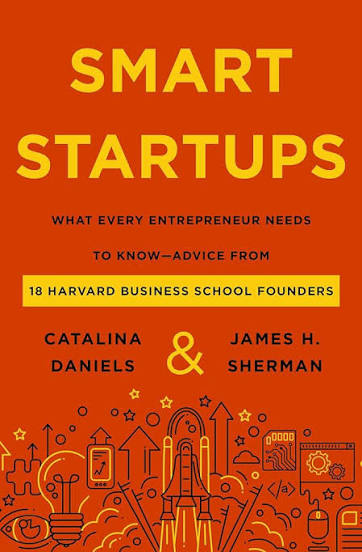
The Smart Startups material emphasizes idea development, validation, customer feedback, founder-led sales, metrics, financing, scaling and exit strategy.
Similarly, The Psychology of Money emphasizes the importance of behavior, uncertainty and maintaining sufficient “room for error” rather than assuming that favorable forecasts will always materialize.
2. The Smart Startup Definition
A Smart Startup is:
An entrepreneurial organization that identifies valuable customer problems, validates opportunities using evidence, develops solutions incrementally, applies technology where it creates measurable value, manages financial risk, and continuously adapts its business model.
Five principles define the model:
2.1 Customer First
Start with a real customer problem.
2.2 Evidence Before Major Investment
Test assumptions before committing substantial resources.
2.3 Technology as an Enabler
Technology is used to solve business problems rather than becoming the objective itself.
2.4 Financial Resilience
Protect cash flow and maintain a margin of safety.
2.5 Continuous Innovation
Innovation becomes an ongoing business capability rather than a one-time project.
3. The Smart SME Innovation Triangle
Every innovation opportunity should be evaluated across three dimensions.
3.1 Customer
What problem exists?
- Is the problem painful?
- Is it frequent?
- Does it cost money?
- Is the customer already spending money to solve it?
3.2 Technology
Can technology improve the situation?
Potential technologies include:
- AI
- Generative AI
- RAG
- AI agents
- IoT
- Edge AI
- cloud
- automation
- robotics
- digital twins
- cybersecurity
- data analytics
- e-commerce
3.3 Economics
Can the solution make money?
Consider:
- pricing
- margins
- customer acquisition cost
- customer lifetime value
- recurring revenue
- capital requirements
- scalability
- cash flow
The strongest opportunity occurs where:
Customer Pain + Technology Feasibility + Economic Value
intersect.
4. From Idea to Innovation
The Smart SME process is:
DISCOVER
Find problems.
↓
DEFINE
Develop hypotheses.
↓
VALIDATE
Talk to customers.
↓
PROTOTYPE
Build a proof of concept.
↓
MVP
Build the minimum useful product.
↓
PILOT
Test with real customers.
↓
SELL
Generate revenue.
↓
LEARN
Measure behavior.
↓
IMPROVE
Iterate.
↓
PRODUCTIZE
Create repeatable delivery.
↓
SCALE
Expand geographically.
This is closely aligned with the startup principles in Smart Startups, particularly inexpensive validation, feedback, customer acquisition, metrics and adaptability.
5. India–UK–Canada Strategic Opportunity
The three countries have different strengths.
|
Country |
Strategic Opportunity |
|---|---|
|
India |
Engineering, software, entrepreneurship, manufacturing and frugal innovation |
|
UK |
Research, universities, deep tech, IP, finance and commercialization |
|
Canada |
AI, clean technology, industrial innovation, resources and North American market access |
Instead of treating the three countries as competing markets, the Smart SME model proposes treating them as complementary nodes in an innovation ecosystem.
6. India Innovation Strategy
India can function as an important:
Engineering + R&D + Software Development + Product Development Centre
Potential sectors include:
- AI
- SaaS
- fintech
- agritech
- healthtech
- automotive
- EV
- electronics
- embedded systems
- industrial IoT
- energy
- logistics
- manufacturing automation
The Indian MSME ecosystem already places emphasis on technology modernization, innovation, entrepreneurship, incubation, skills and market access.
This creates opportunities for a Smart SME model based on:
Low-cost experimentation + engineering talent + large domestic market + international exports.
7. United Kingdom Innovation Strategy
The UK can function as a:
Research + Deep Technology + IP + Commercialization Centre
Potential areas include:
- AI
- advanced engineering
- fintech
- healthtech
- climate technology
- robotics
- cybersecurity
- semiconductor technology
- university spinouts
- industrial innovation
UKRI's current strategy explicitly emphasizes helping companies move from discovery toward commercialization and scale. (Keen Computer)
The strategic opportunity is therefore:
Research → IP → Prototype → Industrial Pilot → Commercialization
8. Canada Innovation Strategy
Canada can function as:
Applied Innovation + Industrial Pilot + North American Commercialization Centre
Potential areas include:
- AI
- clean technology
- energy
- mining technology
- agriculture
- advanced manufacturing
- aerospace
- cybersecurity
- quantum technology
- supply-chain technology
Canada's current industrial strategy emphasizes SME innovation, AI, quantum, commercialization and resilience. (Keen Computer)
This makes Canada particularly attractive as a platform for testing innovative technologies in real industrial and commercial environments.
9. The India–UK–Canada Innovation Corridor
The proposed model is:
INDIA
Engineering + Software + R&D
↓
UK
Research + IP + Deep-Tech Commercialization
↓
CANADA
Industrial Pilot + SME Deployment + North American Market
↓
USA / GLOBAL
Scale
This should not be viewed as a rigid corporate structure.
Instead, it represents a distributed innovation strategy in which organizations locate specific activities where the appropriate skills, markets, partnerships and capital exist.
10. The Role of KeenComputer.com
KeenComputer.com can serve as the Digital Transformation and Technology Implementation Arm of the Smart SME ecosystem.
Its role is to take validated business concepts and turn them into operational digital systems.
Existing KeenComputer material describes capabilities including cloud infrastructure, DevOps, Docker/Kubernetes, cybersecurity, performance optimization and digital platforms. (Keen Computer)
10.1 KeenComputer Strategic Functions
Digital Transformation
- SME IT modernization
- cloud migration
- VPS infrastructure
- Linux
- networking
- cybersecurity
- backup
- monitoring
Software Engineering
- websites
- CMS
- APIs
- web applications
- enterprise systems
E-commerce Technology
- Magento
- WordPress
- Joomla
- WooCommerce
- payment integration
- shipping integration
- performance optimization
DevOps
- Docker
- CI/CD
- infrastructure automation
- deployment
- monitoring
- security
AI Infrastructure
- local LLM infrastructure
- Ollama
- RAG platforms
- AI application deployment
- enterprise knowledge systems
11. KeenComputer's Position in the Innovation Lifecycle
KeenComputer becomes particularly important after the idea has been validated.
Idea
↓
IAS-Research
↓
Validated Architecture
↓
KeenComputer
↓
Production Infrastructure
↓
Customer
KeenComputer therefore provides the engineering bridge between innovation strategy and operational implementation.
12. The Role of IAS-Research.com
IAS-Research.com should function as the Research, Engineering Innovation and Advanced Technology Arm.
Its role is particularly important when an SME faces problems requiring research rather than ordinary IT implementation.
Existing IAS-Research work covers RAG-LLM, AI/ML, digital twins, engineering simulation, IoT and Industry 4.0 applications. (IAS Research)
12.1 IAS-Research Functions
Research
- market research
- technology research
- feasibility studies
- literature review
- competitive analysis
- technical white papers
Artificial Intelligence
- RAG-LLM
- machine learning
- predictive analytics
- AI agents
- knowledge engineering
Engineering
- embedded systems
- IoT
- Edge AI
- CAN bus
- automotive diagnostics
- energy systems
- power electronics
- VLSI
- digital twins
Industry 4.0
- industrial IoT
- predictive maintenance
- sensor systems
- Edge computing
- industrial analytics
- AI-assisted engineering
13. IAS-Research as the Innovation Laboratory
The role can be summarized:
IAS-Research asks: “What should we build, why should we build it, and how should it work?”
KeenComputer asks:
“How do we engineer, deploy, secure and operate it?”
KeenDirect asks:
“How do we commercialize it and acquire customers?”
This creates a powerful three-stage system.
14. The Role of KeenDirect.com
KeenDirect.com becomes the E-commerce, Go-to-Market and Revenue Generation Arm.
This is essential because a technically successful product can still fail commercially.
Existing organizational material describes KeenDirect's role in e-commerce enablement, marketing, SEO, conversion optimization, CRM workflows and customer acquisition. (Keen Computer)
14.1 KeenDirect Functions
E-commerce
- Magento
- product catalogs
- online stores
- B2B commerce
- B2C commerce
- marketplace integration
Digital Marketing
- SEO
- GEO
- content marketing
- email marketing
- social media
- paid advertising
Customer Acquisition
- landing pages
- lead generation
- funnels
- CRM
- marketing automation
Conversion Optimization
- A/B testing
- customer journey analysis
- UX optimization
- conversion-rate optimization
Revenue Analytics
- traffic
- conversion
- customer acquisition cost
- lifetime value
- sales funnel performance
15. KeenDirect as the Commercialization Engine
The role can be summarized:
KeenDirect converts technology into market demand and market demand into revenue.
This closes a common gap between engineering companies and customers.
The complete chain becomes:
Research
→ IAS-Research
Engineering
→ KeenComputer
Commerce
→ KeenDirect
Revenue
→ Customer
16. The Three-Company Innovation Ecosystem
The proposed architecture is:
SMART SME │ ▼ CUSTOMER PROBLEM │ ▼ ┌─────────────────┐ │ IAS-RESEARCH │ │ Research │ │ AI / IoT │ │ Engineering │ │ Feasibility │ └────────┬────────┘ │ ▼ ┌─────────────────┐ │ KEENCOMPUTER │ │ IT Engineering │ │ Cloud / DevOps │ │ Software │ │ Infrastructure │ └────────┬────────┘ │ ▼ ┌─────────────────┐ │ KEENDIRECT │ │ E-Commerce │ │ Marketing │ │ SEO/GEO │ │ Sales │ └────────┬────────┘ │ ▼ CUSTOMER │ ▼ REVENUE │ ▼ SCALE
This model is consistent with existing company material describing the combined value chain as Research → Engineering → Deployment → Digital Commercialization. (Keen Computer)
17. Smart SME Product Development Model
Suppose an SME identifies a business opportunity.
Step 1 — IAS-Research
Conduct:
- market research
- technical feasibility
- competitive analysis
- AI feasibility
- architecture
- prototype research
Step 2 — KeenComputer
Build:
- cloud environment
- application
- database
- API
- website
- infrastructure
- DevOps pipeline
Step 3 — KeenDirect
Launch:
- e-commerce
- SEO
- content
- advertising
- CRM
- sales funnel
Step 4 — All Three
Measure:
- customers
- conversion
- revenue
- product usage
- customer feedback
Step 5
Improve and scale.
18. E-Commerce as the Commercialization Layer
E-commerce should not be treated simply as an online store.
It can become the commercial operating system for an SME.
Architecture:
Product
↓
Digital Catalog
↓
E-commerce
↓
Marketing
↓
Customer
↓
Transaction
↓
CRM
↓
Analytics
↓
AI
↓
Product Improvement
This creates a continuous feedback loop.
19. KeenDirect + Magento Strategy
For SMEs requiring advanced commerce, Magento can provide the foundation for:
- complex catalogs
- B2B pricing
- customer groups
- multi-store commerce
- integrations
- payment gateways
- shipping
- inventory
- ERP integration
- CRM integration
The objective should be:
Magento as the commerce platform + KeenDirect as the growth engine + KeenComputer as the engineering platform + IAS-Research as the innovation layer.
20. AI + E-Commerce Innovation
The ecosystem can introduce:
AI Product Discovery
Customers describe what they need in natural language.
RAG Product Assistant
AI answers questions from product documentation.
AI Sales Assistant
Recommends appropriate products.
Predictive Analytics
Identifies:
- buying patterns
- customer churn
- product demand
AI Content
Generates:
- product descriptions
- technical documentation
- FAQs
- marketing content
Agentic Commerce
Future systems could allow AI agents to:
- discover products
- compare products
- create quotations
- assist purchasing
- update CRM
- initiate customer-service workflows
21. Industry 4.0 + E-Commerce
A particularly interesting opportunity is connecting physical products to digital commerce.
For example:
IoT Device
↓
Sensor Data
↓
Cloud
↓
AI Analytics
↓
Predictive Maintenance
↓
Replacement Part Recommendation
↓
KeenDirect E-Commerce
↓
Order
This creates a closed-loop industrial business model.
22. Example: Automotive Innovation
IAS-Research can develop:
OBD-II/CAN + Edge AI + RAG-LLM
KeenComputer can provide:
Cloud + APIs + database + application + DevOps
KeenDirect can commercialize:
Diagnostic hardware + software subscriptions + technical services
The resulting business model could include:
- hardware
- SaaS
- diagnostic subscriptions
- fleet services
- repair-shop services
- technical support
- data analytics
Thus:
Engineering innovation becomes a recurring-revenue business.
23. Example: Smart Energy SME
IAS-Research:
- power electronics
- IoT
- Edge AI
- energy analytics
KeenComputer:
- cloud
- dashboards
- APIs
- monitoring
KeenDirect:
- commercial website
- product catalog
- lead generation
- B2B sales
The result:
Engineering Technology → Digital Platform → Commercial Product
24. Example: SME Digital Transformation
A traditional SME may have:
- outdated website
- manual sales
- spreadsheets
- poor CRM
- slow e-commerce
- weak cybersecurity
- no analytics
The three-company model provides:
IAS-Research
Digital maturity and innovation assessment.
KeenComputer
Infrastructure modernization.
KeenDirect
Digital marketing and revenue optimization.
Result:
Traditional SME → Digital SME → AI-enabled SME
25. Smart SME Maturity Model
|
Level |
SME State |
|---|---|
|
1 |
Traditional |
|
2 |
Digitized |
|
3 |
Connected |
|
4 |
Data-driven |
|
5 |
AI-assisted |
|
6 |
AI-automated |
|
7 |
Agentic |
|
8 |
Smart Enterprise |
The objective is not necessarily to reach Level 8 immediately.
The objective is:
Move one level higher where there is a measurable business case.
26. India–UK–Canada Delivery Model
The three organizations can support international SMEs through:
India
Engineering and development
UK
Research, IP and commercialization partnerships
Canada
North American pilots and SME implementation
KeenComputer's existing research material already frames its SME services across Canada, the USA and India, while the proposed model expands that strategy toward the UK. (Keen Computer)
27. Smart SME Innovation Lab
A long-term strategic initiative could be established as:
Smart SME Innovation Lab
Mission
Help SMEs transform ideas into commercially viable technology products and digital businesses.
Services
Innovation Audit
→
Market Research
→
Technology Research
→
AI Assessment
→
Business Model
→
Prototype
→
MVP
→
E-Commerce Launch
→
Marketing
→
Customer Pilot
→
Scale
28. Innovation Funding Strategy
The organizations should not encourage SMEs to pursue funding simply because funding is available.
The preferred sequence is:
Problem
↓
Validation
↓
Prototype
↓
Customer
↓
Revenue
↓
Funding for Scale
Funding should accelerate validated opportunities.
This philosophy is consistent with the lessons from Smart Startups, including examples where financing choices affected strategic flexibility and exit options.
29. Risk Management
The Smart SME strategy adopts the principle:
No single innovation project should be capable of destroying the core business.
Use:
- staged investment
- MVPs
- pilot projects
- milestone-based spending
- customer-funded development where possible
- diversified revenue
- cash reserves
Housel's “room for error” concept provides a useful foundation for this principle.
30. The Smart SME Innovation Scorecard
Each opportunity can be evaluated on a 100-point scale.
|
Factor |
Weight |
|---|---|
|
Customer Pain |
10 |
|
Market Opportunity |
10 |
|
Willingness to Pay |
10 |
|
Technical Feasibility |
10 |
|
Competitive Advantage |
10 |
|
Recurring Revenue |
10 |
|
Scalability |
10 |
|
Capital Efficiency |
10 |
|
Strategic Fit |
10 |
|
Risk |
10 |
|
Total |
100 |
Projects scoring 80+ become high-priority candidates.
Projects scoring 65–79 require additional validation.
Projects below 65 should normally be redesigned, postponed or rejected.
31. Five-Year Strategic Roadmap
Year 1 — Build the Innovation Pipeline
- establish Smart SME Innovation Lab
- identify customer problems
- conduct market research
- develop idea database
- create technology radar
Year 2 — MVP Development
- select high-scoring ideas
- develop prototypes
- build MVPs
- launch pilots
Year 3 — Commercialization
- launch e-commerce
- establish recurring revenue
- develop marketing funnels
- build partnerships
Year 4 — Internationalization
Expand:
India → UK → Canada → USA
according to product-market fit.
Year 5 — Scale
Develop:
- strategic partnerships
- licensing
- acquisitions
- investment
- international distribution
- recurring-revenue products
32. Strategic Positioning
The three organizations should not be positioned as three unrelated service providers.
They should be presented as a single innovation value chain:
IAS-Research
“We discover and engineer the future.”
KeenComputer
“We build and deploy the technology.”
KeenDirect
“We take it to market and grow revenue.”
Together:
Research → Engineering → Digital Transformation → E-Commerce → Marketing → Revenue → Scale
33. The Strategic Flywheel
The ultimate objective is a self-reinforcing cycle:
Research
↓
Innovation
↓
Technology
↓
Product
↓
E-Commerce
↓
Marketing
↓
Customers
↓
Revenue
↓
Customer Data
↓
Research
↓
Better Product
↓
More Customers
This becomes the:
Smart SME Innovation Flywheel
34. Conclusion
The future of SME competitiveness will not be determined simply by who adopts the newest technology.
It will be determined by who can continuously identify problems, validate opportunities, deploy technology, acquire customers, learn from data and adapt faster than competitors.
India, the UK and Canada offer complementary capabilities for this process.
The proposed ecosystem provides a practical institutional architecture:
IAS-Research.com
Research + Engineering + AI + Innovation
KeenComputer.com
IT + Cloud + DevOps + Software + Digital Transformation
KeenDirect.com
E-Commerce + Marketing + SEO/GEO + Customer Acquisition + Revenue
The combined value proposition is:
IDEA → RESEARCH → ENGINEERING → DIGITAL TRANSFORMATION → E-COMMERCE → CUSTOMER → REVENUE → SCALE
This positions the three organizations not merely as technology vendors, but as a potential SME Innovation and Commercialization Ecosystem serving India, the United Kingdom and Canada.
Existing material from the organizations already supports this integrated positioning, including research on SME digital transformation, e-commerce, continuous customer discovery, RAG-LLM and IT operational excellence. (Keen Computer)
Core Strategic Proposition
KeenComputer builds the digital foundation. IAS-Research develops the innovation and intelligence. KeenDirect creates the market and revenue.
Together, they can help an SME progress from:
Idea → Innovation → MVP → Digital Business → E-Commerce → AI-Enabled Enterprise → International Growth.
This is the foundation for a Smart Startup and Smart SME strategy for the India–UK–Canada innovation corridor.