The rapid evolution of digital technologies—including artificial intelligence, cloud computing, and distributed computing systems—has created unprecedented complexity for modern organizations. Small and medium enterprises (SMEs) often struggle to navigate this complexity due to limited technical expertise, fragmented decision frameworks, and reactive problem-solving approaches.
Mental models provide a structured solution to this challenge. A mental model is a simplified representation of how the world works, allowing individuals and organizations to interpret information, predict outcomes, and design effective strategies.
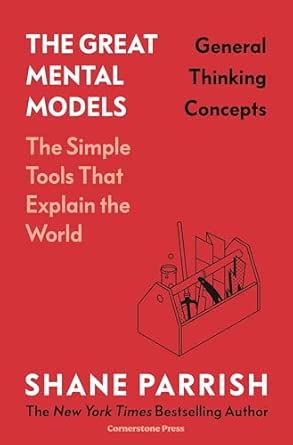
This research paper explores the interdisciplinary mental-model framework articulated by Shane Parrish in The Great Mental Models series and demonstrates how it can serve as a cognitive operating system for engineering problem solving, digital transformation consulting, and knowledge management.
The paper proposes a systematic methodology for embedding mental models into consulting workflows, technical diagnostics, AI-enabled knowledge systems, and SME strategic planning. It further explores how organizations such as IAS Research and Keen Computer can leverage mental models to build a scalable intellectual infrastructure that enhances decision quality, improves system reliability, and accelerates innovation.
Mental Models as the Cognitive Infrastructure for Engineering Innovation, SME Strategy, and AI-Driven Digital Transformation
Abstract
The rapid evolution of digital technologies—including artificial intelligence, cloud computing, and distributed computing systems—has created unprecedented complexity for modern organizations. Small and medium enterprises (SMEs) often struggle to navigate this complexity due to limited technical expertise, fragmented decision frameworks, and reactive problem-solving approaches.
Mental models provide a structured solution to this challenge. A mental model is a simplified representation of how the world works, allowing individuals and organizations to interpret information, predict outcomes, and design effective strategies.
This research paper explores the interdisciplinary mental-model framework articulated by Shane Parrish in The Great Mental Models series and demonstrates how it can serve as a cognitive operating system for engineering problem solving, digital transformation consulting, and knowledge management.
The paper proposes a systematic methodology for embedding mental models into consulting workflows, technical diagnostics, AI-enabled knowledge systems, and SME strategic planning. It further explores how organizations such as IAS Research and Keen Computer can leverage mental models to build a scalable intellectual infrastructure that enhances decision quality, improves system reliability, and accelerates innovation.
1 Introduction
Modern technology ecosystems are becoming increasingly complex. Organizations now operate within interconnected networks of software platforms, cloud infrastructure, artificial intelligence tools, data analytics systems, and cybersecurity frameworks. For many businesses, particularly SMEs, managing this complexity has become a major strategic challenge.
Traditional management methods often rely on narrow analytical approaches, such as financial metrics or industry benchmarks. While these tools remain valuable, they are insufficient for addressing the multidimensional problems created by modern digital ecosystems.
Effective decision making in such environments requires the integration of insights from multiple disciplines. Engineering design requires principles from physics and mathematics. Business strategy draws on economics and evolutionary theory. Organizational management benefits from psychology and systems thinking.
Mental models provide a way to integrate these diverse perspectives into a coherent framework.
According to Shane Parrish, individuals and organizations improve decision quality when they construct a latticework of mental models drawn from multiple disciplines. Rather than relying on a single analytical lens, decision makers use multiple conceptual tools to examine problems from different angles.
This approach is particularly valuable in engineering and technology consulting. Systems failures, software performance issues, and strategic misalignments often arise from hidden interactions between technical components, organizational processes, and market dynamics.
Organizations such as IAS Research and Keen Computer operate at the intersection of these domains. Their work includes:
- digital infrastructure development
- artificial intelligence integration
- SME technology consulting
- software architecture design
- network engineering
- digital transformation strategy
In such environments, mental models can serve as a shared intellectual framework that guides problem solving, system design, and strategic planning.
This paper examines how mental models can be systematically integrated into organizational processes, transforming them from abstract ideas into practical tools for engineering innovation and business growth.
2 Understanding Mental Models
A mental model is a conceptual framework that helps individuals understand how a system works. Mental models simplify reality by focusing on essential relationships between variables, enabling people to predict outcomes and make decisions.
Examples of mental models include:
- supply and demand in economics
- feedback loops in systems theory
- natural selection in biology
- probability theory in statistics
Each of these models provides a lens through which complex phenomena can be understood.
The power of mental models lies in their transferability across domains. For example, evolutionary models from biology can be applied to competitive markets. Feedback loops from control theory can be used to understand organizational learning processes. Entropy from physics can explain why complex systems require maintenance.
Shane Parrish emphasizes that no single mental model can fully explain complex systems. Instead, effective reasoning requires a latticework of models drawn from multiple disciplines.
This interdisciplinary approach reduces the risk of what Charlie Munger famously called the “man with a hammer” problem: when someone with only one analytical tool attempts to apply it to every situation.
For engineering organizations and technology consultants, building a mental-model latticework enables:
- clearer problem diagnosis
- improved system design
- more robust risk management
- better strategic decisions
3 The Mental Model Stack
The Great Mental Models series organizes models into three major categories:
- General thinking concepts
- Scientific models
- Systems and mathematical models
Together, these categories form a layered reasoning architecture.
Layer 1: General Thinking Models
These models improve clarity of thought and reduce cognitive biases.
Examples include:
- map vs territory
- first principles thinking
- inversion
- probabilistic reasoning
- second-order thinking
Layer 2: Scientific Models
Scientific models explain how systems evolve and interact.
Examples include:
- leverage
- entropy
- inertia
- adaptation and evolution
Layer 3: Systems and Mathematical Models
These models describe the behavior of complex systems.
Examples include:
- feedback loops
- bottlenecks
- compounding effects
- algorithms
This layered approach provides a comprehensive toolkit for analyzing complex problems.
4 Core Thinking Models
Map vs Territory
One of the most important cognitive models is the distinction between maps and territory.
A map is a simplified representation of reality. In engineering and business contexts, maps include:
- architecture diagrams
- project plans
- financial forecasts
- business models
While useful, these representations are always incomplete.
For example, an SME might believe that declining website traffic is caused by poor search engine optimization. However, analytics may reveal that the real issue is poor user experience or slow page load times.
Consultants must therefore constantly test assumptions and validate models against real data.
First Principles Thinking
First principles thinking involves breaking problems down to their most basic components.
Rather than copying industry practices, engineers analyze the fundamental constraints governing a system.
For example, website performance ultimately depends on:
- CPU utilization
- memory availability
- disk input/output speed
- network latency
- database efficiency
By focusing on these underlying factors, engineers can design solutions tailored to specific system conditions.
Second-Order Thinking
Many decisions produce unintended consequences that appear only after time has passed.
Second-order thinking involves anticipating these downstream effects.
For example, moving a website to a larger server may temporarily improve performance but can obscure inefficient code that will create problems later.
Considering second-order effects encourages more sustainable solutions.
Inversion
Inversion involves approaching problems from the opposite direction.
Instead of asking how to achieve success, decision makers ask how failure would occur.
For example, an ecommerce business might fail if it:
- ignores customer feedback
- relies on a single marketing channel
- fails to monitor website performance
Avoiding these failure conditions significantly improves the likelihood of success.
5 Scientific Mental Models
Scientific mental models provide insights into how systems evolve and adapt.
These models are particularly useful in competitive business environments.
Leverage
Leverage refers to the amplification of effort through strategic positioning.
In technology consulting, leverage can be achieved through:
- automation tools
- reusable software frameworks
- AI-powered analysis systems
A small investment in automation may eliminate hundreds of hours of repetitive work.
Activation Energy
Many processes require an initial investment of effort before change can occur.
In business environments, this barrier often prevents organizations from adopting new technologies.
Consultants can reduce activation energy by providing:
- simple onboarding processes
- pilot projects
- clear demonstrations of return on investment
Entropy
Entropy describes the tendency of systems toward disorder.
Digital infrastructure naturally degrades over time due to:
- outdated software
- security vulnerabilities
- configuration drift
Without maintenance, complex systems become unstable.
Organizations must therefore implement regular monitoring and maintenance processes.
Evolution and Adaptation
Biological evolution provides a powerful metaphor for competitive markets.
Businesses must continuously adapt to changes in technology, consumer preferences, and competitive pressures.
Organizations that fail to evolve eventually disappear from the market.
6 Systems Thinking Models
Complex systems exhibit behaviors that cannot be understood by examining individual components in isolation.
Systems thinking models provide tools for analyzing these interactions.
Feedback Loops
Feedback loops enable systems to adjust their behavior based on outcomes.
Positive feedback loops amplify change, while negative feedback loops stabilize systems.
Examples include:
- performance monitoring systems
- customer feedback programs
- automated testing pipelines
These loops allow organizations to learn and improve continuously.
Bottlenecks
Every system has constraints that limit performance.
In software systems, bottlenecks may include:
- database queries
- network bandwidth
- CPU capacity
In organizations, bottlenecks may include:
- management decision processes
- sales capacity
- product development resources
Identifying and eliminating bottlenecks is one of the most valuable forms of consulting.
Compounding Effects
Small improvements accumulate over time.
For example:
- regular software updates
- continuous SEO optimization
- incremental product improvements
These incremental changes can produce dramatic long-term gains.
Margin of Safety
Engineers design structures with safety margins to protect against unexpected stress.
Similarly, digital systems should include buffers such as:
- redundant servers
- backup systems
- excess computing capacity
These margins increase resilience and reliability.
7 Applying Mental Models to Engineering Consulting
A mental-model framework can be integrated into consulting workflows.
Typical diagnostic process:
1 Identify the true problem
2 Break problem into fundamental components
3 Identify system constraints
4 Predict downstream effects
5 Test solutions through experiments
6 Implement monitoring and feedback loops
This systematic approach improves the reliability of engineering solutions.
8 AI and Mental Models
Artificial intelligence tools such as large language models can be enhanced by embedding mental models into their reasoning processes.
For example, an AI diagnostic assistant could:
- analyze server logs
- identify potential bottlenecks
- suggest optimization strategies
- predict second-order effects
Integrating mental models into AI reasoning frameworks improves decision quality.
Organizations such as IAS Research can develop domain-specific AI assistants that apply these models automatically.
9 Knowledge Systems and Organizational Learning
Mental models can also serve as the foundation for organizational knowledge systems.
Possible implementations include:
- internal knowledge bases
- research white papers
- training materials
- AI knowledge assistants
By documenting insights from projects and research activities, organizations can create a knowledge repository that grows over time.
10 Strategic Applications for SMEs
SMEs can benefit significantly from mental-model frameworks.
Applications include:
- technology adoption decisions
- digital marketing strategy
- product development planning
- operational optimization
Consultants can teach SME leaders to apply these models in strategic planning processes.
11 Implementation Strategy
Implementing a mental-model framework requires three phases.
Phase 1: Knowledge development
Phase 2: Workflow integration
Phase 3: Client education and productization
This gradual approach allows organizations to build capabilities over time.
12 Future Research Directions
Future work could explore integrating mental models with:
- AI decision support systems
- distributed knowledge networks
- digital twin simulation environments
These technologies may enable new forms of intelligent decision support.
13 Conclusion
Mental models represent a powerful interdisciplinary framework for understanding complex systems and making better decisions.
By constructing a latticework of models drawn from multiple disciplines, organizations can improve problem solving, strategic planning, and technological innovation.
For engineering and consulting organizations such as IAS Research and Keen Computer, mental models can serve as the intellectual infrastructure behind digital transformation initiatives, AI system development, and SME advisory services.
As technological complexity continues to increase, organizations that cultivate strong thinking frameworks will gain a decisive competitive advantage.
References
Mental Models and Decision Science
- Shane Parrish & Beaubien, R. (2019). The Great Mental Models: Volume 1 – General Thinking Concepts. Farnam Street Media.
- Shane Parrish & Beaubien, R. (2020). The Great Mental Models: Volume 2 – Physics, Chemistry and Biology. Farnam Street Media.
- Shane Parrish & Beaubien, R. (2021). The Great Mental Models: Volume 3 – Systems and Mathematics. Farnam Street Media.
- Charlie Munger (2005). Poor Charlie’s Almanack: The Wit and Wisdom of Charlie T. Munger. Donning Company Publishers.
- Daniel Kahneman (2011). Thinking, Fast and Slow. Farrar, Straus and Giroux.
- Philip E. Tetlock & Gardner, D. (2015). Superforecasting: The Art and Science of Prediction. Crown Publishing.
Systems Thinking and Complexity
- Donella H. Meadows (2008). Thinking in Systems: A Primer. Chelsea Green Publishing.
- Peter M. Senge (2006). The Fifth Discipline: The Art and Practice of the Learning Organization. Doubleday.
- John D. Sterman (2000). Business Dynamics: Systems Thinking and Modeling for a Complex World. McGraw-Hill.
- Melanie Mitchell (2009). Complexity: A Guided Tour. Oxford University Press.
- Russell L. Ackoff (1999). Re-Creating the Corporation: A Design of Organizations for the 21st Century. Oxford University Press.
Engineering and Systems Design
- George Coulouris, Dollimore, J., Kindberg, T., & Blair, G. (2012). Distributed Systems: Concepts and Design. Addison-Wesley.
- Andrew S. Tanenbaum & Wetherall, D. (2011). Computer Networks. Pearson.
- Martin Kleppmann (2017). Designing Data‑Intensive Applications. O’Reilly Media.
- Gene Kim, Humble, J., Debois, P., & Willis, J. (2016). The DevOps Handbook. IT Revolution Press.
- Michael T. Nygard (2018). Release It!: Design and Deploy Production‑Ready Software. Pragmatic Bookshelf.
Artificial Intelligence and Machine Learning
- Stuart Russell & Norvig, P. (2021). Artificial Intelligence: A Modern Approach. Pearson.
- Ian Goodfellow, Bengio, Y., & Courville, A. (2016). Deep Learning. MIT Press.
- Chip Huyen (2022). Designing Machine Learning Systems. O’Reilly Media.
- Andriy Burkov (2019). The Hundred‑Page Machine Learning Book. Andriy Burkov Publishing.
AI Agents and Knowledge Systems
- Amir Husain (2017). The Sentient Machine. Scribner.
- Yoav Goldberg (2023). Neural Network Methods for Natural Language Processing. Morgan & Claypool.
- Manning Publications (2024). AI Agents in Action.
SME Strategy and Digital Transformation
- Philip Kotler & Keller, K. (2016). Marketing Management. Pearson.
- Byron Sharp (2010). How Brands Grow. Oxford University Press.
- Gabriel Weinberg & Mares, J. (2015). Traction. Penguin.
- Eric Ries (2011). The Lean Startup. Crown Business.
Economics and Decision Theory
- Herbert A. Simon (1997). Administrative Behavior. Free Press.
- Thomas Schelling (2006). Micromotives and Macrobehavior. W.W. Norton.
- Nassim Nicholas Taleb (2012). Antifragile. Random House.
Organizational Learning and Innovation
- Chris Argyris & Schön, D. (1996). Organizational Learning II. Addison-Wesley.
- Clayton Christensen (1997). The Innovator’s Dilemma. Harvard Business School Press.
Online Resources
- Farnam Street. Mental Models Knowledge Library.
https://fs.blog/mental-models/ - MIT OpenCourseWare – Systems Thinking.
https://ocw.mit.edu - Stanford AI Lab Research Publications.
https://ai.stanford.edu