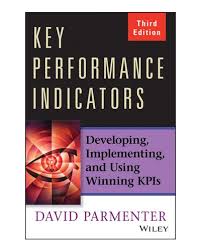
In an increasingly digital, data-driven economy, the Chief Technology Officer (CTO) plays a pivotal role in shaping organizational productivity, innovation, and long-term competitiveness. This white paper presents an expanded and comprehensive framework for measuring, managing, and optimizing productivity under CTO leadership.
Grounded in the principles outlined in Key Performance Indicators: Developing, Implementing, and Using Winning KPIs by David Parmenter, this research synthesizes modern KPI methodologies with digital transformation practices including DevOps, AI/ML, cloud computing, and RAG-LLM architectures.
The paper also highlights how KeenComputer.com and IAS-Research.com enable organizations to operationalize productivity frameworks through technology, analytics, and strategic consulting.
Comprehensive Research White Paper
CTO Leadership, Productivity Measurement, and Digital Transformation Excellence
Abstract
In an increasingly digital, data-driven economy, the Chief Technology Officer (CTO) plays a pivotal role in shaping organizational productivity, innovation, and long-term competitiveness. This white paper presents an expanded and comprehensive framework for measuring, managing, and optimizing productivity under CTO leadership.
Grounded in the principles outlined in Key Performance Indicators: Developing, Implementing, and Using Winning KPIs by David Parmenter, this research synthesizes modern KPI methodologies with digital transformation practices including DevOps, AI/ML, cloud computing, and RAG-LLM architectures.
The paper also highlights how KeenComputer.com and IAS-Research.com enable organizations to operationalize productivity frameworks through technology, analytics, and strategic consulting.
1. Introduction
1.1 The Evolution of the CTO Role
Historically, CTOs were custodians of IT infrastructure—focused on uptime, cost control, and system stability. Today, the role has transformed into a strategic business leadership position, responsible for:
- Driving innovation and digital transformation
- Aligning technology with business strategy
- Enhancing organizational productivity
- Enabling data-driven decision-making
- Leading AI and automation initiatives
In modern enterprises, productivity is no longer a simple measure of output per employee. Instead, it encompasses:
- Speed of innovation
- Quality of execution
- Scalability of systems
- Customer-centric outcomes
1.2 The Productivity Imperative
Organizations that fail to measure productivity effectively face:
- Misaligned strategic initiatives
- Inefficient resource utilization
- Delayed innovation cycles
- Reduced competitive advantage
As highlighted by David Parmenter, performance measurement systems often fail because they are not linked to critical success factors (CSFs) and lack actionable insights .
2. Theoretical Foundations of Productivity Measurement
2.1 Understanding Performance Measurement Hierarchy
A robust productivity framework must distinguish between four types of performance measures:
1. Key Result Indicators (KRIs)
- Provide high-level outcomes
- Example: Customer satisfaction, profitability
- Used by board-level executives
2. Result Indicators (RIs)
- Summarize operational results
- Example: Daily sales
3. Performance Indicators (PIs)
- Guide operational activities
- Example: Number of deployments
4. Key Performance Indicators (KPIs)
- Critical drivers of success
- Non-financial, actionable, frequent
- Directly linked to CSFs
True KPIs are behavior-driving metrics, not just measurement tools .
2.2 Critical Success Factors (CSFs)
CSFs represent the core areas where performance must be excellent for an organization to succeed. For CTOs, these typically include:
- System reliability and uptime
- Engineering productivity
- Security and compliance
- Customer experience
- Innovation velocity
Without clearly defined CSFs, KPI systems become fragmented and ineffective.
2.3 The 10/80/10 Rule
According to David Parmenter:
- 10 KRIs → Strategic overview
- 80 PIs/RIs → Operational control
- 10 KPIs → Critical drivers
This rule prevents measurement overload and ensures focus.
3. CTO Productivity Measurement Framework
3.1 Multi-Dimensional Productivity Model
CTO productivity must be measured across multiple dimensions:
Strategic Layer
- Technology ROI
- Innovation index
- Digital revenue contribution
Operational Layer
- Deployment frequency
- Incident resolution time
- Infrastructure efficiency
Execution Layer
- Developer productivity
- Code quality
- Automation coverage
3.2 Balanced Scorecard for CTOs
Building on the Balanced Scorecard model, CTOs should adopt six perspectives:
- Financial
- Customer
- Internal Processes
- Learning & Growth
- Employee Satisfaction
- Environment & Community
This holistic approach ensures balanced productivity measurement.
4. Key Productivity Metrics for CTO Organizations
4.1 Engineering Productivity Metrics
- Lead Time for Changes
- Deployment Frequency
- Change Failure Rate
- Mean Time to Recovery (MTTR)
These metrics align with DevOps best practices and directly impact delivery speed.
4.2 Infrastructure and DevOps Metrics
- System uptime (%)
- Latency and response time
- Resource utilization
- Cost per transaction
4.3 AI/ML Productivity Metrics
- Model training time
- Deployment cycle time
- Inference latency
- Accuracy and precision
4.4 Business and Customer Metrics
- Time-to-market
- Customer retention rate
- Conversion rates
- Digital engagement
5. Digital Transformation as a Productivity Driver
5.1 Core Technologies
Modern productivity is enabled by:
- Cloud computing
- Containerization (Docker, Kubernetes)
- CI/CD pipelines
- AI/ML frameworks
- RAG-based LLM systems
5.2 Automation and Efficiency
Automation enables:
- Faster deployments
- Reduced errors
- Scalable operations
Result: Higher productivity with fewer resources
5.3 Data-Driven Decision Making
Real-time analytics allows CTOs to:
- Identify bottlenecks
- Predict failures
- Optimize workflows
6. KPI Implementation Strategy
6.1 12-Step KPI Model
Adapted from David Parmenter:
- Executive commitment
- KPI team formation
- Cultural alignment
- Strategy definition
- CSF identification
- KPI selection
- Data infrastructure setup
- Dashboard implementation
- Reporting framework
- Behavioral alignment
- Continuous monitoring
- KPI refinement
6.2 Real-Time Reporting Systems
Effective reporting includes:
- Daily dashboards
- Weekly performance reviews
- Monthly strategic analysis
Timeliness is critical—delayed KPIs lose value .
7. Organizational Culture and Productivity
7.1 Role of Leadership
CTOs must:
- Promote accountability
- Encourage innovation
- Align teams with strategy
7.2 Employee Productivity
Key factors:
- Skill development
- Motivation
- Work environment
Happy employees → Higher productivity → Better outcomes
7.3 Behavioral Impact of KPIs
Poorly designed KPIs can lead to:
- Gaming the system
- Reduced quality
- Short-term thinking
KPIs must encourage positive behaviors .
8. Challenges in Productivity Measurement
8.1 Measurement Overload
Too many metrics reduce clarity.
8.2 Misalignment
Metrics not tied to strategy create inefficiencies.
8.3 Data Silos
Lack of integration leads to incomplete insights.
9. Advanced Technologies and Future Trends
9.1 AI-Driven KPI Systems
- Predictive analytics
- Automated decision-making
- Intelligent dashboards
9.2 AIOps and Autonomous Systems
- Self-healing infrastructure
- Automated incident response
9.3 Digital Twins
Simulating systems for optimization.
9.4 RAG-LLM Integration
- Knowledge retrieval systems
- Enhanced decision support
10. Role of KeenComputer.com and IAS-Research.com
10.1 KeenComputer.com
Services:
- Digital transformation consulting
- DevOps and cloud implementation
- KPI dashboards and analytics
- eCommerce optimization
Impact:
- Faster deployments
- Improved scalability
- Real-time productivity insights
10.2 IAS-Research.com
Services:
- AI/ML development
- RAG-LLM systems
- Engineering simulations
- Advanced analytics
Impact:
- Predictive insights
- Innovation acceleration
- Data-driven productivity
10.3 Combined Value
Together, they deliver:
- End-to-end transformation
- KPI-driven decision systems
- AI-enabled productivity optimization
11. Industry Use Cases
11.1 Software Development
- KPI: Deployment frequency
- Result: Faster releases
11.2 eCommerce
- KPI: Conversion rate
- Result: Increased revenue
11.3 Industrial IoT
- KPI: Machine uptime
- Result: Reduced downtime
11.4 AI Enterprises
- KPI: Model accuracy
- Result: Better decisions
12. Implementation Roadmap for CTOs
Phase 1: Assessment
- Identify CSFs
- Evaluate current metrics
Phase 2: Design
- Define KPI framework
- Select tools
Phase 3: Deployment
- Implement dashboards
- Train teams
Phase 4: Optimization
- Refine KPIs
- Improve processes
13. ROI and Business Impact
13.1 Quantitative Benefits
- Increased efficiency
- Reduced costs
- Faster innovation
13.2 Qualitative Benefits
- Better decision-making
- Improved employee morale
- Enhanced customer satisfaction
14. Conclusion
CTO-led productivity measurement is a strategic imperative in the digital age. By adopting:
- KPI-driven frameworks
- Real-time analytics
- AI-powered systems
Organizations can achieve:
- Sustainable growth
- Competitive advantage
- Operational excellence
Leveraging expertise from KeenComputer.com and IAS-Research.com, CTOs can successfully implement scalable, intelligent productivity systems.
References
- Key Performance Indicators: Developing, Implementing, and Using Winning KPIs
- Kaplan, R. & Norton, D. – Balanced Scorecard
- Hope, J. & Fraser, R. – Beyond Budgeting
- Industry DevOps and AI best practices