As organizations increasingly rely on Joomla-based websites for digital marketing, eCommerce, customer engagement, and business development, website performance has become a critical success factor. Slow response times negatively affect search engine rankings, user experience, lead generation, and online sales. This paper examines the deployment of Varnish Cache, Nginx, PHP-FPM, Redis, and SSL on Ubuntu 24.04 LTS using a Problem Identification–AIDA methodology. The framework demonstrates how technical performance improvements can be aligned with business objectives, digital transformation initiatives, and customer acquisition strategies.
Research Paper: Optimizing Joomla Performance with Nginx, Varnish Cache, SSL, and the Problem Identification
Abstract
As organizations increasingly rely on Joomla-based websites for digital marketing, eCommerce, customer engagement, and business development, website performance has become a critical success factor. Slow response times negatively affect search engine rankings, user experience, lead generation, and online sales. This paper examines the deployment of Varnish Cache, Nginx, PHP-FPM, Redis, and SSL on Ubuntu 24.04 LTS using a Problem Identification–AIDA methodology. The framework demonstrates how technical performance improvements can be aligned with business objectives, digital transformation initiatives, and customer acquisition strategies.
Keywords: Joomla, Ubuntu 24.04, Nginx, Varnish Cache, Redis, SSL, Digital Transformation, AIDA, SEO, Performance Engineering
1. Introduction
Modern websites operate within an environment where users expect pages to load almost instantly. Research consistently shows that delays of even a few seconds can dramatically increase bounce rates and reduce conversions.
For Joomla websites, common challenges include:
- Slow page rendering
- High PHP processing overhead
- Excessive database activity
- Poor scalability
- Lower search engine rankings
A properly designed architecture combining Nginx, Varnish, Redis, and Joomla can significantly improve website responsiveness while reducing infrastructure costs.
2. Problem Identification
2.1 Business Problem
Many SMEs invest in:
- Search Engine Optimization (SEO)
- Content Marketing
- Google Ads
- Social Media Campaigns
Yet website visitors leave before engaging because pages load slowly.
The business problem is not merely technical; it directly affects revenue generation and customer satisfaction.
2.2 Technical Problem
Typical Joomla deployments often use:
Internet
↓
Nginx
↓
PHP-FPM
↓
MariaDB
Each request triggers:
- PHP execution
- Database queries
- Template rendering
- Extension processing
This architecture becomes inefficient as traffic increases.
3. Root Cause Analysis
The main causes include:
Infrastructure Bottlenecks
- Limited server resources
- Improper caching
- Lack of HTTP acceleration
Application Bottlenecks
- Complex Joomla extensions
- Excessive plugins
- Dynamic page generation
Content Bottlenecks
- Large images
- Excessive JavaScript
- Unoptimized CSS
4. Applying the AIDA Framework
Attention
Current Joomla pages require excessive processing time.
Slow websites create:
- Customer frustration
- Reduced engagement
- Lost revenue
The problem affects both marketing and operations.
Interest
Analysis reveals that most requests repeatedly execute identical PHP and database operations.
Caching technologies can eliminate unnecessary processing.
This creates interest in performance optimization.
Desire
A Joomla architecture using:
- Nginx
- Varnish Cache
- Redis
- PHP-FPM
- MariaDB
can provide:
- Faster page delivery
- Improved SEO
- Better user experience
- Lower infrastructure costs
Organizations begin to recognize measurable business benefits.
Action
Implement a layered caching architecture incorporating:
- SSL termination
- Reverse proxy caching
- Object caching
- Database optimization
This converts strategic intent into operational improvements.
5. Proposed Architecture
Recommended Production Design
Internet
↓
HTTPS (443)
↓
Nginx SSL Reverse Proxy
↓
Varnish Cache (6081)
↓
Backend Nginx (8080)
↓
PHP-FPM
↓
Joomla
↓
MariaDB
Additional Services
- Redis
- Monitoring
- Backups
- CDN
6. Nginx Backend Configuration
Backend Nginx listens on port 8080.
Responsibilities:
- Execute PHP
- Serve Joomla
- Communicate with MariaDB
Benefits:
- Separation of concerns
- Improved scalability
- Simplified troubleshooting
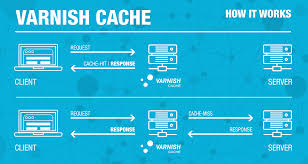
7. Varnish Cache Configuration
Varnish acts as an HTTP accelerator.
Advantages include:
- Memory-based caching
- Reduced PHP execution
- Lower database load
- Faster response times
Frequently accessed pages are delivered directly from memory.
This dramatically improves scalability.
8. SSL Termination Considerations
A common misconception is that Varnish handles SSL.
In reality:
Varnish:
- HTTP acceleration
Nginx:
- SSL termination
- Reverse proxying
Therefore production deployments generally follow:
Client
↓ HTTPS
Nginx
↓ HTTP
Varnish
↓ HTTP
Backend Nginx
This architecture preserves SSL security while enabling caching.
9. Redis Integration
Redis provides:
Session Storage
Benefits:
- Faster authentication
- Reduced database activity
Object Cache
Benefits:
- Improved Joomla responsiveness
- Reduced query load
Redis complements Varnish by accelerating dynamic content operations.
10. SEO Benefits
Performance optimization directly influences search visibility.
Benefits include:
- Faster page indexing
- Improved Core Web Vitals
- Reduced bounce rates
- Increased session duration
Technical optimization becomes a marketing advantage.
11. Digital Transformation Perspective
Technology should support business objectives.
Performance optimization enables:
- Better customer engagement
- Higher conversion rates
- Improved lead generation
- Enhanced operational efficiency
This aligns infrastructure investments with strategic goals.
12. ROI Analysis
Potential benefits include:
Revenue Improvements
- Increased conversions
- Better customer retention
Cost Reduction
- Lower server utilization
- Reduced infrastructure expansion
Marketing Gains
- Improved SEO
- Better advertising performance
Organizations often achieve measurable returns within months of implementation.
13. Role of AI and RAG Systems
Future Joomla environments may incorporate:
- AI chatbots
- Knowledge assistants
- RAG-LLM platforms
- Customer support automation
Fast infrastructure becomes essential for supporting these advanced capabilities.
14. How Keen Computer and IAS Research Can Help
Services include:
Keen Computer
- Joomla development
- Nginx optimization
- Redis deployment
- Varnish implementation
- SEO enhancement
- Digital marketing
IAS Research
- Systems engineering
- AI integration
- RAG-LLM architecture
- Performance modeling
- Technical research
Together these capabilities support comprehensive digital transformation initiatives.
15. Conclusion
Website performance is both a technical and business challenge. Organizations that fail to address performance issues risk losing customers, revenue, and search visibility.
By applying a structured Problem Identification–AIDA methodology and implementing a modern Joomla architecture using Nginx, Varnish Cache, Redis, and SSL, organizations can improve performance, scalability, and customer satisfaction while supporting broader digital transformation goals.
The combination of technical optimization and strategic communication provides a practical roadmap for SMEs seeking sustainable growth in an increasingly competitive digital marketplace.
References
- The Art of SEO.
- Joomla Administrator Documentation.
- Varnish Cache Documentation.
- Nginx Administration Guide.
- Redis Documentation.
- Marketing Management – Philip Kotler.
- Innovation and Entrepreneurship – Bessant and Tidd.
- Practical Intelligence – Karl Albrecht.
- Competitive Strategy – Michael Porter.
- Digital Transformation Playbook – David Rogers.