In an increasingly volatile North American economy shaped by inflationary pressure, supply-chain restructuring, AI disruption, geopolitical uncertainty, cybersecurity risks, and rapid technological change, small and medium-sized enterprises (SMEs) must rethink how they compete. Traditional operational thinking alone is no longer sufficient. Organizations now require a combination of:
- Strategic thinking
- Lateral thinking
- Systems thinking
- Digital transformation
- AI-enabled decision support
- Agile business models
- DevOps and cloud-native infrastructure
This paper integrates principles from:
- Edward de Bono
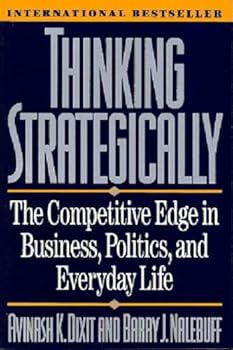
- Avinash K. Dixit
- Harvard strategic thinking methodologies
- Digital transformation frameworks
- AI and RAG-LLM technologies
- DevOps and cloud-native architecture practices
The paper also positions:
as strategic partners for SMEs, startups, ecommerce firms, engineering companies, and digital innovators seeking scalable modernization.
Strategic Thinking, Lateral Thinking, and Digital Transformation for SME Growth in North America
Executive Summary
In an increasingly volatile North American economy shaped by inflationary pressure, supply-chain restructuring, AI disruption, geopolitical uncertainty, cybersecurity risks, and rapid technological change, small and medium-sized enterprises (SMEs) must rethink how they compete. Traditional operational thinking alone is no longer sufficient. Organizations now require a combination of:
- Strategic thinking
- Lateral thinking
- Systems thinking
- Digital transformation
- AI-enabled decision support
- Agile business models
- DevOps and cloud-native infrastructure
This paper integrates principles from:
- Edward de Bono
- Avinash K. Dixit
- Harvard strategic thinking methodologies
- Digital transformation frameworks
- AI and RAG-LLM technologies
- DevOps and cloud-native architecture practices
The paper also positions:
as strategic partners for SMEs, startups, ecommerce firms, engineering companies, and digital innovators seeking scalable modernization.
1. Introduction
North America’s economic environment between 2023–2026 has been characterized by:
- Persistent inflation
- Rising borrowing costs
- Supply chain realignment
- AI-driven workforce transformation
- Cloud migration acceleration
- Cybersecurity threats
- Pressure on SMEs to automate and innovate
SMEs now face a critical challenge:
How can small organizations compete against larger enterprises with limited budgets and smaller teams?
The answer increasingly lies in:
- strategic thinking,
- lateral innovation,
- automation,
- AI integration,
- and intelligent digital transformation.
2. Strategic Thinking and the Work of Avinash Dixit
Who is Avinash Dixit?
Avinash K. Dixit is widely recognized for contributions to:
- strategic decision-making,
- game theory,
- uncertainty management,
- economic strategy,
- and competitive dynamics.
His work is particularly relevant for:
- SME competition,
- pricing strategy,
- ecommerce positioning,
- technology adoption,
- and digital transformation planning.
Core Strategic Concepts from Dixit
2.1 Strategic Interdependence
Businesses do not operate in isolation.
Competitors, suppliers, customers, regulators, and technology platforms all influence outcomes.
For SMEs this means:
- monitoring competitor automation,
- understanding AI disruption,
- tracking cloud migration trends,
- and anticipating customer behavior shifts.
2.2 Thinking Several Moves Ahead
Strategic organizations:
- anticipate reactions,
- model future outcomes,
- analyze trade-offs,
- and prepare contingency plans.
Example:
An ecommerce company deploying AI chatbots today may reduce support costs tomorrow while improving customer retention.
2.3 Competitive Positioning
SMEs must avoid competing solely on price.
Instead they should compete through:
- specialization,
- customer experience,
- AI-enhanced services,
- automation,
- SEO visibility,
- and digital agility.
3. Edward de Bono and Lateral Thinking
The Importance of Lateral Thinking
Edward de Bono introduced the concept of lateral thinking as a method of solving problems through indirect and creative approaches.
Traditional thinking:
- follows predictable logic,
- reinforces existing assumptions,
- and often produces incremental improvement.
Lateral thinking:
- challenges assumptions,
- explores unconventional possibilities,
- and creates disruptive innovation.
For SMEs facing economic uncertainty, lateral thinking becomes essential.
4. Core Edward de Bono Concepts for SMEs
4.1 Six Thinking Hats
The Six Thinking Hats framework enables structured collaboration.
|
Hat |
Function |
SME Use Case |
|---|---|---|
|
White Hat |
Facts/Data |
Analytics dashboards |
|
Red Hat |
Emotions |
Customer sentiment |
|
Black Hat |
Risk analysis |
Cybersecurity |
|
Yellow Hat |
Benefits |
ROI evaluation |
|
Green Hat |
Creativity |
AI innovation |
|
Blue Hat |
Process control |
Strategic planning |
Digital Transformation Application
Example:
A Magento ecommerce business considering AI deployment can use Six Thinking Hats to evaluate:
- operational cost,
- customer impact,
- SEO implications,
- infrastructure risks,
- and automation opportunities.
4.2 Provocation (PO)
De Bono encouraged provocative questions:
- “What if our company became fully remote?”
- “What if customer support was entirely AI-assisted?”
- “What if SMEs used enterprise-grade DevOps?”
These provocative questions often reveal:
- hidden efficiencies,
- automation potential,
- and new revenue models.
4.3 Random Entry Technique
Unexpected inputs can stimulate innovation.
Example:
A Joomla hosting company studying logistics automation may discover:
- container orchestration principles useful for scalable web hosting.
5. Strategic Thinking Framework for SME Digital Transformation
The Harvard strategic thinking framework emphasizes:
- systems thinking,
- stakeholder analysis,
- trend identification,
- creativity,
- prioritization,
- and trade-offs.
Key Strategic Capabilities
5.1 Seeing the Big Picture
Strategic leaders analyze:
- customers,
- competitors,
- macroeconomic trends,
- AI disruption,
- and organizational dependencies.
5.2 SMART Objectives
Strategic objectives should be:
- Specific
- Measurable
- Achievable
- Realistic
- Time-bound
5.3 Identifying Patterns and Trends
Strategic thinkers:
- identify cross-industry lessons,
- recognize emerging technology shifts,
- and anticipate market changes.
5.4 Creative Problem Solving
Creative thinking:
- challenges assumptions,
- welcomes provocative ideas,
- and encourages experimentation.
6. Digital Transformation Technologies for SME Growth
6.1 Docker and Containerization
Docker enables:
- portable infrastructure,
- scalable deployment,
- simplified DevOps,
- and cloud-native modernization.
Benefits for SMEs
|
Benefit |
Business Impact |
|---|---|
|
Faster deployment |
Reduced operational delays |
|
Lower infrastructure cost |
Better cash flow |
|
Scalability |
Easier growth |
|
Isolation |
Improved security |
|
Automation |
Reduced staffing burden |
7. Docker Applications Across Platforms
7.1 Joomla CMS
Docker helps Joomla environments through:
- isolated staging,
- automated deployment,
- scalable hosting,
- and simplified upgrades.
7.2 Magento Ecommerce
Magento benefits include:
- horizontal scaling,
- CI/CD deployment,
- improved caching,
- containerized microservices,
- and resilient ecommerce architecture.
7.3 WordPress
Dockerized WordPress environments improve:
- plugin testing,
- migration,
- multisite deployment,
- and SEO optimization workflows.
7.4 Full Stack Java & Spring Boot
Java developers can use:
- Docker,
- Kubernetes,
- Jenkins,
- GitLab CI/CD,
- and microservices architectures.
7.5 Python Flask, Django, and FastAPI
Containerization enables:
- reproducible AI environments,
- scalable APIs,
- and easier RAG-LLM deployment.
8. AI, RAG-LLM, and Strategic Automation
AI has shifted from optional innovation to strategic necessity.
Applications for SMEs
|
AI Capability |
Business Value |
|---|---|
|
RAG-LLM systems |
Knowledge automation |
|
AI chatbots |
Customer support |
|
Predictive analytics |
Better forecasting |
|
AI search |
Improved UX |
|
AI content generation |
SEO acceleration |
9. RAG-LLM Architecture for SMEs
Architecture Overview
Customer Query ↓ LLM Interface ↓ Vector Database ↓ Business Knowledge Base ↓ Retrieved Context ↓ AI Response
Benefits
- Reduced support cost
- Faster onboarding
- Better customer experience
- Enterprise knowledge retention
- AI-powered ecommerce support
10. Kubernetes and Cloud-Native Strategy
Kubernetes enables:
- orchestration,
- autoscaling,
- failover,
- self-healing infrastructure,
- and multi-cloud deployment.
SME Advantages
|
Capability |
Value |
|---|---|
|
Auto-scaling |
Lower cost |
|
Resilience |
Reduced downtime |
|
Portability |
Vendor flexibility |
|
Automation |
Faster deployment |
11. CI/CD and DevOps Automation
CI/CD Workflow
Developer Commit ↓ Git Repository ↓ Automated Testing ↓ Docker Build ↓ Kubernetes Deployment ↓ Production Monitoring
Popular Tools
|
Tool |
Function |
|---|---|
|
Jenkins |
CI/CD |
|
GitLab CI |
Automation |
|
GitHub Actions |
Deployment |
|
Ansible |
Infrastructure |
|
Terraform |
IaC |
12. Strategic Thinking During Economic Uncertainty
North American SMEs must adapt to:
- inflation,
- trade disruptions,
- AI displacement,
- and cybersecurity risk.
Strategic thinking requires:
- long-term planning,
- digital resilience,
- and agile experimentation.
Recommended SME Strategy
Short-Term
- cost optimization,
- cloud migration,
- automation,
- AI pilots.
Medium-Term
- platform modernization,
- DevOps adoption,
- data analytics.
Long-Term
- AI-native infrastructure,
- autonomous workflows,
- agentic AI integration.
13. SWOT Analysis
Strengths
- Cloud scalability
- AI automation
- Open-source flexibility
- Lower infrastructure cost
Weaknesses
- Skills shortages
- Cybersecurity complexity
- Integration challenges
Opportunities
- AI-assisted ecommerce
- Digital consulting
- SaaS growth
- Edge computing
Threats
- Economic recession
- Cyber attacks
- Big-tech competition
- AI disruption
14. How Keen Computer Can Help
Services
DevOps Consulting
- Docker deployment
- Kubernetes orchestration
- CI/CD automation
Ecommerce Support
- Magento optimization
- Joomla hosting
- WordPress deployment
AI Integration
- RAG-LLM deployment
- AI search systems
- predictive analytics integration
Linux Optimization
- performance tuning
- server hardening
- cloud-native migration
SEO & Digital Marketing
- technical SEO
- content strategy
- AI-enhanced marketing
15. How IAS Research Can Help
Research & Innovation Areas
- AI research
- engineering simulation
- predictive analytics
- automation systems
- digital transformation strategy
- machine learning systems
- RAG-LLM architectures
- industrial optimization
Industry Support
IAS Research can assist:
- SMEs,
- manufacturing firms,
- engineering organizations,
- ecommerce companies,
- and research institutions.
16. Future Trends
16.1 Agentic AI
AI systems increasingly:
- make decisions,
- coordinate tasks,
- and automate workflows autonomously.
16.2 Autonomous Infrastructure
Future systems will:
- self-heal,
- self-optimize,
- and auto-scale dynamically.
16.3 Edge Computing
Edge infrastructure reduces:
- latency,
- bandwidth usage,
- and centralized dependency.
16.4 AI-Assisted DevOps
AI will increasingly:
- generate infrastructure code,
- optimize deployment,
- detect anomalies,
- and automate remediation.
17. Best Learning Resources
Books
|
Resource |
Focus |
|---|---|
|
Docker Deep Dive |
Docker |
|
Kubernetes Up & Running |
Kubernetes |
|
The Phoenix Project |
DevOps |
|
Thinking Strategically |
Strategic thinking |
|
Six Thinking Hats |
Lateral thinking |
|
Lateral Thinking |
Innovation |
MOOCs
|
Platform |
Topic |
|---|---|
|
Coursera |
DevOps |
|
Udemy |
Docker |
|
edX |
Cloud computing |
|
Linux Foundation |
Kubernetes |
GitHub Resources
18. SEO Keywords
Primary Keywords
- strategic thinking for SMEs
- lateral thinking for business growth
- Docker consulting
- Kubernetes for SMEs
- AI digital transformation
- DevOps consulting services
- RAG-LLM deployment
- Magento DevOps
- Joomla cloud hosting
- SME AI automation
Long-Tail Keywords
- how SMEs can use AI for digital transformation
- strategic thinking for economic uncertainty
- Docker and Kubernetes for ecommerce
- AI-powered DevOps for small business
- lateral thinking techniques for startups
19. SEO Meta Description
“Discover how strategic thinking, lateral thinking, Docker, Kubernetes, AI, and RAG-LLM technologies can help SMEs and startups achieve digital transformation, automation, scalability, and competitive growth in North America. Learn how Keen Computer and IAS Research provide enterprise-grade consulting and AI solutions.”
20. Blog Summary
Blog Title
“Strategic Thinking and AI-Driven Digital Transformation for SMEs in North America”
Summary
North American SMEs face unprecedented pressure from economic volatility, AI disruption, and cybersecurity challenges. This article explores how strategic thinking, lateral thinking, Docker, Kubernetes, AI, and RAG-LLM systems can help businesses innovate, automate, and scale. Learn how Keen Computer and IAS Research help organizations modernize infrastructure, deploy AI solutions, and build competitive digital ecosystems.
21. LinkedIn Post
North American SMEs are entering a new era shaped by AI, automation, cloud-native infrastructure, and economic uncertainty.
Organizations that combine:
• strategic thinking
• lateral innovation
• DevOps automation
• Docker & Kubernetes
• AI & RAG-LLM systems
will be far better positioned for long-term growth.
Key technologies driving SME competitiveness:
✔ Docker
✔ Kubernetes
✔ AI-powered automation
✔ CI/CD pipelines
✔ Cloud-native ecommerce
✔ Predictive analytics
✔ Agentic AI
Learn how Keen Computer and IAS Research help businesses modernize infrastructure, reduce operational costs, and accelerate digital transformation.
#DigitalTransformation #Docker #Kubernetes #AI #DevOps #SME #CloudComputing #Magento #Joomla #RAGLLM
22. Email Marketing Version
Dear Business Leader,
Economic uncertainty, AI disruption, and increasing operational complexity are forcing SMEs to rethink how they compete.
Organizations adopting:
• Docker and Kubernetes
• DevOps automation
• AI and RAG-LLM systems
• cloud-native ecommerce
• predictive analytics
are improving agility, scalability, and long-term competitiveness.
Keen Computer and IAS Research provide consulting and implementation services for:
• DevOps modernization
• Magento and Joomla hosting
• AI integration
• Linux optimization
• SaaS development
• cybersecurity
• predictive analytics
• enterprise ecommerce
Our solutions are designed specifically to help SMEs modernize efficiently while controlling costs.
Visit:
https://www.keencomputer.com
https://www.ias-research.com
to learn more.
Best regards,
Keen Computer & IAS Research
23. FAQ Section
What is lateral thinking?
Lateral thinking is a creative problem-solving methodology developed by Edward de Bono that challenges conventional assumptions to generate innovative solutions.
Why is strategic thinking important for SMEs?
Strategic thinking helps SMEs:
- anticipate market changes,
- prioritize investments,
- improve competitiveness,
- and navigate economic uncertainty.
Why should SMEs adopt Docker?
Docker simplifies:
- deployment,
- scaling,
- testing,
- and infrastructure portability.
What is RAG-LLM?
RAG-LLM (Retrieval-Augmented Generation) combines:
- large language models,
- vector databases,
- and enterprise knowledge retrieval systems.
How can AI help ecommerce companies?
AI can improve:
- customer support,
- personalization,
- search,
- inventory forecasting,
- and marketing automation.
24. References
Official Documentation
- Docker Docs
- Kubernetes Docs
- Linux Foundation
- Red Hat OpenShift
- AWS Containers
- Google Cloud Kubernetes
- Microsoft Azure Kubernetes Service
Strategic Thinking Sources
- Harvard Business School – Thinking Strategically Pocket Mentor
- Edward de Bono – Lateral Thinking
- Edward de Bono – Six Thinking Hats
- Avinash Dixit – Thinking Strategically