Organizations across industries struggle with persistent IT problems—legacy systems, security vulnerabilities, poor integration, recurring outages, technical debt, resistance to change, and fragmented governance. These long-standing IT issues undermine operational efficiency, increase costs, and limit innovation.
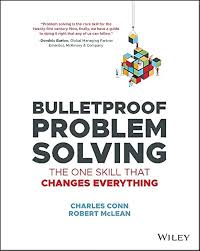
This research paper presents a comprehensive framework for solving entrenched IT challenges using structured methodologies, particularly integrating principles from Bulletproof Problem Solving by Charles Conn and Robert McLean. The paper combines hypothesis-driven problem solving, Lean IT, DevOps, enterprise architecture, cybersecurity best practices, and systems thinking into a unified transformation roadmap.
Additionally, it explores how KeenComputer.com and IAS-Research.com can support organizations in implementing structured IT recovery, modernization, and digital transformation programs.
Solving Long-Standing IT Problems for Operational Success and Organizational Excellence
Integrating Structured Problem Solving, Digital Transformation, and Strategic IT Governance
Author:
Keywords: IT governance, digital transformation, operational excellence, root cause analysis, Bulletproof Problem Solving, Lean IT, DevOps, systems thinking, enterprise architecture, change management
Abstract
Organizations across industries struggle with persistent IT problems—legacy systems, security vulnerabilities, poor integration, recurring outages, technical debt, resistance to change, and fragmented governance. These long-standing IT issues undermine operational efficiency, increase costs, and limit innovation.
This research paper presents a comprehensive framework for solving entrenched IT challenges using structured methodologies, particularly integrating principles from Bulletproof Problem Solving by Charles Conn and Robert McLean. The paper combines hypothesis-driven problem solving, Lean IT, DevOps, enterprise architecture, cybersecurity best practices, and systems thinking into a unified transformation roadmap.
Additionally, it explores how KeenComputer.com and IAS-Research.com can support organizations in implementing structured IT recovery, modernization, and digital transformation programs.
1. Introduction
Many organizations experience “chronic IT pain” rather than acute failures. These include:
- Repeated system outages
- Legacy ERP/CRM platforms with poor integration
- Cybersecurity vulnerabilities
- Slow application development cycles
- Shadow IT and fragmented governance
- Lack of documentation and institutional memory
Such problems persist because they are treated symptomatically rather than structurally.
Operational excellence requires:
- Clarity in problem definition
- Data-driven root cause analysis
- Structured prioritization
- Governance alignment
- Cultural transformation
This paper presents a research-backed framework for eliminating persistent IT dysfunction.
2. Understanding Long-Standing IT Problems
2.1 Categories of Persistent IT Issues
1. Legacy Infrastructure
- Monolithic systems
- Unsupported software
- Hardware nearing end-of-life
2. Technical Debt
Coined by Ward Cunningham, technical debt represents the long-term cost of short-term engineering decisions.
3. Poor IT Governance
Absence of clear decision rights and accountability.
4. Cultural Resistance
Resistance to modernization initiatives.
5. Cybersecurity Weaknesses
Lack of structured compliance with frameworks such as:
- National Institute of Standards and Technology (NIST)
- International Organization for Standardization (ISO 27001)
3. Theoretical Foundations
3.1 Systems Thinking
From The Fifth Discipline by Peter Senge, systems thinking emphasizes understanding feedback loops and structural causes rather than isolated symptoms.
3.2 Lean and Continuous Improvement
Inspired by the Toyota Motor Corporation Production System:
- Eliminate waste
- Improve flow
- Build quality into processes
Lean IT applies these principles to software and infrastructure.
3.3 DevOps and Agile
DevOps reduces friction between development and operations, improving deployment frequency and system stability.
Key references:
- The Phoenix Project
- Accelerate
4. Bulletproof Problem Solving Applied to IT
4.1 Core Principles
Bulletproof Problem Solving outlines a structured methodology:
- Define the problem clearly
- Disaggregate into manageable parts
- Prioritize drivers
- Develop hypotheses
- Test with data
- Synthesize insights
- Communicate clearly
4.2 Applying Hypothesis-Driven IT Recovery
Instead of asking:
“Why is our system slow?”
Ask:
“Which three factors most likely explain 80% of performance degradation?”
Example Hypothesis Framework:
|
Hypothesis |
Data Needed |
Validation Method |
|---|---|---|
|
Database indexing issue |
Query logs |
Performance profiling |
|
Network latency |
Packet analysis |
Wireshark |
|
Infrastructure overload |
CPU metrics |
Monitoring tools |
4.3 Issue Trees in IT Diagnostics
Issue trees break complex problems into structured components:
IT Downtime
→ Infrastructure
→ Application
→ Security
→ Human Error
→ Vendor Dependency
This prevents “solution jumping.”
5. Structured IT Transformation Framework
Phase 1: Problem Structuring
- Conduct stakeholder interviews
- Map IT ecosystem
- Quantify financial impact
Phase 2: Root Cause Analysis
Tools:
- 5 Whys
- Fishbone diagrams
- Log analytics
Phase 3: Strategic Prioritization
Use impact vs. feasibility matrix.
Phase 4: Execution Framework
- Modernize infrastructure
- Strengthen cybersecurity
- Implement DevOps pipelines
- Establish governance frameworks
6. Enterprise Architecture and Governance
Frameworks:
- The Open Group TOGAF
- ISACA COBIT
Governance includes:
- Defined decision rights
- Risk management protocols
- SLA-based vendor oversight
7. Cybersecurity as Foundational Stability
Long-standing IT problems often mask security gaps.
Adopt:
- Zero Trust architecture
- Continuous monitoring
- Incident response planning
Framework references:
- Cybersecurity and Infrastructure Security Agency
- NIST Cybersecurity Framework
8. Cultural Transformation
Technical solutions fail without behavioral alignment.
Inspired by:
- Extreme Ownership
Promote:
- Accountability
- Cross-functional collaboration
- Transparent metrics
9. Technology Modernization Strategies
9.1 Cloud Migration
Use hybrid or multi-cloud strategies.
9.2 Containerization
Docker-based microservices improve scalability.
9.3 AI-Driven Monitoring
Leverage predictive analytics to detect failures early.
10. Metrics for Operational Excellence
Key KPIs:
- Mean Time to Recovery (MTTR)
- Change Failure Rate
- Deployment Frequency
- Infrastructure Cost per User
- Security Incident Frequency
From Accelerate research.
11. Risk Management
- Identify systemic risks
- Build redundancy
- Develop disaster recovery plans
12. How KeenComputer.com Can Help
KeenComputer.com provides:
1. IT Modernization Services
- Legacy migration
- Docker-based deployments
- CMS and eCommerce infrastructure optimization
2. Structured Problem-Solving Workshops
Using principles from Bulletproof Problem Solving.
3. Cybersecurity Assessment
- Vulnerability scanning
- Network diagnostics
- Compliance mapping
4. DevOps Implementation
- CI/CD pipeline setup
- Monitoring frameworks
- Infrastructure automation
5. SME Digital Transformation
Supporting small and medium enterprises in operational restructuring.
13. How IAS-Research.com Can Help
IAS-Research.com contributes through:
1. Systems Engineering Analysis
Applying research-backed diagnostic models.
2. AI-Driven Analytics
Root cause modeling using machine learning.
3. RAG-LLM Knowledge Systems
Embedding organizational knowledge into structured repositories.
4. Governance Framework Development
Policy creation aligned with ISO and NIST standards.
5. Strategic Research & White Papers
Helping leadership understand transformation pathways.
14. Integrated Model: Bulletproof IT Excellence Framework
Step 1: Problem Structuring (Hypothesis-driven)
Step 2: Technical Diagnostics (Data validation)
Step 3: Governance Alignment
Step 4: Infrastructure Modernization
Step 5: Cultural Reinforcement
Step 6: Continuous Monitoring & Feedback
This closed-loop system ensures long-term sustainability.
15. Case Illustration (Hypothetical SME)
Problem: Repeated ERP outages.
Bulletproof approach:
- Hypothesis: 70% due to legacy DB bottleneck.
- Data validation: Log analytics confirm query inefficiency.
- Solution: Cloud migration + database restructuring.
- Governance: Monitoring dashboard with MTTR KPI.
- Cultural change: Incident accountability model.
Result:
- 60% downtime reduction
- 35% operational cost savings
- 2x deployment speed
16. Conclusion
Long-standing IT problems are rarely technical alone. They are systemic, cultural, structural, and strategic. Organizations must transition from reactive troubleshooting to structured, hypothesis-driven problem solving.
By integrating:
- Systems thinking
- Lean IT
- DevOps
- Cybersecurity frameworks
- Governance alignment
- Bulletproof Problem Solving methodology
Organizations can achieve sustainable operational excellence.
KeenComputer.com and IAS-Research.com offer complementary technical and research-driven capabilities to implement this transformation.
References
Conn, C., & McLean, R. (2018). Bulletproof Problem Solving. Wiley.
Forsgren, N., Humble, J., & Kim, G. (2018). Accelerate. IT Revolution.
Kim, G., Behr, K., & Spafford, G. (2013). The Phoenix Project. IT Revolution.
Senge, P. (1990). The Fifth Discipline. Doubleday.
Willink, J., & Babin, L. (2015). Extreme Ownership. St. Martin’s Press.
NIST Cybersecurity Framework. National Institute of Standards and Technology
ISO/IEC 27001 Standards. International Organization for Standardization
COBIT Framework. ISACA
TOGAF Standard. The Open Group