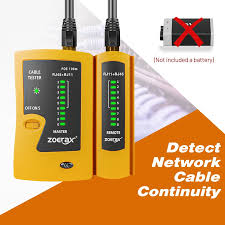
Structured cabling is the foundation of modern enterprise networking. Cat6 and Cat6A twisted-pair copper systems enable Gigabit and 10-Gigabit Ethernet across commercial buildings, data centers, healthcare facilities, manufacturing plants, and educational institutions. However, performance depends not only on installation quality but also on rigorous testing and certification aligned with TIA-568 and ISO/IEC 11801 standards.
Comprehensive Research White Paper Cat6 / Cat6A Cable Testing, Certification, Commercial LAN Deployment, and Strategic Infrastructure Enablement
Abstract
Structured cabling is the foundation of modern enterprise networking. Cat6 and Cat6A twisted-pair copper systems enable Gigabit and 10-Gigabit Ethernet across commercial buildings, data centers, healthcare facilities, manufacturing plants, and educational institutions. However, performance depends not only on installation quality but also on rigorous testing and certification aligned with TIA-568 and ISO/IEC 11801 standards.
This expanded white paper presents:
- Deep technical analysis of Cat6/Cat6A electrical performance
- Standards compliance and measurement theory
- Step-by-step LAN cable tester usage guide
- Commercial certification workflow
- Troubleshooting methodology
- ROI and risk mitigation analysis
- Lifecycle infrastructure management
- Strategic role of KeenComputer.com in enterprise LAN enablement
1. Introduction: The Physical Layer as Strategic Infrastructure
Enterprise IT strategies often emphasize:
- Cloud migration
- AI integration
- Virtualization
- Cybersecurity frameworks
- Digital transformation
Yet all higher-layer protocols ultimately depend on Layer 1 — the physical medium.
Cat6 and Cat6A cabling systems are designed to support:
- 1000BASE-T (1GbE)
- 2.5GBASE-T / 5GBASE-T
- 10GBASE-T
- Power over Ethernet (PoE / PoE+ / PoE++)
- High-density wireless backhaul
Improperly validated infrastructure can result in:
- Crosstalk-induced retransmissions
- Excessive bit error rates
- PoE voltage instability
- Reduced throughput
- Compliance failures
Therefore, cable testing is not optional—it is a mission-critical engineering function.
2. Electrical Fundamentals of Cat6 and Cat6A
2.1 Transmission Characteristics
Twisted-pair copper supports differential signaling. Performance depends on:
- Pair twist rate
- Conductor gauge (typically 23–24 AWG)
- Dielectric properties
- Shielding type (UTP, F/UTP, S/FTP)
- Pair balance
Cat6A introduces improved alien crosstalk performance and tighter insertion loss specifications.
2.2 Key Electrical Parameters
Certification testers measure:
Insertion Loss (Attenuation)
Signal strength reduction over distance.
NEXT (Near-End Crosstalk)
Interference between pairs measured at transmitting end.
PSNEXT
Power sum of all pair interference.
Return Loss
Reflected signal energy due to impedance mismatch.
ACR-F
Attenuation to Crosstalk Ratio at far end.
Propagation Delay
Signal travel time through medium.
Delay Skew
Difference in delay between pairs (critical for 10GbE).
Alien Crosstalk
Interference from adjacent cables in high-density bundles.
3. Standards and Compliance Framework
3.1 TIA-568
Defines:
- Category specifications
- Permanent link vs channel limits
- Test limit values
- Performance margins
3.2 ISO/IEC 11801
Defines:
- Class E (Cat6)
- Class EA (Cat6A)
- International compliance standards
Meeting these standards is often mandatory for warranty certification.
4. Categories of LAN Cable Testers
4.1 Certification-Level Testers
Example:
Fluke Networks – DSX-602 CableAnalyzer
Purpose:
- Formal compliance documentation
- Warranty acceptance
- Commercial handover reporting
4.2 Qualification / Validation Testers
Example:
Fluke Networks – LinkIQ Cable+Network Tester
Purpose:
- Bandwidth validation
- Troubleshooting
- PoE verification
- Network port diagnostics
4.3 Entry-Level Verification Tools
Example:
Triplett Test Equipment – LV Pro 30
Purpose:
- Continuity testing
- Wiremap verification
- Basic installations
5. How to Use a LAN Cable Tester — Detailed Engineering Procedure
5.1 Phase 1: Installation Pre-Inspection
Before testing:
- Verify correct T568A or T568B termination.
- Ensure minimal pair untwist (< 0.5 inch recommended).
- Confirm bend radius compliance.
- Separate from high-voltage lines.
- Label cable endpoints clearly.
Poor mechanical installation is the primary cause of certification failure.
5.2 Phase 2: Basic Wiremap Test
Procedure:
- Connect main unit to patch panel port.
- Connect remote unit at workstation outlet.
- Power on tester.
- Select wiremap mode.
- Run test.
Interpret results:
- Straight-through pass
- Split pair detection
- Open/short condition
- Crossed pair indication
Re-terminate if failure occurs.
5.3 Phase 3: Qualification Testing
Using LinkIQ:
- Connect to cable.
- Select bandwidth test mode.
- Choose 1G or 10G verification.
- Run test.
Outputs:
- Maximum supported bandwidth
- Cable length
- Wiremap
- PoE detection
- Switch port diagnostics
Use this to troubleshoot:
- Speed negotiation problems
- PoE device instability
- Intermittent links
5.4 Phase 4: Full Certification Testing
Using DSX-602:
Step 1: Select Test Standard
- TIA Cat6 or Cat6A
- ISO Class E or EA
- Permanent link or Channel test
Step 2: Attach Proper Adapters
Permanent link adapters ensure accurate measurement of installed link only.
Step 3: Connect Main and Remote Units
Step 4: Run Autotest
Measures:
- Insertion loss
- NEXT
- PSNEXT
- Return loss
- ACR-F
- Delay skew
- Alien crosstalk (if configured)
Step 5: Analyze Graphical Results
- Identify margin
- Locate fault distance via TDR
- Assess failure severity
Step 6: Save Results
Assign cable ID and store internally.
Step 7: Export Reports
Use LinkWare software to generate compliance documentation.
6. Advanced Troubleshooting Methodology
Common failure scenarios:
Excessive NEXT
Cause: Excess untwist at termination
Fix: Re-terminate with tighter twist control
High Return Loss
Cause: Poor connector seating
Fix: Replace keystone jack
Alien Crosstalk Fail
Cause: Dense bundle without separation
Fix: Re-route with spacing
PoE Voltage Drop
Cause: High resistance conductor
Fix: Replace cable
7. Commercial Deployment Workflow
- Infrastructure planning
- Cable installation
- Wiremap testing
- Certification testing
- Documentation export
- Warranty submission
- Network activation
8. ROI Analysis of Certification-Level Testing
8.1 Reduced Rework
Cost of reopening ceiling space often exceeds cost of certification equipment rental.
8.2 Warranty Compliance
Manufacturers may reject claims without certification documentation.
8.3 Reduced Downtime
Undetected marginal cables cause intermittent packet loss and expensive diagnostics.
8.4 Professional Credibility
Certified reports enhance contractor reputation.
9. Procurement and Rental in Canada
Purchase:
- Canada Computers
- Authorized distributors of Fluke Networks
Rental:
- TRS-RenTelco
Rental is cost-effective for single commercial projects.
10. Strategic Role of KeenComputer.com in Commercial LAN Infrastructure
Cable certification is one component of a broader infrastructure strategy.
10.1 Structured Network Architecture Design
KeenComputer.com supports:
- 10Gb backbone design
- PoE++ capacity planning
- Rack and patch panel optimization
- Redundant uplink strategy
- VLAN segmentation design
10.2 Test-Ready Deployment Oversight
Improves first-pass certification success through:
- Termination QA review
- Grounding validation
- Patch panel labeling systems
- Cable pathway planning
10.3 Equipment Advisory and Sourcing
Helps organizations evaluate:
- Certification vs validation testers
- PoE-capable switches
- Shielded vs unshielded cable
- Enterprise switching platforms
10.4 Post-Certification Monitoring
After installation:
- Link performance monitoring
- PoE load tracking
- Network utilization analytics
- Early fault detection
10.5 Security & Compliance Integration
Aligns cabling infrastructure with:
- Firewall segmentation
- VLAN isolation
- Audit compliance documentation
- Secure access frameworks
10.6 Digital Transformation Enablement
Reliable LAN infrastructure enables:
- Cloud workloads
- AI systems
- CMS and ecommerce platforms
- Virtualized data centers
- Hybrid IT environments
KeenComputer.com bridges physical infrastructure reliability with business-level digital transformation objectives.
11. Strategic Conclusion
Cat6 and Cat6A cable testing is both a technical necessity and a strategic investment. Certification-level testing ensures compliance with TIA-568 and ISO/IEC 11801 standards while protecting long-term operational stability.
Proper use of LAN cable testers involves:
- Installation inspection
- Wiremap validation
- Qualification testing
- Full certification
- Documentation management
Certification tools such as the DSX series from Fluke Networks provide industry-recognized compliance validation. Validation tools such as LinkIQ enable rapid troubleshooting.
However, true infrastructure resilience requires:
- Professional installation oversight
- Structured testing workflows
- Ongoing monitoring
- Security alignment
- Strategic network design
KeenComputer.com enables organizations to transform certified cabling infrastructure into scalable, secure, high-performance enterprise networks—ensuring that physical layer investments translate into measurable operational and strategic value.