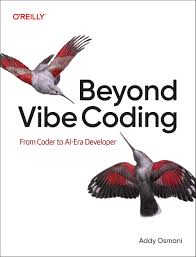
The rapid emergence of large language models (LLMs) and AI-powered developer tools is reshaping the foundations of software engineering. What Addy Osmani terms “Vibe Coding” captures a broader paradigm shift from syntax-driven programming to intent-driven software development, where human developers specify goals and constraints while AI systems generate implementation scaffolding. Gene Kim and Steve Yegge extend this discussion by emphasizing that tools alone do not create high-performing engineering organizations; sustainable productivity emerges from sociotechnical systems, DevOps maturity, and continuous learning cultures.
This white paper presents a comprehensive AI-Augmented Software Development Life Cycle (SDLC) model designed specifically for Small and Medium Enterprises (SMEs). While SMEs benefit most from accelerated development cycles enabled by AI coding tools, they also face disproportionate risks from technical debt, security vulnerabilities, and architectural fragility. The proposed framework integrates Vibe Coding into every SDLC phase—requirements engineering, architecture, implementation, testing, deployment, and maintenance—while preserving governance, security-by-design, and platform engineering best practices.
The paper further positions KeenComputer.com and IAS-Research.com as complementary partners delivering “AI-Augmented Software Engineering as a Service.” KeenComputer focuses on production-grade engineering, cloud-native DevOps, cybersecurity, and SME digital transformation, while IAS-Research contributes applied research, advanced modeling, AI architecture, and domain-specific LLM engineering. Together, they provide SMEs with a safe, scalable pathway to operationalize Vibe Coding and AI-native software development.
AI-Augmented Software Engineering SDLC with Vibe Coding
A Comprehensive Research White Paper for SMEs
Operationalizing AI-Driven Development with KeenComputer.com and IAS-Research.com
Author: Differential Design Inc
Affiliation: KeenComputer.com | IAS-Research.com
Date: February 2026
SEO Metadata
Meta Title:
AI-Augmented SDLC with Vibe Coding for SMEs | KeenComputer & IAS-Research
Meta Description:
A comprehensive 5,000+ word research white paper on AI-augmented software engineering SDLC using Vibe Coding. Integrating Addy Osmani’s frameworks with DevOps research by Gene Kim and Steve Yegge, and real-world SME use cases delivered by KeenComputer.com and IAS-Research.com.
Keywords:
AI SDLC, Vibe Coding framework, AI software engineering lifecycle, AI DevOps, Cursor AI IDE, Bolt AI, SME digital transformation, AI-assisted development, domain-specific LLMs, KeenComputer, IAS Research, AI governance, AI software architecture
Abstract
The rapid emergence of large language models (LLMs) and AI-powered developer tools is reshaping the foundations of software engineering. What Addy Osmani terms “Vibe Coding” captures a broader paradigm shift from syntax-driven programming to intent-driven software development, where human developers specify goals and constraints while AI systems generate implementation scaffolding. Gene Kim and Steve Yegge extend this discussion by emphasizing that tools alone do not create high-performing engineering organizations; sustainable productivity emerges from sociotechnical systems, DevOps maturity, and continuous learning cultures.
This white paper presents a comprehensive AI-Augmented Software Development Life Cycle (SDLC) model designed specifically for Small and Medium Enterprises (SMEs). While SMEs benefit most from accelerated development cycles enabled by AI coding tools, they also face disproportionate risks from technical debt, security vulnerabilities, and architectural fragility. The proposed framework integrates Vibe Coding into every SDLC phase—requirements engineering, architecture, implementation, testing, deployment, and maintenance—while preserving governance, security-by-design, and platform engineering best practices.
The paper further positions KeenComputer.com and IAS-Research.com as complementary partners delivering “AI-Augmented Software Engineering as a Service.” KeenComputer focuses on production-grade engineering, cloud-native DevOps, cybersecurity, and SME digital transformation, while IAS-Research contributes applied research, advanced modeling, AI architecture, and domain-specific LLM engineering. Together, they provide SMEs with a safe, scalable pathway to operationalize Vibe Coding and AI-native software development.
1. Introduction: The AI Inflection Point in Software Engineering
Software engineering has historically evolved through distinct methodological epochs: structured programming, object-oriented design, Agile development, DevOps, and cloud-native architectures. The current AI-driven wave represents not merely a tooling upgrade but a paradigm shift in cognitive labor. Developers increasingly collaborate with AI copilots that can synthesize code, documentation, tests, and even architectural proposals from natural language descriptions.
Addy Osmani’s concept of Vibe Coding encapsulates this shift: developers focus on intent, architecture, and user experience, while AI systems handle much of the mechanical code generation. However, Osmani cautions that Vibe Coding, when adopted naively, risks producing fragile systems. The “70% problem” describes how AI tools often produce functional prototypes rapidly, but struggle with the final 30% of production readiness: performance optimization, security hardening, compliance, and maintainability.
Gene Kim and Steve Yegge extend this critique by situating AI coding tools within the broader context of DevOps and sociotechnical systems. They argue that without strong feedback loops, platform engineering, and organizational learning, AI-accelerated development can amplify existing dysfunctions.
For SMEs, the stakes are high. AI tools promise to democratize software development, enabling small teams to compete with larger enterprises. At the same time, SMEs lack the internal governance structures and specialized expertise to manage AI-related risks. This white paper addresses this tension by proposing a structured AI-Augmented SDLC framework that balances speed with sustainability.
2. Theoretical Foundations from the Vibe Coding Literature
2.1 Intent-Driven Development and Cognitive Load Reduction
Osmani frames Vibe Coding as a response to growing system complexity. Modern software stacks—microservices, cloud platforms, CI/CD pipelines, security frameworks—impose a heavy cognitive burden on developers. AI copilots reduce this burden by translating high-level intent into low-level implementation.
This aligns with established software engineering principles: abstraction, modularity, and separation of concerns. Vibe Coding can be seen as the next abstraction layer, where natural language becomes the programming interface. However, this abstraction must be carefully managed to avoid “leaky abstractions” that obscure performance, security, and operational realities.
2.2 The 70% Problem and the Myth of Full Automation
In Beyond Vibe Coding, Osmani emphasizes that AI excels at generating boilerplate and common patterns but struggles with domain-specific nuances. This creates a false sense of completion: stakeholders may believe a system is nearly finished when, in reality, critical engineering work remains.
This observation echoes Brooks’ Mythical Man-Month: there is no silver bullet for software complexity. AI tools change the economics of early-stage development but do not eliminate the need for disciplined engineering practices.
2.3 Sociotechnical Systems and DevOps Maturity
Gene Kim’s DevOps research highlights three core principles: flow, feedback, and continuous learning. Steve Yegge’s critiques of over-engineered systems emphasize the importance of developer experience and simplicity. Together, they argue that high-performing engineering organizations optimize not just tools, but workflows, culture, and feedback loops.
AI-augmented SDLC must therefore be embedded within DevOps pipelines, observability platforms, and continuous improvement processes. Without these, AI-generated code becomes another source of unmanaged complexity.
3. The AI-Augmented SDLC Framework
The proposed framework extends the classical SDLC with explicit AI integration points and governance layers.
3.1 Phase 1: Requirements Engineering and Intent Modeling
Traditional requirements engineering relies on documentation-heavy processes. In an AI-augmented SDLC, requirements become machine-interpretable intents. Natural language prompts, structured user stories, and domain ontologies guide AI generation.
KeenComputer.com facilitates stakeholder workshops to capture business objectives, while IAS-Research.com formalizes domain models and knowledge graphs to ground AI outputs in domain-specific semantics.
3.2 Phase 2: Architecture and System Design
AI tools can propose reference architectures, but architectural decisions remain a human responsibility. Key concerns include scalability, fault tolerance, data governance, and regulatory compliance.
KeenComputer provides cloud-native architecture blueprints, while IAS-Research applies simulation and modeling techniques to validate performance and reliability under varying workloads.
3.3 Phase 3: Implementation with Vibe Coding
This phase operationalizes Vibe Coding. AI copilots generate service skeletons, UI components, and integration code. Engineers focus on orchestration, domain logic, and system cohesion.
Governance mechanisms include code review policies, architectural guardrails, and secure coding standards enforced through CI/CD pipelines.
3.4 Phase 4: Testing, Verification, and Quality Assurance
AI-generated test cases accelerate coverage, but human oversight ensures correctness and security. Continuous testing aligns with DevOps best practices, embedding quality gates into deployment pipelines.
3.5 Phase 5: Deployment, DevOps, and Platform Engineering
Infrastructure-as-Code, containerization, and observability platforms ensure reliable deployment. KeenComputer manages production environments, while IAS-Research contributes resilience modeling and reliability engineering.
3.6 Phase 6: Maintenance, Learning, and Evolution
Continuous refactoring mitigates AI-induced technical debt. Observability data feeds back into both human learning and AI prompt refinement, creating a virtuous cycle of improvement.
4. Governance, Risk, and Compliance
AI-augmented SDLC introduces new risk vectors: hallucinated code, license contamination, data leakage, and model drift. Governance frameworks must address:
- Security-by-design
- Model risk management
- Explainability and traceability
- Compliance with data protection regulations
KeenComputer provides cybersecurity and compliance consulting, while IAS-Research develops risk assessment models and validation frameworks.
5. SME Use Cases
5.1 Rapid SaaS MVP Development
5.2 AI-Augmented ERP Systems
5.3 Smart IoT Dashboards
5.4 AI-Powered Customer Support Platforms
5.5 Digital Transformation of Professional Services
Each use case demonstrates how Vibe Coding accelerates development while KeenComputer and IAS-Research ensure production readiness.
6. Economic Impact and ROI for SMEs
Empirical evidence from DevOps research suggests that organizations with mature CI/CD and automation practices outperform peers in deployment frequency, reliability, and recovery time. AI augments these benefits by reducing development lead times and lowering barriers to experimentation.
7. Implementation Roadmap for SMEs
- AI Readiness Assessment
- Pilot Projects with Vibe Coding
- Governance Framework Deployment
- Platform Engineering Setup
- Continuous Improvement
8. Future Outlook
The convergence of AI agents, platform engineering, and domain-specific LLMs will lead to increasingly autonomous software systems. SMEs that adopt structured AI-augmented SDLC frameworks early will gain strategic advantages in innovation speed and operational resilience.
9. Conclusion
Vibe Coding is best understood not as a replacement for software engineering discipline, but as a powerful abstraction layer that, when integrated into a robust SDLC, enables sustainable innovation. KeenComputer.com and IAS-Research.com provide the organizational, technical, and research capabilities required to translate AI-generated prototypes into resilient, secure, and scalable software systems for SMEs.
References
- Osmani, A. Vibe Coding: The Future of Programming.
- Osmani, A. Beyond Vibe Coding (Early Release).
- Kim, G., Yegge, S. Vibe Coding.
- Forsgren, N., Humble, J., Kim, G. Accelerate.
- Brooks, F. The Mythical Man-Month.
- ISO/IEC 27001.
- AWS Well-Architected Framework.