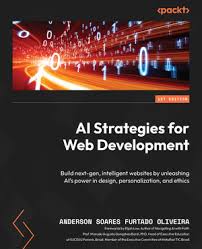
Artificial Intelligence (AI), particularly generative and agentic AI models, is reshaping web and mobile application development by automating coding, testing, UI generation, deployment, and system maintenance. Between 2024 and 2026, AI-assisted development tools have seen rapid adoption across enterprises and small and medium-sized enterprises (SMEs), with reported usage rates exceeding 80% among professional developers. However, trust, security, governance, regulatory compliance, and code quality remain significant concerns.
This review and survey paper synthesizes findings from recent developer surveys, systematic literature reviews, and industry reports. It evaluates leading AI development tools such as Lovable, GitHub Copilot, Cursor, and Replit Agent through comparative and SWOT analysis. Furthermore, it proposes a practical governance framework and presents a deployable empirical survey instrument to assess organizational readiness, maturity, and responsible AI adoption.
The paper is targeted at SMEs, IT consultants, and digital transformation practitioners. It highlights gaps in domain-specific implementation, especially within resource-constrained SMEs, and offers actionable recommendations supported by implementation models suitable for LEMP/Docker-based development environments. The role of KeenComputer.com and IAS-Research.com is articulated as strategic enablers for responsible AI integration, secure deployment, and enterprise-scale governance.
AI in Web and Mobile App Development: A Comprehensive Review, Survey, Tool Analysis, and Governance Framework for SMEs
Abstract
Artificial Intelligence (AI), particularly generative and agentic AI models, is reshaping web and mobile application development by automating coding, testing, UI generation, deployment, and system maintenance. Between 2024 and 2026, AI-assisted development tools have seen rapid adoption across enterprises and small and medium-sized enterprises (SMEs), with reported usage rates exceeding 80% among professional developers. However, trust, security, governance, regulatory compliance, and code quality remain significant concerns.
This review and survey paper synthesizes findings from recent developer surveys, systematic literature reviews, and industry reports. It evaluates leading AI development tools such as Lovable, GitHub Copilot, Cursor, and Replit Agent through comparative and SWOT analysis. Furthermore, it proposes a practical governance framework and presents a deployable empirical survey instrument to assess organizational readiness, maturity, and responsible AI adoption.
The paper is targeted at SMEs, IT consultants, and digital transformation practitioners. It highlights gaps in domain-specific implementation, especially within resource-constrained SMEs, and offers actionable recommendations supported by implementation models suitable for LEMP/Docker-based development environments. The role of KeenComputer.com and IAS-Research.com is articulated as strategic enablers for responsible AI integration, secure deployment, and enterprise-scale governance.
Keywords: AI-assisted development, web applications, mobile applications, SMEs, governance framework, digital transformation, software engineering survey
1. Introduction
The software development lifecycle (SDLC) is undergoing a profound transformation driven by the emergence of generative AI, large language models (LLMs), and agentic development platforms. Traditionally, web and mobile application development required skilled teams of frontend, backend, QA, DevOps, and UX designers. Today, AI-powered tools can generate production-grade code, automate testing, scaffold databases, create UI layouts, and even deploy applications to cloud platforms.
Global surveys indicate that over 80% of developers now use AI tools regularly. However, adoption patterns vary significantly between large enterprises and SMEs. SMEs often lack formal governance structures, secure DevOps pipelines, and AI literacy, making them vulnerable to security risks, vendor lock-in, and compliance challenges.
This paper positions AI-assisted development within the broader context of digital transformation for SMEs, emphasizing:
- Productivity gains
- Cost efficiency
- Faster time-to-market
- Democratization of software development
- Emerging governance and ethical challenges
The review further aligns with Keen Computer Consulting and IAS-Research.com’s mission of providing secure, scalable, and responsible digital solutions for SMEs in Canada, India, the USA, and the UK.
2. Background and Conceptual Foundations
2.1 AI in the Software Development Lifecycle (SDLC)
AI tools now support almost every SDLC stage:
|
SDLC Phase |
AI Contribution |
|---|---|
|
Requirements |
User story generation, backlog refinement |
|
Design |
UI mockups, UX suggestions |
|
Development |
Code generation, refactoring |
|
Testing |
Automated test creation, fuzzing |
|
Deployment |
CI/CD pipeline automation |
|
Maintenance |
Bug detection, observability insights |
These tools lower entry barriers but introduce systemic risks when misused.
2.2 Web and Mobile App Development Trends (2024–2026)
Key trends include:
- AI-first IDEs
- Low-code / No-code platforms
- Prompt-driven full-stack development
- Mobile-first, API-centric architectures
- Containerized deployment (Docker, Kubernetes)
- Serverless backends
SMEs benefit from these trends but require technical governance and security maturity.
3. Literature Review
Recent studies indicate:
- Productivity improvements of 30–55% in coding tasks
- Higher satisfaction among junior developers
- Increased cognitive load for debugging AI-generated code
- Elevated security risks due to hallucinated code patterns
Key findings from academic reviews emphasize:
- AI improves boilerplate generation
- Domain-specific logic still requires human oversight
- Governance frameworks remain underdeveloped for SMEs
- Tool transparency is limited
There is a notable lack of empirical studies focusing on SMEs and consulting environments, creating a gap addressed in this paper.
4. AI Tools for Web and Mobile App Development
4.1 Tool Profiles
Lovable
- Chat-to-app full-stack builder
- Generates frontend, backend, DB, authentication
- Suitable for rapid MVP development
GitHub Copilot
- IDE-based AI code completion
- Strong for frameworks like React, Flutter, PHP, Laravel
Cursor
- AI-native IDE
- Supports multi-file refactoring
- Suitable for enterprise-scale codebases
Replit Agent
- Browser-based AI coding
- Enables real-time collaboration
- Good for prototypes and education
4.2 SWOT Analysis (Condensed)
|
Tool |
Strengths |
Weaknesses |
Opportunities |
Threats |
|---|---|---|---|---|
|
Lovable |
Rapid MVPs |
Limited customization |
SME prototyping |
Vendor lock-in |
|
Copilot |
High accuracy |
Security risks |
Enterprise scaling |
Compliance |
|
Cursor |
Deep refactoring |
Learning curve |
Large projects |
Cost |
|
Replit |
Accessibility |
Scalability |
Team learning |
Performance |
5. Comparative Analysis
|
Criterion |
Lovable |
Copilot |
Cursor |
Replit |
|---|---|---|---|---|
|
Speed |
Very High |
Medium |
Medium |
High |
|
Control |
Low |
High |
Very High |
Medium |
|
SME Fit |
Excellent |
Good |
Good |
Excellent |
|
Governance |
Weak |
Medium |
Medium |
Weak |
6. Benefits, Risks, and Challenges
6.1 Benefits
- Faster prototyping
- Reduced development costs
- Democratized software creation
- Enhanced testing automation
6.2 Risks
- Security vulnerabilities
- Code hallucinations
- IP and licensing risks
- Vendor dependency
- Regulatory non-compliance
7. Governance Framework for AI-Assisted Development
A proposed four-layer governance model:
- Policy Layer
- AI usage policies
- Data sensitivity classification
- Technical Layer
- CI/CD scanning
- Code review automation
- SBOM generation
- Organizational Layer
- AI literacy programs
- Change management
- Regulatory Layer
- Compliance with GDPR, EU AI Act
- Ethical guidelines
KeenComputer.com and IAS-Research.com provide implementation services for this framework.
8. Empirical Survey Instrument (Research Methodology)
8.1 Survey Design
Target: SMEs, developers, IT consultants
Method: Online structured survey
8.2 Sample Survey Questions
- Which AI tools do you use?
- Has AI reduced development time by >30%?
- Do you follow AI governance policies?
- What risks concern you most?
8.3 Analysis Plan
- Quantitative analysis
- Cross-tabulation by SME size
- Qualitative thematic coding
9. Role of KeenComputer.com and IAS-Research.com
Service Areas:
- AI tool integration
- Secure DevOps pipelines
- LEMP/Docker deployment
- Governance frameworks
- SME digital transformation
- Staff training and capacity building
They act as trusted technology partners, helping SMEs adopt AI responsibly.
10. Future Research Directions
- Longitudinal studies on AI code quality
- AI governance ROI
- Agentic workflows in DevOps
- AI-native software engineering models
11. Conclusion
AI-assisted web and mobile development represents a paradigm shift for SMEs. While the benefits are transformative, ungoverned adoption exposes organizations to serious technical and regulatory risks. This review demonstrates the need for structured governance, human oversight, and secure deployment practices. SMEs supported by consulting partners such as Keen Computer and IAS-Research can harness AI responsibly to accelerate innovation and competitiveness.
References (Selected)
- Stack Overflow Developer Survey 2025
- Oliveira, A. S. F. (2026). AI in Web and Mobile App Development
- IEEE Software (2024–2025). AI-Assisted SDLC
- ArXiv (2025). Human-AI Collaboration in IDEs
- KnosTIC AI Governance Framework (2025)
- EU AI Act (2024)
- Docker Documentation
- Linux Foundation – Secure DevOps
- OECD AI Principles
- NIST AI Risk Management Framework