Blue-collar industries—construction, electrical, HVAC, machining, logistics, manufacturing, field service, and infrastructure trades—are experiencing a structural economic shift driven by demographic shortages, declining interest in trades among younger workers, and rapid advancements in automation that disproportionately impact white-collar roles. In this environment, skilled trades have emerged not only as resilient career paths but also as powerful engines of economic mobility, intrapreneurship, and entrepreneurship.
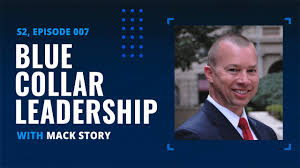
This research white paper synthesizes insights from two leading practitioner thinkers: Mack Story, a lean-leadership coach specializing in blue-collar operational excellence, and Ken Rusk, an entrepreneur advocating for life design, financial literacy, and blue-collar entrepreneurship. Their ideas are triangulated with foundational literature from Stephen R. Covey, Jeffrey Liker, Katie Anderson, lean construction research, and the Toyota Production System (TPS).
The paper also integrates how three organizations—KeenComputer.com, IAS-Research.com, and KeenDirect.com—can support blue-collar companies in adopting lean leadership, AI-enabled workflows, character-centric workforce development, and modern digital operations.
The result is a comprehensive, practical framework showing how character, respect, vision-driven life design, and digital transformation can make blue-collar businesses more competitive, more attractive to the next generation of workers, and more capable of driving long-term societal wealth creation.
Blue-Collar Excellence in the Age of Lean and AI: Character, Respect, Digital Transformation, and Entrepreneurship as Engines of Performance and Wealth
Abstract
Blue-collar industries—construction, electrical, HVAC, machining, logistics, manufacturing, field service, and infrastructure trades—are experiencing a structural economic shift driven by demographic shortages, declining interest in trades among younger workers, and rapid advancements in automation that disproportionately impact white-collar roles. In this environment, skilled trades have emerged not only as resilient career paths but also as powerful engines of economic mobility, intrapreneurship, and entrepreneurship.
This research white paper synthesizes insights from two leading practitioner thinkers: Mack Story, a lean-leadership coach specializing in blue-collar operational excellence, and Ken Rusk, an entrepreneur advocating for life design, financial literacy, and blue-collar entrepreneurship. Their ideas are triangulated with foundational literature from Stephen R. Covey, Jeffrey Liker, Katie Anderson, lean construction research, and the Toyota Production System (TPS).
The paper also integrates how three organizations—KeenComputer.com, IAS-Research.com, and KeenDirect.com—can support blue-collar companies in adopting lean leadership, AI-enabled workflows, character-centric workforce development, and modern digital operations.
The result is a comprehensive, practical framework showing how character, respect, vision-driven life design, and digital transformation can make blue-collar businesses more competitive, more attractive to the next generation of workers, and more capable of driving long-term societal wealth creation.
1. Introduction
Across North America and globally, skilled trades remain the backbone of economic infrastructure—yet paradoxically, they face severe workforce shortages. Electricians, HVAC technicians, welders, machinists, millwrights, plumbers, carpenters, heavy-equipment mechanics, and construction supervisors are in critically short supply. These shortages intersect with another trend: growing automation of white-collar tasks due to AI tools capable of:
- drafting reports
- summarizing research
- generating analytics
- automating administrative workflows
- assisting with basic code writing
While many desk-based tasks are becoming automatable, trade work requiring physical presence, sensory feedback, situational judgment, hands-on craft, and trust-based customer relationships remains resistant to automation.
At the same time, high student debt burdens, unclear career paths for graduates, and credential inflation are causing people to reevaluate traditional university routes. Many young workers are discovering that blue-collar pathways may offer stronger financial outcomes, less debt, more autonomy, and faster entrepreneurial opportunities.
This paper responds to three central questions:
- How does “respect for people” function as an operational and cultural asset in blue-collar environments?
- How can blue-collar career pathways offer greater financial and entrepreneurial freedom compared to college-centric pathways?
- How can organizations build systems that simultaneously grow people, integrate digital technologies, and scale lean operations?
To answer these questions, the paper integrates practitioner insights with academic literature and shows how technology partners—including KeenComputer.com, IAS-Research.com, and KeenDirect.com—can operationalize these principles across real organizations.
2. Theoretical Background
2.1 Lean Leadership: Respect for People as the True Foundation
Lean thinking is often misunderstood as a toolkit rather than a philosophy. Many blue-collar companies attempt to implement 5S, value-stream mapping, or standard work without building the human foundations required for continuous improvement.
Mack Story reframes lean by insisting that “respect for people” is not a pillar—it is the foundation that everything rests upon. Without trust, humility, and psychological safety, lean tools become performative rather than transformative.
This aligns with the Toyota Way, which states:
- We build people before we build cars.
- Leadership is teaching.
- Continuous improvement requires continuous development of people.
Lean construction research also confirms that tool-heavy approaches fail unless the organization first reorients itself toward collaboration, worker voice, predictability, and mutual trust.
KeenComputer.com supports this by providing the digital platforms that bring these principles to life—visual management systems, workflow automation, digital kaizen boards, and integrated field-operations systems that ensure transparency and shared problem-solving.
IAS-Research.com complements this by delivering culture diagnostics, readiness assessments, socio-technical systems analysis, and leadership development research that helps companies measure and strengthen the respect-for-people foundation.
2.2 Character and Trust as Economic Drivers
Stephen R. Covey’s distinction between character and competence mirrors Story’s 87/13 model. Competence matters—but without character, trust collapses and the organization slows down.
Trust:
- reduces transaction costs
- accelerates decision cycles
- improves safety
- boosts worker retention
- increases customer loyalty
In trades, these effects are multiplied because most work is team-based, interdependent, and physically demanding.
IAS-Research.com provides trust analytics, leadership profiling, and risk modeling to help evaluate organizational character strengths and weaknesses.
KeenDirect.com supports internal communication and culture reinforcement, ensuring that character development becomes visible, celebrated, and internalized.
2.3 Blue-Collar Entrepreneurship and Vision-Based Life Design
Ken Rusk reframes blue-collar work as a path to:
- financial stability
- personal autonomy
- entrepreneurship
- long-term wealth
His insight: young people need vision before instruction.
They must define the life they want—house, family, hobbies, career, income—before choosing training or business paths.
This mirrors Covey’s principle: Begin with the end in mind.
Rusk’s “vision-first” model produces disciplined workers who are anchored by purpose. KeenDirect.com translates this into:
- digital life-design templates
- employee vision-tracking portals
- financial literacy modules
- goal-mapping tools and dashboards
Meanwhile, KeenComputer.com builds the systems that support internal entrepreneurship (“intrapreneurship”)—crew-level financial dashboards, division-level P&L tools, and tools allowing tradespeople to manage customer satisfaction, scheduling, and quality metrics as if they owned their own business.
3. Methodology: Qualitative Synthesis of Practitioner Insight and Literature
This paper employs a qualitative interpretive synthesis based on:
- two long-form practitioner podcast interviews
- lean leadership literature
- entrepreneurship theory
- character-development research
- Toyota Way and lean construction frameworks
- organizational psychology literature
The practitioner insights offer real-world evidence from decades of work with blue-collar teams, while technology partners (KeenComputer.com, IAS-Research.com, KeenDirect.com) illustrate how modern tools can mobilize these principles.
4. Findings from Mack Story: Lean Leadership in Blue-Collar Operations
4.1 Respect for People as the Non-Negotiable Foundation
Story’s reframing of lean into 87% character and 13% competence explains why many lean initiatives fail. Without trust:
- kaizen suggestions stop
- quality suffers
- supervisors become authoritarian
- workers disengage
- continuous improvement collapses
The “respect-first” model reduces resistance and increases psychological safety.
IAS-Research.com operationalizes this through cultural mapping, trust surveys, leadership benchmarking, and diagnostics that reveal where respect is thriving or failing.
KeenComputer.com digitizes the systems that allow frontline voices to be heard—digital idea submission, risk reporting tools, and shop-floor visualization dashboards.
4.2 Character-Centric Workforce Development
Story emphasizes developing:
- self-leadership
- emotional intelligence
- humility
- responsibility
- ownership mentality
His message: leadership is not positional.
Any worker can lead from where they are.
KeenDirect.com helps organizations amplify this philosophy by creating internal campaigns, storytelling assets, role-model videos, and communication materials that celebrate frontline leadership.
IAS-Research.com adds structured curriculum and assessments for self-leadership, decision-making, and people-first lean practices.
4.3 Lean Transformations Require People, Not Tools
Story’s case study of the Donaldson plant emphasizes that breakthrough performance stemmed from:
- humble leadership
- reading culture
- investment in people
- transparency
- frontline participation
KeenComputer.com provides the modern digital infrastructure required to sustain such transformations:
- cloud-based shop floor systems
- digital SOPs
- quality dashboards
- maintenance tracking
- real-time performance metrics
Technology amplifies culture when aligned with respect-driven leadership.
5. Findings from Ken Rusk: Blue-Collar Entrepreneurship and Wealth Creation
5.1 The $400,000 Swing: Trades vs. College
Rusk highlights that by age 23–24:
- College graduates may carry $200k in education plus lost wages
- Tradespeople may have earned $200k+ and saved significantly
This produces a $400,000 net difference in early adulthood, which compounds over decades.
5.2 Vision-First Life Design
Workers who know their desired future are more:
- disciplined
- motivated
- financially stable
- entrepreneurial
KeenDirect.com operationalizes Rusk’s model by building:
- employee life-vision portals
- skills ladders
- goal-setting dashboards
- savings/investment planners
- mentorship pairing systems
5.3 Intrapreneurship as a Workforce Model
Rusk’s company empowers employees to make owner-like decisions. This increases retention, quality, customer satisfaction, and profitability.
KeenComputer.com builds the digital tools required for intrapreneurship:
- crew-level quality tracking
- mobile time/expense management
- digital customer-rating systems
- division-level P&L dashboards
- tool & asset management apps
IAS-Research.com supports this with organizational design, incentive modeling, and performance-analytics research.
6. Integrated Discussion
6.1 Character as an Operational and Economic Asset
The convergence of Story and Rusk presents character and respect not as soft skills but as direct drivers of financial performance.
They influence:
- safety
- error rates
- teamwork
- cycle time
- customer loyalty
- employee retention
- margins
KeenComputer.com, IAS-Research.com, and KeenDirect.com provide the technological, analytical, and communication infrastructure that make character-based cultures scalable.
6.2 Blue-Collar Career Advantages in the AI Era
Trades require real-world capabilities that AI cannot automate:
- hand–eye coordination
- spatial reasoning
- muscular control
- physical diagnostics
- real-time problem solving
- customer trust
This makes blue-collar careers future-proof compared to many white-collar roles.
IAS-Research.com helps organizations incorporate AI tools that augment workers (diagnostics, RAG assistants, predictive maintenance) rather than replace them.
6.3 Policy and Educational Implications
The analysis suggests:
- greater funding for vocational programs
- apprenticeship incentives
- character development in trade schools
- intrapreneurship-friendly labor policies
- small-business support for tradespeople
IAS-Research.com helps government bodies with white papers, policy research, and grant applications.
KeenDirect.com helps schools and trade organizations recruit the next generation of workers.
7. Practical Framework for Practitioners
7.1 For Blue-Collar Firms Implementing Lean
- Build trust before tools.
- Provide leadership and character training.
- Use digital systems (KeenComputer.com) to make work transparent.
- Measure culture (IAS-Research.com).
- Tell internal success stories (KeenDirect.com).
7.2 For Companies Building Owner-Like Teams
- Implement vision-planning tools (KeenDirect.com).
- Use crew-level P&L dashboards (KeenComputer.com).
- Deploy leadership diagnostics (IAS-Research.com).
- Reinforce autonomy and trust.
- Align incentives with long-term contribution.
8. Conclusion
Blue-collar excellence is a strategic imperative in the age of AI.
The combination of respect, character, intrapreneurship, lean philosophy, and digital transformation creates:
- more resilient organizations
- more empowered workers
- stronger communities
- higher long-term wealth creation
Mack Story and Ken Rusk offer a human-centered vision for the future of work—one where tradespeople lead, grow, and build prosperous lives through character, vision, and craftsmanship.
KeenComputer.com, IAS-Research.com, and KeenDirect.com provide the digital, analytical, and growth infrastructure that make this transformation scalable and sustainable.
9. References (Informal)
- Story, Mack. Blue Collar Leadership (Series).
- Rusk, Ken. Blue Collar Cash.
- Covey, Stephen R. The 7 Habits of Highly Effective People.
- Covey, Stephen M.R. The Speed of Trust.
- Anderson, Katie. Learning to Lead, Leading to Learn.
- Liker, Jeffrey. The Toyota Way.
- Lean Construction Institute (LCI).
- Additional lean & leadership literature.