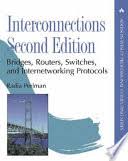
The Internet is the most complex engineered system ever created, connecting billions of devices across heterogeneous physical networks. The fundamental architecture of the Internet is based on the TCP/IP protocol suite, which provides a scalable framework for global communication systems. Foundational works such as Internetworking with TCP/IP Volume 1, Internetworking with TCP/IP Volume 2, and Internetworking with TCP/IP Volume 3 have provided generations of engineers with the theoretical and practical foundations of Internet networking.
In parallel, networking research has been significantly influenced by the pioneering work of Radia Perlman, particularly through the influential book Interconnections: Bridges, Routers, Switches, and Internetworking Protocols, which explains how routing protocols, switching mechanisms, and internetworking technologies operate inside real networks.
As networks have grown in complexity, network simulation environments such as NS-3 have become critical tools for research, design, and validation of networking systems. Simulation allows engineers to model large-scale networks, analyze protocol performance, and evaluate new architectures before real-world deployment.
This research white paper synthesizes concepts from TCP/IP architecture, enterprise networking design, and simulation-based validation using NS-3. It presents a comprehensive framework for designing scalable and secure enterprise networks while demonstrating how Keen Computer can help organizations implement modern Internet networking infrastructures.
Advanced Internet Networking and Enterprise Internetworking Architecture-Integrating TCP/IP Architecture, Network Simulation, and Enterprise Infrastructure
Abstract
The Internet is the most complex engineered system ever created, connecting billions of devices across heterogeneous physical networks. The fundamental architecture of the Internet is based on the TCP/IP protocol suite, which provides a scalable framework for global communication systems. Foundational works such as Internetworking with TCP/IP Volume 1, Internetworking with TCP/IP Volume 2, and Internetworking with TCP/IP Volume 3 have provided generations of engineers with the theoretical and practical foundations of Internet networking.
In parallel, networking research has been significantly influenced by the pioneering work of Radia Perlman, particularly through the influential book Interconnections: Bridges, Routers, Switches, and Internetworking Protocols, which explains how routing protocols, switching mechanisms, and internetworking technologies operate inside real networks.
As networks have grown in complexity, network simulation environments such as NS-3 have become critical tools for research, design, and validation of networking systems. Simulation allows engineers to model large-scale networks, analyze protocol performance, and evaluate new architectures before real-world deployment.
This research white paper synthesizes concepts from TCP/IP architecture, enterprise networking design, and simulation-based validation using NS-3. It presents a comprehensive framework for designing scalable and secure enterprise networks while demonstrating how Keen Computer can help organizations implement modern Internet networking infrastructures.
1. Introduction
Modern society relies heavily on computer networks. Financial systems, healthcare infrastructure, energy grids, transportation systems, and global communication platforms depend on reliable networking technologies.
The development of Internet networking was driven by early research in packet switching and distributed communication systems. Over time, the TCP/IP architecture emerged as the dominant networking framework because of its scalability, modularity, and interoperability.
Key contributors to this architecture include Douglas E. Comer, whose multi-volume TCP/IP series explains Internet protocol design, and Radia Perlman, whose research in routing protocols and spanning tree algorithms helped define modern Ethernet and switching networks.
Modern networking environments must support:
- Cloud computing
- Distributed systems
- Edge computing
- Internet of Things
- Artificial intelligence workloads
- Cybersecurity frameworks
Designing such networks requires a combination of theoretical knowledge and practical validation tools. Network simulation tools such as NS-3 enable researchers and engineers to evaluate network architectures before deployment.
2. TCP/IP Architecture
The TCP/IP architecture forms the foundation of Internet communication.
2.1 Layered Network Model
The TCP/IP model consists of four layers:
|
Layer |
Function |
|---|---|
|
Application Layer |
User applications and services |
|
Transport Layer |
Reliable or connectionless communication |
|
Internet Layer |
Packet routing |
|
Network Access Layer |
Physical transmission |
2.2 Application Layer Protocols
Common application protocols include:
- HTTP / HTTPS
- FTP
- DNS
- SMTP
- SNMP
- SSH
These protocols allow applications to communicate over heterogeneous networks.
Modern enterprise applications increasingly use:
- REST APIs
- Microservices
- Containerized services
- Event-driven communication
2.3 Transport Layer Protocols
The transport layer provides end-to-end communication.
TCP
Features include:
- reliable communication
- congestion control
- packet sequencing
- retransmission
TCP ensures that packets are delivered correctly and in order.
UDP
UDP provides:
- low-latency communication
- connectionless messaging
- reduced protocol overhead
Applications such as streaming media, gaming, and real-time analytics rely heavily on UDP.
3. Internet Layer and IP Routing
The Internet layer is responsible for delivering packets between networks.
Protocols include:
- IPv4
- IPv6
- ICMP
- ARP
- Neighbor Discovery
Routers forward packets based on IP addresses.
3.1 Routing Protocols
Large networks rely on routing protocols to determine packet paths.
Interior Gateway Protocols
Examples:
- OSPF
- IS-IS
- RIP
Used inside autonomous systems.
Exterior Gateway Protocols
The main protocol is:
- BGP
BGP connects Internet service providers and large networks.
4. Ethernet Switching and Network Devices
Enterprise networks rely on multiple types of network devices.
Bridges
Early LAN devices that connect network segments.
Switches
Modern switches operate at Layer 2 and sometimes Layer 3.
Functions include:
- frame forwarding
- VLAN segmentation
- traffic isolation
Routers
Routers connect different networks.
Functions include:
- routing packets
- enforcing security policies
- traffic shaping
- network segmentation
5. Enterprise Network Architecture
Enterprise networks typically follow a hierarchical architecture.
5.1 Core Layer
High-speed backbone.
Features:
- fiber optic infrastructure
- high-throughput routing
- redundancy
5.2 Distribution Layer
Handles:
- routing policies
- access control
- network segmentation
5.3 Access Layer
Connects:
- computers
- mobile devices
- IoT devices
- wireless networks
6. Data Center Networking
Modern enterprises rely on large data centers.
Technologies include:
- spine-leaf architectures
- software-defined networking
- container networking
- microservices networking
Data centers require high throughput and low latency.
7. Cloud Networking
Cloud computing has transformed networking infrastructure.
Major platforms include:
- AWS
- Azure
- Google Cloud
Enterprise cloud networking requires:
- virtual networks
- load balancing
- distributed storage
- container orchestration
8. Network Security Architecture
Cybersecurity is critical in modern networking environments.
Key security mechanisms include:
Firewalls
Control traffic between networks.
Intrusion Detection Systems
Detect malicious network activity.
VPN Infrastructure
Provides secure communication channels.
9. Network Monitoring and Management
Large networks must be continuously monitored.
Monitoring includes:
- bandwidth utilization
- packet loss
- latency
- device status
Common tools include:
- SNMP
- NetFlow
- telemetry-based monitoring
10. Network Simulation in Research
Building real-world experimental networks can be extremely expensive and complex.
Simulation tools allow researchers to study networking systems without deploying full infrastructure.
Network simulation enables:
- protocol evaluation
- performance testing
- scalability analysis
- failure analysis
One of the most widely used research simulators is NS-3.
11. Network Simulation with NS-3
11.1 Overview of NS-3
NS-3 is a discrete-event network simulator widely used in academic and industrial networking research.
It supports simulation of:
- TCP/IP networks
- wireless networks
- mobile networks
- IoT systems
- satellite networks
The simulator is implemented in C++ with Python bindings.
11.2 NS-3 Architecture
The architecture of NS-3 includes:
- Simulation core
- Network device models
- Protocol implementations
- Application models
- Tracing and statistics modules
These modules allow engineers to build realistic network experiments.
11.3 TCP/IP Simulation in NS-3
NS-3 provides detailed implementations of:
- TCP congestion control
- UDP transport
- IPv4 and IPv6 routing
- wireless communication protocols
Researchers can simulate:
- congestion behavior
- packet loss
- network latency
- routing efficiency
12. Example Enterprise Network Simulation
Consider a simulation scenario:
Enterprise network topology:
- 1000 client devices
- multiple routers
- distributed data centers
- cloud gateways
Simulation objectives:
- measure throughput
- analyze congestion
- test routing strategies
- evaluate resilience
NS-3 allows simulation of such large-scale networks.
13. Example NS-3 Simulation Code
Simplified TCP simulation example:
NodeContainer nodes; nodes.Create(2); PointToPointHelper p2p; p2p.SetDeviceAttribute("DataRate","5Mbps"); p2p.SetChannelAttribute("Delay","2ms"); NetDeviceContainer devices = p2p.Install(nodes); InternetStackHelper stack; stack.Install(nodes); Ipv4AddressHelper address; address.SetBase("10.1.1.0","255.255.255.0"); Ipv4InterfaceContainer interfaces = address.Assign(devices);
This simple example creates a basic network topology.
14. Use Cases of NS-3 in Enterprise Networking
Simulation can support:
Network planning
Test network architecture before deployment.
Security research
Simulate cyberattacks and evaluate defenses.
Cloud networking
Test distributed cloud infrastructure.
IoT scalability
Evaluate performance with thousands of devices.
15. AI and Network Simulation
AI is increasingly integrated with network simulation.
Applications include:
- automated network design
- congestion prediction
- anomaly detection
- traffic optimization
Combining AI + simulation + real network telemetry enables self-optimizing networks.
16. Role of Keen Computer in Enterprise Networking
KeenComputer.com provides engineering consulting for modern networking infrastructures.
16.1 Enterprise Network Architecture
Services include:
- campus network design
- WAN design
- data center networking
- hybrid cloud infrastructure
16.2 Network Simulation Services
Using tools such as NS-3, KeenComputer can:
- simulate enterprise networks
- test routing architectures
- evaluate network scalability
- optimize performance
16.3 Network Security Engineering
Security services include:
- firewall architecture
- VPN infrastructure
- zero-trust networking
- intrusion detection
16.4 AI-Driven Network Monitoring
Deployment of:
- AI-based monitoring systems
- predictive network maintenance
- anomaly detection
16.5 Cloud Networking
KeenComputer supports:
- Kubernetes networking
- container networking
- microservices architecture
- hybrid cloud integration
17. Strategic Benefits for SMEs
Small and medium enterprises often struggle with networking complexity.
KeenComputer enables SMEs to implement:
- secure cloud networking
- scalable infrastructure
- digital transformation architecture
- enterprise-level network monitoring
18. Future Trends in Internet Networking
Future networking technologies include:
Autonomous Networks
Self-managing network systems.
Edge Computing
Processing data closer to devices.
6G Networking
Ultra-low latency communication networks.
AI-Driven Infrastructure
Machine learning controlling network operations.
Conclusion
The architecture of the Internet remains fundamentally grounded in the TCP/IP framework developed and explained by pioneers such as Douglas E. Comer. The operational behavior of network devices and routing protocols, further clarified by Radia Perlman, continues to shape modern enterprise networking infrastructures.
However, the increasing complexity of modern networks requires advanced tools for design and evaluation. Network simulators such as NS-3 enable engineers to analyze network performance, simulate large-scale infrastructures, and validate new protocols.
Organizations such as Keen Computer play a vital role in translating networking theory into real-world solutions. Through expertise in enterprise architecture, simulation-based design, cloud networking, and cybersecurity, KeenComputer helps organizations build scalable, secure, and future-ready network infrastructures.
References
- Internetworking with TCP/IP Volume 1
- Internetworking with TCP/IP Volume 2
- Internetworking with TCP/IP Volume 3
- Interconnections: Bridges, Routers, Switches, and Internetworking Protocols
- RFC 791 – Internet Protocol
- RFC 793 – Transmission Control Protocol
- IEEE Ethernet Standards
- NS-3 Network Simulator Documentation