The business environment facing small and medium-sized enterprises (SMEs) has changed more dramatically during the past decade than during the previous fifty years.
Artificial Intelligence, cloud computing, ecommerce, cybersecurity, digital marketing, remote work, data analytics, automation, and rapidly evolving customer expectations have fundamentally altered how businesses compete.
At the same time, economic uncertainty, inflationary pressures, labor shortages, supply-chain disruptions, and global competition continue to create new challenges for business owners.
Many SMEs respond by working harder.
Unfortunately, effort alone rarely solves growth problems.
Research from strategic management, entrepreneurship, innovation management, and organizational theory suggests that growth limitations are usually caused by identifiable constraints or bottlenecks that restrict organizational performance.
IDENTIFYING AND ELIMINATING SME GROWTH BOTTLENECKS
A Strategic Management, Digital Transformation, Artificial Intelligence, and Innovation Framework for Sustainable Business Growth
A CEO's Guide to Scaling Small and Medium Enterprises in the Digital Economy
Integrating Strategic Management, Y Combinator Principles, Lean Startup Thinking, Exponential Organizations, AI, and Digital Transformation
How Keen Computer and IAS Research Help SMEs Build Sustainable Competitive Advantage
Executive Summary
The business environment facing small and medium-sized enterprises (SMEs) has changed more dramatically during the past decade than during the previous fifty years.
Artificial Intelligence, cloud computing, ecommerce, cybersecurity, digital marketing, remote work, data analytics, automation, and rapidly evolving customer expectations have fundamentally altered how businesses compete.
At the same time, economic uncertainty, inflationary pressures, labor shortages, supply-chain disruptions, and global competition continue to create new challenges for business owners.
Many SMEs respond by working harder.
Unfortunately, effort alone rarely solves growth problems.
Research from strategic management, entrepreneurship, innovation management, and organizational theory suggests that growth limitations are usually caused by identifiable constraints or bottlenecks that restrict organizational performance.
The central thesis of this paper is:
Business growth is constrained not by effort but by systems.
Every business possesses constraints.
The organizations that achieve sustainable growth are those that systematically identify, measure, and eliminate those constraints.
This paper combines lessons from:
- Strategic Management
- Lean Startup
- Y Combinator
- Innovation and Entrepreneurship
- Exponential Organizations
- Blue Ocean Strategy
- Digital Transformation
- Artificial Intelligence
- Knowledge Management
to provide SME leaders with a practical roadmap for sustainable growth.
Chapter 1
The New Reality for Small Business Owners
Historically, small businesses competed primarily through:
- Local relationships
- Geographic proximity
- Product expertise
- Personal service
Today, competition operates on a global scale.
A small company in Winnipeg can compete against organizations located in:
- Toronto
- New York
- London
- Bangalore
- Singapore
Technology has lowered barriers to entry.
Customers have more information.
Competitors have more tools.
Markets evolve faster.
As a result, competitive advantage has become increasingly dependent upon:
- Innovation
- Speed
- Adaptability
- Customer experience
- Data
- Technology
- Organizational learning
The traditional business model of relying exclusively on referrals and repeat customers is no longer sufficient for many organizations.
The modern SME must become a learning organization capable of adapting continuously.
Chapter 2
Understanding Growth Bottlenecks
A bottleneck is any factor limiting organizational growth.
From a systems perspective, improving non-constrained areas rarely produces significant results.
Instead, leaders must identify the primary constraint restricting performance.
Common SME bottlenecks include:
Strategic Bottlenecks
Symptoms:
- No clear positioning
- No strategic plan
- Unclear target market
- Competing priorities
Consequences:
- Wasted resources
- Market confusion
- Slow growth
Marketing Bottlenecks
Symptoms:
- Low website traffic
- Weak SEO rankings
- Poor content marketing
- Limited brand awareness
Consequences:
- Insufficient leads
- Revenue stagnation
Sales Bottlenecks
Symptoms:
- Weak follow-up
- Lack of CRM
- Poor conversion rates
Consequences:
- Lost opportunities
- Reduced revenue
Operational Bottlenecks
Symptoms:
- Manual processes
- Duplicate work
- Excessive meetings
- Poor communication
Consequences:
- Rising costs
- Reduced productivity
Technology Bottlenecks
Symptoms:
- Legacy systems
- Security vulnerabilities
- Lack of automation
Consequences:
- Reduced competitiveness
- Increased risk
Leadership Bottlenecks
Symptoms:
- Founder dependency
- Micromanagement
- Decision bottlenecks
Consequences:
- Limited scalability
Chapter 3
Strategic Management Framework for CEOs
One of the most powerful frameworks available to SME leaders comes from strategic management.
Successful organizations typically follow three interconnected activities:
Analysis
Understanding:
- Customers
- Competitors
- Markets
- Internal capabilities
Questions include:
What is changing?
What opportunities exist?
What threats exist?
What capabilities differentiate us?
Formulation
Creating:
- Competitive strategy
- Innovation strategy
- Technology strategy
- Growth strategy
This phase answers:
What should we do?
What should we stop doing?
Implementation
Execution through:
- Processes
- Technology
- Organizational structure
- Talent
Many organizations fail during implementation.
Good ideas without execution produce no results.
Chapter 4
Lessons from Y Combinator
Many SME owners believe startup principles only apply to technology companies.
This is incorrect.
The fundamental lessons from Y Combinator apply equally to:
- Retail businesses
- Engineering firms
- Manufacturers
- Consultants
- Professional services firms
- Ecommerce companies
Y Combinator's philosophy centers around several principles.
Principle 1: Talk to Customers
The most successful businesses remain extremely close to customers.
Many organizations fail because they:
- Stop listening
- Assume they understand customer needs
- Focus internally
The CEO should continuously ask:
What customer problem are we solving?
Principle 2: Solve Real Problems
Customers do not buy products.
Customers buy solutions.
Businesses that understand customer pain points create stronger value propositions.
Principle 3: Start Small and Learn Fast
Many businesses spend months planning.
Successful companies experiment.
They test.
They learn.
They adapt.
This principle aligns closely with Lean Startup thinking.
Principle 4: Adaptability Matters More Than Original Ideas
History shows that many successful organizations evolved significantly from their original business concepts.
The ability to adapt often matters more than the initial idea itself.
Chapter 5
Lean Startup Thinking for Established SMEs
Many SME owners assume Lean Startup methods apply only to startups.
This is another misconception.
The principles apply equally to mature organizations.
Build
Develop a minimum viable solution.
Measure
Collect data.
Learn
Adjust strategy.
Repeat
Continuous improvement becomes a competitive advantage.
For SMEs this approach reduces:
- Risk
- Cost
- Waste
while accelerating innovation.
Chapter 6
Competitive Advantage in the Digital Economy
Historically competitive advantage came from:
- Location
- Scale
- Capital
Today competitive advantage increasingly comes from:
Knowledge
Knowing more than competitors.
Customer Experience
Serving customers better.
Technology
Operating more efficiently.
Innovation
Creating new value.
Data
Making better decisions.
The implication for SMEs is profound.
A small organization can compete successfully against much larger organizations if it leverages technology effectively.
Chapter 7
Digital Transformation as a Growth Multiplier
Digital transformation is frequently misunderstood as a technology project.
It is not.
Digital transformation is a business transformation enabled by technology.
The objective is to improve:
- Revenue
- Productivity
- Customer experience
- Decision quality
- Innovation capability
Layer 1: Website Transformation
A website should function as:
- Lead generation engine
- Marketing platform
- Sales support system
Many SME websites operate as online brochures.
This represents a missed opportunity.
Layer 2: CRM Transformation
CRM systems provide:
- Customer visibility
- Pipeline management
- Forecasting
- Follow-up automation
Without CRM systems, growth eventually becomes difficult.
Layer 3: Process Automation
Automation reduces:
- Errors
- Administrative effort
- Costs
Examples include:
- Email automation
- Proposal generation
- Customer onboarding
Layer 4: Data Analytics
Data transforms decision making.
Organizations become capable of:
- Predicting trends
- Measuring performance
- Identifying opportunities
Chapter 8
Artificial Intelligence as a Competitive Advantage
Artificial Intelligence represents one of the most important technologies available to SMEs.
AI allows organizations to increase output without proportional increases in labor costs.
Applications include:
Marketing
- Content creation
- SEO optimization
- Email campaigns
Sales
- Lead qualification
- Proposal generation
- Pipeline analysis
Customer Service
- Chatbots
- Knowledge assistants
Operations
- Workflow automation
- Predictive maintenance
Executive Decision Making
- Scenario analysis
- Financial forecasting
- Strategic planning
Organizations adopting AI effectively gain substantial leverage.
Chapter 9
The Rise of Agentic AI
Traditional software follows instructions.
Traditional AI provides recommendations.
Agentic AI performs tasks.
Examples include:
Sales Agents
Identify prospects.
Send outreach.
Schedule meetings.
Update CRM records.
Marketing Agents
Create content.
Optimize campaigns.
Analyze results.
Operations Agents
Monitor systems.
Generate reports.
Identify anomalies.
For SMEs this creates unprecedented opportunities to scale without proportional increases in staffing.
Chapter 10
Why Digital Transformation Matters During Economic Uncertainty
Economic uncertainty often causes business owners to delay investment.
Historically, however, many successful organizations increased investment during downturns.
Reasons include:
- Reduced competition
- Lower technology costs
- Opportunity to improve efficiency
Digital transformation helps organizations:
- Reduce operating costs
- Improve customer retention
- Increase productivity
- Improve cash flow
Technology becomes a strategic investment rather than an expense.
Part I Summary
Growth constraints rarely disappear on their own.
Successful CEOs identify bottlenecks systematically and remove them through:
- Strategic management
- Customer understanding
- Innovation
- Digital transformation
- Artificial Intelligence
- Continuous learning
Organizations that develop these capabilities become more resilient, scalable, and competitive.
In Part II we will examine:
- SEO and content marketing
- Digital lead generation
- CRM strategy
- Outbound marketing
- Cold email systems
- Ecommerce growth
- RAG-LLM business applications
- Knowledge management
- Business development frameworks
- How Keen Computer and IAS Research help SMEs implement these systems
IDENTIFYING AND ELIMINATING SME GROWTH BOTTLENECKS
PART II
Marketing, Lead Generation, CRM, Business Development, AI-Powered Growth Systems, and Revenue Expansion
Chapter 11
Why Most SMEs Struggle to Generate Predictable Revenue
One of the most common growth bottlenecks affecting SMEs is inconsistent lead generation.
Many businesses rely heavily on:
- Referrals
- Existing customers
- Word-of-mouth marketing
- Personal networks
While these sources are valuable, they rarely provide predictable growth.
The result is a revenue roller coaster.
Some months are highly profitable.
Other months produce little business activity.
This creates uncertainty that affects:
- Hiring decisions
- Capital investments
- Strategic planning
- Cash flow management
The solution is creating a systematic customer acquisition engine.
The objective is simple:
Generate qualified leads consistently regardless of economic conditions.
Chapter 12
The Modern Customer Buying Journey
The buying process has changed dramatically.
Historically, buyers relied upon:
- Sales representatives
- Trade shows
- Printed materials
Today buyers conduct extensive research before contacting vendors.
Studies consistently indicate that buyers complete a significant portion of their purchasing journey before engaging sales personnel.
This means marketing and sales are no longer separate functions.
They must operate as an integrated system.
The modern buying journey includes:
Awareness
Customer discovers problem.
Consideration
Customer researches solutions.
Evaluation
Customer compares alternatives.
Decision
Customer selects vendor.
Retention
Customer evaluates experience.
Advocacy
Customer refers others.
Organizations that support each stage outperform competitors.
Chapter 13
Search Engine Optimization (SEO) as a Strategic Asset
Many SME owners underestimate the importance of SEO.
SEO is not merely a marketing tactic.
SEO is a long-term business asset.
High search rankings create:
- Credibility
- Visibility
- Lead generation
- Lower acquisition costs
Unlike advertising, SEO continues producing value after content is published.
Strategic SEO Framework
Technical SEO
Ensuring:
- Fast websites
- Mobile compatibility
- Secure connections
- Proper indexing
Content SEO
Creating:
- Educational articles
- White papers
- Case studies
- Industry insights
Authority SEO
Building:
- Backlinks
- Industry citations
- Thought leadership
Local SEO
Critical for SMEs serving local markets.
Includes:
- Local citations
- Business profiles
- Geographic targeting
Chapter 14
Content Marketing and Thought Leadership
Modern buyers prefer learning before buying.
This creates an opportunity.
Organizations that educate customers establish trust before sales conversations begin.
Examples include:
White Papers
Demonstrate expertise.
Technical Articles
Build credibility.
Industry Research
Establish authority.
Case Studies
Provide proof.
Educational Videos
Increase engagement.
Newsletters
Maintain customer relationships.
The objective is becoming the most trusted source of information within the target market.
Chapter 15
Y Combinator's Customer Development Philosophy
One of the most important lessons from Y Combinator is customer intimacy.
Successful organizations spend substantial time understanding customers.
Many businesses fail because they focus on products rather than problems.
Y Combinator repeatedly emphasized:
- Talk to customers
- Understand pain points
- Learn continuously
- Adapt quickly
For SMEs this means:
Interview Customers
Regularly.
Analyze Support Requests
Identify recurring problems.
Monitor Buying Behavior
Understand decision criteria.
Test New Ideas
Before major investments.
Customer understanding becomes a strategic advantage.
Chapter 16
CRM as a Revenue Growth Platform
Many SMEs manage customer relationships through:
- Email inboxes
- Spreadsheets
- Individual memory
This approach becomes unsustainable as organizations grow.
Customer Relationship Management (CRM) systems provide:
Pipeline Visibility
Management can track opportunities.
Forecasting
Revenue becomes more predictable.
Automation
Routine activities become automated.
Collaboration
Teams share information effectively.
Customer Retention
Relationships become easier to manage.
CRM Maturity Levels
Level 1
No CRM
Level 2
Basic CRM
Level 3
Integrated CRM
Level 4
CRM + Marketing Automation
Level 5
AI-Powered CRM
Organizations at Levels 4 and 5 frequently outperform competitors significantly.
Chapter 17
Outbound Marketing Systems
While inbound marketing is powerful, relying exclusively on inbound methods creates limitations.
Successful SMEs often combine:
- SEO
- Content marketing
- Email marketing
- Outbound prospecting
Outbound marketing remains highly effective when executed strategically.
Modern Outbound Framework
Identify Target Market
Specificity matters.
Avoid broad targeting.
Define Value Proposition
Clearly communicate:
- Problems solved
- Outcomes achieved
- Competitive advantages
Personalize Outreach
Generic messages perform poorly.
Personalized communication performs substantially better.
Follow Up Consistently
Many opportunities are lost because organizations fail to follow up.
Chapter 18
Email Marketing as a Revenue Engine
Email remains one of the highest ROI marketing channels.
Benefits include:
- Low cost
- High scalability
- Direct communication
Applications include:
Lead Nurturing
Educational Campaigns
Customer Retention
Upselling
Cross-Selling
Newsletter Distribution
Combined with AI, email marketing becomes even more powerful.
Chapter 19
Business Development in the AI Era
Business development is evolving rapidly.
Historically, business development relied heavily on:
- Networking
- Trade shows
- Referrals
Today AI enables:
Market Intelligence
Competitive Analysis
Prospect Identification
Automated Research
Personalized Outreach
Proposal Development
Organizations that integrate AI into business development gain significant advantages.
Chapter 20
RAG-LLM Systems for SMEs
Retrieval-Augmented Generation (RAG) represents one of the most practical AI applications available today.
Unlike generic AI systems, RAG combines:
- Large Language Models
- Internal knowledge
- Business-specific information
This creates highly relevant responses.
RAG Use Cases
Customer Support
AI accesses:
- Manuals
- Policies
- Documentation
Customers receive accurate answers.
Sales Enablement
AI retrieves:
- Proposals
- Pricing
- Technical specifications
Sales teams become more effective.
Employee Training
New employees gain instant access to organizational knowledge.
Executive Decision Support
Management gains rapid access to internal expertise.
Chapter 21
Knowledge Management as a Competitive Advantage
Many organizations lose knowledge every time an employee leaves.
This creates risk.
Knowledge management systems capture:
- Processes
- Procedures
- Best practices
- Technical expertise
The result is organizational memory.
Benefits include:
Reduced Training Costs
Faster Onboarding
Better Customer Service
Improved Innovation
Reduced Dependency on Individuals
Knowledge becomes a strategic asset.
Chapter 22
Building a Digital Lead Generation Machine
The most successful SMEs create integrated systems.
Components include:
Website
Lead capture.
SEO
Visibility.
Content Marketing
Trust.
CRM
Management.
Email Marketing
Nurturing.
Analytics
Measurement.
AI
Optimization.
These components work together.
The result is predictable lead generation.
Chapter 23
Ecommerce as a Growth Platform
Ecommerce is no longer limited to retail.
Modern ecommerce supports:
- Manufacturers
- Distributors
- Consultants
- Professional services
- Training organizations
Benefits include:
Geographic Expansion
Lower Sales Costs
Better Customer Experience
Improved Data Collection
Scalable Revenue Models
SMEs should evaluate ecommerce opportunities even if they traditionally operate offline.
Chapter 24
Digital Trust and Brand Authority
Trust remains the foundation of business growth.
Digital trust is built through:
Expertise
Consistency
Transparency
Customer Success Stories
Educational Content
Professional Websites
Organizations with strong digital trust frequently achieve:
- Higher conversion rates
- Better customer retention
- Greater pricing power
Chapter 25
Revenue Growth KPIs Every CEO Should Monitor
The following metrics should appear on every executive dashboard.
Marketing:
- Website Traffic
- Organic Search Traffic
- Cost Per Lead
Sales:
- Conversion Rate
- Sales Cycle Length
- Pipeline Value
Customer Success:
- Customer Retention
- Customer Lifetime Value
- Net Promoter Score
Operations:
- Productivity Metrics
- Automation Rate
- Process Efficiency
Financial:
- Revenue Growth
- Gross Margin
- Cash Flow
Organizations that measure consistently improve consistently.
Part II Summary
Marketing, sales, customer acquisition, and knowledge management are among the most significant growth bottlenecks facing SMEs.
Organizations that implement:
- SEO
- Content Marketing
- CRM
- Marketing Automation
- Email Marketing
- AI
- RAG-LLM Systems
- Knowledge Management Platforms
create sustainable competitive advantages that become increasingly difficult for competitors to replicate.
The combination of customer understanding, digital transformation, AI-enabled business development, and continuous learning creates the foundation for long-term growth.
Next: Part III
Part III will examine:
- Operations Excellence
- Financial Management
- Innovation Frameworks
- Exponential Organizations
- Agentic AI Deployment
- Cloud Computing
- Cybersecurity
- Digital Transformation Roadmaps
- SWOT Analysis
- Industry Case Studies
- Implementation Frameworks
- How Keen Computer and IAS Research Help SMEs Execute Growth Strategies
IDENTIFYING AND ELIMINATING SME GROWTH BOTTLENECKS
PART III
Operations Excellence, Innovation Management, Exponential Organizations, Agentic AI, Financial Performance, and Digital Transformation Roadmap
A CEO Framework for Building Scalable, Resilient, and Future-Ready Enterprises
Chapter 26
Why Operational Bottlenecks Destroy Growth
Many SME owners focus almost exclusively on:
- Marketing
- Sales
- Customer acquisition
While these functions are essential, operational excellence ultimately determines profitability.
Many businesses experience a paradox:
Sales increase.
Profits do not.
The reason is operational inefficiency.
Common symptoms include:
Employee Overload
Staff spend excessive time on repetitive activities.
Process Duplication
Multiple people perform the same work.
Information Silos
Departments fail to share information.
Manual Reporting
Managers spend hours generating reports.
Slow Decision Making
Critical opportunities are delayed.
Operational inefficiencies increase costs while reducing customer satisfaction.
Chapter 27
The Lean Enterprise Framework
The Lean philosophy developed from manufacturing but applies equally to service businesses.
Lean focuses on eliminating waste.
Common forms of waste include:
Overproduction
Creating products or services customers do not need.
Waiting
Employees waiting for approvals.
Transportation
Unnecessary movement of information.
Overprocessing
Excessive documentation.
Inventory
Unused resources.
Motion
Inefficient workflows.
Defects
Errors requiring rework.
For SMEs, eliminating waste often produces immediate profitability improvements.
Chapter 28
Building Process Excellence
Successful organizations eventually become systems-driven.
Instead of relying on individuals, they rely on documented processes.
Examples include:
Sales Process
Lead → Qualification → Proposal → Closing → Follow-Up
Customer Support Process
Inquiry → Resolution → Feedback
Employee Onboarding Process
Recruitment → Training → Certification
Marketing Process
Research → Content Creation → Distribution → Analytics
Documented processes create:
- Consistency
- Scalability
- Quality
- Efficiency
Chapter 29
Knowledge Management and Organizational Learning
Peter Drucker predicted the rise of the knowledge worker.
Today, knowledge is often the most valuable organizational asset.
Unfortunately, many SMEs fail to capture knowledge effectively.
Knowledge exists in:
- Emails
- Employee memories
- Personal notebooks
- Informal conversations
When employees leave, knowledge leaves with them.
Creating a Learning Organization
Successful organizations build systems that capture:
Best Practices
Standard Operating Procedures
Lessons Learned
Technical Documentation
Customer Insights
Competitive Intelligence
Knowledge management systems become increasingly important as organizations grow.
Chapter 30
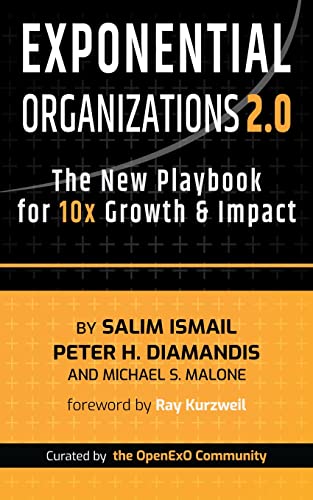
Exponential Organizations and SME Growth
The concept of Exponential Organizations demonstrates how technology enables organizations to scale faster than traditional enterprises.
Historically, growth required:
- More facilities
- More employees
- More capital
Today growth increasingly depends on:
- Information
- Software
- Automation
- Platforms
- Artificial Intelligence
This shift benefits SMEs.
Small organizations can leverage technologies previously available only to large enterprises.
Characteristics of Exponential Organizations
Massive Transformative Purpose (MTP)
Organizations need a compelling mission.
Examples:
- Accelerate Digital Transformation
- Democratize AI Adoption
- Improve SME Competitiveness
Data-Driven Decision Making
Successful organizations use data rather than intuition alone.
Automation
Repetitive work becomes automated.
Community Building
Organizations create ecosystems around their expertise.
Experimentation
Continuous testing becomes part of organizational culture.
Chapter 31
Financial Bottlenecks and Growth Constraints
Many growth initiatives fail because financial management receives insufficient attention.
Common financial bottlenecks include:
Poor Cash Flow
Profitable companies can still fail.
Customer Concentration
Overdependence on a small number of customers.
Low Margins
Revenue grows while profitability declines.
Poor Forecasting
Management lacks visibility.
Financial Metrics Every CEO Should Monitor
Revenue Growth Rate
Target:
15–30% annually
Gross Margin
Measures profitability.
Customer Acquisition Cost (CAC)
Cost of obtaining customers.
Customer Lifetime Value (CLV)
Long-term customer value.
Cash Conversion Cycle
Measures liquidity efficiency.
Operating Margin
Measures operational effectiveness.
Chapter 32
Artificial Intelligence Strategy for SMEs
Many organizations adopt AI tactically.
A strategic approach produces better results.
AI Maturity Model
Level 1
No AI
Level 2
Experimentation
Level 3
Departmental AI
Level 4
Enterprise AI
Level 5
AI-Native Organization
Future competitive advantage increasingly depends upon reaching Levels 4 and 5.
Chapter 33
Agentic AI and Autonomous Business Operations
Agentic AI represents the next major business transformation.
Traditional software executes predefined instructions.
Agentic AI:
- Observes
- Plans
- Acts
- Learns
Examples include:
Sales Agents
Generate leads.
Send outreach.
Schedule meetings.
Update CRM systems.
Marketing Agents
Create content.
Analyze SEO.
Optimize campaigns.
Monitor competitors.
Customer Service Agents
Answer questions.
Resolve issues.
Update records.
Escalate exceptions.
Operations Agents
Monitor infrastructure.
Detect anomalies.
Generate reports.
Recommend improvements.
Chapter 34
Cloud Computing as a Growth Enabler
Cloud computing has transformed SME economics.
Historically organizations required:
- Servers
- Data centers
- IT personnel
Cloud computing provides:
Lower Capital Costs
Higher Reliability
Improved Security
Scalability
Business Continuity
Cloud platforms create agility.
Agility creates competitive advantage.
Chapter 35
Cybersecurity and Business Resilience
Digital transformation increases opportunity.
It also increases risk.
Cybersecurity must become a strategic priority.
Threats include:
- Ransomware
- Phishing
- Data breaches
- Insider threats
Cybersecurity Framework
Governance
Policies and accountability.
Technology
Firewalls, monitoring, backups.
Training
Employee awareness.
Incident Response
Preparedness.
Continuous Improvement
Ongoing assessment.
Cybersecurity should be viewed as risk management rather than merely technology management.
Chapter 36
Digital Transformation Roadmap for SMEs
Many organizations struggle because they attempt too much too quickly.
A phased approach works best.
Phase 1: Foundation
Objectives:
- Modern website
- CRM implementation
- Cloud migration
- Cybersecurity baseline
Duration:
3–6 months
Phase 2: Optimization
Objectives:
- Marketing automation
- Process automation
- Analytics dashboards
- Knowledge management
Duration:
6–12 months
Phase 3: Intelligence
Objectives:
- AI integration
- Predictive analytics
- RAG-LLM systems
Duration:
12–24 months
Phase 4: Autonomous Operations
Objectives:
- Agentic AI
- Autonomous workflows
- Intelligent decision support
Duration:
24–36 months
Chapter 37
Industry Use Cases
Manufacturing SME
Challenges:
- Production inefficiency
- Quality issues
- High costs
Solutions:
- IoT monitoring
- Predictive maintenance
- AI quality control
Results:
- Reduced downtime
- Improved productivity
Engineering Consulting Firm
Challenges:
- Proposal generation
- Knowledge management
Solutions:
- RAG-LLM systems
- AI-assisted documentation
Results:
- Faster project delivery
- Improved utilization
Retail Business
Challenges:
- Customer acquisition
- Inventory management
Solutions:
- Ecommerce
- CRM
- Marketing automation
Results:
- Increased revenue
- Better retention
Professional Services Firm
Challenges:
- Lead generation
- Business development
Solutions:
- SEO
- Content marketing
- AI prospecting
Results:
- Predictable pipeline
Chapter 38
How Keen Computer Helps SMEs Scale
Keen Computer provides practical implementation services that address many technology-related growth bottlenecks.
Services include:
Website Development
- WordPress
- Joomla
- Magento
Ecommerce Development
- B2B Ecommerce
- B2C Ecommerce
Digital Marketing
- SEO
- Email marketing
- Content marketing
AI Integration
- RAG-LLM deployment
- Chatbots
- Automation
Managed IT Services
- Infrastructure management
- Security monitoring
- Cloud migration
Open Source Solutions
Reducing licensing costs while increasing flexibility.
Chapter 39
How IAS Research Supports Innovation and Strategic Growth
IAS Research helps organizations address strategic and innovation bottlenecks.
Capabilities include:
Engineering Research
AI Strategy
IoT Development
Market Research
Competitive Intelligence
Digital Transformation Planning
Technology Assessments
Innovation Roadmaps
Product Development Support
The combination of IAS Research and Keen Computer creates a comprehensive ecosystem supporting both strategy and execution.
Chapter 40
SWOT Analysis for SME Digital Transformation
Strengths
- Agility
- Fast decision making
- Customer proximity
Weaknesses
- Limited resources
- Skills gaps
- Technology debt
Opportunities
- AI adoption
- Ecommerce growth
- Digital marketing
- Cloud computing
Threats
- Global competition
- Cybersecurity risks
- Economic uncertainty
- Rapid technological change
Organizations that proactively address weaknesses and exploit opportunities gain sustainable advantages.
Chapter 41
CEO Action Framework
Every CEO should periodically ask:
Strategy
- Do we have a clear competitive advantage?
Marketing
- Are leads predictable?
Sales
- Is the pipeline healthy?
Operations
- Are processes documented?
Technology
- Are we leveraging AI?
Finance
- Is cash flow healthy?
Innovation
- Are we experimenting?
Leadership
- Can the business operate without me?
Answers to these questions reveal growth bottlenecks.
Conclusion
The central message of this white paper is clear:
Growth is not constrained by effort. Growth is constrained by systems.
Organizations achieve sustainable growth by systematically identifying and removing bottlenecks across:
- Strategy
- Leadership
- Marketing
- Sales
- Operations
- Technology
- Finance
- Innovation
Digital transformation provides the infrastructure.
Artificial Intelligence provides leverage.
Agentic AI provides scalability.
Strategic management provides direction.
Innovation provides differentiation.
Leadership provides execution.
The SMEs that combine these elements effectively will be positioned not only to survive economic uncertainty but to thrive, expand, and create lasting competitive advantage in the digital economy.
Comprehensive References
- Peter Drucker, Innovation and Entrepreneurship
- Frank T. Rothaermel, Strategic Management
- Eric Ries, The Lean Startup
- W. Chan Kim & Renée Mauborgne, Blue Ocean Strategy
- Jim Collins, Good to Great
- John Bessant & Joe Tidd, Innovation and Entrepreneurship
- Salim Ismail, Exponential Organizations
- Gabriel Weinberg, Traction
- Paul Graham Essays and Y Combinator Startup Principles
- Philip Kotler, Marketing Management
- Michael Porter, Competitive Strategy
- Geoffrey Moore, Crossing the Chasm
- Clayton Christensen, The Innovator's Dilemma
- Thomas Davenport & Jeanne Harris, Competing on Analytics
- Andrew Ng, AI Transformation Playbooks
- Industry publications from NIST, OECD, World Bank, McKinsey, Gartner, and MIT Sloan on Digital Transformation, AI, and SME Competitiveness