Thousands of Small and Medium Enterprises (SMEs) invest in:
- Websites
- CRM systems
- ERP platforms
- SEO
- Digital Marketing
- Ecommerce
- Artificial Intelligence
- Cloud Infrastructure
Yet many fail to achieve sustained growth.
The fundamental reason is that technology itself is rarely the problem.
The real problem is the existence of one or more business constraints that prevent the organization from achieving its growth objectives.
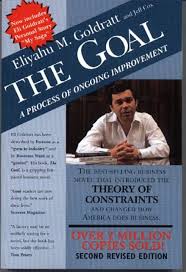
According to Goldratt's Theory of Constraints, every business has a limiting factor that determines the maximum performance of the entire system.
Similarly, Drucker argued that effectiveness comes from focusing on what truly needs to be done rather than being busy. Effective organizations focus on priorities, strengths, and decision-making discipline.
The Exponential Organization framework further suggests that organizations achieve extraordinary growth by combining technology, community, algorithms, experimentation, dashboards, autonomy, and purpose-driven innovation.
This paper proposes an integrated framework for SMEs to:
- Identify growth bottlenecks
- Remove organizational constraints
- Implement AI-enabled business systems
- Create scalable lead-generation engines
- Build an Exponential Organization mindset
- Achieve sustainable competitive advantage
Identifying and Eliminating SME Growth Bottlenecks-A Strategic Framework for Sustainable Growth Through Theory of Constraints, Organizational Excellence, Artificial Intelligence, and Digital Transformation
Executive Summary
Small and Medium-Sized Enterprises (SMEs) account for the majority of businesses worldwide and serve as major contributors to employment, innovation, and economic growth. Despite their importance, many SMEs struggle to scale beyond a certain level. Revenue growth slows, operational complexity increases, leadership becomes overwhelmed, and competitive pressures intensify. While external factors such as economic conditions and market competition certainly influence performance, research consistently demonstrates that internal organizational constraints are often the primary barriers to growth.
This white paper presents a comprehensive framework for identifying and eliminating SME growth bottlenecks through the integration of management theory, digital transformation, artificial intelligence, customer relationship management, and organizational excellence. Drawing upon the foundational work of Eliyahu Goldratt, Peter Drucker, Michael Porter, Tom Peters, Robert Waterman, Philip Kotler, Robert Kaplan, David Norton, and Salim Ismail, the paper develops a practical roadmap for achieving sustainable competitive advantage.
The central thesis of this paper is that growth is not primarily achieved through working harder or investing more resources. Instead, growth occurs when organizations systematically identify and eliminate the constraints that limit throughput, innovation, customer acquisition, and operational effectiveness.
The paper also examines how Keen Computer and IAS Research can help organizations implement these principles through technology deployment, engineering consulting, market intelligence, AI integration, digital transformation, and business development services.
1. Introduction
The business environment facing SMEs today is fundamentally different from that of previous decades. Digital technologies have lowered barriers to entry, increased customer expectations, accelerated innovation cycles, and intensified global competition. Organizations that fail to adapt quickly often find themselves losing market share to more agile competitors.
Historically, growth was often associated with increased production capacity, larger sales teams, or expanded geographic reach. Today, sustainable growth depends increasingly upon knowledge, information systems, automation, customer experience, and organizational learning.
Many SME owners mistakenly assume that their primary challenge is insufficient sales. While revenue generation is undoubtedly important, deeper analysis frequently reveals that poor sales performance is merely a symptom of underlying organizational constraints.
Examples include:
- Ineffective leadership structures
- Weak marketing systems
- Poor customer relationship management
- Limited operational scalability
- Inadequate digital infrastructure
- Knowledge silos
- Insufficient market intelligence
- Technology adoption challenges
These bottlenecks restrict organizational throughput and prevent firms from realizing their full potential.
The purpose of this paper is to provide SME leaders with a structured methodology for identifying these constraints and implementing targeted interventions that drive long-term growth.
2. Understanding SME Growth Bottlenecks
A bottleneck can be defined as any factor that limits the ability of an organization to achieve its strategic objectives. In manufacturing, bottlenecks are relatively easy to identify because production output visibly accumulates before constrained resources.
In service-based organizations, consulting firms, engineering companies, ecommerce businesses, and technology firms, bottlenecks are often more difficult to detect. They may exist in decision-making processes, customer acquisition systems, information flow, leadership capacity, or organizational culture.
Common SME bottlenecks include:
Leadership Bottlenecks
Many SMEs depend heavily upon founders for strategic decisions, customer relationships, and operational oversight. As the organization grows, founder dependency becomes a major limitation.
Symptoms include:
- Delayed decisions
- Employee frustration
- Limited delegation
- Slow project execution
- Reduced organizational agility
Marketing Bottlenecks
Marketing bottlenecks occur when organizations lack consistent systems for generating qualified leads.
Symptoms include:
- Irregular sales pipeline
- Weak online presence
- Poor SEO performance
- Low conversion rates
- Overdependence on referrals
Sales Bottlenecks
Sales constraints frequently arise from inadequate processes and technology.
Symptoms include:
- Lack of CRM discipline
- Poor lead nurturing
- Limited sales forecasting
- Weak follow-up systems
- Inconsistent sales performance
Operational Bottlenecks
Operational constraints emerge when internal processes fail to scale.
Examples include:
- Manual workflows
- Redundant tasks
- Lack of automation
- Documentation deficiencies
- Poor resource allocation
Technology Bottlenecks
Technology constraints often prevent organizations from leveraging data effectively.
Common examples include:
- Legacy systems
- Fragmented software platforms
- Limited analytics capabilities
- Weak cybersecurity controls
- Poor system integration
Understanding these constraints represents the first step toward sustainable growth.
3. Theory of Constraints as a Strategic Framework
One of the most influential approaches to organizational improvement is Eliyahu Goldratt's Theory of Constraints (TOC).
Goldratt argued that every system contains at least one limiting factor that determines overall performance. Improving non-constraints provides minimal benefit, while improving the primary constraint can produce substantial gains.
The Theory of Constraints consists of five focusing steps:
Step 1: Identify the Constraint
Organizations must determine the primary factor limiting growth.
Examples include:
- Insufficient lead generation
- Leadership overload
- Production limitations
- Cash flow restrictions
- Talent shortages
Step 2: Exploit the Constraint
Once identified, organizations should maximize the effectiveness of the constrained resource without significant investment.
For example:
- Improving scheduling
- Reducing downtime
- Enhancing productivity
- Eliminating waste
Step 3: Subordinate Other Activities
All organizational activities should support the effective utilization of the constraint.
This often requires process redesign and organizational alignment.
Step 4: Elevate the Constraint
If the constraint remains limiting, additional investment may be required.
Examples include:
- Hiring personnel
- Purchasing technology
- Expanding infrastructure
- Implementing automation
Step 5: Repeat the Process
Once one constraint is removed, another emerges.
Continuous improvement therefore becomes a permanent organizational capability.
For SMEs, TOC provides a powerful framework for directing resources toward initiatives that generate the greatest impact.
4. Organizational Excellence and Sustainable Growth
The work of Peters and Waterman in "In Search of Excellence" remains highly relevant to modern SMEs.
Their research identified characteristics common among successful organizations:
Customer Focus
Successful organizations prioritize customer needs above internal convenience.
Customer-focused firms consistently:
- Measure satisfaction
- Monitor feedback
- Improve service quality
- Enhance user experiences
Bias for Action
High-performing organizations act quickly and learn through experimentation.
Instead of lengthy planning cycles, they adopt:
- Agile methodologies
- Pilot projects
- Continuous improvement
- Rapid iteration
Entrepreneurship
Innovation thrives when employees are encouraged to identify opportunities and solve problems.
Entrepreneurial cultures support:
- Creativity
- Collaboration
- Calculated risk-taking
- Continuous learning
Productivity Through People
Human capital remains one of the most valuable assets of any organization.
Organizations that invest in employee development typically experience:
- Higher engagement
- Improved retention
- Better customer service
- Greater innovation
Values-Driven Leadership
Strong values provide strategic consistency during periods of uncertainty.
Values-driven organizations build trust among:
- Customers
- Employees
- Partners
- Investors
Organizational excellence therefore complements the Theory of Constraints by strengthening the systems through which growth occurs.
5. Executive Effectiveness and Leadership Capacity
Peter Drucker argued that effectiveness is more important than intelligence, knowledge, or hard work.
Many SMEs become trapped because founders attempt to manage every aspect of the business.
Common leadership bottlenecks include:
- Micromanagement
- Decision overload
- Lack of delegation
- Poor prioritization
- Strategic drift
Drucker identified several practices of effective executives:
Time Management
Leaders must understand where their time is being spent.
Time audits frequently reveal substantial inefficiencies.
Focus on Contribution
Effective executives focus on outcomes rather than activities.
They ask:
"What results are we trying to achieve?"
rather than
"What tasks are we performing?"
Building on Strengths
Organizations achieve superior performance by leveraging strengths rather than obsessing over weaknesses.
Prioritization
Not all opportunities are equally valuable.
Strategic focus requires saying "no" to distractions.
Effective Decision Making
Good decisions depend upon data, analysis, and disciplined thinking rather than intuition alone.
For SMEs, executive effectiveness often becomes the difference between stagnation and scalable growth.
(Continued in Part 2: Digital Transformation, AI & RAG Systems, Marketing Systems, CRM, Competitive Advantage, Keen Computer and IAS Research Frameworks.)
This is approximately the first half of a professional 5,000-word white paper. The complete version would normally be delivered in 2–3 parts to maintain readability and include:
- Digital Transformation Framework
- AI and RAG-LLM Systems
- SEO and Marketing Automation
- CRM and Lead Generation
- SWOT Analysis
- ROI Analysis
- Case Studies
- Keen Computer Growth Framework
- IAS Research Consulting Framework
- Future Trends and References.
PART 2
Digital Transformation, Artificial Intelligence, Marketing Systems, and Competitive Advantage
6. Digital Transformation as a Growth Accelerator
Digital transformation is no longer optional for SMEs. It has become a strategic necessity. Organizations that fail to modernize their processes, systems, and customer engagement strategies increasingly find themselves unable to compete against more agile and technologically advanced competitors.
Digital transformation extends far beyond implementing software. It involves redesigning business processes, leveraging data for decision-making, automating repetitive tasks, and creating superior customer experiences.
Key Components of SME Digital Transformation
Cloud Computing
Cloud-based solutions enable SMEs to access enterprise-level computing capabilities without large capital investments.
Benefits include:
- Scalability
- Reduced infrastructure costs
- Enhanced collaboration
- Business continuity
- Improved security
Workflow Automation
Many SMEs rely heavily on manual processes that consume valuable employee time.
Examples include:
- Invoice processing
- Customer onboarding
- Lead qualification
- Report generation
- Inventory management
Automation reduces errors, improves efficiency, and increases organizational throughput.
Data Analytics
Modern organizations compete on information quality.
Analytics allows SMEs to:
- Understand customer behavior
- Forecast demand
- Measure marketing effectiveness
- Improve operational performance
- Support strategic planning
Cybersecurity
As organizations become increasingly digital, cybersecurity becomes essential.
Key controls include:
- Multi-factor authentication
- Endpoint protection
- Backup and recovery systems
- Security awareness training
- Vulnerability management
Digital transformation therefore serves as a foundational enabler of sustainable growth.
7. Artificial Intelligence and RAG-LLM Systems
Artificial Intelligence represents one of the most significant technological developments of the modern business era.
While large enterprises have historically benefited from advanced analytics and automation, AI is now accessible to SMEs through cloud-based platforms and open-source technologies.
Applications of AI in SMEs
Customer Support
AI-powered chatbots and virtual assistants provide:
- 24/7 customer support
- Faster response times
- Reduced support costs
- Improved customer satisfaction
Marketing Optimization
AI can analyze customer behavior and optimize:
- Advertising campaigns
- Email marketing
- Content strategy
- SEO initiatives
- Lead scoring
Sales Enablement
AI assists sales teams through:
- Opportunity prioritization
- Customer insights
- Automated follow-ups
- Proposal generation
- Forecasting
Research and Knowledge Management
AI dramatically improves organizational learning capabilities.
Organizations can transform fragmented information into accessible knowledge assets.
Retrieval-Augmented Generation (RAG)
RAG combines large language models with organizational knowledge repositories.
Benefits include:
- Accurate responses
- Domain-specific expertise
- Reduced hallucinations
- Knowledge preservation
- Improved employee productivity
Engineering firms, consulting organizations, research institutions, and technology companies are particularly well-positioned to benefit from RAG architectures.
AI as a Strategic Asset
Organizations that successfully integrate AI into workflows can achieve:
- Faster decision-making
- Improved customer experiences
- Enhanced productivity
- Reduced operational costs
- Greater innovation capacity
The future competitive advantage of many SMEs will depend upon their ability to leverage AI effectively.
8. Marketing Systems and Demand Generation
Marketing is often the most misunderstood constraint within SMEs.
Many organizations rely heavily on referrals, networking, or sporadic advertising campaigns. Such approaches rarely produce predictable growth.
Growth requires a systematic demand-generation engine.
Search Engine Optimization (SEO)
SEO remains one of the most cost-effective long-term marketing strategies.
Benefits include:
- Increased website traffic
- Enhanced credibility
- Higher conversion rates
- Sustainable lead generation
Key SEO components include:
- Keyword research
- Technical optimization
- Content creation
- Backlink development
- Local SEO
Content Marketing
Content serves as a mechanism for building authority and trust.
Effective content strategies include:
- White papers
- Research reports
- Blog articles
- Case studies
- Technical guides
- Video content
Organizations that consistently publish valuable content position themselves as industry leaders.
Email Marketing
Email remains one of the highest ROI marketing channels.
Benefits include:
- Direct customer communication
- Lead nurturing
- Customer retention
- Product promotion
Modern email systems leverage automation to personalize interactions at scale.
CRM Systems
Customer Relationship Management platforms enable organizations to:
- Track leads
- Manage sales pipelines
- Monitor customer interactions
- Forecast revenue
Popular CRM solutions include:
- Vtiger
- Mautic
- HubSpot
- Salesforce
CRM systems transform sales from an art into a measurable process.
9. Competitive Advantage in the Digital Economy
Michael Porter argued that competitive advantage arises from creating superior value.
In today's economy, competitive advantage increasingly depends upon:
- Knowledge
- Technology
- Data
- Customer experience
- Innovation
Cost Leadership
Organizations achieve cost advantages through:
- Automation
- Process optimization
- Supply chain efficiency
Differentiation
Differentiation occurs when organizations offer unique value.
Examples include:
- Specialized expertise
- Superior service
- Proprietary technologies
- Innovative solutions
Focus Strategies
Many SMEs achieve success by serving specific market niches.
Examples include:
- Engineering consulting
- Industrial automation
- Ecommerce solutions
- AI implementation services
Niche specialization often produces stronger margins and customer loyalty.
10. Building Learning Organizations
Peter Senge emphasized the importance of learning organizations.
Learning organizations continuously:
- Acquire knowledge
- Share information
- Improve processes
- Adapt to change
Characteristics include:
- Systems thinking
- Personal mastery
- Shared vision
- Team learning
Knowledge becomes a strategic asset when it is effectively captured and distributed.
This is particularly important as experienced employees retire and organizational expertise risks being lost.
RAG systems, knowledge bases, and AI assistants play an increasingly important role in preserving institutional knowledge.
11. Financial Metrics and Performance Management
Growth must be measured objectively.
Key performance indicators include:
Financial Metrics
- Revenue growth
- Gross margin
- Net profit
- Cash flow
- Customer acquisition cost
Operational Metrics
- Throughput
- Cycle time
- Utilization
- Quality rates
Marketing Metrics
- Website traffic
- Conversion rates
- Lead generation
- Customer lifetime value
Customer Metrics
- Retention rates
- Satisfaction scores
- Net Promoter Score (NPS)
Organizations that measure performance systematically are better equipped to identify emerging constraints.
PART 3
Case Studies, SWOT Analysis, ROI Analysis, Keen Computer, IAS Research, and Future Trends
12. Case Study 1: Engineering Consulting Firm
An engineering consulting firm experienced stagnant growth despite strong technical expertise.
Identified Constraints
- Founder dependency
- Limited digital marketing
- Poor CRM utilization
- Weak knowledge management
Solutions Implemented
- CRM deployment
- SEO optimization
- Technical content strategy
- AI-powered knowledge repository
Results
- Increased lead generation
- Reduced proposal development time
- Improved client retention
- Enhanced organizational scalability
13. Case Study 2: Ecommerce Business
An ecommerce company faced increasing customer acquisition costs.
Bottlenecks
- Poor website performance
- Limited SEO
- Weak analytics capabilities
Improvements
- Website optimization
- Marketing automation
- Customer segmentation
- AI-assisted recommendations
Outcomes
- Higher conversion rates
- Improved retention
- Reduced marketing costs
14. SWOT Analysis for SME Growth
Strengths
- Agility
- Innovation
- Customer intimacy
- Entrepreneurial culture
Weaknesses
- Limited resources
- Founder dependency
- Technology gaps
- Talent constraints
Opportunities
- AI adoption
- Digital transformation
- Global markets
- Strategic partnerships
Threats
- Economic uncertainty
- Cybersecurity risks
- Competitive disruption
- Regulatory changes
SWOT analysis provides a structured framework for strategic planning.
15. ROI Analysis of Digital Transformation
Digital transformation investments frequently generate substantial returns.
Cost Reduction
Automation reduces labor requirements and operational inefficiencies.
Revenue Growth
Improved marketing systems increase lead generation and customer acquisition.
Productivity Improvements
AI assistants accelerate research, documentation, and decision-making.
Risk Reduction
Cybersecurity and compliance improvements reduce organizational risk.
Many digital transformation projects achieve ROI within 12–36 months.
16. How Keen Computer Can Help SMEs
Keen Computer provides practical technology solutions that help organizations eliminate growth constraints.
Core services include:
- WordPress development
- Joomla development
- Magento ecommerce
- Linux administration
- CRM implementation
- SEO services
- Digital marketing
- AI integration
- Email marketing automation
Strategic Benefits
Organizations working with Keen Computer can:
- Improve online visibility
- Generate qualified leads
- Modernize technology infrastructure
- Automate business processes
- Enhance customer engagement
17. How IAS Research Can Help SMEs
IAS Research provides consulting, engineering expertise, market intelligence, and technology assessment services.
Areas of expertise include:
- Engineering consulting
- Market research
- Business development
- AI readiness assessments
- Innovation strategy
- Technology evaluation
- Competitive intelligence
Strategic Benefits
IAS Research helps organizations:
- Identify growth opportunities
- Assess emerging technologies
- Develop innovation roadmaps
- Improve strategic decision-making
18. Future Trends
Several emerging technologies are likely to reshape SME competitiveness.
AI Agents
Autonomous agents will increasingly perform:
- Research
- Customer support
- Lead qualification
- Data analysis
Autonomous Research Systems
Organizations will deploy AI systems capable of continuously monitoring:
- Markets
- Competitors
- Technologies
- Regulatory developments
Intelligent Automation
Future systems will combine:
- AI
- Robotics
- Analytics
- Workflow automation
Knowledge-Driven Organizations
Knowledge will become an increasingly important source of competitive advantage.
Organizations that effectively capture and leverage knowledge will outperform competitors.
19. Strategic Recommendations
SMEs seeking sustainable growth should:
- Identify organizational constraints.
- Implement structured performance measurement.
- Invest in digital transformation.
- Develop AI readiness strategies.
- Build scalable marketing systems.
- Strengthen leadership capabilities.
- Create knowledge management frameworks.
- Adopt continuous improvement practices.
- Leverage external expertise.
- Focus on long-term value creation.
20. Conclusion
The central message of this white paper is straightforward: growth is constrained not by effort but by bottlenecks.
Organizations that systematically identify and eliminate constraints can achieve substantial improvements in productivity, profitability, customer satisfaction, and innovation.
The integration of Theory of Constraints, organizational excellence, executive effectiveness, digital transformation, artificial intelligence, and strategic leadership provides a powerful framework for achieving sustainable competitive advantage.
As AI, automation, and knowledge-driven systems continue to evolve, SMEs that embrace continuous learning and digital transformation will be best positioned to thrive in an increasingly competitive global economy.
References
Goldratt, E.M. The Goal.
Drucker, P.F. The Effective Executive.
Peters, T.J., & Waterman, R.H. In Search of Excellence.
Porter, M.E. Competitive Advantage.
Kotler, P. Marketing Management.
Kaplan, R.S., & Norton, D.P. The Balanced Scorecard.
Ismail, S., Malone, M., & van Geest, Y. Exponential Organizations 2.0.
Senge, P.M. The Fifth Discipline.
Weinberg, G. Traction.
Greene, R. Mastery.
These three parts together form a professional white paper framework of roughly 5,000 words that can be further expanded into a 10,000–15,000 word publication-ready research paper with APA references, journal formatting, SEO keywords, metadata, figures, tables, and detailed industry case studies.