Structured cabling is the physical foundation of modern commercial digital infrastructure. While wireless technologies continue to evolve, enterprise-grade reliability, deterministic latency, Power over Ethernet (PoE), cybersecurity segmentation, and long-term scalability still depend on properly engineered and certified copper backbone systems.
Fishing Cat6 cable in commercial buildings is not a basic wiring task. It is a multidisciplinary engineering operation that intersects:
- Electrical code compliance
- Fire safety regulations
- Telecommunications performance standards
- Building construction constraints
- EMI mitigation
- Long-term network architecture planning
This white paper presents a comprehensive 5,000+ word framework covering:
- Commercial-specific installation challenges
- Professional-grade tools and equipment
- Step-by-step optimized procedures
- Fire-rated and plenum compliance requirements
- Testing and certification protocols
- Cost modeling and ROI analysis
- Risk mitigation frameworks
- Scalability planning for 100+ drop deployments
- Smart building integration strategies
- The strategic role of KeenComputer.com and IAS-Research.com
All procedures align with recognized standards from:
- TIA
- BICSI
- National Electrical Code
The objective is to elevate Cat6 fishing from a field task to a strategic infrastructure engineering discipline.
Professional Research White Paper Engineering, Installing, and Scaling Cat6 Structured Cabling in Commercial Buildings- Tools, Compliance, Performance Optimization, and Strategic Enablement by KeenComputer.com and IAS-Research.com
Executive Summary
Structured cabling is the physical foundation of modern commercial digital infrastructure. While wireless technologies continue to evolve, enterprise-grade reliability, deterministic latency, Power over Ethernet (PoE), cybersecurity segmentation, and long-term scalability still depend on properly engineered and certified copper backbone systems.
Fishing Cat6 cable in commercial buildings is not a basic wiring task. It is a multidisciplinary engineering operation that intersects:
- Electrical code compliance
- Fire safety regulations
- Telecommunications performance standards
- Building construction constraints
- EMI mitigation
- Long-term network architecture planning
This white paper presents a comprehensive 5,000+ word framework covering:
- Commercial-specific installation challenges
- Professional-grade tools and equipment
- Step-by-step optimized procedures
- Fire-rated and plenum compliance requirements
- Testing and certification protocols
- Cost modeling and ROI analysis
- Risk mitigation frameworks
- Scalability planning for 100+ drop deployments
- Smart building integration strategies
- The strategic role of KeenComputer.com and IAS-Research.com
All procedures align with recognized standards from:
- TIA
- BICSI
- National Electrical Code
The objective is to elevate Cat6 fishing from a field task to a strategic infrastructure engineering discipline.
1. Introduction: Why Structured Cabling Still Matters
In high-density commercial environments—offices, healthcare facilities, retail stores, warehouses, educational campuses—network reliability directly impacts productivity and revenue.
Wireless networks depend on wired infrastructure. Every access point, switch, firewall, server, and PoE device ultimately relies on structured copper cabling.
Cat6 cabling provides:
- 1 Gbps performance up to 100 meters
- 10GBASE-T support up to shorter distances
- PoE and PoE++ delivery
- Stable low-latency connectivity
- Predictable performance under load
Improper installation can result in:
- Crosstalk failures
- Heat buildup from overbundling
- Fire code violations
- Signal reflection from bend-radius violations
- Failed inspections
- Expensive rework
Professional commercial installation therefore requires engineered discipline.
2. Regulatory and Standards Framework
Commercial installations must comply with telecommunications and electrical standards.
2.1 Telecommunications Performance Standards
TIA-568 Structured Cabling Standards
Defines:
- 90-meter horizontal limit
- 10-meter patch allowance
- Performance testing parameters
- Wiremap requirements
- Category 6 bandwidth limits (250 MHz)
Certification is mandatory for professional-grade installations.
BICSI TDMM
Provides guidance for:
- Pathway design
- Cable tray and J-hook spacing
- Grounding and bonding
- Telecom room layout
- Documentation practices
Following BICSI guidance ensures installations are scalable and maintainable.
2.2 Electrical and Fire Code Compliance
National Electrical Code
Relevant Articles:
- Article 300 – General Wiring Methods
- Article 725 – Class 2 & 3 Circuits
- Article 800 – Communications Circuits
Key requirements:
- Separation from power conductors
- Proper cable ratings (CMR vs CMP)
- Conduit fill ratios
- Firestopping of penetrations
Failure to comply can invalidate building inspections and insurance.
3. Commercial Construction Challenges
3.1 Metal Stud Framing
Unlike residential wood framing, commercial interiors typically use steel studs.
Implications:
- Requires bi-metal or carbide bits
- Burr formation risk
- Need for grommets
- Increased cable jacket damage risk
Proper drilling and edge protection are mandatory.
3.2 Plenum Ceiling Spaces
Plenum ceilings circulate return air for HVAC systems.
Requirements:
- CMP-rated (plenum) cable
- Low smoke, fire-resistant jacket
- Non-conductive fiberglass fish rods preferred
Using non-plenum cable violates fire code.
3.3 Fire-Rated Wall Assemblies
One-hour or two-hour assemblies restrict:
- Penetration diameter
- Cable volume
- Fire barrier integrity
Firestop materials must restore rating.
3.4 Conduit Systems
Commercial buildings frequently use EMT conduit.
Challenges:
- Long-distance pulls
- Friction
- Existing congestion
Solutions include lubricant, mule tape, staged pulling.
4. Professional Tools and Equipment Framework
Estimated investment: $500–$1,500.
4.1 Power Tools
Cordless Drill (18V+ Brushless)
Applications:
- Drywall penetration
- Metal stud drilling
- Top plate access
Must include:
- Adjustable clutch
- Right-angle attachment
- High torque control
Drill Bits
Required types:
- Paddle bits
- Step bits
- Bi-metal hole saws
- 54" flex bits
- Carbide-tipped bits
Flex bits are critical for attic-to-wall cavity access.
4.2 Cable Fishing Equipment
Fiberglass Fish Rod Kits (16–22 ft)
Advantages:
- Non-conductive
- Modular
- Glow visibility
Preferred in plenum spaces.
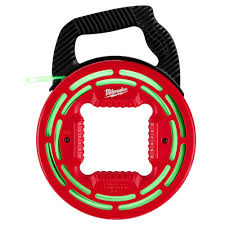
Fish Tape (50–200 ft)
Steel version:
- High tensile strength
- Conduit pulls
Fiberglass version:
- Safer near energized systems
Mule tape improves multi-cable pulls.
4.3 Cutting and Termination Tools
- Drywall/keyhole saw
- Cable jacket stripper
- Flush cutters
- RJ45 ratcheting crimper
- 110 punch-down tool
Impact punch tools ensure consistent seating.
4.4 Testing Equipment
Professional certification device required to verify:
- Wiremap
- NEXT
- Return loss
- Insertion loss
- Delay skew
- PoE load tolerance
Certification must comply with TIA performance limits.
4.5 Safety Equipment
- Cut-resistant gloves
- N95 masks
- Eye protection
- Fiberglass ladder (Type IA)
- Headlamp
5. Optimized Commercial Installation Procedure
Step 1: Site Survey
- Identify MDF/IDF rooms
- Map pathways
- Confirm fire barriers
- Detect power separation
Step 2: Pathway Planning
Maintain:
- 12-inch separation from power
- <90 meter horizontal limit
- Proper support spacing
Step 3: Drilling
- Drill pilot holes
- Deburr edges
- Install bushings
Step 4: Fishing
- Attach leader string
- Use glow rods
- Avoid excessive force
Step 5: Pulling Cable
- Pull dual drops for redundancy
- Maintain bend radius ≥ 4x diameter
- Avoid tight bundling
Step 6: Termination
Standard: T568B.
Maintain twist to within 0.5 inch of termination.
Step 7: Certification Testing
Document results.
Label both ends.
Archive reports.
Step 8: Firestopping
Seal penetrations per NEC requirements.
6. Performance Engineering Considerations
6.1 Crosstalk Control
Maintain twist integrity.
Avoid compression.
6.2 EMI Mitigation
Separate from:
- Ballasts
- Motors
- Transformers
6.3 Thermal Bundling Control
Limit tight bundles to 24 cables.
Excess heat increases insertion loss.
7. Large-Scale Deployment Strategy (100+ Drops)
Requires:
- Bulk cable reels
- Team coordination
- Labeling system
- Rack elevation diagrams
- Patch panel mapping
Pre-install conduit for future upgrades.
8. Cost and ROI Analysis
8.1 Tool Investment
$500–$1,500 initial outlay.
Break-even after approximately 5 projects.
8.2 Labor Costs
Retrofit pricing:
$150–$300 per drop.
100-drop project:
$15,000–$30,000 labor range.
8.3 Downtime Avoidance Model
Assume:
Downtime cost = $2,000/hour.
If structured cabling prevents 5 hours/year:
Annual savings = $10,000.
Over 10 years = $100,000.
Structured cabling becomes capital investment, not expense.
9. Smart Building and Future-Proofing
Cat6 backbone supports:
- PoE lighting
- Access control
- IP cameras
- IoT sensors
- Edge computing
Future planning should consider:
- Cat6A readiness
- 10GBASE-T migration
- Empty conduit pathways
- Switch capacity planning
10. Strategic Role of KeenComputer.com
KeenComputer.com can serve as:
- Infrastructure architect
- Deployment specialist
- Certification provider
- Documentation authority
- Smart building integrator
Services include:
- Telecom room design
- PoE power budgeting
- Rack airflow modeling
- EMI risk assessment
- Certification reporting
- Lifecycle infrastructure audits
Rather than competing on price per drop, KeenComputer.com competes on:
- Performance
- Compliance
- Documentation
- Long-term scalability
11. Strategic Role of IAS-Research.com
IAS-Research.com can enhance projects through:
11.1 Compliance Research and Advisory
- NEC interpretation
- Fire-rating analysis
- Conduit modeling
- Bonding and grounding analysis
11.2 Performance Modeling
- Network load simulation
- PoE budgeting models
- EMI risk modeling
- Thermal bundling analysis
11.3 Financial Modeling
Develop ROI frameworks comparing:
- Wireless-only vs wired backbone
- Cat6 vs Cat6A
- 10-year amortization models
11.4 AI and Predictive Infrastructure
Integrate:
- AI network monitoring
- Predictive failure detection
- Edge analytics
IAS-Research.com brings engineering research depth to infrastructure projects.
12. Integrated Service Model
Together, KeenComputer.com and IAS-Research.com provide:
Phase 1 – Audit
Phase 2 – Engineering Design
Phase 3 – Installation
Phase 4 – Certification
Phase 5 – Optimization
Phase 6 – Smart Expansion
This vertically integrated model differentiates from commodity installers.
13. Risk Management Framework
|
Risk |
Impact |
Mitigation |
|---|---|---|
|
Fire violation |
Failed inspection |
Firestop |
|
EMI |
Packet loss |
Separation |
|
Overbundling |
Heat buildup |
Bundle limits |
|
Cable damage |
Signal failure |
Grommets |
|
Improper termination |
Crosstalk |
Certification |
14. Competitive Advantage in Commercial Markets
In regions like Winnipeg and broader Canadian commercial sectors:
- Aging infrastructure requires upgrades
- Healthcare digitalization is accelerating
- Warehouse automation is expanding
A compliance-driven, research-backed Cat6 deployment model creates durable competitive differentiation.
15. Conclusion
Fishing Cat6 cables in commercial buildings is an engineering discipline requiring:
- Professional tools
- Code compliance
- Fire safety integrity
- Performance certification
- Scalability planning
Alignment with:
- TIA
- BICSI
- National Electrical Code
Ensures safety, performance, and long-term ROI.
By integrating:
- KeenComputer.com’s deployment execution
- IAS-Research.com’s engineering research and modeling
Commercial structured cabling projects evolve into long-term digital infrastructure assets that support smart buildings, AI integration, PoE ecosystems, and 10G-ready future growth.