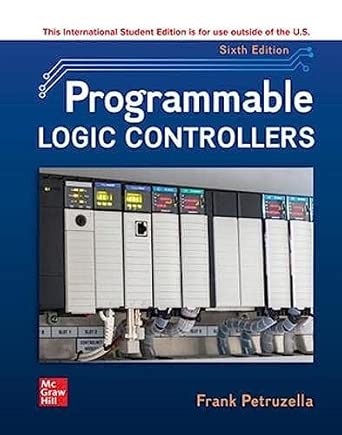
Programmable Logic Controllers (PLCs) remain the backbone of modern industrial automation. From discrete manufacturing and process control to smart factories and Industry 4.0 deployments, PLC programming has evolved from simple ladder logic implementations to object-oriented, modular, version-controlled, and cybersecurity-hardened software engineering practices.
This white paper presents a comprehensive technical overview of PLC programming, including:
- IEC 61131-3 programming languages
- Structured Text (ST) and Object-Oriented Programming (OOP)
- Software Engineering practices in automation
- HMI, SCADA, and Distributed Control Systems
- Cybersecurity and Industry 4.0 integration
- Emerging trends including AI-assisted debugging
The paper also outlines how KeenComputer.com can assist manufacturing firms, SMEs, utilities, and research organizations in designing, modernizing, and securing PLC-based automation systems.
Programmable Logic Controller (PLC) Programming in the Era of Industry 4.0
A Comprehensive Research White Paper
With Strategic Implementation Support from KeenComputer.com
Abstract
Programmable Logic Controllers (PLCs) remain the backbone of modern industrial automation. From discrete manufacturing and process control to smart factories and Industry 4.0 deployments, PLC programming has evolved from simple ladder logic implementations to object-oriented, modular, version-controlled, and cybersecurity-hardened software engineering practices.
This white paper presents a comprehensive technical overview of PLC programming, including:
- IEC 61131-3 programming languages
- Structured Text (ST) and Object-Oriented Programming (OOP)
- Software Engineering practices in automation
- HMI, SCADA, and Distributed Control Systems
- Cybersecurity and Industry 4.0 integration
- Emerging trends including AI-assisted debugging
The paper also outlines how KeenComputer.com can assist manufacturing firms, SMEs, utilities, and research organizations in designing, modernizing, and securing PLC-based automation systems.
1. Introduction
PLCs were originally developed in the late 1960s to replace relay-based control systems in automotive manufacturing. Today, they control:
- Power plants
- Oil & gas refineries
- Water treatment facilities
- Packaging lines
- Robotics cells
- Smart buildings
Modern PLC systems are no longer isolated hardware logic devices. They are networked computing systems integrated into cloud platforms, IIoT architectures, AI pipelines, and cybersecurity frameworks.
Industry 4.0 has transformed PLC programming into a multidisciplinary engineering discipline combining:
- Electrical engineering
- Software engineering
- Networking
- Cybersecurity
- Data analytics
2. PLC Architecture and Fundamentals
2.1 Core Components
A typical PLC system consists of:
- CPU module
- Input modules
- Output modules
- Power supply
- Communication modules
- Programming interface
The PLC operates cyclically:
- Read Inputs
- Execute Program
- Update Outputs
- Diagnostics
This deterministic scan cycle makes PLCs suitable for real-time industrial control.
3. IEC 61131-3: The PLC Programming Standard
The international standard governing PLC programming is:
IEC 61131-3
It defines five primary programming languages:
- Ladder Diagram (LD)
- Function Block Diagram (FBD)
- Structured Text (ST)
- Instruction List (IL) (deprecated)
- Sequential Function Chart (SFC)
3.1 Ladder Logic
- Graphical
- Resembles relay logic
- Ideal for discrete control
3.2 Structured Text (ST)
Text-based language similar to Pascal/C. Increasingly dominant for:
- Complex algorithms
- Data handling
- OOP implementation
4. Advanced Structured Text and OOP in PLCs
Modern PLC programming has embraced software engineering principles. The book:
Mastering PLC Programming by M. T. White
demonstrates how OOP, SOLID principles, Git version control, and UML design are transforming automation development .
4.1 Benefits of OOP in PLC Programming
- Encapsulation
- Code reuse
- Maintainability
- Reduced technical debt
Example: Function Block as Object
FUNCTION_BLOCK MotorControl VAR Speed : INT; IsRunning : BOOL; END_VAR
Function Blocks behave like objects with internal state.
5. Software Engineering Practices in PLC Development
Traditional PLC programming often suffered from:
- Global variable misuse
- Spaghetti ladder logic
- Poor documentation
- No version control
Modern automation integrates:
5.1 Version Control
Using Git repositories to manage PLC code (increasingly exported as PLCopen XML).
5.2 SDLC Implementation
Lifecycle stages:
- Requirements gathering
- Design (UML)
- Implementation
- Testing
- Deployment
- Maintenance
5.3 SOLID Principles
Applied in PLC OOP design:
- Single Responsibility Principle
- Open/Closed Principle
- Liskov Substitution
- Interface Segregation
- Dependency Inversion
These elevate PLC code to enterprise-grade software standards.
6. HMI and SCADA Integration
PLC systems interface with:
- Human Machine Interfaces (HMIs)
- Supervisory Control and Data Acquisition (SCADA)
6.1 HMI Design Best Practices
- Proper color coding (Red/Yellow/Green)
- Alarm prioritization
- Clear operator workflows
6.2 SCADA Systems
SCADA enables:
- Remote monitoring
- Data logging
- Alarm management
- Trend analysis
7. Industrial Communication Protocols
Modern PLCs use multiple protocols:
- Modbus
- Profibus
- Profinet
- EtherCAT
- EtherNet/IP
Industrial Ethernet is replacing serial communication in most facilities.
8. PLCs vs DCS
|
Feature |
PLC |
DCS |
|---|---|---|
|
Application |
Discrete control |
Process control |
|
Architecture |
Centralized |
Distributed |
|
Cost |
Lower |
Higher |
|
Scalability |
Moderate |
High |
Large process industries prefer DCS, while discrete manufacturing relies heavily on PLCs.
9. Cybersecurity in PLC Systems
Industrial cybersecurity is critical due to:
- Ransomware attacks
- Nation-state threats
- Insider threats
Security best practices include:
- Network segmentation
- Firewall configuration
- Avoiding default passwords
- Encrypted communication
- Whitelisting
Standards include IEC 62443 for industrial cybersecurity.
10. Industry 4.0 and PLC Evolution
Industry 4.0 integrates:
- IoT
- Cloud computing
- AI
- Digital twins
- Predictive maintenance
PLCs now connect to:
- MQTT brokers
- REST APIs
- Cloud dashboards
- Edge computing systems
11. AI in PLC Programming
AI assists in:
- Debugging
- Code optimization
- Alarm pattern analysis
- Predictive maintenance
Emerging tools include AI-based troubleshooting assistants embedded in IDEs.
12. Testing and Validation
Critical industries require:
- Unit testing
- Integration testing
- Functional testing
- Validation and verification
Simulation and digital twins reduce deployment risk.
13. Common Challenges in PLC Programming
- Legacy systems modernization
- Vendor lock-in
- Poor documentation
- Cybersecurity gaps
- Lack of skilled engineers
- Integration with IT systems
14. Role of KeenComputer.com in PLC and Automation Projects
KeenComputer.com provides integrated engineering and IT solutions for automation modernization.
14.1 PLC System Design & Implementation
- Control panel design
- PLC programming (ST, Ladder, FBD)
- HMI configuration
- SCADA integration
- Industrial networking
14.2 Legacy System Modernization
- Migration from relay logic
- Upgrading outdated PLC platforms
- Code refactoring using OOP principles
- Documentation reconstruction
14.3 Cybersecurity Hardening
- Industrial firewall configuration
- Network segmentation
- Secure remote access
- Compliance consulting
14.4 Integration with Enterprise IT
- PLC to Cloud integration
- IIoT architecture
- Database integration
- API and middleware development
14.5 Training and Capacity Building
- PLC programming workshops
- Structured Text and OOP training
- Git for automation engineers
- Cybersecurity awareness
15. Case Study Example
Manufacturing Plant Modernization
Problem:
- Obsolete PLC
- Frequent downtime
- No version control
- Manual data logging
Solution:
- Migrated to IEC 61131-3 compliant platform
- Implemented structured modular ST code
- Integrated SCADA dashboard
- Added secure VPN access
- Deployed version control
Result:
- 30% reduction in downtime
- Improved maintainability
- Real-time production visibility
16. Future Trends
- Edge computing PLCs
- Microservices in industrial control
- Cloud-native SCADA
- AI-driven alarm reduction
- Model-based design
- Digital twin simulation
17. Conclusion
PLC programming is no longer limited to ladder logic and hardware wiring. It has evolved into a full-scale software engineering discipline aligned with Industry 4.0 principles.
Modern automation engineers must master:
- IEC 61131-3
- Structured Text
- OOP
- Version control
- Cybersecurity
- Industrial networking
Organizations that modernize their PLC infrastructure gain:
- Reliability
- Security
- Scalability
- Data intelligence
- Competitive advantage
Partnering with experienced integrators like KeenComputer.com ensures that automation systems are not only operational but optimized for long-term growth.
References
- IEC 61131-3 – Programmable Controllers – Part 3: Programming Languages.
- Mastering PLC Programming, M. T. White, Packt Publishing, 2026.
- International Electrotechnical Commission – Industrial Automation Standards.
- IEC 62443 – Industrial communication networks – Network and system security.
- Bolton, W. Programmable Logic Controllers. Newnes.
- Petruzella, F. Programmable Logic Controllers. McGraw-Hill.
- Parr, E. A. Programmable Controllers: An Engineer’s Guide.