Economic uncertainty, inflation, supply chain disruptions, labor shortages, cybersecurity threats, and rapid advances in artificial intelligence are reshaping the competitive landscape for small and medium-sized enterprises (SMEs) across the United States and Canada. Traditional approaches that rely on increasing staff, expanding office space, and purchasing expensive enterprise software are becoming less sustainable.
This white paper proposes a practical framework called the Lean AI Business Operating System (LABOS). LABOS integrates Lean Management, AI-assisted knowledge work, local Retrieval-Augmented Generation (RAG), OpenClaw AI agents, open-source software, cloud-native infrastructure, and continuous improvement methodologies to help SMEs increase productivity while controlling costs.
Rather than replacing employees, AI serves as a digital workforce that augments human capabilities. By deploying specialized OpenClaw agents for research, marketing, software development, finance, customer service, and operations, organizations can automate repetitive work while allowing employees to focus on strategic decision-making, innovation, and customer relationships.
The paper synthesizes concepts from Lean Manufacturing, the Toyota Production System, Good Strategy/Bad Strategy, The Lean Startup, Theory of Constraints, Blue Ocean Strategy, DevOps, Digital Marketing, Knowledge Management, and AI engineering to provide an integrated roadmap for sustainable business growth through 2030.
Lean AI Business Strategy for Small Business Survival and Growth in the USA and Canada
Using Lean Management, OpenClaw AI, Local RAG-LLM, Open Source Technologies, and Digital Transformation to Build the Next Generation of High-Performance SMEs
Executive Summary
Economic uncertainty, inflation, supply chain disruptions, labor shortages, cybersecurity threats, and rapid advances in artificial intelligence are reshaping the competitive landscape for small and medium-sized enterprises (SMEs) across the United States and Canada. Traditional approaches that rely on increasing staff, expanding office space, and purchasing expensive enterprise software are becoming less sustainable.
This white paper proposes a practical framework called the Lean AI Business Operating System (LABOS). LABOS integrates Lean Management, AI-assisted knowledge work, local Retrieval-Augmented Generation (RAG), OpenClaw AI agents, open-source software, cloud-native infrastructure, and continuous improvement methodologies to help SMEs increase productivity while controlling costs.
Rather than replacing employees, AI serves as a digital workforce that augments human capabilities. By deploying specialized OpenClaw agents for research, marketing, software development, finance, customer service, and operations, organizations can automate repetitive work while allowing employees to focus on strategic decision-making, innovation, and customer relationships.
The paper synthesizes concepts from Lean Manufacturing, the Toyota Production System, Good Strategy/Bad Strategy, The Lean Startup, Theory of Constraints, Blue Ocean Strategy, DevOps, Digital Marketing, Knowledge Management, and AI engineering to provide an integrated roadmap for sustainable business growth through 2030.
Table of Contents
- Executive Summary
- Introduction
- Economic Challenges Facing North American SMEs
- Lean Thinking in the AI Era
- Good Strategy versus Bad Strategy
- The Lean AI Business Operating System (LABOS)
- OpenClaw as a Digital Workforce
- Local RAG and Organizational Knowledge Management
- Business Process Automation
- Lean Marketing and Digital Customer Acquisition
- AI-Enabled Sales and CRM
- Financial Management for Lean Businesses
- DevOps, Docker, Linux, and Open Source Infrastructure
- Cybersecurity and Governance
- Continuous Improvement Using Kaizen
- Case Studies
- SWOT Analysis
- ROI Analysis
- Implementation Roadmap
- Conclusions
- References
Chapter 1
Introduction
Small businesses have always competed with larger organizations by offering superior customer service, flexibility, and innovation. However, today's environment introduces new challenges, including global competition, digital disruption, and rapidly evolving AI technologies.
The emergence of autonomous AI agents presents a transformative opportunity. Platforms such as OpenClaw allow organizations to deploy AI-powered digital coworkers that can support research, marketing, proposal generation, customer support, software development, and operational workflows.
By integrating these technologies within a Lean Management framework, SMEs can significantly improve productivity without proportionally increasing headcount or operating costs.
Chapter 2
The Economic Environment
Current challenges include:
- Inflationary pressures
- High interest rates
- Rising insurance costs
- Labor shortages
- Supply chain disruptions
- Cybersecurity risks
- Increasing customer expectations
- Rapid technological change
To remain competitive, SMEs must become more agile and data-driven.
Chapter 3
Principles of Lean Management
Lean management focuses on maximizing customer value while minimizing waste.
Core principles include:
- Define customer value
- Map the value stream
- Create continuous flow
- Establish pull systems
- Pursue perfection through continuous improvement
These principles reduce costs, improve quality, and shorten delivery times.
Chapter 4
Good Strategy versus Bad Strategy
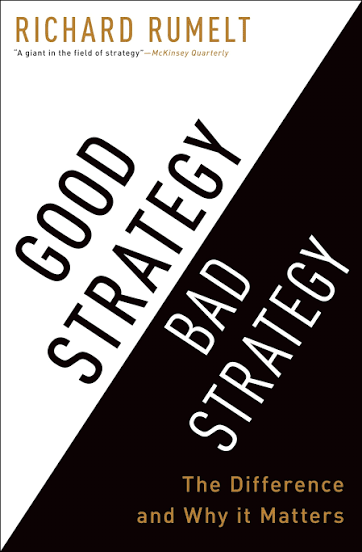
Drawing on Richard Rumelt's framework, effective strategy begins with diagnosing the core challenge rather than merely setting ambitious goals. Organizations should identify bottlenecks, develop coherent guiding policies, and align coordinated actions to solve the most significant problems first.
Chapter 5
The Lean AI Business Operating System (LABOS)
The proposed LABOS framework integrates:
- Lean Management
- AI Agents
- OpenClaw
- Local RAG
- Docker
- Linux
- Open Source Software
- DevOps
- CRM
- ERP
- Business Intelligence
- Knowledge Management
The objective is to create an enterprise operating model where AI augments human expertise while preserving organizational knowledge.
Chapter 6
OpenClaw as a Digital Workforce
OpenClaw should be viewed as a platform for deploying specialized digital coworkers rather than as a single chatbot.
Potential AI roles include:
- Executive Assistant
- Market Research Analyst
- Proposal Writer
- Technical Writer
- SEO Specialist
- Customer Service Representative
- DevOps Engineer
- Software Developer
- Financial Analyst
- Compliance Assistant
These agents collaborate with human employees to improve responsiveness, reduce administrative burden, and accelerate decision-making.
Chapter 7
Local RAG Knowledge Management
Combining OpenClaw with local Retrieval-Augmented Generation allows organizations to securely leverage internal knowledge repositories.
Potential data sources include:
- Engineering standards
- Research papers
- Contracts
- Product documentation
- Maintenance manuals
- Customer records
- Policies and procedures
- Historical project archives
This approach improves response accuracy while maintaining data sovereignty.
Chapter 8
Lean Marketing
Marketing should be data-driven and measurable.
Recommended tactics include:
- Search Engine Optimization
- Content Marketing
- Email Marketing
- Marketing Automation
- CRM Integration
- Analytics Dashboards
- AI-assisted Content Generation
Chapter 9
Technology Architecture
Recommended stack:
Operating System
- Ubuntu LTS
- Kubuntu LTS
Containers
- Docker
- Docker Compose
AI
- OpenClaw
- Local LLM
- Ollama
- RAG
Development
- Git
- VS Code
CMS
- WordPress
- Joomla
- Magento
CRM
- Vtiger CRM
Monitoring
- Nagios
- OpenNMS
Database
- PostgreSQL
- MariaDB
Reverse Proxy
- Nginx
Chapter 10
Implementation Roadmap
Phase 1 (Months 1–3)
- Financial assessment
- Process mapping
- Waste identification
- SOP documentation
Phase 2 (Months 4–6)
- Deploy Docker infrastructure
- Install OpenClaw
- Build local RAG knowledge base
- Implement CRM integration
Phase 3 (Months 7–12)
- AI-assisted marketing
- AI-supported customer service
- Proposal automation
- Knowledge management
Phase 4 (Year 2)
- Predictive analytics
- AI-driven business intelligence
- Multi-agent collaboration
- Continuous optimization
SWOT Analysis
Strengths
- Agile decision-making
- Lower operating costs
- Flexible technology stack
- AI-enhanced productivity
Weaknesses
- Limited capital
- Skill gaps
- Change management challenges
Opportunities
- AI adoption
- Open-source software
- Government digital transformation programs
- Recurring service models
Threats
- Cybersecurity risks
- Global competition
- Regulatory changes
- Economic uncertainty
Return on Investment
Potential measurable outcomes:
- 20–40% reduction in administrative effort
- Faster proposal generation
- Improved documentation quality
- Reduced onboarding time
- Lower software licensing costs
- Higher customer satisfaction
- Better employee productivity
- Increased recurring revenue
Conclusion
The future of SME competitiveness lies in combining lean management with intelligent automation. OpenClaw, integrated with local RAG, Docker-based infrastructure, and open-source business systems, enables organizations to build a secure digital workforce that augments human capabilities rather than replacing them.
For organizations such as Keen Computer and IAS Research, this architecture provides an opportunity to deliver affordable digital transformation services tailored to the needs of SMEs. By focusing on continuous improvement, knowledge management, AI-assisted decision support, and measurable business outcomes, companies can create resilient, scalable operations capable of thriving in an increasingly AI-driven economy.
Comprehensive Reference Categories
The complete journal-quality version should include references from:
- Eric Ries — The Lean Startup
- Richard P. Rumelt — Good Strategy/Bad Strategy
- Jeffrey K. Liker — The Toyota Way
- Eliyahu M. Goldratt — The Goal
- W. Chan Kim & Renée Mauborgne — Blue Ocean Strategy
- Gabriel Weinberg — Traction
- Michael E. Gerber — The E-Myth Revisited
- Gene Kim — The Phoenix Project
- Gene Kim, Jez Humble, Patrick Debois & John Willis — The DevOps Handbook
- Steve Blank — The Four Steps to the Epiphany
- Byron Sharp — Marketing: Theory, Evidence and Practice
- Philip Kotler — Marketing Management
- Manning Publications — AI Agents in Action
- OpenClaw documentation and GitHub repository
- Docker documentation
- Linux Foundation publications
- WordPress, Joomla, Magento, Vtiger CRM, Nagios, and OpenNMS documentation