Creating a successful technology product is not simply an engineering problem.
A technically excellent product can fail because it solves the wrong problem, targets the wrong customer, arrives too late, costs too much, is difficult to deploy, lacks a sustainable business model, or is overtaken by a competitor.
The central proposition of this paper is therefore:
Do not begin with “What can we build?” Begin with “What valuable problem should we solve, for whom, why will they choose our solution, and how can we continuously adapt faster than the environment changes?”
Critical Thinking and Dynamic Competitive Strategy for Creating Hardware and Software Products
A Product Strategy Framework for Hardware, Embedded Systems, AI, IoT, Industrial Electronics, and Software Platforms
Executive Summary
Creating a successful technology product is not simply an engineering problem.
A technically excellent product can fail because it solves the wrong problem, targets the wrong customer, arrives too late, costs too much, is difficult to deploy, lacks a sustainable business model, or is overtaken by a competitor.
The central proposition of this paper is therefore:
Do not begin with “What can we build?” Begin with “What valuable problem should we solve, for whom, why will they choose our solution, and how can we continuously adapt faster than the environment changes?”
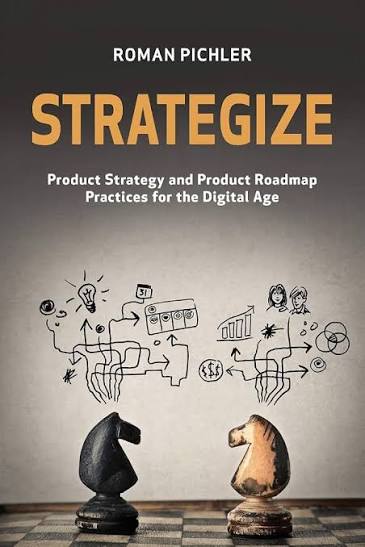
Roman Pichler's Strategize provides a useful foundation for answering these questions. Pichler distinguishes the vision, product strategy, roadmap, and backlog. The vision explains why the product should exist; the strategy explains how the vision will be realized; the roadmap translates the strategy into releases; and the backlog contains the detailed development work.
This paper extends that logic to products in which hardware and software are inseparable.
Examples include:
- Smart inverters
- EV charging systems
- Automotive diagnostic systems
- OBD/IoT devices
- Industrial controllers
- Edge-AI devices
- Robotics
- Medical and laboratory equipment
- Embedded Linux products
- ARM-based systems
- Industrial IoT gateways
- Cybersecurity appliances
- AI-enabled instruments
- Computer and networking hardware
- Hardware/software platforms
The proposed model is:
Vision → Strategic Choice → Customer Problem → Value Proposition → Competitive Position → System Architecture → Validation → MVP → Product/Market Fit → Roadmap → Scale → Renewal
The critical-thinking component continually asks:
- Are we solving the right problem?
- For the right customer?
- With a sufficiently differentiated solution?
- Can we technically build it?
- Can customers afford it?
- Can we manufacture, deploy, maintain, and support it?
- Can the business make money?
- Can competitors copy the advantage?
- What assumptions are still unproven?
- What evidence should cause us to pivot, persevere, or stop?
1. The Strategic Problem
Traditional engineering often begins with technology:
“We have a processor, sensor, FPGA, AI model, communication interface, or software capability. What product can we build?”
A product-strategy approach reverses the sequence:
Customer problem → value → product → technology → implementation
Pichler describes product strategy as a high-level plan for realizing a vision. It addresses who the product is for, why customers would use or buy it, what makes the product stand out, and why investment in it makes business sense.
For hardware/software products, this becomes a six-layer strategic question:
|
Layer |
Critical question |
|---|---|
|
Customer |
Who has the problem? |
|
Problem |
What expensive, frequent, risky, or frustrating problem exists? |
|
Value |
What measurable improvement will the product create? |
|
Product |
What hardware/software system delivers the value? |
|
Business |
How will the company capture value? |
|
Competition |
Why will the advantage survive competitive pressure? |
This prevents a common engineering failure:
building an impressive technology without creating an economically valuable product.
2. Critical Thinking as the Product-Development Discipline
Critical thinking should not be treated as a philosophical exercise.
It should become an operating discipline for product development.
2.1 The Five Strategic Questions
Every major product decision should pass five tests.
Question 1 — What do we believe?
Example:
Fleet operators will pay for an AI-enabled diagnostic system because it reduces vehicle diagnostic time.
Question 2 — What evidence supports it?
Possible evidence:
- Customer interviews
- Field observations
- Existing repair records
- Pilot projects
- Competitor research
- Prototype demonstrations
- Pre-orders
- Letters of intent
- Usage data
Question 3 — What could make the assumption false?
For example:
- Technicians do not trust AI recommendations.
- Existing diagnostic tools are sufficiently good.
- Hardware cost is too high.
- Automotive data access is restricted.
- Integration is too complicated.
Question 4 — What is the cheapest experiment that can test it?
This is the critical-thinking principle:
Test the riskiest assumption before investing heavily in implementation.
Question 5 — What decision will the evidence trigger?
The answer must be explicit:
- Persevere
- Modify
- Pivot
- Delay
- Stop
Pichler specifically emphasizes iterative strategy validation, data-driven decisions, experimentation, MVPs, technical feasibility assessment, and the possibility of pivoting or stopping.
3. Vision: Define the Positive Change
A product should begin with a vision rather than a feature list.
Pichler describes an effective vision as:
- Big
- Shared
- Inspiring
- Concise
The vision describes the positive change the product should create.
For a hardware/software product:
Weak vision
Build an ARM-based IoT gateway with Linux, Wi-Fi, MQTT and AI.
This is a technology description.
Stronger strategic vision
Enable small industrial operators to understand and control distributed equipment without requiring a large engineering staff.
The second statement permits multiple implementation strategies.
The product might eventually become:
- an embedded gateway,
- a cloud service,
- an AI diagnostic platform,
- a mobile application,
- a managed service,
- or a combination.
The vision remains stable while the strategy can change.
4. Vision → Strategy → Tactics
One of the most important principles in Pichler's framework is the distinction between three levels.
|
Level |
Question |
Hardware/software example |
|---|---|---|
|
Vision |
Why? |
Improve industrial equipment reliability |
|
Strategy |
How? |
Edge-AI monitoring platform |
|
Tactics |
What exactly? |
STM32 sensor node, ARM gateway, MQTT, RAG service, dashboard |
The uploaded text explicitly describes this relationship: the vision guides strategy, strategy directs tactics, while evidence from tactics can also force strategy changes.
This creates an important engineering rule:
Architecture must serve strategy—not become the strategy.
A common failure occurs when an organization becomes committed to:
- a processor,
- programming language,
- AI model,
- database,
- cloud platform,
- operating system,
- framework,
- or development methodology
before proving that the technology is appropriate to the customer problem.
5. Business Strategy Must Drive Product Strategy
A product is not an isolated engineering project.
Pichler argues that the product strategy should support the overall business strategy. The business strategy determines markets, investments, innovation initiatives, differentiation, and growth direction.
For a technology company this produces a hierarchy:
Corporate Strategy
↓
Market Strategy
↓
Product Portfolio Strategy
↓
Hardware/Product Strategy
↓
Software Strategy
↓
System Architecture
↓
Engineering Roadmap
↓
Backlog
This prevents individual engineering teams from optimizing components while the overall company loses strategic direction.
6. The Hardware + Software Product System
A modern technology product should be treated as a system of value, not merely a physical device.
A useful architecture is:
Layer 1 — Physical Product
- Sensors
- MCU
- MPU
- FPGA
- Power electronics
- PCB
- Communications
- Mechanical enclosure
- Power supply
Layer 2 — Embedded Software
- Bootloader
- RTOS
- Embedded Linux
- Drivers
- Middleware
- Device management
- Diagnostics
- Security
Layer 3 — Connectivity
- Ethernet
- Wi-Fi
- Bluetooth
- CAN
- Modbus
- MQTT
- Cellular
- Industrial protocols
Layer 4 — Data Platform
- Database
- Time-series data
- Device telemetry
- Event processing
- APIs
Layer 5 — Intelligence
- Machine learning
- TinyML
- AI
- RAG
- Knowledge graphs
- Rule engines
- Predictive analytics
Layer 6 — User Experience
- Web application
- Mobile application
- Dashboard
- Alerts
- Reports
- Workflow
Layer 7 — Business Service
- Installation
- Training
- Monitoring
- Maintenance
- Support
- Subscription
- Professional services
The competitive product is therefore often not the hardware alone.
It is:
Hardware + firmware + software + data + intelligence + service + ecosystem.
7. Market Segmentation
Pichler identifies market segmentation and selection of the right segment as core product-strategy practices. The Product Vision Board specifically identifies the target group and customer/user needs as fundamental elements of strategy.
For hardware/software products, segmentation should consider:
Customer type
- Consumer
- SMB
- Enterprise
- Government
- Industrial
- Engineering organization
- Research institution
Application
- Automotive
- Energy
- Manufacturing
- Healthcare
- Agriculture
- Construction
- Telecommunications
- Cybersecurity
Technical environment
- Legacy equipment
- Modern digital infrastructure
- Edge computing
- Cloud
- Hybrid environment
Economic characteristics
- High-volume / low-margin
- Low-volume / high-value
- Subscription
- Project-based
- OEM
- Licensing
The goal is not to address everyone.
The goal is to identify the segment in which the company's capabilities and the customer's problem intersect.
8. Find the "Itch Worth Scratching"
A major strategic question is:
Which customer problem is sufficiently important that customers will change their behavior and pay for a solution?
Possible problem dimensions include:
Cost
Does the problem cause:
- downtime,
- labor cost,
- energy cost,
- inventory cost,
- maintenance cost?
Risk
Does it create:
- safety risk,
- cybersecurity risk,
- regulatory risk,
- financial risk?
Time
Does the product save:
- diagnostic time,
- engineering time,
- deployment time,
- maintenance time?
Revenue
Can the product:
- increase sales,
- increase capacity,
- create new services,
- improve customer retention?
Quality
Can it improve:
- reliability,
- accuracy,
- availability,
- product quality?
A product becomes strategically interesting when the problem is significant enough to create a real economic incentive.
9. Value Proposition
A useful value proposition for an engineering product should contain four elements:
Customer + Problem + Outcome + Differentiation
For example:
For small industrial operators experiencing unexpected equipment downtime, the system provides continuous equipment monitoring and AI-assisted diagnostics, reducing diagnostic effort while providing a simpler deployment model than conventional industrial monitoring systems.
The proposition should then be tested.
Do customers actually experience the problem?
Do they care?
Do they currently pay for solving it?
Will they change their workflow?
Will they pay for the proposed improvement?
10. Competitive Differentiation
Pichler emphasizes that key features and differentiators should focus on the small number of characteristics that influence customer choice rather than attempting to list every feature.
For hardware/software systems, differentiation may come from:
Technical differentiation
- Lower latency
- Lower power
- Higher reliability
- Better accuracy
- Smaller physical size
- Better security
- Edge processing
Economic differentiation
- Lower total cost of ownership
- Lower installation cost
- Lower maintenance cost
- Subscription model
- Modular purchasing
Operational differentiation
- Faster deployment
- Easier configuration
- Remote management
- Automated diagnostics
User differentiation
- Better UX
- Simpler installation
- Better documentation
- Easier integration
Ecosystem differentiation
- APIs
- SDKs
- Partner ecosystem
- Open standards
- Hardware compatibility
Intelligence differentiation
- Proprietary datasets
- AI models
- RAG knowledge base
- Domain knowledge
- Diagnostic reasoning
The strongest advantage may be a combination rather than a single feature.
11. The Competitive Moat
A useful critical-thinking question is:
If our product succeeds, what prevents a larger competitor from copying it?
Potential defenses include:
- Intellectual property
- Proprietary algorithms
- Proprietary datasets
- Customer workflow integration
- Domain expertise
- Hardware/software co-design
- Certification
- Installed base
- Network effects
- Ecosystem relationships
- Brand trust
- Switching costs
- Service infrastructure
- Manufacturing expertise
A technology feature alone may not be a durable competitive advantage.
For example:
"We use AI"
is weak differentiation.
But:
"We possess a validated domain-specific dataset, embedded sensing architecture, diagnostic workflow, proprietary knowledge graph, field-tested models, and an installed hardware base"
can represent a much more difficult system to reproduce.
12. Innovation Portfolio: Core, Adjacent and Disruptive
Pichler distinguishes three innovation categories:
Core
Improve an existing product for an existing market.
Adjacent
Create a new product for an existing market or take an existing capability into a new market.
Disruptive
Create a new product and a new market.
The uploaded text associates increasing growth potential with increasing risk and uncertainty across these categories.
For a hardware/software company, the portfolio could look like this:
|
Innovation |
Example |
|---|---|
|
Core |
Improved industrial gateway |
|
Core |
New firmware release |
|
Adjacent |
Gateway + AI diagnostics |
|
Adjacent |
Existing inverter technology for EV charging |
|
Disruptive |
Autonomous AI maintenance platform |
The strategic mistake is to manage all three categories identically.
Core products require operational discipline.
Adjacent products require experimentation.
Disruptive products require entrepreneurial experimentation and acceptance of substantial uncertainty. Pichler specifically recommends different organizational and validation approaches for these innovation types.
13. Hardware/Software Critical-Thinking Matrix
Before approving a product, use the following matrix.
|
Question |
Evidence required |
|---|---|
|
Customer problem |
Interviews/observations |
|
Market demand |
Market evidence |
|
Value proposition |
Customer validation |
|
Hardware feasibility |
Prototype/spike |
|
Software feasibility |
Prototype/spike |
|
AI feasibility |
Dataset/model experiment |
|
Manufacturing |
Supplier/production analysis |
|
Certification |
Regulatory assessment |
|
Security |
Threat model/testing |
|
Economics |
Cost model |
|
Business model |
Revenue experiment |
|
Competitive advantage |
Competitor analysis |
|
Supportability |
Service analysis |
|
Scalability |
Architecture test |
|
Adoption |
Pilot users |
|
Product-market fit |
Usage and commercial evidence |
The purpose is to prevent a single positive signal from hiding a major failure elsewhere.
14. The "Five Feasibilities"
A hardware/software product should pass five feasibility tests.
14.1 Desirability
Do customers want it?
14.2 Technical Feasibility
Can we build it?
14.3 Economic Viability
Can we make money?
14.4 Operational Feasibility
Can we manufacture, deploy, update, repair and support it?
14.5 Strategic Sustainability
Can the company defend and evolve the product?
A product that passes only technical feasibility is not yet a viable product.
Pichler's development-stage objective is similarly to find a strategy resulting in a product that is beneficial, feasible, and economically viable.
15. Minimum Viable Product for Hardware
MVP thinking is more complicated for hardware because hardware has physical constraints.
A useful approach is to separate:
Proof of concept
Can the technology work?
Engineering prototype
Can the architecture work?
Minimum viable product
Will a real customer use it?
Production candidate
Can it be manufactured and supported?
Production product
Can it operate reliably at commercial scale?
For example:
OBD-AI concept
- Read CAN/OBD data.
- Capture diagnostic data.
- Demonstrate basic interpretation.
- Add knowledge retrieval.
- Test with technicians.
- Add mobile workflow.
- Add field validation.
- Harden hardware.
- Secure communications.
- Commercialize.
The mistake is spending years building production hardware before establishing that the customer actually values the solution.
16. Hardware and Software Should Have Parallel Validation
Hardware and software development should not proceed as two independent projects.
Instead:
Customer validation
↓
System requirements
↓
Hardware architecture + software architecture
↓
Integrated prototype
↓
System validation
This is especially important for:
- Edge AI
- Smart energy
- Robotics
- Automotive
- Industrial automation
- IoT
- Embedded systems
A powerful processor cannot compensate for an incorrect customer requirement.
Likewise, excellent software cannot compensate for inadequate sensors, unreliable communications, insufficient power, thermal limitations, or inappropriate hardware economics.
17. Technical Spikes as Strategic Experiments
Pichler identifies technical spikes as a way to assess technical feasibility.
For hardware/software products, technical spikes can test:
- MCU performance
- CPU utilization
- RAM requirements
- AI inference latency
- power consumption
- sensor accuracy
- CAN throughput
- network reliability
- database scalability
- model accuracy
- embedded Linux boot time
- real-time behavior
- security architecture
- cloud/edge communication
A spike should answer a strategic question.
It should not become uncontrolled engineering work.
Example
Question:
Can a low-cost ARM device perform local anomaly detection?
Experiment:
- Select representative dataset.
- Deploy candidate model.
- Measure latency.
- Measure RAM.
- Measure power.
- Measure accuracy.
Decision:
Proceed / change architecture / move inference to gateway / move inference to cloud / stop.
18. Business Model Is Part of Product Strategy
A technically successful product can fail because the business model is wrong.
Pichler emphasizes complementing product strategy with a business model covering competitors, revenue sources, cost factors, and channels.
For hardware/software products, possible models include:
Hardware sale
Customer purchases device.
Hardware + subscription
Device plus recurring software/service fee.
SaaS
Hardware acts as an entry point to software revenue.
Device-as-a-Service
Customer pays periodically.
Licensing
Software or firmware licensed to OEMs.
OEM
Your technology becomes part of another company's product.
Professional services
Revenue from integration, installation, training and support.
Bait-and-hook ecosystem
Low-cost hardware creates demand for higher-value software/service.
The appropriate model should be tested rather than assumed.
19. Total Cost of Ownership
Hardware strategy must go beyond BOM cost.
Calculate:
TCO = Hardware + Manufacturing + Logistics + Installation + Software + Support + Warranty + Updates + Infrastructure + End-of-Life
This changes competitive strategy.
A device that costs $200 more but saves $2,000 per year in maintenance may be economically superior for the customer.
Therefore:
Compete on customer economics, not merely component price.
20. Product Roadmap
Pichler distinguishes strategy from roadmap.
The strategy explains the path.
The roadmap explains how the strategy will be implemented through releases, goals and features.
For hardware/software products, a roadmap should contain multiple dimensions:
Product
- Features
- User experience
- Variants
Hardware
- Prototype
- PCB revision
- EVT
- DVT
- PVT
- Production
Software
- Firmware
- Embedded Linux
- Cloud
- Mobile
- AI
Operations
- Manufacturing
- Supply chain
- Certification
- Support
Commercial
- Pilot
- Beta
- Launch
- Channel expansion
21. Roadmap Should Be Goal-Oriented
A weak roadmap says:
Q1: Sensor
Q2: AI
Q3: Dashboard
Q4: Mobile application
A strategic roadmap says:
Q1 — Prove technical feasibility
Q2 — Validate customer problem
Q3 — Demonstrate measurable customer value
Q4 — Achieve pilot product-market fit
Features become means rather than objectives.
This is consistent with Pichler's emphasis on release goals and measurable roadmaps.
22. Dynamic Competitive Strategy
Competition changes continuously.
Therefore, strategy cannot be a one-time document.
Pichler explicitly states that product strategy changes as the product grows and matures and recommends regular review and adjustment.
A dynamic strategy should monitor:
- Customers
- Competitors
- Technology
- Regulation
- Supply chain
- Pricing
- AI capabilities
- Standards
- Security threats
- Distribution channels
- Capital availability
The strategy loop becomes:
Observe → Interpret → Decide → Experiment → Measure → Learn → Adapt
23. The Strategic Learning Loop
Every product release should generate learning.
Before release
What do we believe?
During development
What are we learning?
Pilot
What does the customer actually do?
After deployment
What does usage data tell us?
Strategic review
What should change?
The critical principle is:
The product is not merely an output of the strategy; the product also generates evidence that changes the strategy.
Pichler explicitly describes this two-way relationship between strategy, roadmap and backlog, with customer feedback and development progress potentially causing roadmap and strategy changes.
24. KPI Framework
Pichler warns against relying on intuition and recommends using KPIs to balance opinions with empirical evidence.
For hardware/software products, KPIs should cover four dimensions.
Financial
- Revenue
- Gross margin
- Recurring revenue
- Customer acquisition cost
- Support cost
- Warranty cost
Customer
- Adoption
- Retention
- Usage
- Referral
- Satisfaction
- Renewal
Product/Engineering
- Reliability
- Defect rate
- Latency
- Energy consumption
- Model accuracy
- Software quality
- Firmware update success
People/Process
- Development velocity
- Cycle time
- Engineering productivity
- Support response time
- Manufacturing yield
Pichler also emphasizes combining quantitative and qualitative measures and using both lagging and leading indicators.
25. Hardware-Specific Leading Indicators
For physical products, leading indicators can be particularly important.
Examples:
- Prototype failure rate
- PCB redesign frequency
- Component availability
- Manufacturing yield
- Firmware defect density
- Battery degradation
- Thermal margin
- Mean time to repair
- Field failure trends
These indicators may reveal future commercial problems before revenue declines.
26. Product Life Cycle Strategy
Pichler presents five major product life-cycle stages:
- Development
- Introduction
- Growth
- Maturity
- Decline
He also identifies launch, product-market fit and end-of-life as important events.
For hardware/software:
Development
Objective:
Prove the product is beneficial, feasible and economically viable.
Introduction
Objective:
Find product-market fit.
Growth
Objective:
Scale and defend the product.
Maturity
Objective:
Extend life or optimize profitability.
Decline
Objective:
Reduce investment and prepare replacement.
27. Product Renewal Strategy
When a product reaches maturity, there are several strategic possibilities:
Improve
Add meaningful capabilities.
Simplify
Remove unnecessary features.
Reposition
Target a new segment.
Bundle
Combine with another product/service.
Unbundle
Turn a capability into a separate product.
Platformize
Expose APIs and allow ecosystem development.
Replace
Develop the next-generation product.
Pichler specifically discusses enhancing, simplifying, entering new markets, bundling and unbundling as ways to extend product life.
28. Hardware Platform Strategy
A powerful long-term strategy is to separate:
Stable platform
from
Changing product applications
For example:
Platform
- ARM processor
- Secure boot
- RTOS/Linux
- Communication stack
- Device management
- Security
- Hardware abstraction
Applications
- Smart inverter
- EV charger
- Industrial gateway
- OBD diagnostic device
- Energy monitor
This allows engineering investment to be reused.
The company gradually moves from:
Product-by-product engineering
to:
Platform + product family strategy
29. Software Platform Strategy
The same concept applies to software.
Build reusable:
- APIs
- authentication
- device management
- data ingestion
- AI services
- RAG infrastructure
- analytics
- monitoring
- update mechanisms
Then create vertical applications.
For example:
Common AI/IoT platform
↓
Automotive diagnostics
Energy monitoring
Industrial maintenance
Cybersecurity monitoring
Smart equipment
This can create an adjacent-innovation pipeline.
30. Dynamic Portfolio Strategy
A technology company should not have only one product.
A portfolio might contain:
|
Portfolio |
Purpose |
|---|---|
|
Core products |
Current revenue |
|
Adjacent products |
Near-term growth |
|
Emerging products |
Future growth |
|
Research projects |
Option creation |
|
Platform technology |
Reusable capability |
This corresponds closely to Pichler's observation that successful adjacent and disruptive products eventually become core products, requiring continual investment in new growth opportunities.
31. The Product Investment Gate
Every major product initiative should pass strategic gates.
Gate 1 — Problem
Is there a meaningful problem?
Gate 2 — Customer
Is there an identifiable target segment?
Gate 3 — Value
Can we demonstrate measurable value?
Gate 4 — Differentiation
Why will customers select us?
Gate 5 — Feasibility
Can we build it?
Gate 6 — Economics
Can we make money?
Gate 7 — Pilot
Will real customers use it?
Gate 8 — Scale
Can we manufacture and support it?
Gate 9 — Defense
Can the advantage survive competition?
Gate 10 — Renewal
What is the next growth opportunity?
32. The Strategic Red-Team
Critical thinking becomes stronger when someone is explicitly assigned to challenge the product.
The red-team asks:
Customer challenge
What if customers don't actually care?
Competition challenge
What if an incumbent copies this?
Technology challenge
What if our chosen technology becomes obsolete?
Economics challenge
What if manufacturing costs double?
Supply-chain challenge
What if the key component becomes unavailable?
Security challenge
What if the device is compromised?
Regulatory challenge
What certification could block commercialization?
AI challenge
What if the AI does not achieve sufficient accuracy?
Business-model challenge
What if customers refuse subscriptions?
Strategic challenge
What if we are solving a symptom instead of the underlying problem?
This transforms disagreement from a political conflict into a product-risk-management process.
33. The 80/20 Product Principle
A product should concentrate resources on the relatively small number of capabilities that create most customer value.
Pichler similarly recommends focusing the product strategy on the few key features that influence customer choice rather than attempting to describe every feature.
For an embedded AI device, the strategic priorities might be:
- Measurement accuracy
- Reliability
- Diagnostic intelligence
- Ease of deployment
- Security
Everything else should be evaluated against those priorities.
34. Avoid Feature Accumulation
A common product failure is:
Customer request → feature → another feature → another feature → increasing complexity
Eventually:
- hardware becomes expensive,
- firmware becomes complicated,
- software becomes difficult to maintain,
- UX deteriorates,
- support costs increase.
The strategic question should therefore be:
Does this feature strengthen the value proposition or merely increase the feature count?
Pichler explicitly includes eliminating features as a product-strategy practice.
35. Product Architecture as a Competitive Weapon
Architecture should be designed not only for technical correctness but for strategic adaptability.
A strong architecture should support:
- modularity,
- upgradeability,
- security,
- interoperability,
- diagnostics,
- scalability,
- maintainability,
- reuse.
For example:
Sensor
↓
MCU
↓
RTOS
↓
Gateway
↓
Embedded Linux
↓
Data platform
↓
AI/RAG
↓
Application
The architecture becomes a strategic asset when new products can reuse significant portions of it.
36. The Hardware–Software Co-Design Principle
For sophisticated products, hardware and software decisions should be made together.
Consider:
AI workload
May influence:
- CPU
- GPU/NPU
- memory
- thermal design
- power supply
Real-time requirements
May influence:
- MCU
- RTOS
- interrupt architecture
- communication bus
Security requirements
May influence:
- secure element
- TPM
- secure boot
- key storage
- operating system
Product economics
May influence:
- processor choice
- memory
- PCB layers
- communications
- manufacturing strategy
Thus:
Product strategy → system architecture → hardware/software co-design.
37. Strategic Use of Simulation
Simulation can reduce product-development risk before expensive hardware production.
Potential tools include:
- MATLAB/Simulink
- SystemC/TLM
- QEMU
- SPICE
- FPGA simulation
- digital twins
- software-in-the-loop
- hardware-in-the-loop
Simulation should not exist merely because it is technically interesting.
The strategic question is:
Which expensive real-world uncertainty can simulation remove?
Examples:
- control algorithm validation,
- processor architecture,
- real-time behavior,
- power electronics,
- communication performance,
- fault behavior,
- AI pipeline performance.
38. Research → Prototype → Product
Research organizations and commercial engineering organizations have different objectives.
A research result asks:
Is this technically possible?
A product asks:
Will customers pay for a reliable implementation of this capability?
The transition is:
Research
↓
Proof of Concept
↓
Engineering Prototype
↓
Customer Pilot
↓
MVP
↓
Product-Market Fit
↓
Production
↓
Scale
This prevents the common mistake of treating a successful laboratory demonstration as proof of commercial viability.
39. Dynamic Competitive Intelligence
A product strategy should maintain a living competitive map.
Monitor:
Competitor products
- Features
- Pricing
- Performance
- Distribution
Competitor technology
- Patents
- Architecture
- AI capabilities
- Hardware platforms
Competitor economics
- Business model
- Pricing
- Service model
Customer movement
- New requirements
- Switching behavior
- Complaints
- Procurement criteria
Technology movement
- New processors
- AI models
- Communication technologies
- Standards
This information should periodically update the roadmap.
40. The Strategic Decision Dashboard
A management dashboard can contain:
|
Dimension |
Question |
|---|---|
|
Market |
Are customers responding? |
|
Customer |
Are users receiving measurable value? |
|
Product |
Is the product differentiated? |
|
Engineering |
Is architecture sustainable? |
|
Hardware |
Is manufacturing feasible? |
|
Software |
Is technical debt controlled? |
|
AI |
Is model performance improving? |
|
Economics |
Is unit economics improving? |
|
Competition |
Is the advantage narrowing? |
|
Strategy |
Should we pivot, persevere or stop? |
This implements Pichler's principle that KPIs should help determine whether the product strategy is working rather than simply measuring activity.
41. Dynamic Competitive Strategy Model
The complete framework can be represented as:
CORPORATE VISION │ ▼ BUSINESS STRATEGY │ ▼ PRODUCT VISION │ ▼ MARKET SEGMENT │ ▼ CUSTOMER PROBLEM │ ▼ VALUE PROPOSITION │ ▼ COMPETITIVE POSITION │ ┌─────────────┴─────────────┐ ▼ ▼ HARDWARE STRATEGY SOFTWARE STRATEGY │ │ └─────────────┬─────────────┘ ▼ SYSTEM ARCHITECTURE │ ▼ VALIDATION EXPERIMENTS │ ┌────────────┼────────────┐ ▼ ▼ ▼ CUSTOMER TECHNICAL ECONOMIC VALIDATION VALIDATION VALIDATION └────────────┼────────────┘ ▼ MVP │ ▼ CUSTOMER PILOT │ ▼ PRODUCT-MARKET FIT │ ▼ PRODUCT ROADMAP │ ▼ SCALE │ ▼ MATURITY │ ┌────────────┼────────────┐ ▼ ▼ ▼ RENEW REPOSITION REPLACE │ │ │ └────────────┼────────────┘ ▼ NEXT PRODUCT
42. The Strategic Product Canvas
For practical use, the entire strategy can be condensed into one page.
A. Vision
What positive change will we create?
B. Target Customer
Who specifically experiences the problem?
C. Problem
What important problem are we solving?
D. Value
What measurable value do we create?
E. Product
What hardware/software system delivers the value?
F. Differentiation
Why will customers choose us?
G. Competitive Defense
What prevents easy imitation?
H. Business Model
How do we capture value?
I. Technology
Which technologies are strategic and which are merely implementation choices?
J. Validation
What assumptions remain unproven?
K. KPIs
How will we know the strategy is working?
L. Roadmap
What must happen next?
M. Kill/Pivot Criteria
What evidence would cause us to change direction?
43. Product Development Operating Model
The recommended organization is not simply:
Engineering → build → sales → sell.
Instead:
Strategy
↔
Product Management
↔
Engineering
↔
Customers
↔
Sales/Marketing
↔
Operations
↔
Service
All functions should contribute evidence.
Sales knows customer objections.
Engineering knows technical constraints.
Operations knows manufacturing constraints.
Service knows field failures.
Customers know real-world problems.
Product management integrates these signals into strategic decisions.
44. Role of Agile Development
Agile development should operate below the strategic layer.
The hierarchy should be:
Vision
→ Strategy
→ Roadmap
→ Release Goal
→ Epic
→ User Story
→ Engineering Task
This prevents agile execution from becoming a mechanism for producing large quantities of low-value features.
Pichler explicitly distinguishes the strategic level from the tactical backlog and emphasizes that tactics can feed information back into strategy.
45. The Dynamic Strategy Cycle
A company should establish a recurring strategy review.
Weekly
Engineering and customer evidence.
Monthly
Product performance and risk review.
Quarterly
Product strategy review.
Semi-annually
Competitive and technology review.
Annually
Portfolio and investment review.
Pichler recommends regular strategy review because product strategy changes as products grow and mature.
46. Strategic Rules for Hardware/Software Entrepreneurs
Rule 1
Do not confuse technology with product.
Rule 2
Do not confuse prototype success with market success.
Rule 3
Do not confuse customer interest with willingness to pay.
Rule 4
Do not confuse features with value.
Rule 5
Do not confuse revenue with product health.
Rule 6
Do not ignore manufacturing and support.
Rule 7
Do not lock the architecture before understanding the problem.
Rule 8
Do not build the entire system before validating the riskiest assumption.
Rule 9
Do not let the roadmap become a fixed contract.
Rule 10
Do not continue investing simply because substantial investment has already occurred.
Rule 11
Treat failure as evidence.
Rule 12
Protect the vision while remaining willing to change the strategy.
47. From Product to Product Family
Once the first product achieves product-market fit, the company should ask:
What reusable capabilities have we created?
For example:
Product A
Smart industrial gateway
may provide:
- ARM platform
- secure boot
- Linux
- MQTT
- device management
- AI inference
- cloud API
Those capabilities can become the foundation for:
Product B
Energy monitoring
Product C
EV diagnostics
Product D
Predictive maintenance
Product E
Cybersecurity appliance
This creates a product-family strategy rather than repeatedly starting from zero.
48. Strategic Role of AI
AI should not automatically be treated as the product.
Instead ask:
Where does intelligence create measurable customer value?
Possible roles include:
- anomaly detection,
- predictive maintenance,
- diagnosis,
- recommendation,
- automation,
- natural-language interfaces,
- knowledge retrieval,
- engineering assistance,
- optimization.
For specialized products, the competitive advantage may arise from combining:
Domain knowledge + proprietary data + hardware telemetry + AI + workflow integration.
That combination can be more strategically meaningful than simply adding a generic AI chatbot.
49. Strategic Role of Data
In connected hardware products, the installed product generates data.
That creates a potentially compounding cycle:
More installations
↓
More operational data
↓
Better models
↓
Better product
↓
More customer value
↓
More installations
The company should therefore consider data architecture from the beginning.
However, this advantage must be evaluated against:
- privacy,
- cybersecurity,
- ownership,
- consent,
- regulation,
- storage costs,
- model governance.
50. The Ultimate Competitive Loop
The long-term competitive system can be represented as:
Better Customer Understanding
↓
Better Product Strategy
↓
Better Product
↓
More Customer Adoption
↓
More Data and Learning
↓
Better Product
↓
Stronger Ecosystem
↓
Lower Cost / Better Economics
↓
Greater Market Reach
↓
More Learning
This creates a dynamic capability rather than a one-time competitive advantage.
51. Conclusion
The fundamental lesson from Pichler's product-strategy framework is that successful products require strategic choices before detailed execution.
The uploaded book states this particularly clearly: organizations can become so focused on tactical activity that they execute the wrong strategy extremely well.
For hardware/software products, the implication is profound.
A successful company should not ask only:
Can we build it?
It should ask:
Should we build it?
Then:
For whom?
Then:
What problem are we solving?
Then:
What value are we creating?
Then:
Why will customers choose us?
Then:
Can we build it reliably?
Then:
Can we manufacture, deploy and support it?
Then:
Can the business capture sufficient value?
And finally:
How will we continue to adapt when customers, technologies and competitors change?
The resulting philosophy is:
Think Strategically. Build Experimentally. Measure Empirically. Compete Dynamically.
The product strategy provides direction.
The roadmap converts direction into coordinated releases.
Hardware/software co-design turns strategy into a system.
Validation reduces uncertainty.
KPIs provide evidence.
Customer feedback creates learning.
Competitive intelligence reveals external change.
And continuous strategy renewal allows the product—and the company—to remain relevant throughout its life cycle.
In this model, product development is not a linear journey from idea to engineering to market.
It is a continuous strategic learning system:
Vision → Hypothesis → Experiment → Evidence → Decision → Product → Market → Learning → Strategy Renewal
That is the foundation for creating technology products that are not merely technically impressive, but valuable, feasible, economically viable, strategically differentiated, and capable of adapting to changing markets.
Reference
Pichler, Roman. Strategize: Product Strategy and Product Roadmap Practices for the Digital Age. Pichler Consulting, 2016. The uploaded text organizes product strategy around strategy foundations, strategy development, strategy validation, product roadmaps, KPIs, business models, innovation types and product life-cycle management.