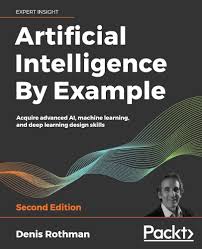
In the 21st century, innovation, business development, and digital transformation are deeply interconnected forces driving organizational growth and competitiveness. The convergence of Artificial Intelligence (AI) and Machine Learning (ML) is accelerating this transformation by enabling data-driven decision-making, automation, predictive analytics, and intelligent systems. This white paper presents a comprehensive framework integrating innovation theory, systems thinking, critical thinking, and digital transformation, supported by real-world use cases. Drawing from foundational works such as Thinking in Systems by Donella Meadows, Critical Thinking by Tom Chatfield, and How China Escaped the Poverty Trap by Yuen Yuen Ang, the paper explores how organizations can leverage AI/ML for sustainable growth.
Additionally, the paper highlights the role of KeenComputer.com and IAS-Research.com in enabling enterprises—especially SMEs—to adopt scalable, secure, and cost-effective digital transformation strategies.
RESEARCH WHITE PAPER (UPDATED VERSION)
Innovation, Business Development, and Digital Transformation Using AI & Machine Learning
An Integrated Systems Thinking and Critical Intelligence Approach with Implementation by KeenComputer.com and IAS-Research.com
Abstract
This research paper presents an advanced and integrated framework for innovation, business development, and digital transformation using Artificial Intelligence (AI) and Machine Learning (ML). By incorporating systems thinking, causal modeling, critical reasoning, and adaptive AI architectures, this paper expands traditional transformation models into dynamic, learning-driven ecosystems.
Drawing from foundational works such as Thinking in Systems, The Systems Thinking Playbook, Critical Thinking, and Artificial Intelligence by Example, this study introduces a multi-layered transformation model combining:
- Systems thinking and causal loop analysis
- Critical thinking and bias-aware decision-making
- AI-driven optimization and automation
- Business innovation and digital ecosystems
1. Introduction (Enhanced)
Digital transformation is no longer linear—it is systemic, iterative, and intelligence-driven.
Modern organizations face:
- Complex interdependencies
- Rapid technological evolution
- Data overload and decision complexity
AI and ML act as cognitive amplifiers, enabling organizations to:
- Learn from data
- Adapt dynamically
- Optimize continuously
However, transformation fails without structured thinking frameworks, which is why systems thinking and critical thinking are essential complements to AI.
2. Systems Thinking as the Core of Innovation (Major Update)
2.1 Systems Thinking Foundations
Systems thinking shifts focus from isolated parts to holistic structures and relationships.
Systems thinking helps organizations move from fragmented decision-making to integrated problem solving
2.2 Characteristics of a Systems Thinker (New Section)
A systems thinker:
- Sees the whole system, not just components
- Identifies interdependencies
- Recognizes feedback loops and delays
- Focuses on structure rather than blame
- Anticipates unintended consequences
2.3 Causal Loop Modeling in Business (New Section)
Digital transformation requires causal loop diagrams:
- Reinforcing loops → growth and scaling
- Balancing loops → stability and control
Causal loop diagrams help explain system behavior and identify structural causes of outcomes
2.4 Leverage Points for Innovation
From systems thinking:
- Change rules (policies, incentives)
- Alter information flows
- Shift paradigms
- Adjust time horizons
These leverage points enable high-impact transformation with minimal intervention
3. Critical Thinking in AI-Driven Enterprises (Expanded)
3.1 Critical Thinking as a Skill System
Critical thinking is:
A structured toolkit for reasoning, evaluating evidence, and identifying bias
3.2 Five Core Capabilities (New)
- Evaluating arguments
- Assessing evidence
- Identifying bias
- Logical reasoning
- Digital information literacy
3.3 Critical Thinking in the Age of AI
Modern organizations must:
- Evaluate AI outputs critically
- Avoid automation bias
- Ensure ethical decision-making
AI systems are powerful but must be complemented by human reasoning and adaptability
3.4 Metacognition in Business Strategy
Critical thinking introduces metacognition:
- Thinking about thinking
- Continuous learning
- Adaptive decision-making
This is essential in:
- AI adoption
- Innovation strategy
- Leadership
4. Artificial Intelligence and Machine Learning (Deep Expansion)
4.1 Evolution of AI
AI became transformative due to:
- Cloud computing
- Big data availability
- Open-source ecosystems
AI disruption emerged when computing power and data availability converged
4.2 Key AI Technologies (Expanded)
1. Neural Networks
- Feedforward Neural Networks (FNN)
- Convolutional Neural Networks (CNN)
2. Machine Learning Models
- K-means clustering
- Support Vector Machines (SVM)
- Reinforcement learning
3. Advanced AI Systems
- NLP chatbots
- Predictive analytics
- Cognitive AI systems
4.3 AI Optimization Philosophy
“Do not get lost in techniques—focus on optimizing solutions”
Key principle:
- Business outcomes > technical complexity
4.4 AI + IoT + Blockchain Integration
New transformation stack:
- AI → Intelligence
- IoT → Data generation
- Blockchain → Trust
5. Innovation Framework (Enhanced with AI Thinking)
5.1 Adaptive Innovation
AI enables:
- Continuous experimentation
- Rapid prototyping
- Real-time feedback
5.2 Machine Thinking in Business
AI introduces:
- Pattern recognition
- Predictive decision-making
- Autonomous optimization
5.3 From Invention to Innovation
AI becomes innovation only when widely adopted and integrated into business systems
6. Business Development in the Digital Age (Expanded)
6.1 AI-Driven Business Models
- Platform economy
- Data monetization
- Subscription services
6.2 Intelligent Customer Engagement
AI enables:
- Personalization
- Recommendation engines
- Behavioral analytics
6.3 Growth Through Systems Thinking
Business growth depends on:
- Feedback loops
- Network effects
- Ecosystem partnerships
7. Advanced Use Cases (Expanded with AI + Systems Thinking)
7.1 Smart Supply Chain Optimization
Using:
- K-means clustering
- Predictive analytics
Outcome:
- Optimized logistics
- Reduced cost
7.2 AI-Powered Decision Systems
Using:
- Neural networks
- Data flow graphs
Outcome:
- Faster strategic decisions
- Reduced uncertainty
7.3 Digital Marketing Intelligence
Using:
- NLP
- Sentiment analysis
Outcome:
- Improved targeting
- Higher ROI
7.4 Intelligent Manufacturing
Using:
- Reinforcement learning
- IoT sensors
Outcome:
- Predictive maintenance
- Automation
7.5 AI Chatbots and Customer Experience
Using:
- NLP + sentiment analysis
Outcome:
- 24/7 customer engagement
- Reduced operational cost
8. Role of KeenComputer.com (Enhanced)
KeenComputer.com enables:
8.1 Digital Infrastructure
- Websites and eCommerce platforms
- Cloud deployment
- DevOps
8.2 AI Integration
- API-based AI services
- Data analytics dashboards
- Automation systems
8.3 Business Impact
- Faster digital transformation
- Cost-effective implementation
- Scalable systems
9. Role of IAS-Research.com (Enhanced)
IAS-Research.com provides:
9.1 Advanced AI Research
- ML model development
- Deep learning systems
- Optimization algorithms
9.2 Systems Modeling
- Causal loop diagrams
- Simulation models
- Predictive systems
9.3 Innovation Acceleration
- Feasibility studies
- Prototyping
- R&D strategy
10. Integrated Transformation Architecture (Updated)
Layered Model:
- Data Layer → IoT, databases
- AI Layer → ML models
- Systems Layer → Feedback loops
- Business Layer → Strategy
- User Layer → Experience
11. Challenges (Expanded)
11.1 Systems Complexity
- Interdependencies
- Non-linear behavior
11.2 AI Risks
- Bias
- Over-reliance
11.3 Cognitive Challenges
- Poor reasoning
- Information overload
12. Strategic Recommendations (Enhanced)
12.1 Combine AI with Systems Thinking
→ Avoid isolated solutions
12.2 Embed Critical Thinking
→ Improve decision quality
12.3 Focus on Optimization
→ Business outcomes first
12.4 Build Learning Organizations
→ Continuous adaptation
13. Future Trends (Updated)
13.1 Autonomous Enterprises
AI-driven decision systems
13.2 Cognitive Digital Twins
Simulation-based strategy
13.3 Human-AI Symbiosis
Collaborative intelligence
14. Conclusion (Strengthened)
Digital transformation is not just technological—it is cognitive and systemic.
Success requires:
- Systems thinking
- Critical reasoning
- AI-driven intelligence
Organizations that integrate these elements will achieve:
- Sustainable innovation
- Competitive advantage
- Long-term growth
15. Updated References
- Meadows, D. Thinking in Systems
- Booth Sweeney, L. Systems Thinking Playbook
- Chatfield, T. Critical Thinking
- Rothman, D. Artificial Intelligence by Example
Appendix: Updated Mind Map
Core System
→ Innovation
→ Business Development
→ Digital Transformation
Enablers
→ AI/ML
→ Systems Thinking
→ Critical Thinking
Execution
→ KeenComputer.com
→ IAS-Research.com