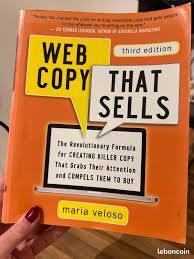
This white paper explores the intersection of classic copywriting principles, as exemplified in "The Boron Letters," modern copywriting frameworks like WeCopyThat Sells, and the evolving landscape of web content strategy. It aims to provide a comprehensive guide to creating effective, engaging, and persuasive online content that drives conversions.
RESEARCH WHITE PAPER
Digital Transformation Through Persuasive Web Copy: Integrating The Boron Letters, Web Copywriting Frameworks, and CMS-Based Marketing Systems
Abstract
In the modern digital economy, organizations must move beyond static websites toward intelligent, conversion-driven digital platforms. This research paper explores how classical copywriting principles—especially those from The Boron Letters—can be integrated with modern frameworks such as Web Copy That Sells, SEO, Content Management Systems (CMS), and AI-driven digital transformation.
The study demonstrates that persuasive communication, rooted in human psychology, remains the foundation of digital success. By combining copywriting science, behavioral economics, and digital infrastructure, organizations can significantly enhance customer acquisition, engagement, and revenue generation.
The paper also highlights how firms such as KeenComputer and IAS Research can enable scalable implementation of these strategies across industries.
1. Introduction
Digital transformation is often misunderstood as a purely technological shift. In reality, it is a fusion of technology, communication, and customer psychology.
Modern websites must function as:
- Sales engines
- Lead generation systems
- Brand positioning platforms
However, technology alone is insufficient. Without persuasive messaging, even the most advanced platforms fail to convert.
This paper proposes:
Digital success = Persuasive Copywriting + Data-Driven Systems + Scalable Technology
2. Evolution of Copywriting: From Direct Mail to Digital Ecosystems
2.1 Historical Context
Copywriting originated in:
- Direct mail marketing
- Print advertising
- Sales letters
The Boron Letters emerged from this era, representing a direct-response philosophy focused on measurable results.
Key insight:
- Copywriting is not about creativity—it is about selling effectively (dropdeadcopy.com)
2.2 Transition to Digital Platforms
Today’s environment includes:
- Websites
- Landing pages
- Email funnels
- Social media
Despite technological changes, the core principle remains:
People buy based on emotion and justification, not logic alone.
3. The Boron Letters: Foundational Framework
3.1 Core Philosophy
The Boron Letters provide a blueprint for high-performance marketing:
- Focus on market demand first
- Build compelling offers
- Write simple, persuasive copy
A central idea:
“Find a starving crowd and give them what they want.” (Gist)
3.2 Key Principles
1. Market First Approach
- Identify existing demand before creating products
- Selling becomes easier when demand exists (Skool)
2. Audience Targeting
- Tailor messaging to specific segments
- Personalization increases conversions
3. Benefits Over Features
- Customers care about outcomes, not specifications (grahammann.net)
4. Simplicity in Communication
- Effective copy is clear and easy to understand
- Often written at a basic reading level (dropdeadcopy.com)
5. AIDA Model
- Attention
- Interest
- Desire
- Action (grahammann.net)
3.3 Strategic Implications
These principles translate directly into:
- Landing page design
- SEO content strategy
- Email marketing systems
4. Web Copy That Sells: Structured Digital Persuasion
4.1 Framework Overview
Modern web copywriting expands classical ideas into structured systems:
Core components:
- Headline (Attention)
- Story (Engagement)
- Offer (Value)
- Call-to-Action (Conversion)
4.2 Copywriting as System Design
Copywriting is no longer isolated writing—it is part of:
- UX (User Experience)
- UI (Interface design)
- Conversion Rate Optimization (CRO)
4.3 Integration with Digital Funnels
Copy operates across:
- Awareness stage
- Consideration stage
- Decision stage
5. Psychological Foundations of High-Converting Copy
5.1 Behavioral Triggers
Effective copy uses:
- Scarcity
- Authority
- Social proof
- Reciprocity
5.2 Emotional vs Logical Appeals
Research shows:
- Emotional triggers initiate action
- Logic justifies decisions
5.3 Trust and Credibility
Trust is built through:
- Testimonials
- Case studies
- Transparent messaging
6. SEO and Content Engineering
6.1 Role of SEO in Copywriting
SEO ensures discoverability:
- Keyword optimization
- Meta tags
- Structured content
6.2 SEO + Copywriting Integration
|
SEO Element |
Copywriting Role |
|---|---|
|
Keywords |
Audience intent |
|
Meta tags |
Click-through optimization |
|
Headings |
Readability and structure |
|
Content |
Engagement and authority |
6.3 Data-Driven Optimization
Using:
- Google Analytics
- Heatmaps
- A/B testing
7. CMS Platforms and Digital Implementation
7.1 WordPress
- Content marketing leader
- Blog-driven SEO
7.2 Joomla
- Flexible architecture
- Enterprise applications
7.3 Magento
- E-commerce optimization
- Product storytelling
7.4 CMS as Digital Infrastructure
CMS platforms enable:
- Content scalability
- Rapid deployment
- Marketing automation
8. Digital Transformation Framework
8.1 From Static to Intelligent Systems
Modern websites must be:
- Data-driven
- Personalized
- Automated
8.2 AI Integration
AI enables:
- Content generation
- Personalization
- Predictive analytics
8.3 Automation Pipelines
Examples:
- Email automation
- Chatbots
- Recommendation engines
9. Conversion Optimization Strategies
9.1 A/B Testing
Testing improves:
- Headlines
- CTAs
- Layouts
9.2 Funnel Optimization
Steps:
- Traffic acquisition
- Engagement
- Conversion
- Retention
9.3 UX + Copywriting Synergy
Good UX:
- Reduces friction
- Improves readability
- Enhances trust
10. Industry Use Cases
10.1 E-Commerce
- Product descriptions
- Upsell strategies
10.2 SaaS
- Landing pages
- Onboarding flows
10.3 Industrial & B2B
- Technical storytelling
- White papers
11. Role of KeenComputer and IAS Research
11.1 KeenComputer Contributions
- CMS development
- SEO optimization
- Digital marketing
11.2 IAS Research Contributions
- AI/ML integration
- Data analytics
- Engineering solutions
11.3 Combined Value
Together, they provide:
- End-to-end digital transformation
- High-performance web systems
- Scalable marketing solutions
12. Integrated Strategic Model
12.1 Unified Framework
Market → Message → Platform → Data → Optimization
12.2 Workflow
- Market research
- Audience segmentation
- Copywriting strategy
- CMS implementation
- SEO optimization
- Analytics and iteration
13. Future Trends
13.1 AI-Generated Copy
- Faster content production
- Requires human oversight
13.2 Hyper-Personalization
- Dynamic content delivery
- Behavioral targeting
13.3 Voice & Conversational Interfaces
- Voice search optimization
- AI assistants
14. Discussion
The integration of:
- Classical copywriting
- Digital platforms
- AI technologies
creates a new paradigm of intelligent marketing systems.
15. Conclusion
This research demonstrates that:
- Copywriting remains the foundation of digital success
- Technology amplifies—but does not replace—persuasion
- Integration of frameworks leads to scalable growth
The synergy between:
- The Boron Letters
- Web copy frameworks
- CMS platforms
- AI-driven analytics
forms a powerful blueprint for digital transformation.
16. References
- Gary Halbert – The Boron Letters
- Boron Letters Summary and Notes (grahammann.net)
- Copywriting Lessons and Market Strategy (Skool)
- Direct Response Copywriting Principles (dropdeadcopy.com)
- Copywriting Frameworks and Marketing Psychology (Scribd)
- Digital Copywriting Strategy Insights (Gist)
Version 1.0 - Old Copy for Reference
The Boron Letters, WeCopyThat Sells, and Copywriting Handbooks: A Comprehensive White Paper on Web Content Strategy
Abstract: This white paper explores the intersection of classic copywriting principles, as exemplified in "The Boron Letters," modern copywriting frameworks like WeCopyThat Sells, and the evolving landscape of web content strategy. It aims to provide a comprehensive guide to creating effective, engaging, and persuasive online content that drives conversions.
1. Introduction
In today's digital age, compelling web content is essential for businesses to attract, engage, and convert their target audience. While the mediums may have changed, the fundamental principles of persuasive writing, as outlined in legendary texts like Gary Halbert's "The Boron Letters," remain highly relevant. This white paper will delve into these timeless principles, examine contemporary copywriting frameworks, and provide actionable insights for crafting a winning web content strategy.
2. The Boron Letters: Timeless Wisdom for the Digital Age
"The Boron Letters," a collection of personal letters written by Gary Halbert to his son, offer invaluable lessons in copywriting and marketing. Though penned in the 1980s, the principles espoused in these letters remain remarkably relevant today. Some key takeaways include:
- Understanding your audience: Halbert emphasizes the importance of deeply understanding your target audience's desires, fears, and motivations. This principle is crucial for crafting web content that resonates with readers and compels them to take action.
- Writing with clarity and conciseness: Halbert champions clear, concise writing that is easy to understand and avoids jargon. This is particularly important for web content, where readers have short attention spans and are quick to abandon convoluted text.
- Building strong headlines and leads: Halbert stresses the significance of captivating headlines and engaging leads that hook the reader's attention. In the digital realm, where content competes for attention, compelling headlines and leads are more crucial than ever.
- Creating a sense of urgency: Halbert advocates for instilling a sense of urgency in your writing to encourage immediate action. This can be effectively applied to web content through limited-time offers, countdown timers, and compelling calls to action.
- Focusing on benefits over features: Halbert emphasizes highlighting the benefits of your product or service rather than simply listing its features. This principle is particularly relevant for web content, where readers are looking for solutions to their problems.
3. WeCopyThat Sells: A Modern Copywriting Framework
WeCopyThat Sells, a popular copywriting framework developed by John Forde, provides a structured approach to crafting high-converting copy. This framework, while building on classic copywriting principles, offers a contemporary perspective tailored to the digital landscape. Some key elements of the WeCopyThat Sells framework include:
- The "Big Idea": This refers to the core message or unique selling proposition that differentiates your product or service. A strong Big Idea is crucial for creating web content that stands out from the competition.
- The "Story": This involves crafting a compelling narrative that connects with the reader on an emotional level. Storytelling is a powerful tool for engaging audiences and building brand loyalty.
- The "Offer": This encompasses the specific value proposition you are presenting to the reader. A clear and compelling offer is essential for driving conversions.
- The "Guarantee": This provides a sense of security and trust to the reader by minimizing their risk. Guarantees can significantly increase conversion rates.
4. Web Content Strategy: A Holistic Approach
Effective web content strategy goes beyond simply writing good copy. It involves a holistic approach that encompasses various elements, including:
- Content planning and creation: This involves identifying your target audience, defining your content goals, and creating a content calendar.
- Search engine optimization (SEO): This involves optimizing your content for search engines to improve your website's visibility and organic traffic.
- Content promotion and distribution: This involves promoting your content through various channels, such as social media, email marketing, and paid advertising.
- Content analysis and optimization: This involves tracking your content's performance and making data-driven adjustments to improve its effectiveness.
5. Integrating Copywriting Principles into Web Content Strategy
To create a winning web content strategy, it's essential to integrate the principles of classic copywriting and modern frameworks like WeCopyThat Sells into your overall approach. This includes:
- Crafting compelling headlines and meta descriptions: Use strong headlines and meta descriptions that accurately reflect your content and entice users to click.
- Writing engaging and informative body content: Provide valuable information that addresses your audience's needs and interests.
- Using clear and concise language: Avoid jargon and technical terms that your audience may not understand.
- Incorporating strong calls to action: Encourage users to take the desired action, whether it's making a purchase, signing up for a newsletter, or sharing your content.
- Optimizing your content for readability: Use formatting elements, such as headings, subheadings, bullet points, and images, to make your content easy to scan and digest.
- Ensuring your content is mobile-friendly: With the increasing use of mobile devices, it's crucial to ensure your content is easily accessible and readable on all screen sizes.
6. Conclusion
By integrating the timeless wisdom of "The Boron Letters," the structured approach of WeCopyThat Sells, and a comprehensive web content strategy, businesses can create compelling online content that drives conversions and achieves their marketing goals. While the digital landscape continues to evolve, the fundamental principles of persuasive writing remain steadfast, providing a solid foundation for crafting effective web content.
References:
- Halbert, G. (1984). The Boron Letters.
- Maria Veloso (2013). Web Copy That Sells.
- Nielsen, J. (2000). Designing Web Usability: The Practice of Simplicity.
- Handley, A. (2011). Content Rules: How to Create Killer Blogs, Podcasts, Videos, Ebooks, Webinars (and More) That Engage Customers and Ignite Your Business.