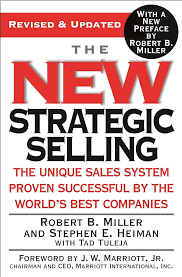
Small and medium-sized enterprises operate in an environment characterized by economic uncertainty, changing customer expectations, inflationary pressure, increased competition, technology disruption, cybersecurity risk, labour constraints and rapidly changing digital buying behaviour.
In this environment, the traditional distinction between sales, marketing, website development, ecommerce, customer service, IT and operations is becoming strategically obsolete.
A modern SME website is not merely a brochure.
An ecommerce platform is not merely an online catalogue.
A CRM is not merely a contact database.
Digital transformation is not simply the replacement of manual processes with software.
Together, these capabilities constitute a business development and revenue operating system.
The original research paper established that B2B buyers increasingly conduct independent digital research, involve multiple stakeholders and demand greater evidence of business value, security, credibility and implementation feasibility.
This expanded paper develops that argument further.
STRATEGIC BUSINESS DEVELOPMENT AND DIGITAL COMMERCE FOR SMEs IN UNCERTAIN TIMES
A Business Strategy, Strategic Selling, Digital Transformation and Revenue-Growth Framework
Integrating Miller Heiman Strategic Selling, Customer-Centric Strategy, Digital Commerce, Business Development, and SME Operations
Prepared from the perspective of an MBA-level Business Strategist and Business Development Professional with 20 Years of Experience
Strategic Organizations:
KeenComputer.com | IAS-Research.com | KeenDirect.com
Winnipeg, Manitoba, Canada
Executive Summary
Small and medium-sized enterprises operate in an environment characterized by economic uncertainty, changing customer expectations, inflationary pressure, increased competition, technology disruption, cybersecurity risk, labour constraints and rapidly changing digital buying behaviour.
In this environment, the traditional distinction between sales, marketing, website development, ecommerce, customer service, IT and operations is becoming strategically obsolete.
A modern SME website is not merely a brochure.
An ecommerce platform is not merely an online catalogue.
A CRM is not merely a contact database.
Digital transformation is not simply the replacement of manual processes with software.
Together, these capabilities constitute a business development and revenue operating system.
The original research paper established that B2B buyers increasingly conduct independent digital research, involve multiple stakeholders and demand greater evidence of business value, security, credibility and implementation feasibility.
This expanded paper develops that argument further.
The central proposition is:
For an SME, the website, ecommerce platform, CRM, content system, analytics, automation and operational infrastructure should be designed as an integrated business-development system whose purpose is to acquire, convert, serve, retain and expand profitable customers.
The strategic objective is therefore not simply:
"Build a better website."
It is:
Attract the right customers → establish trust → educate buyers → qualify opportunities → reduce buying risk → facilitate purchasing → deliver value → retain customers → expand accounts → generate referrals → learn from data → improve the business.
This creates a closed-loop business-development system.
The paper applies the Miller Heiman Strategic Selling concepts of:
- Buying Influences
- Economic Buyer
- User Buyer
- Technical Buyer
- Coach
- Win-Results
- Red Flags
- Strengths
- Response Modes
- Ideal Customer Profile
- Sales Funnel
and extends them with:
- Market segmentation
- Value proposition design
- Competitive positioning
- Customer journey management
- Digital demand generation
- Account-based marketing
- CRM
- Ecommerce
- Customer lifetime value
- Customer acquisition cost
- Revenue operations
- Business intelligence
- AI and RAG-LLM
- Customer retention
- Strategic partnerships
- Operational excellence
- Continuous improvement
The resulting framework is particularly relevant to SMEs in Canada, the United States, the United Kingdom and India.
1. Introduction
1.1 The Strategic Problem Facing SMEs
An SME can have:
- good products,
- competent engineers,
- experienced employees,
- competitive pricing,
- strong customer service,
- excellent technical capabilities,
and still struggle to grow.
Why?
Because capability does not automatically become market demand.
A business must convert capability into:
Market visibility → credibility → customer interest → qualified opportunity → purchase → customer success → repeat business.
This is the fundamental business-development problem.
Many SMEs continue to operate with fragmented systems:
|
Business Function |
Traditional SME Approach |
|---|---|
|
Marketing |
Occasional advertising |
|
Website |
Company brochure |
|
Sales |
Email and telephone |
|
CRM |
Spreadsheet |
|
Ecommerce |
Product catalogue |
|
Customer service |
Email/telephone |
|
IT |
Reactive support |
|
Analytics |
Website visitor count |
|
Content |
Irregular blog posts |
|
Strategy |
Owner intuition |
|
Operations |
Manual processes |
|
Business development |
Networking/referrals |
The problem is not that these activities are individually wrong.
The problem is that they are often not integrated into a strategic system.
2. The New SME Competitive Environment
2.1 Economic Uncertainty Changes Buying Behaviour
The source paper identifies several important changes in B2B buying behaviour:
- increased risk sensitivity;
- greater stakeholder involvement;
- longer decision processes;
- increased independent online research;
- demand for self-service;
- greater emphasis on measurable ROI;
- greater scrutiny of vendor credibility.
These trends create an important strategic implication.
The SME is no longer competing only during the sales meeting.
It is competing during the customer's:
- Google search;
- website evaluation;
- LinkedIn research;
- review examination;
- technical investigation;
- price comparison;
- internal business-case preparation;
- procurement review;
- security review;
- final supplier selection.
Therefore:
The digital customer journey has become part of the sales process.
3. From Website to Business Development Platform
A conventional website answers:
Who are we?
A strategically designed website answers:
Why should this customer trust us, choose us, buy from us, continue using us and recommend us?
That difference is fundamental.
3.1 The Five Jobs of an SME Website
A high-performing business website should perform at least five strategic jobs.
Job 1 — Attract
Bring appropriate prospects into the business.
Methods include:
- SEO;
- local SEO;
- search advertising;
- social media;
- referrals;
- technical publications;
- industry content;
- partner links;
- thought leadership.
Job 2 — Educate
Explain:
- customer problems;
- solutions;
- alternatives;
- technology;
- implementation;
- risks;
- costs;
- expected outcomes.
Job 3 — Build Trust
Demonstrate:
- expertise;
- experience;
- customer evidence;
- security;
- physical presence;
- leadership;
- technical capability;
- references;
- certifications;
- transparent policies.
Job 4 — Convert
Provide clear calls to action:
- Request Assessment
- Request Quote
- Book Consultation
- Buy Now
- Start Trial
- Download Specification
- Request Demo
- Request Site Audit
- Contact an Engineer
Job 5 — Support Expansion
After purchase, the same digital platform should support:
- documentation;
- reordering;
- support;
- training;
- upgrades;
- cross-selling;
- upselling;
- account management;
- customer communities.
Thus the website becomes part of the complete customer lifecycle.
4. The Strategic Business Development Flywheel
A traditional sales funnel is linear.
A modern SME should think in terms of a Business Development Flywheel:
Market Intelligence
↓
ICP Definition
↓
Positioning
↓
Content and Digital Presence
↓
Lead Generation
↓
Qualification
↓
Strategic Selling
↓
Transaction
↓
Delivery
↓
Customer Success
↓
Retention
↓
Expansion
↓
Referral
↓
Market Intelligence
This creates a feedback loop.
The business learns from customers and feeds that knowledge back into marketing, product development, sales and operations.
5. Ideal Customer Profile as a Strategic Filter
The original paper correctly identifies the Ideal Customer Profile as a core Miller Heiman concept.
An expanded SME strategy should make ICP a management discipline.
5.1 An SME ICP Should Include
Firmographic characteristics
- industry;
- geography;
- employee count;
- revenue;
- locations;
- growth rate;
- technology maturity.
Economic characteristics
- purchasing power;
- budget availability;
- cost sensitivity;
- margin structure;
- lifetime value.
Operational characteristics
- manual processes;
- legacy systems;
- customer-service workload;
- inventory complexity;
- order volume.
Strategic characteristics
- growth ambition;
- digital maturity;
- management commitment;
- willingness to change.
Buying characteristics
- decision-making structure;
- procurement complexity;
- buying cycle;
- technology requirements.
6. Customer Segmentation
An SME should not treat every visitor as an equal prospect.
A practical segmentation model is:
|
Segment |
Strategic Approach |
|---|---|
|
High-value ICP |
Account-based selling |
|
Medium-value ICP |
Automated nurturing + sales |
|
Transactional |
Ecommerce/self-service |
|
Emerging |
Educational content |
|
Poor-fit |
Self-qualification |
|
Existing customers |
Retention and expansion |
This prevents a common SME problem:
Salespeople spending expensive human time on low-value or poorly qualified opportunities.
7. Miller Heiman Buying Influences in the Digital Business Model
The original paper provides a strong analysis of Economic, User, Technical and Coach Buying Influences.
The expanded strategy is to make the entire digital presence serve these stakeholders.
7.1 Economic Buyer
The Economic Buyer asks:
"Why should I spend this money?"
The website must provide:
- ROI;
- total cost of ownership;
- business case;
- productivity impact;
- cost reduction;
- revenue opportunity;
- risk reduction;
- implementation timeline.
Executive content
Create:
- one-page executive brief;
- ROI calculator;
- business case;
- comparison matrix;
- implementation roadmap;
- risk analysis.
8. User Buyer
The User Buyer asks:
"Will this make my work better?"
Therefore provide:
- demonstrations;
- workflow diagrams;
- tutorials;
- videos;
- screenshots;
- user guides;
- FAQs;
- customer stories.
The digital experience must demonstrate not merely what the product is but:
What the user's working day looks like after implementation.
9. Technical Buyer
The Technical Buyer asks:
"Can I safely implement and operate this?"
The website should therefore provide:
- architecture;
- security information;
- API documentation;
- integrations;
- hosting information;
- backup strategy;
- disaster recovery;
- authentication;
- compliance;
- data handling;
- support procedures.
For software and ecommerce projects, technical transparency becomes a competitive advantage.
10. Coach
The Coach asks:
"How can I make this successful inside my organization?"
The website should therefore provide:
- presentations;
- internal proposal templates;
- ROI documents;
- comparison sheets;
- implementation plans;
- customer references;
- FAQs for management;
- technical documentation.
This converts the website into a sales enablement platform.
11. Red Flags and Strengths
The source paper identifies vendor instability, unclear ROI, technical concerns, implementation risk and lack of peer evidence as major Red Flags.
An MBA-level business strategy should treat Red Flags as measurable management issues.
11.1 Digital Red Flag Audit
|
Red Flag |
Business Risk |
Corrective Action |
|---|---|---|
|
No physical address |
Trust |
Display legitimate location |
|
No leadership information |
Vendor risk |
Leadership profiles |
|
No customer evidence |
Credibility |
Case studies |
|
No security information |
Technical risk |
Security centre |
|
No pricing guidance |
Procurement friction |
Pricing framework |
|
Poor mobile experience |
Lost demand |
Responsive redesign |
|
Slow website |
Conversion loss |
Performance optimization |
|
No clear CTA |
Sales leakage |
CTA architecture |
|
Outdated content |
Stability concern |
Content governance |
|
No ecommerce |
Transaction friction |
Self-service purchasing |
12. Value Proposition Strategy
A website should not begin with technology.
It should begin with customer value.
A useful strategic equation is:
Customer Problem + Business Impact + Solution + Evidence + Risk Reduction + Call to Action
For example:
Weak
We provide Magento development services.
Stronger
We help growing distributors reduce manual order processing and improve customer self-service through secure B2B ecommerce.
Strongest strategic formulation
We help SME distributors reduce order-processing costs, improve customer retention and increase sales capacity by transforming manual sales workflows into secure, measurable B2B digital commerce.
The third statement connects technology to business results.
13. Competitive Positioning
SMEs frequently attempt to compete by saying:
- better service;
- lower price;
- experienced team;
- high quality.
These claims are easy for competitors to copy.
A stronger competitive strategy uses capability combinations.
For example:
Business Strategy + Engineering + AI + Ecommerce + Cybersecurity + Operations
can create a differentiated proposition.
This is particularly relevant to the KCS–IAS Research–KeenDirect model.
14. The Strategic Role of KeenComputer.com
KeenComputer.com can function as the implementation and managed-service business-development arm.
Its strategic role can include:
Digital Transformation
- website modernization;
- ecommerce;
- CRM;
- cloud;
- infrastructure;
- cybersecurity;
- managed IT.
SME Technology Operations
- monitoring;
- backup;
- security;
- network management;
- endpoint management;
- lifecycle management.
Web and Ecommerce
- Joomla;
- WordPress;
- Magento;
- WooCommerce;
- OpenCart;
- hosting;
- performance;
- SEO infrastructure.
Commercial proposition
KeenComputer should therefore be positioned around:
Turning SME business requirements into secure, operational technology systems.
15. The Strategic Role of IAS-Research.com
IAS-Research.com can operate upstream as the:
Research + Innovation + Strategy + Advisory
organization.
Its role includes:
- technology research;
- AI/ML;
- RAG-LLM;
- systems engineering;
- VLSI;
- IoT;
- power systems;
- MBSE;
- digital transformation;
- technical feasibility;
- innovation strategy;
- white papers;
- R&D;
- funding strategy.
This creates a powerful differentiation:
IAS Research identifies and validates the strategic and technical opportunity; KeenComputer implements and operates it.
16. The Strategic Role of KeenDirect.com
KeenDirect can function as the:
Commerce + Product + Supply + Transaction
arm.
Potential capabilities include:
- computer hardware;
- components;
- ecommerce;
- product comparison;
- technical recommendations;
- inventory;
- procurement;
- AI-assisted product discovery.
The three organizations can therefore form a strategic value chain:
IAS Research
Research → Strategy → Innovation → Architecture
↓
KeenComputer
Design → Build → Integrate → Secure → Operate
↓
KeenDirect
Product → Commerce → Supply → Customer Transaction
This is substantially stronger than presenting three independent websites.
17. The Three-Company Strategic Ecosystem
17.1 IAS Research
Think
Research and strategic intelligence.
17.2 KeenComputer
Build
Engineering, implementation and operations.
17.3 KeenDirect
Sell
Products, services and ecommerce.
The combined model becomes:
Think → Build → Operate → Sell → Learn → Innovate
This can become a distinctive SME technology ecosystem.
18. Digital Transformation as a Business Strategy
Digital transformation should not begin with:
"Which software should we buy?"
It should begin with:
"Which business constraint prevents growth?"
Examples:
Constraint
Salespeople spend too much time entering orders.
Digital response
B2B ecommerce.
Constraint
Customers repeatedly ask the same technical questions.
Digital response
Knowledge base + AI/RAG.
Constraint
IT failures are discovered after customers complain.
Digital response
Nagios/Wazuh monitoring + proactive operations.
Constraint
Leads are lost.
Digital response
CRM + marketing automation.
Constraint
Management cannot understand website performance.
Digital response
Business intelligence dashboard.
19. Digital Maturity Model for SMEs
A useful maturity model is:
Level 0 — Manual
Email, telephone, spreadsheets.
Level 1 — Digital Presence
Website and email.
Level 2 — Digital Marketing
SEO, analytics, social media and CRM.
Level 3 — Digital Commerce
Ecommerce, online quoting, customer portals.
Level 4 — Integrated Operations
CRM + ecommerce + ERP + support + analytics.
Level 5 — Intelligent Enterprise
AI, RAG-LLM, predictive analytics and automated workflows.
Level 6 — Adaptive Digital Enterprise
AI-assisted strategy, autonomous workflows, continuous optimization and real-time business intelligence.
The objective should not be to jump immediately to Level 6.
SMEs should progress according to ROI and business readiness.
20. Revenue Operations
A modern SME should integrate:
Marketing + Sales + Ecommerce + Customer Success + Operations + Finance
around a common revenue model.
This is the essence of Revenue Operations.
The organization should know:
- where leads originate;
- which campaigns work;
- which industries convert;
- which salespeople convert;
- average deal size;
- sales cycle;
- CAC;
- gross margin;
- retention;
- churn;
- expansion revenue;
- customer lifetime value.
21. The SME Revenue Equation
A useful management model is:
Revenue = Number of Qualified Opportunities × Win Rate × Average Deal Value
But growth is more accurately represented as:
Revenue Growth = New Customers + Expansion Revenue + Repeat Revenue − Churn
This changes management priorities.
A company should not focus exclusively on acquiring new customers.
It must also:
- retain customers;
- increase account value;
- encourage repeat purchases;
- cross-sell;
- upsell;
- generate referrals.
22. Customer Acquisition Cost and Lifetime Value
Two essential metrics are:
Customer Acquisition Cost
CAC = Total Sales and Marketing Cost / New Customers Acquired
Customer Lifetime Value
A simplified model is:
CLV = Average Revenue per Customer × Gross Margin × Expected Customer Lifetime
Strategically:
A business should not optimize for the cheapest lead; it should optimize for the highest profitable customer lifetime value.
This is particularly important for SME ecommerce.
23. Ecommerce as an Operational Strategy
The original paper provides strong evidence that ecommerce can reduce manual processing costs and improve operational efficiency.
The expanded argument is that ecommerce should be viewed as:
Sales + Customer Service + Procurement + Operations + Data Infrastructure.
An ecommerce transaction can capture:
- customer;
- product;
- price;
- quantity;
- location;
- payment;
- inventory;
- browsing behaviour;
- repeat purchase;
- support requirements.
Therefore ecommerce becomes a source of business intelligence.
24. The Digital Order-to-Cash Process
A mature SME can automate:
Product Search
↓
Configuration
↓
Quote
↓
Approval
↓
Order
↓
Payment / PO
↓
Inventory
↓
Fulfillment
↓
Invoice
↓
Delivery
↓
Support
↓
Repeat Purchase
↓
Upsell
This can dramatically reduce administrative work.
25. AI and RAG-LLM as Business Development Infrastructure
The next stage is the integration of AI.
However, an SME should avoid implementing AI simply because AI is fashionable.
The strategic question is:
Where does knowledge, decision-making or repetitive work create economic friction?
RAG-LLM systems can address:
- product knowledge;
- technical documentation;
- customer support;
- service manuals;
- internal procedures;
- sales enablement;
- proposal preparation;
- IT operations;
- log analysis;
- troubleshooting;
- knowledge retrieval.
A RAG architecture can connect:
Company Documents → Knowledge Base → Vector Search → Retrieval → LLM → Grounded Answer
This creates a potentially valuable SME knowledge system.
26. AI-Assisted Sales
AI can support:
Lead qualification
Identify:
- ICP fit;
- industry;
- company size;
- buying intent;
- technology requirements.
Sales preparation
Generate:
- account briefs;
- discovery questions;
- competitor analysis;
- stakeholder maps.
Proposal development
Generate:
- requirements summaries;
- solution architectures;
- statements of work;
- ROI models.
Customer service
Answer:
- product questions;
- installation questions;
- documentation questions;
- troubleshooting questions.
Human salespeople remain responsible for strategic relationships and high-value decisions.
27. AI-Assisted Strategic Selling
The future Miller Heiman workflow can therefore become:
CRM Data
Website Behaviour
Ecommerce Data
Customer History
Market Intelligence
↓
AI Account Intelligence
↓
Buying Influence Map
↓
Win-Result Analysis
↓
Red Flag Identification
↓
Recommended Sales Strategy
↓
Human Sales Executive
This represents a transition from traditional CRM to AI-assisted strategic account management.
28. Content Strategy as a Sales System
Content should not be produced merely to "keep the website active."
Every major piece of content should serve a strategic purpose.
Awareness Content
Answers:
"Do I have this problem?"
Consideration Content
Answers:
"What are my options?"
Evaluation Content
Answers:
"Why should I choose you?"
Procurement Content
Answers:
"Can I justify the purchase?"
Technical Content
Answers:
"Can we implement this safely?"
Customer Content
Answers:
"How do I get value from it?"
This produces a complete content-to-revenue architecture.
29. Content Mapping to Buying Influences
|
Content |
Primary Buyer |
|---|---|
|
ROI Calculator |
Economic Buyer |
|
Case Study |
Economic/Coach |
|
Product Demo |
User Buyer |
|
User Guide |
User Buyer |
|
API Documentation |
Technical Buyer |
|
Security White Paper |
Technical Buyer |
|
Implementation Plan |
Coach |
|
Executive Brief |
Economic Buyer |
|
Comparison Guide |
Economic/Technical |
|
Customer Reference |
Coach/Economic |
The content strategy therefore becomes a strategic-selling strategy.
30. Account-Based Marketing
For high-value B2B accounts, generic marketing should be supplemented by Account-Based Marketing.
Step 1
Identify target accounts.
Step 2
Research organizational structure.
Step 3
Identify Buying Influences.
Step 4
Map Win-Results.
Step 5
Identify Red Flags.
Step 6
Create account-specific content.
Step 7
Engage multiple stakeholders.
Step 8
Measure account engagement.
Step 9
Move the account into strategic selling.
31. Sales Funnel Design
A practical SME funnel is:
Visitor
↓
Engaged Visitor
↓
Marketing Qualified Lead
↓
Sales Qualified Lead
↓
Discovery
↓
Opportunity
↓
Proposal
↓
Technical/Procurement Validation
↓
Negotiation
↓
Won/Lost
↓
Onboarding
↓
Expansion
The critical improvement is that funnel stages should have objective exit criteria.
32. Funnel Metrics
Management should monitor:
- website traffic;
- qualified traffic;
- conversion rate;
- lead-to-opportunity rate;
- opportunity-to-win rate;
- average deal value;
- sales cycle;
- CAC;
- gross margin;
- retention;
- churn;
- CLV;
- expansion revenue.
The objective is not maximum traffic.
The objective is:
Maximum profitable revenue from strategically valuable customers.
33. Strategic KPI Dashboard
A management dashboard should include five categories.
Market
- market growth;
- target segment growth;
- competitor movement.
Marketing
- qualified traffic;
- cost per lead;
- conversion;
- content engagement.
Sales
- pipeline;
- win rate;
- average deal;
- sales cycle.
Customer
- retention;
- churn;
- NPS;
- repeat purchase;
- expansion.
Operations
- order-processing cost;
- fulfillment time;
- support tickets;
- system availability;
- automation percentage.
34. Balanced Scorecard Approach
An SME can also use a Balanced Scorecard.
Financial
- revenue;
- gross margin;
- EBITDA;
- CAC;
- CLV.
Customer
- retention;
- satisfaction;
- NPS;
- market share.
Internal Process
- order cycle time;
- automation;
- defect rate;
- support resolution.
Learning and Innovation
- new products;
- employee training;
- AI adoption;
- R&D;
- knowledge assets.
35. Strategic Investment Prioritization
SMEs rarely have unlimited capital.
Therefore every digital initiative should be evaluated using:
Business Impact × Probability of Success ÷ Cost and Complexity
A practical prioritization matrix:
|
Initiative |
Impact |
Cost |
Priority |
|---|---|---|---|
|
Website security |
Very High |
Low |
Immediate |
|
Backup |
Very High |
Low |
Immediate |
|
SEO foundations |
High |
Low |
High |
|
CRM |
High |
Medium |
High |
|
Ecommerce |
Very High |
Medium/High |
Strategic |
|
AI chatbot |
Medium |
Medium |
Selective |
|
RAG knowledge system |
High |
Medium |
Strategic |
|
Full ERP |
High |
High |
Carefully planned |
|
Advanced AI agents |
Potentially High |
High |
Pilot |
36. Low-Budget SME Strategy
The SME does not need to implement everything simultaneously.
A low-budget sequence can be:
Phase 1
Security + backup + website health.
Phase 2
Clear positioning + ICP + CTA.
Phase 3
SEO + content + analytics.
Phase 4
CRM + lead management.
Phase 5
Self-service and ecommerce.
Phase 6
Automation.
Phase 7
AI/RAG.
Phase 8
Predictive analytics.
This creates a financially disciplined transformation strategy.
37. 90-Day Business Development Program
Days 1–30 — Diagnose
Conduct:
- business audit;
- ICP analysis;
- competitor analysis;
- website audit;
- SEO audit;
- security audit;
- sales-funnel audit;
- customer analysis.
Deliver:
SME Business Development Baseline.
Days 31–60 — Position
Develop:
- value proposition;
- ICP;
- buyer personas;
- Buying Influence map;
- Red Flag map;
- Win-Result map;
- content strategy;
- CTA architecture.
Days 61–90 — Activate
Implement:
- website improvements;
- landing pages;
- CRM;
- analytics;
- lead capture;
- email nurturing;
- sales dashboard;
- initial ecommerce/self-service functions.
The objective is to create measurable business-development momentum.
38. 6–12 Month Transformation
After the first 90 days:
Months 4–6
- ecommerce;
- CRM integration;
- marketing automation;
- customer portal;
- SEO expansion;
- case studies.
Months 7–9
- ERP integration;
- advanced analytics;
- personalization;
- RAG knowledge base.
Months 10–12
- AI-assisted sales;
- predictive analytics;
- account intelligence;
- automated customer service;
- continuous optimization.
39. Risk Management
Digital transformation creates risks.
These include:
- cybersecurity;
- data privacy;
- vendor lock-in;
- implementation failure;
- excessive customization;
- AI hallucination;
- poor data quality;
- employee resistance;
- budget overruns.
Therefore:
Digital transformation must be governed as a business transformation program, not merely an IT project.
40. Governance Model
The SME should establish:
Strategic Owner
CEO/Owner.
Business Owner
Business Development/Sales.
Technology Owner
IT/Engineering.
Customer Owner
Customer Success/Operations.
Data Owner
Management/Analytics.
Security Owner
IT/Security.
This ensures accountability.
41. Competitive Advantage Through Integration
Individual technologies are increasingly commoditized.
A competitor can buy:
- WordPress;
- Magento;
- CRM;
- cloud hosting;
- analytics;
- AI.
The sustainable advantage is therefore not the software.
It is the integration of technology, business knowledge, processes, people and customer relationships.
This is a critical strategic principle.
42. SME Strategic Moat
A long-term competitive moat can be constructed from:
Domain Knowledge
Customer Data
Processes
Relationships
Content
Technology
Operational Experience
AI/Knowledge Systems
The resulting knowledge becomes difficult for competitors to reproduce.
43. Business Development as a Continuous Learning System
The modern SME should continuously ask:
- Which customers are most profitable?
- Why do they buy?
- Why do prospects refuse?
- Which content generates opportunities?
- Which products have highest margin?
- Which accounts are expanding?
- Which customers are at risk?
- Which operational processes waste money?
- Which technology investments produce measurable value?
- What new market opportunities are emerging?
These questions transform business development into a management discipline.
44. SWOT Analysis
Strengths
- SME agility;
- shorter decision chains;
- specialist expertise;
- ability to customize;
- local customer relationships;
- lower organizational complexity.
Weaknesses
- limited capital;
- smaller sales teams;
- lower brand recognition;
- limited marketing resources;
- dependence on key personnel.
Opportunities
- digital commerce;
- AI;
- RAG;
- remote services;
- cybersecurity;
- managed IT;
- specialized vertical solutions;
- cross-border commerce.
Threats
- large competitors;
- platform commoditization;
- cybersecurity attacks;
- economic downturn;
- price competition;
- AI-driven disruption;
- changing customer expectations.
45. Strategic Response to the SWOT
The SME should use its strengths to exploit opportunities.
For example:
Specialist Expertise + AI
→ Vertical AI solutions.
Local Relationship + Ecommerce
→ Hybrid local/digital commerce.
Engineering Expertise + Research
→ High-value technical consulting.
IT Operations + Security
→ Managed SME technology services.
Research + Engineering + Commerce
→ Complete technology lifecycle.
46. The KCS–IAS Research–KeenDirect Strategic Model
The three organizations can be positioned as an integrated ecosystem.
IAS-Research.com
Strategy and Innovation
- Research
- R&D
- AI
- Engineering analysis
- White papers
- Feasibility
- Innovation
- Strategic advisory
KeenComputer.com
Implementation and Operations
- IT
- Websites
- Ecommerce
- Cloud
- Cybersecurity
- Infrastructure
- Managed services
- Digital transformation
KeenDirect.com
Commerce and Supply
- Hardware
- Components
- Products
- Ecommerce
- Procurement
- Technical product recommendations
Together:
Research → Design → Build → Secure → Operate → Sell → Learn → Innovate
47. Recommended SME Service Portfolio
A strategically structured portfolio could include:
Entry Level
SME Digital Health Check
- website;
- security;
- backup;
- SEO;
- performance;
- infrastructure.
Growth Level
SME Digital Transformation Assessment
- business process;
- website;
- CRM;
- ecommerce;
- cybersecurity;
- automation.
Revenue Level
Digital Lead and Commerce Transformation
- website;
- SEO;
- CRM;
- ecommerce;
- analytics;
- automation.
Intelligence Level
AI/RAG Business Knowledge Transformation
- document ingestion;
- knowledge base;
- RAG;
- AI assistant;
- CRM integration;
- analytics.
Enterprise SME Level
Strategic Digital Operations
- infrastructure;
- cybersecurity;
- ecommerce;
- CRM;
- AI;
- monitoring;
- managed services.
48. Productized Services
Productization is especially valuable for SMEs.
Instead of selling:
"IT consulting."
Sell:
SME IT Modernization Audit
Instead of:
"Website development."
Sell:
Secure Lead-Machine Website
Instead of:
"Ecommerce development."
Sell:
B2B Digital Commerce Transformation
Instead of:
"AI consulting."
Sell:
Private RAG Knowledge Assistant
Instead of:
"Cybersecurity."
Sell:
SME Website and VPS Security Hardening
Productization makes the value proposition easier to understand and easier to sell.
49. The Strategic Sales Conversation
The sales conversation should move away from:
"What technology do you want?"
toward:
"What business problem is limiting growth?"
Then:
"What does that problem cost?"
Then:
"What would success look like?"
Then:
"What risks prevent you from acting?"
Then:
"What would a low-risk first step look like?"
This is consultative business development.
50. The Business Case Framework
Every significant proposal should contain:
1. Current State
What exists today?
2. Business Problem
What is not working?
3. Economic Impact
What does the problem cost?
4. Desired State
What should improve?
5. Proposed Solution
What should be implemented?
6. Investment
What will it cost?
7. Expected Benefits
What will improve?
8. Risks
What could go wrong?
9. Mitigation
How will risk be controlled?
10. ROI
What is the expected financial return?
11. Implementation
How will the transformation occur?
12. Next Step
What decision is required?
51. The "Do Nothing" Competitor
One of the most important strategic insights is that the main competitor is not always another vendor.
It can be:
Doing nothing.
Therefore the sales strategy should demonstrate:
Cost of Change
versus
Cost of Inaction.
For example:
Manual process cost:
$100/order
Automated process:
$20/order
Difference:
$80/order.
At 10,000 orders:
$800,000 potential annual process-cost difference.
The exact numbers must be validated for the individual business, but the methodology provides the economic buyer with a defensible decision framework.
52. Customer Retention Strategy
Acquisition without retention creates a leaking bucket.
The customer lifecycle should therefore be:
Acquire → Onboard → Adopt → Succeed → Retain → Expand → Advocate
Digital tools can support each stage.
53. Customer Expansion
Existing customers should be evaluated for:
- additional products;
- additional locations;
- additional services;
- upgrades;
- maintenance;
- training;
- security;
- managed services;
- ecommerce;
- AI;
- consulting.
This can produce substantial revenue without acquiring an entirely new customer.
54. Strategic Partnerships
SMEs can overcome limited scale through partnerships.
Potential partners include:
- accountants;
- lawyers;
- MSPs;
- web agencies;
- software companies;
- manufacturers;
- distributors;
- consultants;
- universities;
- colleges;
- industry associations.
The partnership model can become:
Partner identifies problem → IAS Research provides strategy → KeenComputer implements → KeenDirect supplies products → Partner retains relationship.
55. Geographic Strategy
The three-organization model can support:
Winnipeg/Manitoba
Local SME and professional services.
Canada
Remote consulting and digital transformation.
United States
Specialized engineering, software, AI and ecommerce services.
United Kingdom
Research, software and digital engineering partnerships.
India
Engineering, R&D, software development and technology partnerships.
This creates an international SME strategy without requiring a large physical infrastructure.
56. Strategic Differentiation
The strongest positioning is not:
"We are another web agency."
Nor:
"We are another IT company."
Nor:
"We are another AI consultancy."
The differentiated proposition is:
We combine business strategy, research, engineering, digital commerce, cybersecurity, AI and IT operations to help SMEs reduce cost, improve efficiency and create measurable growth.
This is a much broader strategic position.
57. Research Proposition
The research hypothesis emerging from this paper is:
SMEs that integrate strategic selling, digital commerce, customer-centric website design, CRM, analytics, automation and operational technology are better positioned to improve revenue productivity, reduce cost-to-serve and increase resilience during periods of economic uncertainty than SMEs that manage these capabilities independently.
This hypothesis can be tested empirically.
58. Proposed Research Methodology
A future empirical study could examine 50–200 SMEs across Canada, USA, UK and India.
Measure:
Independent Variables
- digital maturity;
- ecommerce adoption;
- CRM adoption;
- website maturity;
- automation;
- AI adoption.
Mediating Variables
- customer experience;
- sales productivity;
- operational efficiency;
- customer trust.
Dependent Variables
- revenue growth;
- profitability;
- retention;
- sales-cycle duration;
- customer acquisition cost;
- resilience.
This would turn the white paper into a formal research program.
59. Strategic Research Questions
- Does ecommerce adoption reduce SME cost-to-serve?
- Does website trust maturity influence B2B conversion?
- Does digital self-service reduce sales-cycle duration?
- Does CRM integration improve pipeline predictability?
- Does AI-assisted knowledge management improve employee productivity?
- Does digital maturity increase resilience during economic shocks?
- Does customer self-service improve retention?
- Does integrated digital infrastructure produce greater ROI than isolated technology investments?
60. Expanded Strategic Framework
The final model can be summarized as:
STRATEGY
Who should we serve?
↓
POSITIONING
Why should they choose us?
↓
DIGITAL PRESENCE
How will they discover and evaluate us?
↓
STRATEGIC SELLING
How do we win the buying committee?
↓
COMMERCE
How do we make purchasing easy?
↓
OPERATIONS
How do we deliver efficiently?
↓
CUSTOMER SUCCESS
How do we create measurable value?
↓
RETENTION
How do we keep customers?
↓
EXPANSION
How do we increase account value?
↓
INTELLIGENCE
What are customers teaching us?
↓
INNOVATION
What should we build next?
61. Final Strategic Conclusions
The central conclusion of this expanded research paper is that digital infrastructure has become business infrastructure.
For an SME, the website, ecommerce platform, CRM, analytics, AI systems and IT infrastructure should no longer be treated as isolated technology projects.
They should be managed as components of a unified Business Development Operating System.
The original research demonstrates that digital buying behaviour, self-service, trust, ecommerce automation and stakeholder-centric selling have become increasingly important in B2B markets.
The expanded strategic interpretation goes further:
The SME that integrates strategy, selling, digital commerce, customer experience, operations and intelligence can turn technology investment into a repeatable competitive advantage.
The strategic objective is therefore not:
More technology.
It is:
More productive technology.
Not:
More website traffic.
But:
More qualified profitable customers.
Not:
More leads.
But:
More strategically valuable accounts.
Not:
More ecommerce features.
But:
Lower friction and lower cost-to-serve.
Not:
More AI.
But:
Better decisions, faster work and better customer outcomes.
62. Strategic Role of the Three Organizations
The resulting model for the three organizations is:
IAS-Research.com
THINK
Research
Strategy
Innovation
R&D
AI
Engineering
Advisory
↓
KeenComputer.com
BUILD & OPERATE
Digital Transformation
Websites
Ecommerce
IT
Cybersecurity
Cloud
Automation
Managed Services
↓
KeenDirect.com
SELL & SUPPLY
Products
Hardware
Components
Ecommerce
Procurement
Technical Commerce
Together:
THINK → BUILD → OPERATE → SELL → LEARN → INNOVATE
This creates a potentially differentiated SME technology ecosystem.
63. Management Action Plan
An SME adopting this framework should begin with ten actions:
- Define the Ideal Customer Profile.
- Identify the highest-value customer problems.
- Map Economic, User, Technical and Coach Buying Influences.
- Audit the website against those buying influences.
- Identify digital Red Flags.
- Quantify cost of current manual processes.
- Establish CRM and funnel discipline.
- Introduce ecommerce/self-service where economically justified.
- Establish measurable customer and operational KPIs.
- Introduce AI/RAG only where it produces measurable business value.
The final principle is:
Strategy determines where the company competes. Business development determines how it wins. Digital systems determine how efficiently it scales. Operations determine whether it can deliver. Customer success determines whether the revenue lasts. Intelligence determines what the company does next.
References and Research Base
The expanded paper retains the reference base of the original research, including:
- Miller Heiman Strategic Selling framework.
- Gartner research on B2B buyer preferences.
- OECD research on SME digitalisation and resilience.
- McKinsey B2B Pulse research.
- Digital Commerce 360 B2B ecommerce research.
- Distribution Strategy Group B2B ecommerce research.
- Shopify B2B self-service research.
- Virto Commerce B2B ecommerce research.
- Elogic B2B ecommerce ROI research.
- CommerceV3 ecommerce automation research.
- Bloomreach customer-acquisition-cost research.
- 6sense B2B buyer research.
- Dentsu B2B research.
- SalesGlobe B2B sales strategy research.
- Horizon Market Research B2B buyer behaviour research.
- OroCommerce B2B ecommerce case studies.
- Springer research on digital resilience of SMEs.
- Trust and B2B website research identified in the original source paper.
- Customer portal and self-service research.
- B2B sales funnel and sales-technology research.
The source paper's reference section contains the detailed URLs and bibliographic starting points for these materials.
Final Strategic Statement
For the SME of the 2026–2030 period, the website is the front door, ecommerce is the transaction engine, CRM is the relationship system, analytics is the management instrument, AI is the knowledge and productivity layer, cybersecurity is the trust foundation, and operations are the delivery engine.
The competitive advantage emerges when all of these are connected to a coherent business strategy.
That is the central role of strategic business development.
This expanded version shifts the paper from roughly “Miller Heiman + website/ecommerce” toward a much stronger SME business-development operating model, with the three organizations positioned as IAS Research = Think, KeenComputer = Build/Operate, KeenDirect = Sell/Supply. The original paper's implementation roadmap can also be retained as the tactical foundation for this larger strategy. Pasted text
If you want to take this to the next level, the strongest next version would be a 15–25 page formal research white paper with Business Model Canvas + SWOT + PESTLE + Porter's Five Forces + Ansoff Matrix + STP + Miller Heiman Blue Sheet + Customer Journey Map + Revenue Funnel + KPI/Balanced Scorecard + 3-year KCS/IASR/KeenDirect business-development roadmap.