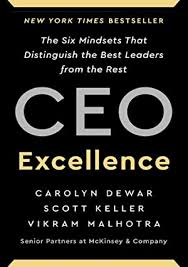
Leadership is the single most critical factor influencing sustainable business growth and successful digital transformation. In an era defined by rapid technological change, globalization, and data-driven decision-making, organizations must evolve beyond traditional management approaches. This research essay explores the relationship between leadership, business growth, and development, with a strong focus on how technology-enabled transformation creates competitive advantage. It further examines how KeenComputer.com and IAS-Research.com can act as strategic partners in leadership enablement, business development, and digital transformation for small and medium enterprises (SMEs), startups, and research-driven organizations.
The paper integrates established leadership theories, modern business development frameworks, and digital transformation best practices. It emphasizes actionable strategies, real-world use cases, and structured roadmaps that organizations can adopt to achieve measurable growth.
Leadership, Business Growth, and Digital Transformation
Executive Summary
Leadership is the single most critical factor influencing sustainable business growth and successful digital transformation. In an era defined by rapid technological change, globalization, and data-driven decision-making, organizations must evolve beyond traditional management approaches. This research essay explores the relationship between leadership, business growth, and development, with a strong focus on how technology-enabled transformation creates competitive advantage. It further examines how KeenComputer.com and IAS-Research.com can act as strategic partners in leadership enablement, business development, and digital transformation for small and medium enterprises (SMEs), startups, and research-driven organizations.
The paper integrates established leadership theories, modern business development frameworks, and digital transformation best practices. It emphasizes actionable strategies, real-world use cases, and structured roadmaps that organizations can adopt to achieve measurable growth.
1. Introduction: Leadership in a Transforming Business Landscape
The global business environment has undergone a fundamental shift over the past two decades. Digital technologies, platform economies, artificial intelligence, cloud computing, and data analytics have redefined how organizations operate, compete, and create value. Leadership today is no longer confined to hierarchical control or operational oversight; it is about vision, adaptability, systems thinking, and the ability to orchestrate change across people, processes, and technology.
Business growth and development are not accidental outcomes. They are the result of deliberate leadership decisions that align organizational strategy with market opportunities and technological capabilities. Leaders must balance short-term performance with long-term capability building, while ensuring resilience in the face of uncertainty.
In this context, digital transformation is not merely an IT initiative. It is a leadership-driven, enterprise-wide transformation that affects culture, governance, customer engagement, and business models. Organizations that fail to integrate leadership development with digital strategy often experience fragmented initiatives, low adoption, and poor return on investment.
2. Leadership Theories and Their Relevance to Business Growth
2.1 Classical Leadership Models
Traditional leadership theories such as trait theory, transactional leadership, and bureaucratic leadership emphasized control, predictability, and efficiency. While these models remain relevant in regulated or operationally intensive environments, they are insufficient for driving innovation-led growth.
Transactional leadership, for example, focuses on performance through rewards and penalties. This approach can optimize existing processes but rarely produces breakthrough innovation or cultural transformation.
2.2 Transformational and Strategic Leadership
Transformational leadership emphasizes vision, inspiration, and change. Transformational leaders motivate teams to transcend short-term goals and align with a shared purpose. Research consistently shows that transformational leadership correlates with higher employee engagement, innovation, and organizational performance.
Strategic leadership extends this concept by integrating market awareness, competitive strategy, and resource allocation. Strategic leaders translate vision into actionable roadmaps, ensuring alignment between business objectives and execution.
2.3 Adaptive and Systems Leadership
In complex and uncertain environments, adaptive leadership becomes essential. Adaptive leaders recognize that not all problems have technical solutions; many require changes in mindset, behavior, and organizational culture.
Systems leadership further expands this view by treating organizations as interconnected systems rather than isolated functions. Decisions in technology, marketing, operations, and human resources are understood as interdependent, enabling leaders to avoid siloed thinking and unintended consequences.
3. Business Growth and Development: Concepts and Frameworks
3.1 Defining Business Growth
Business growth can be measured in multiple dimensions: revenue, profitability, market share, customer base, intellectual property, and organizational capability. Sustainable growth requires balance across these dimensions rather than singular focus on short-term financial metrics.
3.2 Organic vs. Inorganic Growth
- Organic growth arises from internal capabilities such as product innovation, market expansion, and operational efficiency.
- Inorganic growth includes mergers, acquisitions, and strategic partnerships.
Leadership plays a central role in determining which growth path is appropriate and how risks are managed.
3.3 Business Development as a Strategic Function
Business development bridges strategy, sales, partnerships, and innovation. Effective business development leaders identify opportunities, build ecosystems, and convert ideas into scalable offerings.
In digital contexts, business development increasingly relies on data analytics, platform strategies, and technology-enabled service models.
4. Digital Transformation as a Leadership Imperative
4.1 Understanding Digital Transformation
Digital transformation involves the integration of digital technologies into all areas of a business, fundamentally changing how value is delivered to customers. It includes:
- Process digitization and automation
- Data-driven decision-making
- Cloud and platform adoption
- AI and advanced analytics
- Cybersecurity and resilience
However, technology alone does not create transformation. Leadership determines priorities, investment decisions, governance models, and cultural readiness.
4.2 Common Failure Modes in Digital Transformation
Many digital transformation initiatives fail due to:
- Lack of executive sponsorship
- Poor alignment between business and IT
- Resistance to change
- Skills gaps and inadequate training
- Absence of clear success metrics
These failures underscore the importance of leadership capability alongside technical execution.
4.3 Linking Digital Transformation to Business Value
Successful leaders explicitly connect digital initiatives to business outcomes such as cost reduction, customer experience improvement, faster time-to-market, and new revenue streams.
5. The Role of Technology and Research in Leadership Enablement
Modern leaders require timely insights, predictive intelligence, and evidence-based decision-making. This elevates the role of research, analytics, and engineering expertise in leadership development.
Technology platforms enable:
- Real-time performance monitoring
- Scenario planning and forecasting
- Knowledge management and organizational learning
- Distributed and remote leadership models
Organizations that combine leadership development with applied research and engineering gain a significant competitive advantage.
6. How KeenComputer.com Supports Leadership and Business Growth
KeenComputer.com operates at the intersection of IT infrastructure, software engineering, and digital business enablement. Its value proposition lies in translating technology into practical business outcomes.
6.1 Digital Infrastructure for Scalable Growth
KeenComputer.com helps organizations design and deploy scalable digital infrastructure, including cloud platforms, secure hosting, and performance-optimized web systems. This infrastructure forms the foundation upon which leaders can execute growth strategies without operational bottlenecks.
6.2 Enabling Data-Driven Leadership
Through analytics platforms, dashboards, and system integration, KeenComputer.com empowers leaders with visibility into operations, customer behavior, and financial performance. This supports evidence-based decision-making and reduces reliance on intuition alone.
6.3 Supporting Digital Business Models
KeenComputer.com assists organizations in implementing digital products, SaaS platforms, and eCommerce systems. These capabilities enable leaders to explore new revenue streams and market opportunities with lower marginal costs.
6.4 Technology as a Business Development Enabler
By aligning IT architecture with business objectives, KeenComputer.com ensures that technology investments directly support business development initiatives such as market expansion, partner integration, and customer acquisition.
7. How IAS-Research.com Drives Strategic Insight and Transformation
IAS-Research.com complements technology execution with research-driven strategy, advanced analytics, and engineering insight.
7.1 Research-Led Strategy Development
IAS-Research.com provides market research, technology assessment, and strategic analysis that inform leadership decisions. This reduces uncertainty and improves the quality of long-term planning.
7.2 Advanced Analytics and AI for Leadership Decisions
Through applied research in data science, machine learning, and AI, IAS-Research.com enables predictive analytics, optimization models, and intelligent decision-support systems.
These capabilities help leaders anticipate market shifts, optimize resource allocation, and manage risk more effectively.
7.3 Engineering and Innovation Support
IAS-Research.com brings deep expertise in engineering, systems modeling, and emerging technologies. This supports R&D-driven organizations and technology-intensive businesses seeking innovation-led growth.
7.4 Knowledge Transfer and Capability Building
Beyond consulting, IAS-Research.com emphasizes knowledge transfer, helping organizations build internal capabilities in analytics, research, and digital innovation.
8. Integrated Value: KeenComputer.com and IAS-Research.com as Growth Partners
When combined, KeenComputer.com and IAS-Research.com offer an end-to-end ecosystem for leadership, business growth, and digital transformation.
- KeenComputer.com focuses on execution, infrastructure, and operational enablement.
- IAS-Research.com focuses on insight, research, and strategic intelligence.
Together, they support leaders across the full transformation lifecycle:
- Vision and strategy formulation
- Research and feasibility analysis
- Technology architecture and deployment
- Change management and capability building
- Continuous optimization and scaling
This integrated approach significantly improves the success rate of transformation initiatives.
9. Use Cases and Practical Applications
9.1 SME Digital Transformation
SMEs often lack internal resources for large-scale transformation. KeenComputer.com provides cost-effective, scalable IT solutions, while IAS-Research.com delivers strategic guidance and analytics. Leadership teams gain clarity, control, and growth momentum.
9.2 Research-Driven Organizations
For research institutions and technology startups, IAS-Research.com enables advanced modeling and innovation strategy, while KeenComputer.com ensures robust digital platforms for commercialization.
9.3 Market Expansion and Globalization
Leaders pursuing international growth benefit from data-driven market analysis, digital marketing platforms, and globally scalable infrastructure supported jointly by both organizations.
10. Future Outlook: Leadership in the Age of AI and Platforms
The next phase of business growth will be shaped by AI, automation, and platform ecosystems. Leadership will increasingly involve:
- Human–AI collaboration
- Ethical and responsible innovation
- Continuous learning and adaptability
- Ecosystem orchestration
Organizations that invest early in leadership capability, research, and digital infrastructure will be best positioned to thrive.
11. Conclusion
Leadership, business growth, and digital transformation are inseparable in the modern economy. Effective leaders align vision, strategy, people, and technology to create sustainable value. Digital transformation amplifies leadership impact, but only when guided by research, insight, and disciplined execution.
KeenComputer.com and IAS-Research.com together provide a powerful partnership for organizations seeking growth, resilience, and competitive advantage. By combining technology enablement with research-driven strategy, they help leaders move from ambition to execution, and from transformation to sustained success.
This integrated, leadership-centric approach represents a practical and scalable model for business development and digital transformation in the years ahead.
References
- Bass, B. M., & Riggio, R. E. (2006). Transformational Leadership (2nd ed.). Mahwah, NJ: Lawrence Erlbaum Associates.
- Kotter, J. P. (1996). Leading Change. Boston, MA: Harvard Business School Press.
- Drucker, P. F. (2007). Management Challenges for the 21st Century. New York: Harper Business.
- Mintzberg, H. (2009). Managing. San Francisco: Berrett-Koehler Publishers.
- Porter, M. E. (1985). Competitive Advantage: Creating and Sustaining Superior Performance. New York: Free Press.
- Teece, D. J., Pisano, G., & Shuen, A. (1997). Dynamic capabilities and strategic management. Strategic Management Journal, 18(7), 509–533.
- Bessant, J., & Tidd, J. (2018). Innovation and Entrepreneurship (3rd ed.). Hoboken, NJ: Wiley.
- Westerman, G., Bonnet, D., & McAfee, A. (2014). Leading Digital: Turning Technology into Business Transformation. Boston, MA: Harvard Business Review Press.
- Kane, G. C., Palmer, D., Phillips, A. N., Kiron, D., & Buckley, N. (2015). Strategy, not technology, drives digital transformation. MIT Sloan Management Review.
- Bharadwaj, A., El Sawy, O. A., Pavlou, P. A., & Venkatraman, N. (2013). Digital business strategy: Toward a next generation of insights. MIS Quarterly, 37(2), 471–482.
- Osterwalder, A., & Pigneur, Y. (2010). Business Model Generation. Hoboken, NJ: Wiley.
- Rogers, D. L. (2016). The Digital Transformation Playbook. New York: Columbia Business School Publishing.
- McKinsey & Company. (2018). Unlocking Success in Digital Transformations. McKinsey Global Institute Report.
- Kaplan, R. S., & Norton, D. P. (1996). The Balanced Scorecard. Boston, MA: Harvard Business School Press.
- Nonaka, I., & Takeuchi, H. (1995). The Knowledge-Creating Company. New York: Oxford University Press.
- Brynjolfsson, E., & McAfee, A. (2017). Machine, Platform, Crowd. New York: W. W. Norton & Company.
- OECD. (2020). Digital Transformation in the Age of COVID‑19. OECD Publishing.
- Davenport, T. H., & Ronanki, R. (2018). Artificial intelligence for the real world. Harvard Business Review, 96(1), 108–116.
- Vial, G. (2019). Understanding digital transformation: A review and a research agenda. The Journal of Strategic Information Systems, 28(2), 118–144.
- Northouse, P. G. (2021). Leadership: Theory and Practice (9th ed.). Thousand Oaks, CA: Sage Publications.