Small and medium-sized enterprises (SMEs) frequently recognize that something is wrong before they can clearly identify what the real problem is.
Sales may be declining, customers may be leaving, employees may be overloaded, operating costs may be increasing, technology may be outdated, cybersecurity risks may be growing, or competitors may be moving faster. Yet these symptoms can have very different underlying causes.
A strategic approach therefore begins with a different question:
What is the underlying business problem, what is changing in the environment, and how should the organization align its people, processes, technology and resources to respond?
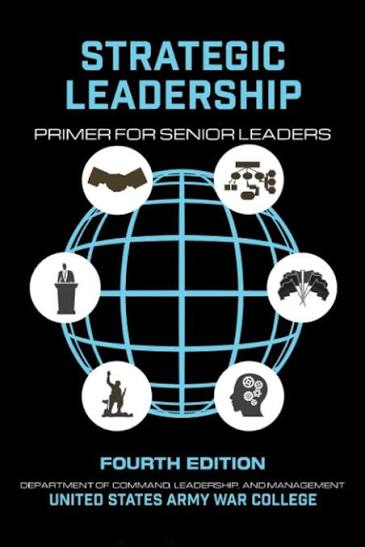
Research White Paper Strategic Problem Identification and Business Growth for SMEs-A Strategic Leadership Framework Inspired by the U.S. Army War College Strategic Leadership: Primer for Senior Leaders
Strategic role of KeenComputer.com: Technology, Digital Transformation, Execution and Continuous Improvement Partner
Executive Summary
Small and medium-sized enterprises (SMEs) frequently recognize that something is wrong before they can clearly identify what the real problem is.
Sales may be declining, customers may be leaving, employees may be overloaded, operating costs may be increasing, technology may be outdated, cybersecurity risks may be growing, or competitors may be moving faster. Yet these symptoms can have very different underlying causes.
A strategic approach therefore begins with a different question:
What is the underlying business problem, what is changing in the environment, and how should the organization align its people, processes, technology and resources to respond?
The Strategic Leadership: Primer for Senior Leaders, 4th Edition, from the U.S. Army War College provides a useful conceptual foundation for this approach. Although written for senior military leadership rather than commercial SMEs, its concepts can be adapted to business management. The Primer defines strategic leadership as aligning people, systems and resources with an enterprise vision while creating an adaptive and innovative culture.
The Primer also emphasizes that strategic environments are dynamic, complex and uncertain. Rather than assuming that every strategic problem has a permanent solution, leaders should continuously manage changing conditions and adapt their strategies.
For an SME, this translates into a practical management cycle:
Observe → Diagnose → Frame → Prioritize → Decide → Align → Execute → Measure → Learn → Adapt
KeenComputer.com can operate as the SME's strategic technology and execution partner, helping management transform this framework into measurable business action through:
- IT and digital-transformation assessments
- cybersecurity and infrastructure reviews
- website and ecommerce analysis
- cloud and hybrid-cloud architecture
- business-process improvement
- data and analytics
- AI/RAG/automation solutions
- software engineering
- infrastructure monitoring
- backup and disaster recovery
- technology modernization
- implementation and managed operations.
The objective is not simply to sell technology. Technology becomes a means of solving identified business problems and enabling strategic objectives.
1. Introduction: Why SMEs Need Strategic Problem Identification
Many SMEs operate successfully through entrepreneurial experience, customer relationships and practical decision-making. This can work extremely well during periods of stability.
However, growth changes the nature of the organization.
A company that once had:
- 5 employees,
- 50 customers,
- one office,
- a simple website,
- manual accounting,
- spreadsheets,
- local servers,
may eventually have:
- 50 employees,
- hundreds or thousands of customers,
- multiple locations,
- ecommerce,
- cloud services,
- remote employees,
- external suppliers,
- cybersecurity exposure,
- increasingly complex operational processes.
The management challenge therefore changes.
The owner can no longer personally see and control every important activity.
The U.S. Army War College makes a similar distinction between lower-level leadership and strategic leadership. At the strategic level, the environment becomes broader and more complex, requiring leaders to understand the environment, evaluate consequences, use leadership teams and align the enterprise around a future vision.
For SMEs, the lesson is straightforward:
Growth requires a transition from primarily operational management toward strategic management.
2. From Symptoms to Strategic Problems
One of the most important disciplines an SME can develop is distinguishing between a symptom, a problem, a root cause and a strategic issue.
Consider:
|
Observable symptom |
Possible underlying problem |
|---|---|
|
Sales declining |
Weak positioning, customer experience or market change |
|
Website traffic declining |
SEO, content, technical or market-positioning problem |
|
Customers leaving |
Service quality, pricing, product-market mismatch |
|
Employees working overtime |
Poor processes, staffing, automation or organizational design |
|
IT costs increasing |
Fragmented infrastructure or uncontrolled technology growth |
|
Security incidents |
Weak governance, patching, identity or monitoring |
|
Ecommerce conversion declining |
UX, pricing, trust, performance or customer journey |
|
Cash flow problems |
Pricing, inventory, collections, margins or growth structure |
|
Projects consistently late |
Capacity, process, estimation or communication problems |
|
Owner making every decision |
Organizational scalability and delegation problem |
The first management error is to treat the symptom as the problem.
For example:
"We need a new website."
may actually mean:
"Our customer acquisition system is not producing sufficient qualified opportunities."
Similarly:
"We need AI."
may actually mean:
"Our employees spend too much time searching, classifying and processing information."
Strategic diagnosis changes the conversation from technology shopping to business problem solving.
3. The U.S. Army War College Strategic Leadership Model
The uploaded Primer provides several concepts that are particularly applicable to SME management.
3.1 Vision
Strategic leadership begins with a vision of what the enterprise should become.
The Primer describes strategic leadership as aligning people, systems and resources to achieve an enterprise vision while enabling an adaptive and innovative culture.
For an SME, management should be able to answer:
- Where are we today?
- Where do we want to be?
- Why does that future state matter?
- What capabilities must we develop?
- What must change?
- What should we deliberately stop doing?
A vision without an execution mechanism is merely an aspiration.
4. Environmental Scanning
The Primer describes the competitive environment as dynamic, complex and characterized by deep uncertainty. It emphasizes that organizations must continually adapt rather than rely on a single permanent solution.
An SME should therefore continuously scan five environments.
4.1 Customer environment
Examine:
- customer needs
- buying behavior
- complaints
- churn
- new requirements
- customer profitability
- emerging customer segments.
4.2 Competitive environment
Examine:
- competitors
- pricing
- product offerings
- service models
- digital presence
- technology adoption
- customer reviews
- new entrants.
4.3 Technology environment
Examine:
- cloud
- AI
- cybersecurity
- automation
- ecommerce
- data analytics
- software platforms
- infrastructure
- emerging standards.
4.4 Economic environment
Examine:
- inflation
- interest rates
- labor costs
- supply chains
- currency
- financing
- purchasing behavior.
4.5 Regulatory and risk environment
Examine:
- privacy
- cybersecurity
- industry regulations
- contractual obligations
- insurance
- business continuity
- data protection.
The objective is not to predict the future perfectly.
It is to identify important changes early enough to respond intelligently.
5. The SME Strategic Diagnostic
KeenComputer can convert the strategic-leadership principles into a practical SME diagnostic.
The 10-Dimension SME Strategic Health Check
1. Vision and Strategy
- Is the company's direction clear?
- Are strategic priorities documented?
- Are investments connected to those priorities?
2. Customers
- Who are the most valuable customers?
- Why do they buy?
- Why do customers leave?
- What unmet problems exist?
3. Revenue
- Where does revenue originate?
- Which products/services generate margin?
- Which customers generate sustainable value?
4. Operations
- Where are bottlenecks?
- What processes are manual?
- Where does work get duplicated?
5. People
- Are responsibilities clear?
- Are key employees overloaded?
- Does knowledge reside with one person?
6. Technology
- Is the technology supporting business objectives?
- Are legacy systems constraining growth?
- Are systems integrated?
7. Cybersecurity
- Are identities protected?
- Are systems patched?
- Are backups tested?
- Is monitoring available?
8. Digital Presence
- Does the website generate business?
- Is ecommerce optimized?
- Is SEO producing qualified traffic?
- Is customer information captured effectively?
9. Financial Management
- Are margins understood?
- Are technology costs controlled?
- Is cash flow monitored?
- Are investments producing measurable results?
10. Organizational Adaptability
Ask:
How quickly can this company recognize a problem, make a decision and implement a change?
This can become one of the SME's most important strategic measurements.
6. Problem Identification: A Five-Level Model
KeenComputer can use a five-level diagnostic hierarchy.
Level 1 — Symptom
What is happening?
Example:
Website sales have fallen 20%.
Level 2 — Evidence
What data confirms the problem?
Examine:
- traffic
- conversion rate
- abandoned carts
- customer acquisition
- product availability
- page performance.
Level 3 — Root Cause
Why is it happening?
Possibilities might include:
- poor search visibility
- slow website
- confusing checkout
- pricing
- inventory
- competitor offerings.
Level 4 — Strategic Issue
Why does this matter to the enterprise?
For example:
The company has become dependent on an acquisition channel whose effectiveness is declining.
Level 5 — Strategic Response
What capability should the company develop?
Possible response:
- improve SEO
- diversify acquisition
- improve ecommerce
- introduce CRM automation
- improve customer retention
- redesign product positioning.
This prevents management from immediately purchasing technology before understanding the actual problem.
7. Problem Management Rather Than Problem Hunting
The Primer emphasizes the difficulty of strategic problems and distinguishes complex adaptive challenges from problems that can be addressed through technical expertise. Its discussion of strategic competencies includes strategic thinking and problem management.
This distinction is extremely valuable for SMEs.
Technical problem
A technical problem generally has a definable solution.
Examples:
- server disk failure
- broken database
- expired SSL certificate
- website configuration error
- failed backup
- software bug.
These can often be addressed through expertise and established procedures.
Adaptive problem
An adaptive problem changes as the organization and environment change.
Examples:
- declining customer loyalty
- changing customer expectations
- new competitors
- disruption from AI
- changing business model
- employee resistance to new processes
- transition from founder-led to management-led organization.
These require experimentation, learning and organizational adaptation.
Therefore:
Not every business problem should be solved with a technical project.
Some require changes in:
people + process + structure + incentives + technology + leadership.
8. Strategic Alignment: Ends, Ways and Means
One of the strongest concepts in the Primer is alignment.
It describes internal alignment around:
- ends — objectives
- ways — concepts and methods
- means — resources.
These must work together to enact the organization's vision.
This can be directly adapted to SMEs.
|
Strategic element |
SME interpretation |
|---|---|
|
Ends |
What business outcome do we need? |
|
Ways |
How will we achieve it? |
|
Means |
What people, money and technology are available? |
Example
End: Increase recurring revenue.
Ways:
- subscription services
- customer retention
- ecommerce automation
- managed services.
Means:
- CRM
- website
- marketing
- sales personnel
- automation
- analytics.
The mistake is starting with the means:
"Let's buy a CRM."
The strategic approach starts with the end:
"What business outcome are we trying to achieve?"
9. Managing Short-Term Versus Long-Term Priorities
SMEs frequently face a strategic tension:
Do we optimize today's business or invest in tomorrow's business?
The Primer identifies similar organizational tensions, including short-term resource needs versus longer-term strategy.
For an SME:
Short-term priorities
- customer support
- revenue
- cash flow
- urgent repairs
- current projects
- payroll.
Long-term priorities
- modernization
- automation
- cybersecurity
- new products
- new markets
- organizational development
- digital transformation.
The answer is not to ignore either.
Management should create a strategic investment portfolio.
For example:
|
Investment category |
Objective |
|---|---|
|
Run |
Keep business operating |
|
Repair |
Remove critical weaknesses |
|
Improve |
Increase productivity |
|
Transform |
Create new capabilities |
|
Explore |
Test future opportunities |
10. Strategic Choice Under Uncertainty
The Primer notes that strategic competition involves uncertainty and that perfect optimization is unrealistic. It discusses Herbert Simon's concept of bounded rationality and the practical idea of making a sufficiently good decision with available information rather than waiting for complete certainty.
For SMEs, this has an important implication:
Do not wait for perfect information before acting on important problems.
Instead:
- Gather the best available evidence.
- Identify assumptions.
- Identify risks.
- Develop alternatives.
- Test important assumptions.
- Make a reversible decision where possible.
- Measure results.
- Adapt.
This creates a learning strategy rather than a rigid five-year plan.
11. Competitive Strategy for SMEs
The Primer defines strategy as guidelines for decision-making under competitive uncertainty, intended to reduce uncertainty and create or maintain advantage.
An SME should therefore ask:
Where will we compete?
- geographic market
- industry
- customer segment
- digital market
- vertical market.
How will we compete?
Potential approaches include:
- specialized expertise
- customer experience
- speed
- reliability
- lower total cost
- technical capability
- personalization
- integrated service.
What capabilities must we develop?
Examples:
- digital commerce
- cybersecurity
- AI
- logistics
- engineering
- customer analytics
- automation.
What should we stop doing?
This is frequently overlooked.
Strategic management requires choices.
12. The SME Strategic Growth Architecture
A practical growth architecture can be represented as:
VISION
↓
ENVIRONMENTAL SCAN
↓
PROBLEM IDENTIFICATION
↓
ROOT-CAUSE ANALYSIS
↓
STRATEGIC ISSUE
↓
OPTIONS
↓
PRIORITIZATION
↓
RESOURCE ALIGNMENT
↓
EXECUTION
↓
MEASUREMENT
↓
LEARNING
↓
ADAPTATION
↓
NEW STRATEGIC CYCLE
This should be treated as a continuous management system rather than a one-time consulting exercise.
13. The Role of People
Strategic transformation cannot be delegated entirely to technology.
The Primer emphasizes the importance of leadership teams, collaboration and interpersonal competencies. It identifies conceptual, technical and interpersonal competencies as important dimensions of strategic leadership.
For SMEs, the equivalent structure could be a Strategic Growth Team.
Possible participants:
- owner/CEO
- operations manager
- finance
- sales/marketing
- IT
- technical specialists
- customer-service representatives
- external advisors.
The team should perform four functions:
Observe
What is happening?
Interpret
What does it mean?
Decide
What should we do?
Execute
Who will do what and when?
14. Technology as a Strategic Capability
Technology should not be treated as an isolated IT department function.
It should be mapped directly to business objectives.
|
Business problem |
Technology capability |
|---|---|
|
Poor customer acquisition |
Website + SEO + analytics + CRM |
|
Manual sales process |
CRM + automation |
|
Slow operations |
Workflow automation |
|
Security exposure |
Cybersecurity + monitoring |
|
Data fragmentation |
Integration + data platform |
|
Knowledge bottleneck |
RAG/AI knowledge system |
|
Ecommerce limitations |
Modern ecommerce architecture |
|
Infrastructure instability |
Monitoring + backup + modernization |
|
Distributed workforce |
Cloud collaboration |
|
Rapid growth |
Scalable cloud/hybrid infrastructure |
This is where KeenComputer can provide substantial strategic value.
15. KeenComputer.com as Strategic Technology Partner
KeenComputer should be positioned not merely as an IT service provider, but as an SME technology strategy and implementation partner.
The role can be organized into four stages.
Stage 1 — Discover
KeenComputer evaluates:
- business objectives
- customer journey
- technology
- infrastructure
- cybersecurity
- website
- ecommerce
- applications
- processes
- data
- cloud
- operational risks.
Deliverable
SME Strategic Technology Assessment
16. Stage 2 — Diagnose
KeenComputer converts observations into documented issues.
For every issue:
Symptom → Evidence → Root Cause → Business Impact → Risk → Opportunity
For example:
Slow website
becomes:
Poor website performance → increased customer friction → lower conversion potential → lost revenue opportunity.
The technology assessment therefore becomes a business assessment.
17. Stage 3 — Design
KeenComputer develops a prioritized roadmap.
Example
Priority A — Critical
- cybersecurity vulnerability
- failed backup
- unsupported infrastructure.
Priority B — Growth
- ecommerce modernization
- CRM integration
- website conversion improvements.
Priority C — Productivity
- automation
- workflow integration
- AI knowledge management.
Priority D — Future Capability
- predictive analytics
- RAG-LLM
- advanced AI
- hybrid-cloud architecture.
This approach helps prevent SMEs from spending scarce capital on low-impact technology.
18. Stage 4 — Execute
KeenComputer can implement the roadmap through:
Infrastructure
- Linux/Windows
- servers
- virtualization
- cloud
- hybrid cloud
- networking
- monitoring.
Cybersecurity
- firewall
- endpoint security
- vulnerability management
- backup
- monitoring
- security hardening.
Website
- Joomla
- WordPress
- SEO
- content architecture
- performance.
Ecommerce
- Magento
- ecommerce integration
- payment systems
- inventory
- shipping
- analytics.
Software Engineering
- application development
- APIs
- integrations
- automation
- databases.
AI
- RAG
- LLM
- enterprise knowledge systems
- document intelligence
- AI-assisted workflows.
19. Continuous Strategic Monitoring
The strategic process should not stop after implementation.
KeenComputer can establish an SME Strategic Technology Dashboard.
Potential indicators include:
Business
- revenue
- gross margin
- recurring revenue
- customer acquisition
- customer retention.
Digital
- website traffic
- qualified leads
- conversion
- ecommerce revenue
- search visibility.
Technology
- system availability
- performance
- infrastructure cost
- automation rate.
Security
- vulnerabilities
- patch status
- backup success
- security events.
Operations
- processing time
- project completion
- employee productivity
- workflow bottlenecks.
This converts strategic management from periodic discussion into continuous measurement.
20. Adaptive Management
The Primer emphasizes that strategic environments are adaptive and that approaches that work today may not work indefinitely. Its competitive-strategy discussion explicitly cautions that strategies must remain adaptable.
For an SME, the management rule becomes:
Treat every strategy as a hypothesis that must be tested against reality.
For example:
Hypothesis:
Improving ecommerce performance will increase sales.
Experiment:
Improve product pages and checkout.
Measurement:
Conversion rate, average order value and abandoned-cart rate.
Learning:
Determine whether the hypothesis is supported.
Adaptation:
Continue, modify or replace the initiative.
This is more robust than assuming that a strategy will automatically work because it was well designed.
21. Innovation as an Organizational Capability
The Primer argues that strategic leaders should deliberately create conditions that encourage coordination and sharing of information and ideas. It also emphasizes that leaders should not allow existing culture to suppress innovation.
SMEs can implement this through:
- employee improvement suggestions
- customer feedback loops
- technology experiments
- pilot projects
- automation initiatives
- cross-functional teams
- post-project reviews.
A useful rule is:
Small experiments can produce strategic learning without requiring large strategic commitments.
22. The KeenComputer SME Growth Cycle
KeenComputer can turn the overall framework into a repeatable service.
Phase 1 — Business Discovery
Understand:
- business model
- customers
- products
- revenue
- objectives
- constraints.
Phase 2 — Strategic Scan
Analyze:
- competition
- technology
- customers
- market
- operational environment.
Phase 3 — Business Health Assessment
Evaluate:
- people
- processes
- systems
- infrastructure
- cybersecurity
- website
- ecommerce
- data.
Phase 4 — Problem Definition
Classify issues as:
- operational
- technical
- financial
- organizational
- strategic
- adaptive.
Phase 5 — Opportunity Identification
Identify:
- cost reduction
- revenue growth
- productivity
- customer experience
- risk reduction
- new capabilities.
Phase 6 — Strategic Roadmap
Define:
- objectives
- initiatives
- dependencies
- investment
- resources
- KPIs.
Phase 7 — Implementation
Execute prioritized initiatives.
Phase 8 — Measurement
Measure business and technical outcomes.
Phase 9 — Strategic Review
Conduct quarterly reviews.
Phase 10 — Adaptation
Modify the roadmap as the environment changes.
23. A 90-Day SME Strategic Transformation Program
Days 1–15: Discover
Conduct:
- management interviews
- business-model review
- customer analysis
- technology inventory
- infrastructure review
- website assessment
- cybersecurity assessment.
Output
Current-State Strategic Assessment
Days 16–30: Diagnose
Identify:
- critical problems
- root causes
- strategic risks
- growth opportunities
- capability gaps.
Output
SME Strategic Issue Register
Days 31–45: Prioritize
Classify initiatives according to:
- business impact
- urgency
- cost
- risk
- complexity
- strategic relevance.
Output
Strategic Priority Matrix
Days 46–60: Design
Create:
- target architecture
- business-process roadmap
- technology roadmap
- cybersecurity roadmap
- digital-growth roadmap.
Output
12–24 Month Strategic Roadmap
Days 61–90: Execute
Begin the highest-priority initiatives.
Examples:
- security remediation
- backup modernization
- website improvements
- ecommerce improvements
- CRM integration
- infrastructure modernization
- automation pilot.
Output
First Measurable Business Improvements
24. SME Strategic Decision Matrix
Management can use a simple matrix:
|
Question |
Evidence |
Decision |
|---|---|---|
|
Is the problem real? |
Data |
Confirm/Reject |
|
What is causing it? |
Root-cause analysis |
Define issue |
|
What is the business impact? |
Financial/operational data |
Quantify |
|
Is it urgent? |
Risk analysis |
Prioritize |
|
Is technology part of the solution? |
Capability analysis |
Determine |
|
What alternatives exist? |
Options analysis |
Select approach |
|
What resources are required? |
Budget/capacity |
Approve |
|
How will success be measured? |
KPI |
Establish baseline |
|
How quickly can we learn? |
Pilot |
Experiment |
|
When should we review? |
Review cycle |
Adapt |
25. Strategic Questions Every SME Owner Should Ask
About the market
- What is changing?
- Which customer needs are changing?
- What are competitors doing differently?
- What new technology could alter our market?
About the organization
- What are we exceptionally good at?
- Where are we vulnerable?
- Which processes depend on one person?
- Where are we wasting time or resources?
About customers
- Why do customers choose us?
- Why do customers leave?
- Which customers are most valuable?
- What problem do customers actually pay us to solve?
About technology
- Is our technology an enabler or a constraint?
- Which processes should be automated?
- Where are our cybersecurity weaknesses?
- Is our data usable for decision-making?
About strategy
- What should we start doing?
- What should we stop doing?
- What should we continue doing?
- What must become true for the company to reach its vision?
26. From Owner-Centric to Enterprise-Centric Management
A major obstacle to SME growth is founder dependence.
An owner may know:
- every customer
- every supplier
- every employee
- every technical problem
- every financial issue.
This works at small scale.
But growth requires institutional knowledge.
The objective becomes:
Owner knowledge
→
documented processes
→
shared organizational knowledge
→
information systems
→
analytics
→
automation
→
organizational capability
KeenComputer can contribute particularly to the technology portion of this transition through documentation, systems integration, collaboration platforms, monitoring, automation and knowledge-management systems.
27. Strategic Risk Management
SMEs should maintain a Strategic Risk Register.
|
Risk |
Probability |
Impact |
Early indicator |
Response |
|---|---|---|---|---|
|
Cyberattack |
High/Medium/Low |
High |
Security alerts |
Hardening/monitoring |
|
Customer concentration |
— |
— |
Revenue concentration |
Diversification |
|
Key-person dependency |
— |
— |
Work concentrated |
Documentation |
|
Technology failure |
— |
— |
System incidents |
Redundancy |
|
Cash-flow pressure |
— |
— |
Receivables |
Financial controls |
|
Supplier dependency |
— |
— |
Delivery problems |
Alternatives |
|
Market disruption |
— |
— |
Customer behavior |
Adaptation |
The exact ratings should be based on company evidence rather than generic assumptions.
28. Strategic Leadership Competencies for SME Executives
The Primer groups strategic leadership competencies into conceptual, technical and interpersonal categories.
An SME leadership team can apply the same structure.
Conceptual
- systems thinking
- strategic thinking
- problem framing
- environmental scanning
- scenario thinking.
Technical
- financial understanding
- operational knowledge
- technology literacy
- data analysis
- project management.
Interpersonal
- communication
- negotiation
- collaboration
- consensus building
- stakeholder management.
The combination matters.
An executive does not need to personally become the company's best programmer, cybersecurity engineer or accountant.
Instead:
The strategic leader must understand enough to ask the right questions and assemble the right expertise.
The Primer similarly emphasizes the increasing importance of senior leadership teams in complex environments and the need to bring together different expertise.
29. KeenComputer's Strategic Position
KeenComputer can therefore position its SME offering around five capabilities.
1. Strategic Technology Assessment
Understand the current state.
2. Problem and Risk Identification
Identify what is preventing growth.
3. Digital Transformation
Design better processes and technology.
4. Engineering and Implementation
Build and deploy the solution.
5. Continuous Operations
Monitor, maintain and improve the environment.
This creates a lifecycle:
Assess → Advise → Architect → Implement → Operate → Improve
rather than a one-time IT project.
30. Recommended KeenComputer Service Architecture
A practical commercial architecture could be:
SME Strategic Assessment
A structured review of:
- business
- IT
- cybersecurity
- website
- ecommerce
- cloud
- operations.
Digital Transformation Roadmap
Prioritized 12–24 month plan.
Technology Modernization
Infrastructure and applications.
Secure SME
Cybersecurity, backup and monitoring.
Digital Growth
Website, SEO, ecommerce, CRM and analytics.
Intelligent SME
AI, RAG, automation and knowledge management.
Managed Technology
Continuous monitoring and operational support.
This provides a natural progression from diagnosis to implementation to recurring service.
31. Measuring Strategic Growth
Growth should not be measured only by revenue.
A strategic SME dashboard should include five dimensions.
Financial
- revenue
- margin
- cash flow
- recurring revenue.
Customer
- retention
- acquisition
- satisfaction
- customer lifetime value.
Operational
- productivity
- cycle time
- error rates
- capacity.
Technology
- availability
- automation
- performance
- technology cost.
Strategic
- new capabilities
- new markets
- innovation pipeline
- strategic risks.
The purpose is to determine whether the organization is becoming more capable, not merely larger.
32. Strategic Maturity Model
An SME can progress through five maturity stages.
Stage 1 — Reactive
Problems are addressed when they become urgent.
Stage 2 — Operational
Processes are documented and basic metrics are introduced.
Stage 3 — Managed
Strategy, technology, risk and performance are coordinated.
Stage 4 — Adaptive
The organization continuously scans, experiments and adapts.
Stage 5 — Strategic
The organization deliberately develops capabilities ahead of environmental change.
The objective is not simply to reach a particular maturity label. The important question is:
Can the organization detect change, understand its implications and respond effectively?
33. Key Principles
The combined framework can be reduced to twelve principles.
- Start with the business problem, not technology.
- Separate symptoms from root causes.
- Continuously scan the external environment.
- Understand the internal organization.
- Recognize uncertainty rather than assuming certainty.
- Align objectives, methods and resources.
- Balance immediate requirements with future capability.
- Use teams and diverse expertise.
- Build an adaptive and innovative culture.
- Measure outcomes rather than activities.
- Treat strategies as hypotheses that require learning.
- Continuously adapt the organization.
These principles closely reflect the strategic leadership framework in the uploaded U.S. Army War College Primer, while their application here is adapted specifically for commercial SME management.
34. Conclusion
SME growth is not simply a matter of increasing sales, hiring employees or purchasing new technology.
As an enterprise grows, the nature of its management problem changes.
The company becomes a more interconnected system involving:
Customers + Employees + Processes + Technology + Suppliers + Finance + Competitors + Regulation + Information
A problem in one component can affect the entire organization.
The U.S. Army War College's Strategic Leadership: Primer for Senior Leaders provides a valuable conceptual lens for dealing with this complexity. It emphasizes environmental awareness, strategic leadership, alignment of people/systems/resources, adaptive culture, strategic choice and continuous development.
For an SME, the practical lesson is:
Do not manage the business only by reacting to today's problems. Build an organizational capability for continuously identifying problems, understanding their causes, recognizing opportunities, making informed choices, executing deliberately and adapting as conditions change.
KeenComputer can make this framework operational by connecting strategic diagnosis with technology and engineering execution.
Its role can therefore extend beyond conventional IT support:
Business Problem
→ Strategic Diagnosis
→ Technology Assessment
→ Solution Architecture
→ Implementation
→ Measurement
→ Managed Operations
→ Continuous Improvement
This positions KeenComputer as a strategic technology and digital-transformation partner for SMEs, helping management move from reactive problem solving toward a systematic capability for sustainable growth.
Reference
Galvin, Tom (Ed.), Watson, Dale (Ed.), et al. Strategic Leadership: Primer for Senior Leaders, 4th Edition, U.S. Army War College, Department of Command, Leadership, and Management, School of Strategic Landpower, Carlisle, Pennsylvania. The uploaded edition contains eight chapters covering strategic leadership, the competitive environment, internal organizational environment, competitive strategy, senior leader roles, competencies, character and development.
The Primer is explicitly designed around the transition toward strategic leadership and emphasizes environmental complexity, adaptation, alignment, teams, competencies and long-term development.
Note: The U.S. Army War College source is a military leadership publication. The SME framework above is an adaptation of its strategic-management concepts to commercial business, not a claim that military organizational practices should be transferred directly to private enterprises.