Web application development has become a foundational pillar of digital transformation for organizations of all sizes. From small and medium enterprises (SMEs) to global enterprises, web applications enable scalable service delivery, data-driven decision-making, automation, and customer engagement across geographies. Advances in cloud computing, modern JavaScript frameworks, API-driven architectures, and content management platforms have significantly reduced barriers to entry while simultaneously increasing expectations around performance, security, and user experience.
This research white paper provides a comprehensive overview of modern web application development, covering architectural paradigms, technology stacks, development lifecycles, security and scalability considerations, and emerging trends such as headless CMS, Progressive Web Apps (PWAs), and AI-assisted development. Particular emphasis is placed on practical, production-oriented approaches suitable for SMEs.
The paper further explains how KeenComputer.com and IAS-Research.com jointly support organizations across the full web application lifecycle—combining applied research, systems engineering, managed services, and enterprise-grade implementation capabilities. Together, these organizations enable clients to move from concept to scalable, secure, and future-ready web applications.
Web Application Development: Architecture, Technologies, and Strategic Enablement for SMEs and Enterprises
Executive Summary
Web application development has become a foundational pillar of digital transformation for organizations of all sizes. From small and medium enterprises (SMEs) to global enterprises, web applications enable scalable service delivery, data-driven decision-making, automation, and customer engagement across geographies. Advances in cloud computing, modern JavaScript frameworks, API-driven architectures, and content management platforms have significantly reduced barriers to entry while simultaneously increasing expectations around performance, security, and user experience.
This research white paper provides a comprehensive overview of modern web application development, covering architectural paradigms, technology stacks, development lifecycles, security and scalability considerations, and emerging trends such as headless CMS, Progressive Web Apps (PWAs), and AI-assisted development. Particular emphasis is placed on practical, production-oriented approaches suitable for SMEs.
The paper further explains how KeenComputer.com and IAS-Research.com jointly support organizations across the full web application lifecycle—combining applied research, systems engineering, managed services, and enterprise-grade implementation capabilities. Together, these organizations enable clients to move from concept to scalable, secure, and future-ready web applications.
1. Introduction to Web Application Development
A web application is a software system that runs on web servers and is accessed through web browsers or lightweight clients using standard internet protocols such as HTTP and HTTPS. Unlike static websites, web applications provide interactive functionality, user authentication, business logic execution, data persistence, and integration with external services.
Web applications today underpin critical business functions including:
- Customer portals and self-service platforms
- eCommerce and digital payments
- Software-as-a-Service (SaaS) offerings
- Internal enterprise systems and dashboards
- Knowledge management and collaboration platforms
The convergence of cloud infrastructure, open-source software, and browser capabilities has positioned web applications as the default delivery model for digital products.
2. Evolution of Web Application Architectures
2.1 Monolithic Architectures
Traditional web applications were commonly built as monolithic systems, where user interface, business logic, and data access layers were tightly coupled. While simpler to deploy initially, monoliths become difficult to scale, maintain, and evolve as complexity grows.
2.2 Layered and MVC Architectures
Model–View–Controller (MVC) and layered architectures introduced separation of concerns, improving maintainability and testability. Frameworks such as Laravel, Django, Ruby on Rails, and ASP.NET MVC exemplify this approach.
2.3 Service-Oriented and Microservices Architectures
Modern applications increasingly adopt microservices, where independent services communicate over APIs. This enables horizontal scaling, fault isolation, and independent deployment but introduces operational complexity.
2.4 Headless and API-First Architectures
Headless architectures decouple the frontend from backend systems using REST or GraphQL APIs. CMS platforms such as WordPress, when used headlessly, act as content and data engines powering web, mobile, and IoT interfaces.
3. Core Technology Stack for Web Applications
3.1 Frontend Technologies
Modern frontend development emphasizes rich user experiences and responsiveness:
- HTML5, CSS3, and modern JavaScript (ES6+)
- Frameworks and libraries such as React, Vue.js, and Angular
- Progressive Web App (PWA) capabilities for offline access and mobile-like performance
3.2 Backend Technologies
Backend systems handle business logic, data processing, and integrations:
- Server-side languages: PHP, Python, Java, Node.js
- Frameworks: Laravel, Express.js, Django, Spring Boot
- API development using REST and GraphQL
3.3 Databases and Data Management
Web applications rely on structured and unstructured data stores:
- Relational databases: MySQL, PostgreSQL
- NoSQL databases: MongoDB, Redis
- Object storage and data lakes in cloud environments
3.4 Cloud and Infrastructure
Cloud-native deployment has become the default:
- Containerization using Docker
- Orchestration with Kubernetes
- CI/CD pipelines for automated deployment
- Managed cloud services from AWS, Azure, and Google Cloud
4. Web Application Development Lifecycle
4.1 Requirements and Discovery
Successful projects begin with clear functional and non-functional requirements, stakeholder alignment, and technical feasibility analysis.
4.2 Architecture and Design
This phase defines system architecture, data models, API contracts, and security boundaries.
4.3 Development and Integration
Agile and DevOps practices enable iterative development, continuous testing, and frequent releases.
4.4 Testing and Quality Assurance
Testing spans unit, integration, performance, and security testing to ensure reliability and compliance.
4.5 Deployment and Operations
Modern applications emphasize observability, monitoring, and automated scaling to ensure uptime and performance.
5. Security Considerations in Web Applications
Security is a critical concern due to the exposed nature of web systems. Key considerations include:
- Secure authentication and authorization
- Input validation and protection against injection attacks
- HTTPS, encryption at rest, and secure session management
- Regular patching and vulnerability assessments
Organizations must adopt security-by-design principles rather than treating security as an afterthought.
6. Scalability, Performance, and Reliability
Web applications must handle variable workloads and growth:
- Horizontal and vertical scaling strategies
- Caching layers (CDN, object cache, database cache)
- Load balancing and redundancy
- Performance optimization and monitoring
Scalability planning is essential even for SME applications due to unpredictable usage growth.
7. Web Applications for SMEs: Opportunities and Challenges
SMEs increasingly rely on web applications for competitiveness but face constraints in budget, skills, and infrastructure. Common challenges include:
- Limited in-house development expertise
- Security and compliance risks
- Difficulty scaling beyond initial deployments
- Fragmented technology decisions
Strategic partners play a critical role in enabling SMEs to adopt enterprise-grade practices without prohibitive costs.
8. Role of WordPress and CMS-Based Web Applications
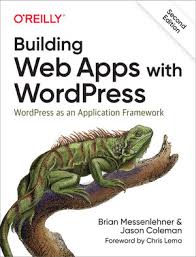
Content Management Systems (CMS), particularly WordPress, have evolved far beyond traditional blogging platforms into robust application frameworks. As detailed in Building Web Apps with WordPress: WordPress as an Application Framework (2nd Edition), WordPress provides a mature, extensible foundation for developing full-featured web applications when approached with sound software engineering principles.
8.1 WordPress as an Application Framework
The book emphasizes that WordPress should be treated not merely as a CMS, but as a domain-driven application platform. Core concepts include:
- Custom Post Types as domain models
- Taxonomies as structured classification systems
- Metadata APIs for flexible data modeling
- Hooks (actions and filters) as an event-driven architecture
This approach aligns WordPress with modern MVC and service-oriented design patterns, enabling developers to build maintainable, testable, and scalable applications.
8.2 Application Architecture and Separation of Concerns
A key principle highlighted in the book is separation of concerns. Business logic should be encapsulated in plugins rather than themes, allowing:
- Independent evolution of presentation and logic layers
- Improved reusability across projects
- Safer upgrades and long-term maintainability
Themes are treated strictly as view layers, while plugins act as controllers and services—mirroring best practices found in enterprise frameworks.
8.3 REST API–Driven and Headless WordPress Applications
The WordPress REST API enables WordPress to function as a headless backend, serving data to:
- JavaScript frontends (React, Vue)
- Mobile applications
- Third-party services and microservices
The book demonstrates how RESTful design transforms WordPress into a backend-as-a-service (BaaS), suitable for SaaS platforms, enterprise dashboards, and multi-channel digital products.
8.4 Security, Performance, and Scalability Considerations
From an application framework perspective, WordPress supports:
- Role-based access control and capability management
- Nonce-based request validation
- Caching layers using object caching and CDNs
- Horizontal scalability when deployed on cloud-native infrastructure
When combined with modern DevOps practices, WordPress-based applications can meet enterprise-grade security and performance requirements.
8.5 Use Cases Enabled by WordPress Application Design
The book presents multiple real-world application scenarios, including:
- Membership and subscription platforms
- Content-driven SaaS applications
- Learning management systems (LMS)
- API-first enterprise portals
These use cases demonstrate that CMS-based web applications can rival custom-built frameworks in capability while offering faster time-to-market.
9. How KeenComputer.com Enables Web Application Development
KeenComputer.com specializes in practical implementation, managed services, and digital platforms for SMEs and enterprises. Key contributions include:
9.1 Full-Stack Web Application Development
- Custom web applications using modern frameworks
- CMS-based and headless architectures
- eCommerce and SaaS platform development
9.2 Cloud, DevOps, and Managed Services
- Docker and cloud-native deployments
- Continuous integration and delivery pipelines
- Ongoing maintenance, monitoring, and optimization
9.3 Security and Compliance
- Secure coding practices
- Website and application hardening
- Managed updates and vulnerability management
KeenComputer.com acts as a long-term technology partner rather than a one-time development vendor.
10. How IAS-Research.com Supports Advanced Web Applications
IAS-Research.com brings applied research, systems thinking, and advanced engineering expertise to web application initiatives:
10.1 Applied Research and Architecture Design
- Technology evaluation and feasibility studies
- Scalable system architecture and integration strategies
- Research-driven decision-making
10.2 AI, Data, and Advanced Analytics Integration
- AI-powered features such as search, recommendations, and automation
- Integration of machine learning and analytics pipelines
- RAG-LLM architectures for knowledge-driven applications
10.3 Engineering Governance and Standards
- Best practices for maintainability and extensibility
- Documentation and technical knowledge transfer
- Alignment with enterprise and academic standards
IAS-Research.com ensures that web applications are not only functional but strategically aligned with long-term innovation goals.
11. Combined Value Proposition: Keen Computer + IAS Research
Together, KeenComputer.com and IAS-Research.com provide an end-to-end ecosystem for web application development:
- Research-backed architecture and design
- Production-grade implementation and managed services
- Continuous improvement and innovation
This combined model is particularly valuable for SMEs seeking enterprise-level capabilities without building large internal teams.
12. Emerging Trends in Web Application Development
Key trends shaping the future include:
- AI-assisted development and automation
- Headless CMS and composable architectures
- Serverless computing
- Increased emphasis on security, privacy, and compliance
Organizations that invest early in these trends gain sustainable competitive advantages.
13. Conclusion
Web application development is no longer optional—it is central to business growth, efficiency, and innovation. As complexity increases, organizations must move beyond ad hoc development toward structured, secure, and scalable approaches.
By combining the implementation strength of KeenComputer.com with the applied research and systems engineering expertise of IAS-Research.com, organizations can successfully design, build, and operate modern web applications that are robust, scalable, and future-ready.
This partnership enables businesses to focus on their core value creation while leveraging proven digital engineering capabilities to compete in an increasingly software-driven world.
References
- Williams, B., & Damstra, J. (2018). Building Web Apps with WordPress: WordPress as an Application Framework (2nd ed.). O’Reilly Media.
- Fielding, R. T. (2000). Architectural Styles and the Design of Network-based Software Architectures. Doctoral dissertation, University of California, Irvine.
- Newman, S. (2021). Building Microservices (2nd ed.). O’Reilly Media.
- Bass, L., Clements, P., & Kazman, R. (2021). Software Architecture in Practice (4th ed.). Addison-Wesley.
- Richards, M., & Ford, N. (2020). Fundamentals of Software Architecture. O’Reilly Media.
- Mozilla Developer Network (MDN). Web Technology for Developers: HTML, CSS, JavaScript, and Web APIs.
- OWASP Foundation. (2023). OWASP Top 10 Web Application Security Risks.
- Amazon Web Services. Well-Architected Framework – Application and Infrastructure Best Practices.
- Google Cloud. Site Reliability Engineering (SRE) Handbook.
- IEEE Computer Society. Software Engineering Body of Knowledge (SWEBOK).
- W3C. World Wide Web Consortium Recommendations for Web Standards.
- Pressman, R. S., & Maxim, B. R. (2020). Software Engineering: A Practitioner’s Approach (9th ed.). McGraw-Hill Education.
- Humble, J., & Farley, D. (2010). Continuous Delivery: Reliable Software Releases through Build, Test, and Deployment Automation. Addison-Wesley.
- Kleppmann, M. (2017). Designing Data-Intensive Applications. O’Reilly Media.
- ISO/IEC 27001. Information Security Management Systems – Requirements.