Rapid technological change, globalization, artificial intelligence, and demographic transitions are reshaping how individuals learn, work, and contribute to society. Nations that fail to adapt risk economic stagnation, while individuals who rely solely on past credentials face career obsolescence. This research paper examines how both individuals and nations can become future-ready by adopting a mindset of continuous learning, cognitive flexibility, and systemic capability building.
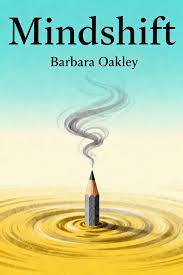
Grounded in Barbara Oakley’s Mindshift: Break Through Obstacles to Learning and Discover Your Hidden Potential, this paper integrates insights from learning science, workforce transformation, and national innovation systems. It proposes a practical framework for personal reinvention and national readiness, emphasizing lifelong learning, non-linear career paths, digital platforms, and applied research partnerships.
The paper concludes by demonstrating how IAS-Research.com and KeenComputer.com can serve as critical enablers, helping individuals, institutions, SMEs, and governments operationalize mindshift principles through applied research, digital infrastructure, AI-enabled learning systems, and enterprise transformation programs.
Becoming a Future-Ready Person and a Future-Ready Nation
A Research Paper Inspired by Mindshift by Barbara Oakley
With Strategic Pathways Enabled by IAS-Research.com and KeenComputer.com
Abstract
Rapid technological change, globalization, artificial intelligence, and demographic transitions are reshaping how individuals learn, work, and contribute to society. Nations that fail to adapt risk economic stagnation, while individuals who rely solely on past credentials face career obsolescence. This research paper examines how both individuals and nations can become future-ready by adopting a mindset of continuous learning, cognitive flexibility, and systemic capability building.
Grounded in Barbara Oakley’s Mindshift: Break Through Obstacles to Learning and Discover Your Hidden Potential, this paper integrates insights from learning science, workforce transformation, and national innovation systems. It proposes a practical framework for personal reinvention and national readiness, emphasizing lifelong learning, non-linear career paths, digital platforms, and applied research partnerships.
The paper concludes by demonstrating how IAS-Research.com and KeenComputer.com can serve as critical enablers, helping individuals, institutions, SMEs, and governments operationalize mindshift principles through applied research, digital infrastructure, AI-enabled learning systems, and enterprise transformation programs.
1. Introduction: Why Future-Readiness Matters
The 21st century is defined by volatility. Skills decay faster than degrees can be earned, and entire industries are restructured within a decade. Traditional education systems, designed for linear careers, are no longer sufficient. The central question facing societies today is not what to learn, but how fast and how effectively learning can occur across a lifetime.
Barbara Oakley’s concept of mindshift reframes learning as a continuous, identity-level transformation rather than a phase confined to youth or formal schooling. She demonstrates that the capacity to learn, unlearn, and relearn is not fixed, but trainable at any age . This insight is foundational for building future-ready individuals and nations.
A future-ready nation is one where citizens are empowered to adapt, where institutions reward learning agility, and where technology amplifies human potential rather than replacing it. A future-ready person is one who cultivates cognitive flexibility, resilience, and interdisciplinary competence.
2. The Concept of Mindshift and Lifelong Learning
2.1 What Is a Mindshift?
Oakley defines a mindshift as a deep transformation enabled by learning that alters one’s career trajectory, identity, or way of thinking. Unlike incremental skill upgrades, a mindshift involves:
- Letting go of fixed self-beliefs
- Embracing beginner status
- Leveraging prior “unrelated” experience as an advantage
Empirical evidence from neuroscience shows that adult brains retain plasticity, with new neural connections forming through deliberate practice, reflection, and exposure to novelty .
2.2 From Fixed Mindsets to Adaptive Capability
Mindshift aligns closely with Carol Dweck’s growth mindset but goes further by emphasizing structural and systemic support. Individuals do not learn in isolation; access to platforms, mentors, tools, and economic safety nets strongly influences outcomes.
For nations, this means designing policies and institutions that normalize reskilling and career transitions rather than penalizing them.
3. The Future-Ready Individual
3.1 Core Attributes
A future-ready individual demonstrates:
- Learning agility – ability to acquire new skills rapidly
- Cognitive flexibility – switching between analytical and creative modes
- Interdisciplinary thinking – combining domains rather than specializing narrowly
- Resilience – sustaining motivation through uncertainty
- Digital fluency – using technology as a learning amplifier
Oakley’s case studies illustrate how musicians become doctors, bus drivers become scholars, and humanities graduates enter STEM fields by reframing identity and practice habits .
3.2 Learning Is Not Just Studying
A critical insight from Mindshift is that learning involves:
- Active recall
- Spaced repetition
- Physical movement (exercise enhances cognition)
- Reflection and mental reframing
This challenges traditional rote-based education models and underscores the need for experiential, technology-enabled learning ecosystems.
4. The Future-Ready Nation
4.1 Characteristics of a Future-Ready Nation
A future-ready nation exhibits:
- High participation in lifelong learning
- Strong digital infrastructure
- Flexible education-to-employment pathways
- Industry–academia collaboration
- Cultural acceptance of career reinvention
Singapore is highlighted by Oakley as a leading example, where government-supported reskilling programs and MOOCs enable citizens to pivot careers multiple times across their lifespan .
4.2 Education as a Dynamic System
Future-ready education systems move from:
- Degree-centric → competency-centric
- Front-loaded education → continuous learning
- Siloed disciplines → systems thinking
National competitiveness increasingly depends on how quickly populations can absorb and apply new knowledge.
5. Technology, MOOCs, and AI-Enabled Learning
5.1 Democratization of Learning
Online platforms, MOOCs, and AI tutors have reduced barriers to learning at scale. Oakley’s own course Learning How to Learn reached millions globally, demonstrating latent demand for high-quality learning experiences .
5.2 AI as a Cognitive Multiplier
AI does not replace human learning; it:
- Personalizes learning paths
- Provides instant feedback
- Accelerates skill acquisition
- Supports reflective practice
However, without proper design, AI can reinforce shallow learning. This creates demand for research-driven, ethically grounded learning architectures.
6. Bridging Individuals and Nations: Systems Thinking
Future-readiness emerges when individual capability development aligns with national strategy. This requires:
- Shared learning standards
- Open digital platforms
- Public–private partnerships
- Applied research feedback loops
Mindshift thinking scales best when embedded into institutions, not left to individual effort alone.
7. How IAS-Research.com Enables Future-Readiness
IAS-Research.com plays a critical role at the intersection of learning science, systems engineering, and applied research. Its contributions include:
7.1 Applied Research & Learning Systems
- Designing evidence-based learning frameworks grounded in neuroscience and adult learning
- Translating academic research into practical curricula and enterprise programs
7.2 National & Institutional Strategy
- Advising governments, universities, and research bodies on future-skills roadmaps
- Developing policy-aligned lifelong learning architectures
7.3 Advanced Domains
- AI, RAG-LLM systems, engineering education
- Power systems, HVDC, digital infrastructure
- Research-to-industry knowledge transfer
IAS-Research.com enables system-level mindshifts, turning learning theory into scalable national capability.
8. How KeenComputer.com Enables Future-Readiness
KeenComputer.com complements IAS Research by delivering the digital and operational backbone required for future-ready systems.
8.1 Digital Platforms & Infrastructure
- Learning management systems
- AI-enabled content delivery
- Secure cloud and DevOps environments
8.2 SME & Workforce Transformation
- Helping SMEs adopt continuous learning models
- Integrating AI tools into daily workflows
- Supporting non-traditional learners and career switchers
8.3 Practical Enablement
- WordPress, Joomla, Magento-based learning portals
- Dockerized environments for scalable education
- Data analytics for learning outcomes
Together, KeenComputer.com ensures that mindshift principles are implemented, measured, and sustained.
9. Integrated Model: From Mindshift to National Impact
|
Level |
Challenge |
IAS-Research.com |
KeenComputer.com |
|---|---|---|---|
|
Individual |
Skill obsolescence |
Learning science, frameworks |
Platforms, tools |
|
SME |
Workforce adaptation |
Applied research |
Digital execution |
|
Institution |
Curriculum lag |
Systems design |
Infrastructure |
|
Nation |
Talent competitiveness |
Policy & research |
Scalable delivery |
This integrated model transforms learning from an aspiration into an operational capability.
10. Conclusion
Becoming a future-ready person or nation is not about predicting the future, but about building the capacity to adapt continuously. Barbara Oakley’s Mindshift provides compelling evidence that human potential is far more flexible than commonly believed, and that learning can reshape lives, careers, and societies at any stage .
However, mindshift at scale requires more than motivation. It requires research-grounded frameworks, digital infrastructure, and trusted partners. IAS-Research.com and KeenComputer.com together provide the intellectual, technological, and operational foundation necessary to turn lifelong learning into a national advantage.
In an age of accelerating change, the most future-ready societies will be those that treat learning not as preparation for life, but as life itself.
References
- Oakley, B. (2017). Mindshift: Break Through Obstacles to Learning and Discover Your Hidden Potential. Penguin Random House.
- Dweck, C. (2006). Mindset: The New Psychology of Success. Random House.
- OECD. (2023). Skills Outlook: Learning for Life.
- World Economic Forum. (2024). The Future of Jobs Report.
- Cotman, C., & Berchtold, N. (2002). Exercise: A behavioral intervention to enhance brain health and plasticity. Trends in Neurosciences.