Small and Medium Enterprises (SMEs) increasingly rely on WordPress, Joomla, and Magento to power marketing websites, content platforms, and e-commerce operations. Despite accessibility of these platforms, most SME digital initiatives underperform due to weak effectiveness testing, poor content-to-conversion alignment, and lack of customer-centered experimentation. This white paper presents a comprehensive framework for effectiveness testing for SME websites and e-commerce platforms, integrating quantitative analytics, qualitative customer discovery using The Mom Test, UX research, conversion rate optimization (CRO), and performance engineering. The paper provides platform-specific testing strategies for WordPress content-driven websites, Joomla enterprise portals, and Magento e-commerce stores, and outlines how KeenComputer.com and IAS-Research.com enable scalable digital transformation for SMEs.
Using The Mom Test to De-Risk Digital Transformation Projects in Web & Ecommerce
A Comprehensive Research White Paper for SMEs
By KeenComputer.com
Abstract
Small and medium enterprises (SMEs) increasingly rely on digital channels such as websites and ecommerce platforms to drive revenue, customer engagement, and competitive differentiation. However, a significant proportion of digital transformation initiatives fail to deliver expected business outcomes. While technology limitations are often blamed, research and practice show that many failures stem from flawed customer discovery and decision-making processes. Teams frequently design and build features based on internal assumptions, trend-following, or misleading customer feedback. This research white paper applies the principles of The Mom Test (Fitzpatrick, 2013) to digital transformation in web and ecommerce contexts. It proposes a structured, evidence-driven framework for reducing risk across discovery, design, development, and post-launch optimisation. The paper further demonstrates how KeenComputer.com can operationalise these principles to help SMEs align digital investments with real customer behaviour, willingness to pay, and measurable business impact.
Keywords: Digital Transformation, Ecommerce, Web Development, Customer Discovery, The Mom Test, SME Strategy, UX Research, Lean Digital Delivery
1. Introduction
Digital transformation has become a strategic imperative for SMEs across industries. Websites and ecommerce platforms are no longer peripheral marketing tools; they function as primary sales channels, customer service interfaces, and brand touchpoints. Despite substantial investment in platforms such as WordPress, Joomla, Magento, and custom web applications, many SMEs report disappointing outcomes: low conversion rates, poor user engagement, abandoned carts, and limited return on digital investment.
Industry studies consistently show high failure rates for digital transformation initiatives. While the surface explanation often points to “technology challenges,” deeper analysis reveals a more fundamental issue: digital projects frequently begin with the wrong assumptions about customer needs. Features are prioritised based on internal opinions, competitor imitation, or fashionable technologies (AI search, chatbots, mobile apps) rather than grounded evidence of customer behaviour and unmet needs.
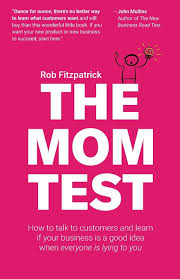
The Mom Test offers a practical methodology for addressing this problem. Originally developed for startups and entrepreneurs, its principles are highly applicable to digital transformation in established SMEs. By reframing how organisations conduct customer conversations, The Mom Test reduces the likelihood of building products and features that customers politely endorse but do not actually use. This white paper explores how The Mom Test can be systematically embedded into the lifecycle of web and ecommerce transformation projects and how KeenComputer.com can serve as an implementation partner for SMEs seeking evidence-driven digital growth.
2. Digital Transformation Challenges in SMEs
2.1 Technology-Centric Transformation
Many SMEs approach digital transformation primarily as a technology upgrade. Typical initiatives include migrating to a new CMS, redesigning the website, implementing a new ecommerce platform, or adding advanced features such as AI-powered recommendations. While these investments are often technically sound, they frequently fail to address the underlying customer problems that determine adoption and revenue impact.
2.2 Organisational and Cognitive Biases
Digital projects are influenced by internal politics, stakeholder preferences, and cognitive biases. Senior leaders may push for features aligned with their personal experiences rather than customer evidence. Marketing teams may prioritise aesthetics over usability, while IT teams may prioritise architectural elegance over real-world workflows. These biases are rarely corrected by traditional customer research methods that rely on surveys or opinion-based interviews.
2.3 The Cost of False Validation
False validation occurs when teams interpret positive customer feedback as proof of demand. Compliments, hypothetical interest, and polite encouragement create an illusion of product-market fit. The result is overinvestment in features that customers do not value enough to change behaviour or pay for. For SMEs with limited budgets, such misallocation of resources can significantly impair competitiveness.
3. The Mom Test: Theory and Principles
3.1 Overview of The Mom Test
Rob Fitzpatrick’s The Mom Test provides a framework for asking customer questions in ways that minimise misleading feedback. The core insight is that people want to be supportive and polite, particularly when asked about ideas presented by someone they know. As a result, traditional validation questions often generate unreliable data.
3.2 Core Rules
The Mom Test is built around three rules:
- Talk about the customer’s life, not your idea.
- Ask about past behaviour, not opinions or future intentions.
- Talk less and listen more.
These rules shift the focus from validating concepts to understanding real-world behaviour, constraints, and motivations.
3.3 Relevance to Digital Transformation
Digital transformation projects face similar validation challenges as startups. Teams seek reassurance that proposed features will succeed, but customer conversations often provide emotional comfort rather than actionable insight. Applying The Mom Test reframes digital discovery as behavioural research rather than opinion gathering.
4. Applying The Mom Test Across the Digital Transformation Lifecycle
4.1 Discovery Phase: Problem and Segment Selection
The discovery phase determines which customer segments and problems are worth solving. SMEs often define “our customers” too broadly. Effective segmentation focuses on specific behavioural contexts, such as B2B procurement managers ordering monthly supplies or first-time retail customers purchasing via mobile.
Mom Test-aligned discovery practices include:
- Conducting short, focused interviews with specific customer segments.
- Asking about recent purchasing experiences, frustrations, and workarounds.
- Identifying recurring pain points and existing alternatives.
Role of KeenComputer.com:
KeenComputer.com can facilitate structured discovery workshops, segment analysis, and evidence mapping, helping SMEs prioritise digital initiatives with the highest likelihood of measurable impact.
4.2 Design Phase: Translating Insight Into UX and Architecture
Design decisions should be grounded in customer workflows rather than internal preferences. For example, navigation structures should reflect how customers search for information, not how the organisation is structured internally. Content strategy should prioritise information that customers repeatedly struggle to find.
Mom Test-informed design practices include:
- Validating wireframes by asking customers to narrate how they completed their last similar task.
- Investigating the motivations behind feature requests rather than implementing them at face value.
- Comparing proposed solutions with existing tools and workarounds used by customers.
Role of KeenComputer.com:
KeenComputer.com translates qualitative insights into customer journeys, information architecture, and UX flows, ensuring that design decisions are traceable to validated customer problems.
4.3 Development Phase: Commitment-Based Validation
Once development begins, the risk of false validation increases. Customers may praise prototypes without genuine intent to use them. The Mom Test emphasises the importance of commitment signals, such as willingness to invest time, involve decision-makers, or allocate budget.
Commitment-based validation methods include:
- Pilot deployments with defined success metrics.
- Usability testing with repeated participation.
- Paid trials or letters of intent for B2B platforms.
Role of KeenComputer.com:
KeenComputer.com structures pilot programs and analytics frameworks that link development sprints to measurable customer commitments, reducing the likelihood of building low-impact features.
4.4 Post-Launch Optimisation: Continuous Learning
Digital transformation is an ongoing process. Post-launch data, support interactions, and behavioural analytics provide continuous opportunities for learning. The Mom Test encourages lightweight, ongoing conversations rather than sporadic, large-scale research efforts.
Post-launch learning practices include:
- Capturing customer stories from support and sales interactions.
- Running small UX experiments based on observed behaviour.
- Maintaining a rolling set of strategic questions guiding optimisation.
Role of KeenComputer.com:
KeenComputer.com establishes continuous feedback loops that integrate qualitative insights with quantitative analytics, enabling SMEs to prioritise improvements based on real-world impact.
5. Governance and Organisational Learning
A critical insight from The Mom Test is the danger of centralising customer insight in a single role. Digital transformation benefits from shared understanding across leadership, marketing, UX, and engineering teams. Governance structures should encourage cross-functional participation in customer learning.
KeenComputer.com supports governance by:
- Designing lightweight customer insight processes.
- Training internal teams in evidence-based interviewing.
- Facilitating shared review sessions to align digital roadmaps with validated insights.
6. Strategic Value of KeenComputer.com for SMEs
KeenComputer.com positions itself as an evidence-driven digital transformation partner. By operationalising The Mom Test, it helps SMEs:
- Reduce the risk of building low-value features.
- Align digital investments with customer behaviour and willingness to pay.
- Improve conversion, retention, and lifetime value.
- Build internal capabilities for continuous digital improvement.
This approach transforms digital transformation from a technology upgrade into a learning-driven business strategy.
7. Conclusion
Digital transformation failures are rarely caused by inadequate technology alone. More often, they stem from flawed assumptions about customer needs and behaviour. The Mom Test provides SMEs with a practical framework for replacing polite fiction with actionable evidence. By embedding these principles throughout the web and ecommerce lifecycle, KeenComputer.com enables SMEs to build digital platforms that customers genuinely adopt and value. This evidence-driven approach creates sustainable competitive advantage in an increasingly digital marketplace.
References
- Fitzpatrick, R. (2013). The Mom Test: How to Talk to Customers and Learn If Your Business Is a Good Idea When Everyone Is Lying to You. CreateSpace.
- Ries, E. (2011). The Lean Startup. Crown Business.
- Blank, S. (2013). The Four Steps to the Epiphany. K&S Ranch.
- Osterwalder, A., & Pigneur, Y. (2010). Business Model Generation. Wiley.
- Norman, D. (2013). The Design of Everyday Things. Basic Books.
- Nielsen, J. (2012). Usability 101: Introduction to Usability. Nielsen Norman Group.
- Kotler, P., Kartajaya, H., & Setiawan, I. (2017). Marketing 4.0. Wiley.
Old Version - 0.2 Paper
Effectiveness Testing for E-Commerce Websites and Content Strategy for SMEs
A Comprehensive Research White Paper Integrating WordPress, Joomla, Magento, The Mom Test, CRO, UX, and Digital Transformation
Industry Research White Paper
Technology & Research Enablement: KeenComputer.com, IAS-Research.com
Executive Summary
Small and Medium Enterprises (SMEs) increasingly depend on digital channels for customer acquisition, revenue generation, and competitive differentiation. Websites and e-commerce platforms built on WordPress, Joomla, and Magento serve as the digital backbone for content marketing, customer engagement, and online transactions. However, a large proportion of SME digital initiatives underperform due to the absence of systematic effectiveness testing frameworks. Many organizations focus on technology deployment without establishing measurable pathways from traffic to business outcomes. This white paper presents a comprehensive, evidence-based framework for evaluating and improving the effectiveness of SME websites and e-commerce platforms. It integrates quantitative analytics, qualitative customer discovery (including The Mom Test methodology), user experience (UX) research, conversion rate optimization (CRO), content strategy alignment, and infrastructure performance optimization. The paper further demonstrates how KeenComputer.com and IAS-Research.com can enable SMEs to implement continuous learning systems for digital growth and long-term digital transformation.
1. Introduction
The digital economy has fundamentally altered how SMEs compete, communicate with customers, and scale operations. Websites are no longer static brochures; they function as primary revenue channels, customer service portals, and brand engagement platforms. WordPress powers content-driven marketing sites, Joomla is often used for structured portals and enterprise information systems, and Magento supports complex e-commerce operations. Despite the availability of these mature platforms, SMEs face persistent challenges:
- High website traffic but low conversion rates
- Poor alignment between content strategy and customer intent
- Fragmented analytics and lack of actionable insights
- Limited experimentation culture
- Underinvestment in performance optimization
- Overreliance on assumptions about customer needs
Effectiveness testing addresses these issues by providing a structured approach to determining whether digital platforms deliver meaningful business outcomes. Unlike traditional web analytics that focus on surface-level engagement, effectiveness testing evaluates outcomes such as qualified leads, revenue impact, customer retention, and trust formation.
2. Theoretical Foundations of Effectiveness Testing
Effectiveness testing is grounded in three complementary theoretical domains:
- Marketing Effectiveness Theory – linking digital touchpoints to business value.
- UX and Human-Computer Interaction (HCI) – ensuring usability and cognitive ease.
- Lean and Evidence-Based Management – continuous experimentation and learning.
Together, these domains support a shift from output metrics (page views, impressions) to outcome metrics (conversions, retention, customer lifetime value).
3. An Integrated Effectiveness Testing Framework for SMEs
3.1 Strategic Alignment Layer
Effectiveness begins with explicit articulation of business objectives:
|
Business Objective |
Digital Outcome |
Key Metrics |
|---|---|---|
|
Lead generation |
Qualified inquiries |
MQL rate, CPL |
|
Online sales |
Revenue growth |
Conversion rate, AOV |
|
Brand trust |
Engagement & retention |
Repeat visits, dwell time |
|
Customer support efficiency |
Self-service success |
Knowledge base usage |
3.2 Measurement and Analytics Layer
SMEs must operationalize analytics beyond basic traffic tracking. Advanced measurement includes:
- Funnel analytics
- Cohort analysis
- Attribution modeling
- SEO keyword-to-conversion mapping
3.3 Experimentation and Learning Layer
Effectiveness testing requires continuous experimentation:
- A/B testing
- Multivariate testing
- UX testing
- Hypothesis-driven iteration
This creates a closed learning loop:
Data → Insight → Experiment → Learning → Strategy Adjustment
4. Platform-Specific Effectiveness Testing
4.1 WordPress: Content-Driven Effectiveness
WordPress is widely used for inbound marketing and thought leadership. Key testing dimensions include:
- Content-to-lead conversion pathways
- SEO performance of blog and landing pages
- CTA placement and form usability
- Page speed and mobile optimization
Use Case:
A B2B services SME redesigned WordPress landing pages based on funnel analytics and customer interviews, resulting in a 40% increase in qualified leads.
4.2 Joomla: Structured Information and Portal Effectiveness
Joomla is frequently adopted for structured corporate portals and documentation hubs. Key testing areas include:
- Information architecture usability
- Search effectiveness
- Content discoverability
- Workflow integration
Use Case:
A manufacturing SME improved documentation access and reduced support tickets by restructuring Joomla content navigation based on user journey analysis.
4.3 Magento: E-Commerce Conversion Effectiveness
Magento supports transaction-intensive commerce. Effectiveness testing focuses on:
- Product page optimization
- Checkout usability
- Cart abandonment analysis
- Payment trust signals
- Mobile commerce performance
Use Case:
A retail SME reduced cart abandonment by simplifying checkout UX and optimizing mobile performance.
5. Integrating The Mom Test into Digital Effectiveness
5.1 Rationale
Traditional surveys often produce biased feedback. The Mom Test emphasizes evidence-based customer conversations that focus on real past behavior rather than hypothetical opinions.
5.2 Application to Digital Strategy
By applying Mom Test principles, SMEs can:
- Identify real user pain points
- Design content aligned with decision-making processes
- Generate high-impact CRO hypotheses
Example:
Rather than asking users if they “like” a product page, SMEs explore how customers previously researched alternatives and what information influenced their decisions.
6. Content Strategy Effectiveness Across the Buyer Journey
Content must map to the buyer journey:
|
Stage |
WordPress |
Joomla |
Magento |
|---|---|---|---|
|
Awareness |
Blogs, SEO |
Corporate pages |
Category content |
|
Consideration |
Case studies |
White papers |
Product comparisons |
|
Decision |
Landing pages |
Contact workflows |
Checkout flows |
7. UX and CRO as Effectiveness Enablers
UX research ensures usability, while CRO ensures that usability translates into business outcomes. Effective CRO programs are driven by:
- User journey mapping
- Behavioral analytics
- Qualitative research (Mom Test)
8. Infrastructure Performance as a Strategic Enabler
Performance optimization is foundational to effectiveness. Slow WordPress pages reduce lead conversion; slow Joomla portals increase user frustration; slow Magento checkout flows reduce revenue. VPS hosting optimization, caching, CDN integration, and PHP-FPM tuning directly impact business outcomes.
9. Digital Transformation Maturity Model for SMEs
|
Maturity Level |
Characteristics |
|---|---|
|
Basic |
Static website |
|
Measured |
Analytics-enabled |
|
Optimized |
Continuous CRO |
|
Adaptive |
AI-driven personalization |
Effectiveness testing enables progression across maturity levels.
10. Role of KeenComputer.com
KeenComputer.com provides:
- Secure VPS hosting for WordPress, Joomla, Magento
- Performance optimization and scalability engineering
- Technical SEO and CRO implementation
- DevOps and containerized deployment pipelines
11. Role of IAS-Research.com
IAS-Research.com delivers:
- Research-driven digital strategy frameworks
- Customer discovery and UX research
- Data analytics and experimentation design
- Digital transformation advisory
12. Governance, Ethics, and Data Privacy
Effectiveness testing must comply with data protection regulations and ethical research standards. SMEs must ensure transparency, informed consent in customer research, and responsible data usage.
13. Future Directions
Emerging trends include AI-driven personalization, predictive analytics for CRO, and privacy-preserving analytics. SMEs adopting these approaches will gain sustainable competitive advantage.
14. Conclusion
Effectiveness testing transforms SME websites from static digital assets into continuous learning platforms. By integrating WordPress, Joomla, and Magento with analytics, CRO, UX research, and The Mom Test, SMEs can achieve measurable digital growth. With KeenComputer.com providing technical excellence and IAS-Research.com delivering research-driven strategy, SMEs can implement scalable, customer-centric digital transformation initiatives.
References
- Fitzpatrick, R. (2013). The Mom Test.
- Krug, S. (2014). Don’t Make Me Think.
- Ries, E. (2011). The Lean Startup.
- Chaffey, D. (2019). Digital Marketing.
- Nielsen, J. (2012). Usability Engineering.
- Osterwalder, A., & Pigneur, Y. (2010). Business Model Generation.
- Google (2024). Web Vitals Documentation.
Old Version of the Paper - Version 0.1
Effectiveness Testing for E-Commerce Websites and Content Strategy for SMEs
An Evidence-Based Research White Paper Integrating WordPress, Joomla, The Mom Test, CRO, UX, and Digital Transformation
Industry Research White Paper
Technology & Research Enablement: KeenComputer.com, IAS-Research.com
Abstract
Small and Medium Enterprises (SMEs) increasingly rely on WordPress, Joomla, and Magento to power marketing websites, content platforms, and e-commerce operations. Despite accessibility of these platforms, most SME digital initiatives underperform due to weak effectiveness testing, poor content-to-conversion alignment, and lack of customer-centered experimentation. This white paper presents a comprehensive framework for effectiveness testing for SME websites and e-commerce platforms, integrating quantitative analytics, qualitative customer discovery using The Mom Test, UX research, conversion rate optimization (CRO), and performance engineering. The paper provides platform-specific testing strategies for WordPress content-driven websites, Joomla enterprise portals, and Magento e-commerce stores, and outlines how KeenComputer.com and IAS-Research.com enable scalable digital transformation for SMEs.
1. Introduction
SMEs increasingly adopt WordPress for content marketing, Joomla for structured corporate portals, and Magento for e-commerce operations. While platform choice is important, business outcomes depend on systematic effectiveness testing, not technology alone. SMEs frequently face:
- High traffic with low conversions on WordPress marketing sites
- Poor content discoverability and UX complexity on Joomla portals
- High cart abandonment and mobile friction on Magento stores
- Limited integration between content strategy and conversion funnels
This paper argues that SMEs must treat WordPress, Joomla, and Magento as measurable business systems, supported by continuous testing, customer insight, and infrastructure optimization.
2. Framework for Effectiveness Testing Across WordPress, Joomla, and Magento
2.1 Unified Effectiveness Model
|
Layer |
WordPress Focus |
Joomla Focus |
Magento Focus |
|---|---|---|---|
|
Strategy |
Lead generation |
Corporate information architecture |
Online sales |
|
UX |
Landing pages, blogs |
Structured navigation |
Checkout flows |
|
Content |
SEO, thought leadership |
Knowledge bases |
Product content |
|
CRO |
CTAs, forms |
Downloads, inquiries |
Add-to-cart |
|
Performance |
Page speed |
Backend scalability |
Transaction speed |
3. WordPress Effectiveness Testing Framework
WordPress is widely used for content-driven growth and inbound marketing.
Key Testing Areas
- Landing page conversion testing
- Blog-to-lead funnel mapping
- SEO content performance testing
- CTA placement and form usability
- Page speed optimization
WordPress SME Use Case
A professional services SME using WordPress improved lead quality by:
- Mapping content to buyer journey stages
- Applying Mom Test interviews to identify missing decision-stage content
- Implementing A/B testing on lead capture forms
Result:
- +40% increase in qualified leads
- Reduced bounce rate on service pages
4. Joomla Effectiveness Testing Framework
Joomla is often used for corporate websites, portals, documentation hubs, and B2B catalogs.
Key Testing Areas
- Information architecture usability testing
- Search and navigation effectiveness
- Content discoverability metrics
- Download and inquiry conversion paths
- Role-based content access testing
Joomla SME Use Case
A manufacturing SME using Joomla improved user engagement by:
- Redesigning navigation based on user journey analysis
- Simplifying technical document access
- Testing knowledge base structure
Result:
- Increased document downloads
- Reduced customer support tickets
- Improved stakeholder satisfaction
5. Magento Effectiveness Testing Framework
Magento powers transaction-heavy e-commerce environments.
Key Testing Areas
- Product page conversion optimization
- Checkout flow testing
- Cart abandonment analysis
- Mobile commerce performance
- Payment trust and friction testing
Magento SME Use Case
An SME electronics retailer reduced cart abandonment by:
- Simplifying checkout UX
- Optimizing mobile performance
- Improving trust signals and product content
Result:
- +28% conversion uplift
- Improved mobile revenue contribution
6. Integrating The Mom Test into Platform-Specific Testing
WordPress
Mom Test interviews uncover:
- How prospects research solutions
- What content they trust
- Why they hesitate to submit forms
Joomla
Mom Test interviews reveal:
- How users search for technical documents
- Where navigation fails
- What information is missing in portals
Magento
Mom Test interviews identify:
- Why users abandon carts
- What information is needed before purchase
- What alternatives customers consider
This insight informs UX design, content prioritization, and CRO hypothesis creation.
7. Content Strategy Effectiveness Across Platforms
|
Funnel Stage |
WordPress |
Joomla |
Magento |
|---|---|---|---|
|
Awareness |
Blogs, SEO |
Corporate pages |
Category pages |
|
Consideration |
Case studies |
White papers |
Comparison pages |
|
Decision |
Landing pages |
Contact workflows |
Product checkout |
8. Performance Optimization and VPS Hosting
Effectiveness depends on performance. Slow WordPress or Joomla sites reduce lead generation. Slow Magento checkout flows reduce revenue. VPS optimization includes:
- Nginx and PHP-FPM tuning
- Caching and CDN integration
- Database optimization
- Containerized deployments
9. Digital Transformation Roadmap for SMEs
|
Stage |
Capability |
|---|---|
|
Basic |
Static WordPress/Joomla |
|
Measured |
Analytics integration |
|
Optimized |
CRO and performance testing |
|
Adaptive |
AI-driven personalization |
10. Role of KeenComputer.com
KeenComputer.com enables SMEs with:
- WordPress, Joomla, Magento VPS hosting
- Performance tuning and security hardening
- CRO implementation support
- SEO and technical optimization
11. Role of IAS-Research.com
IAS-Research.com provides:
- Research-driven content strategy
- Customer discovery using The Mom Test
- UX and experimentation frameworks
- Digital transformation strategy
12. Conclusion
Effectiveness testing transforms WordPress, Joomla, and Magento platforms into measurable growth engines. Integrating analytics, CRO, UX research, and The Mom Test enables SMEs to shift from intuition-driven web design to evidence-based digital strategy. With KeenComputer.com delivering technical excellence and IAS-Research.com providing strategic research leadership, SMEs can build scalable, customer-centric digital ecosystems.
References
- Fitzpatrick, R. (2013). The Mom Test.
- Krug, S. (2014). Don’t Make Me Think.
- Ries, E. (2011). The Lean Startup.
- Chaffey, D. (2019). Digital Marketing.
- Nielsen, J. (2012). Usability Engineering.
- Osterwalder, A., & Pigneur, Y. (2010). Business Model Generation.