The rapid digitization of business processes, education platforms, and municipal services has significantly increased cyber risk exposure. Small and Medium Enterprises (SMEs), schools, and municipalities rely heavily on interconnected networks, cloud services, and remote access technologies, yet they often lack the financial and human resources required to implement enterprise-grade cybersecurity programs. As cyber threats become more automated, persistent, and targeted, traditional perimeter-only defenses are no longer sufficient.
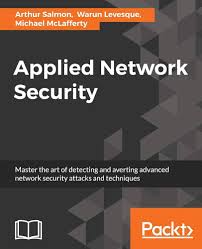
This 3000-word research white paper synthesizes foundational and applied concepts from Applied Network Security: Proven Tactics to Detect and Defend Against All Kinds of Network Attack and Kali Linux Network Scanning Cookbook. It presents a practical, layered cybersecurity framework that combines defensive security monitoring with controlled offensive security testing. The paper emphasizes real-world applicability, focusing on cost-effective tools, open-source platforms, and scalable architectures suitable for SMEs, schools, and municipalities.
The paper further demonstrates how KeenComputer.com and IAS-Research.com can jointly support organizations through consulting, managed security services, training, research-driven innovation, and long-term digital transformation strategies.
Applied Network Security and Offensive Defense for SMEs, Schools, and Municipalities
A Research White Paper Integrating Defensive Monitoring, Kali Linux Offensive Techniques, and Managed Security Services
Prepared for SMEs, Educational Institutions, and Public Sector Organizations
Executive Summary
The rapid digitization of business processes, education platforms, and municipal services has significantly increased cyber risk exposure. Small and Medium Enterprises (SMEs), schools, and municipalities rely heavily on interconnected networks, cloud services, and remote access technologies, yet they often lack the financial and human resources required to implement enterprise-grade cybersecurity programs. As cyber threats become more automated, persistent, and targeted, traditional perimeter-only defenses are no longer sufficient.
This 3000-word research white paper synthesizes foundational and applied concepts from Applied Network Security: Proven Tactics to Detect and Defend Against All Kinds of Network Attack and Kali Linux Network Scanning Cookbook. It presents a practical, layered cybersecurity framework that combines defensive security monitoring with controlled offensive security testing. The paper emphasizes real-world applicability, focusing on cost-effective tools, open-source platforms, and scalable architectures suitable for SMEs, schools, and municipalities.
The paper further demonstrates how KeenComputer.com and IAS-Research.com can jointly support organizations through consulting, managed security services, training, research-driven innovation, and long-term digital transformation strategies.
1. Introduction
Cybersecurity has evolved from a purely technical concern into a strategic business and governance issue. Modern organizations depend on digital infrastructure for operations, service delivery, and stakeholder engagement. Email systems, learning management platforms, ERP systems, and cloud-hosted applications form the backbone of daily activities. At the same time, attackers exploit misconfigurations, unpatched systems, weak credentials, and poor visibility.
The book Applied Network Security emphasizes the importance of understanding how attacks occur, how they are detected, and how organizations should respond. In contrast, Kali Linux Network Scanning Cookbook provides hands-on methodologies for discovering and enumerating attack surfaces using the same tools leveraged by attackers. When combined, these perspectives form a holistic security strategy that balances prevention, detection, response, and continuous improvement.
This white paper adopts that integrated perspective, positioning cybersecurity as an ongoing process rather than a one-time implementation.
2. Cyber Threat Landscape for SMEs and Public Institutions
2.1 Common Threat Categories
SMEs, schools, and municipalities face a consistent set of threats:
- Ransomware targeting shared file systems and backups
- Phishing and social engineering attacks against staff and students
- Credential theft and password reuse
- Exploitation of exposed services such as RDP, SSH, and web administration portals
- Lateral movement within flat or poorly segmented networks
These threats are often opportunistic, but increasingly automated tools allow attackers to scale attacks across thousands of organizations.
2.2 Structural Challenges
Unlike large enterprises, smaller organizations face constraints such as:
- Limited cybersecurity budgets
- Shortage of skilled security professionals
- Reliance on generalist IT staff or third-party vendors
- Legacy systems that cannot be easily replaced
These challenges make it essential to prioritize visibility, risk reduction, and automation.
3. Defensive Security Foundations (Insights from Applied Network Security)
3.1 Network Visibility and Monitoring
A fundamental principle of applied network security is visibility. Organizations cannot protect what they cannot see. Network visibility involves:
- Monitoring inbound and outbound traffic
- Understanding normal versus abnormal behavior
- Capturing logs from network devices, servers, and applications
Techniques such as packet capture, flow analysis, and centralized logging allow defenders to detect anomalies early.
3.2 Intrusion Detection and Prevention
Intrusion Detection Systems (IDS) and Intrusion Prevention Systems (IPS) provide automated detection of malicious activity. Effective deployment focuses on:
- Signature-based detection for known threats
- Behavioral and anomaly-based analysis for unknown threats
- Continuous tuning to reduce false positives
For SMEs, open-source IDS/IPS solutions provide enterprise-level capabilities without licensing costs.
3.3 Incident Detection and Response
Detection alone is insufficient without response. A mature security posture includes:
- Defined incident response workflows
- Alert prioritization and escalation
- Forensic readiness and evidence preservation
These capabilities reduce downtime, financial loss, and reputational damage.
4. Offensive Security and Network Scanning (Insights from Kali Linux Network Scanning Cookbook)
4.1 Role of Offensive Security
Offensive security testing enables organizations to proactively identify weaknesses before attackers exploit them. This approach mirrors real-world attacker behavior, providing realistic insights into risk exposure.
4.2 Network Discovery and Enumeration
Using Kali Linux tools, organizations can perform:
- Host discovery and network mapping
- Port and service enumeration
- Operating system fingerprinting
- Detection of weak or misconfigured services
These activities should always be conducted ethically, within approved scopes and legal frameworks.
4.3 Vulnerability Identification and Validation
Scanning alone is insufficient without validation. Offensive testing helps:
- Confirm exploitability of findings
- Prioritize remediation efforts
- Reduce false positives
Regular assessments ensure that security controls remain effective over time.
5. Integrated Blue Team and Red Team Model for SMEs
A practical approach for resource-constrained organizations is a lightweight Purple Team model that integrates:
- Blue Team defensive monitoring and response
- Red Team-style offensive testing and validation
This integration improves detection accuracy, enhances staff awareness, and creates a feedback loop for continuous improvement.
6. Reference Security Architecture for SMEs and Institutions
6.1 Core Components
A scalable security architecture includes:
- Perimeter firewalls and network segmentation
- Secure remote access (VPN, MFA)
- Centralized logging and monitoring
- IDS/IPS and vulnerability scanning tools
- Backup, recovery, and disaster resilience mechanisms
6.2 Design Principles
Key principles include:
- Least privilege access
- Defense in depth
- Automation and standardization
- Incremental improvement aligned with business priorities
7. Use Cases
7.1 SME Office Network
- Identify exposed services and misconfigurations
- Detect malware callbacks and suspicious traffic
- Improve compliance readiness and audit posture
7.2 Schools and Colleges
- Protect student and staff data
- Monitor campus Wi-Fi and lab networks
- Prevent misuse of shared systems
7.3 Municipal IT Infrastructure
- Secure legacy systems supporting public services
- Monitor critical infrastructure networks
- Improve incident response readiness
8. How KeenComputer.com Can Help
KeenComputer.com specializes in translating cybersecurity theory into practical, affordable solutions for SMEs and public institutions.
8.1 Security Consulting and Architecture
- Network and security assessments
- Secure architecture design
- Tool selection and integration
8.2 Managed Security Services
- Continuous monitoring and alerting
- Vulnerability scanning and reporting
- Incident response coordination
8.3 Training and Capacity Building
- Kali Linux and ethical hacking workshops
- Network security fundamentals for IT staff
- Security awareness training for non-technical users
8.4 Cost-Effective Implementations
- Open-source security stack deployment
- Cloud and hybrid security integration
- Subscription-based managed services
9. How IAS-Research.com Can Help
IAS-Research.com complements operational security services with advanced research and engineering expertise.
9.1 Advanced Security Research
- Threat modeling and risk analysis
- Research-driven security architecture design
- Evaluation of emerging attack techniques
9.2 Engineering and Innovation
- Secure system design and validation
- Integration of AI and analytics into security monitoring
- Custom tool development and automation
9.3 Academic and Institutional Collaboration
- Research partnerships with universities
- Training programs aligned with engineering curricula
- Support for grant-funded and public-sector projects
10. Governance, Risk, and Compliance
Effective cybersecurity must align with governance frameworks such as:
- Risk-based decision making
- Policy and control alignment
- Audit and compliance readiness
KeenComputer.com and IAS-Research.com jointly support organizations in aligning technical controls with governance and regulatory requirements.
11. Future Trends
Key trends shaping the future of network security include:
- AI-assisted threat detection
- Zero Trust networking models
- Automated incident response
- Integration of security into digital transformation initiatives
Organizations that adopt these trends incrementally will be better positioned to manage future risks.
12. Conclusion
Applied network security requires a balanced approach that integrates defensive vigilance with offensive insight. By combining the principles outlined in Applied Network Security and Kali Linux Network Scanning Cookbook, organizations can build resilient, scalable, and cost-effective cybersecurity programs. With the combined support of KeenComputer.com and IAS-Research.com, SMEs, schools, and municipalities can transition from reactive defense to proactive security maturity.
References
- Applied Network Security: Proven Tactics to Detect and Defend Against All Kinds of Network Attack, Packt Publishing
- Kali Linux Network Scanning Cookbook, Justin Hutchens, Packt Publishing
- NIST Cybersecurity Framework
- Open-source IDS/IPS and network security literature