Small and Medium Enterprises (SMEs) are under unprecedented pressure to deliver digital products faster, cheaper, and with higher quality than ever before. Websites, e-commerce platforms, and Software-as-a-Service (SaaS) products are no longer optional capabilities; they are core business infrastructure. At the same time, SMEs face structural constraints: limited engineering teams, tight budgets, legacy systems, security risks, and accelerating market expectations.
A new development paradigm has emerged to address this gap: Vibe Coding, also referred to as AI-assisted or AI-augmented programming. Vibe coding leverages Large Language Models (LLMs) such as ChatGPT and GitHub Copilot to allow developers to express intent in natural language and collaborate with AI systems that generate, refactor, test, and explain code. This represents a fundamental shift from syntax-driven programming to intent-driven software engineering.
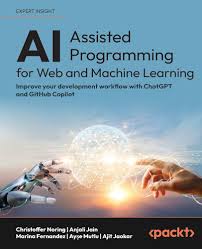
Drawing on the principles outlined in AI-Assisted Programming for Web and Machine Learning (Packt, 2024), this white paper explores how vibe coding can be practically applied across website development, e-commerce systems, and SaaS platforms for SMEs. It also demonstrates why tools alone are insufficient, and how KeenComputer.com and IAS-Research.com together provide the applied engineering, governance, training, and systems-thinking required to turn AI-assisted coding into a sustainable competitive advantage.
Application of Vibe Coding in Website, E-commerce, and SaaS Development for SMEs
How AI-Assisted Programming Enables Faster, Smarter, and More Sustainable Software Delivery
Prepared for: SME Digital Transformation Leaders, CTOs, and Founders
Executive Summary
Small and Medium Enterprises (SMEs) are under unprecedented pressure to deliver digital products faster, cheaper, and with higher quality than ever before. Websites, e-commerce platforms, and Software-as-a-Service (SaaS) products are no longer optional capabilities; they are core business infrastructure. At the same time, SMEs face structural constraints: limited engineering teams, tight budgets, legacy systems, security risks, and accelerating market expectations.
A new development paradigm has emerged to address this gap: Vibe Coding, also referred to as AI-assisted or AI-augmented programming. Vibe coding leverages Large Language Models (LLMs) such as ChatGPT and GitHub Copilot to allow developers to express intent in natural language and collaborate with AI systems that generate, refactor, test, and explain code. This represents a fundamental shift from syntax-driven programming to intent-driven software engineering.
Drawing on the principles outlined in AI-Assisted Programming for Web and Machine Learning (Packt, 2024), this white paper explores how vibe coding can be practically applied across website development, e-commerce systems, and SaaS platforms for SMEs. It also demonstrates why tools alone are insufficient, and how KeenComputer.com and IAS-Research.com together provide the applied engineering, governance, training, and systems-thinking required to turn AI-assisted coding into a sustainable competitive advantage.
1. Introduction: From Software Engineering to Intent Engineering
Software development has undergone multiple paradigm shifts: from assembly language to high-level languages, from procedural to object-oriented programming, from monoliths to microservices, and from manual infrastructure to DevOps and cloud-native architectures. Vibe coding represents the next major transition.
Instead of focusing on how code is written, vibe coding emphasizes what the system should do. Developers communicate goals, constraints, and context through structured prompts, while AI systems generate implementation artifacts. This shift is especially powerful for SMEs, where development velocity and adaptability often determine survival.
However, vibe coding does not eliminate the need for engineering discipline. On the contrary, it amplifies the importance of:
- System architecture
- Prompt strategy
- Validation and testing
- Security and compliance
- Maintainability and scalability
This paper frames vibe coding not as automation, but as augmentation: AI becomes a copilot, while human engineers remain responsible for correctness, architecture, and business alignment.
2. What Is Vibe Coding?
Vibe coding is an informal term describing a workflow where developers:
- Describe features and behaviors in natural language
- Collaborate iteratively with AI assistants
- Rapidly generate frontend, backend, and data components
- Refine and validate outputs through feedback loops
The underlying enablers are Large Language Models (LLMs), trained on massive corpora of code and documentation. These models excel at:
- Code generation and refactoring
- Explaining unfamiliar codebases
- Translating requirements into implementation
- Suggesting architectural patterns
- Automating repetitive development tasks
The Packt book emphasizes prompt-first programming, where natural language becomes a first-class development interface. This dramatically lowers cognitive load and accelerates learning, particularly for full-stack and cross-functional teams.
3. Prompt Strategy as the Core Engineering Skill
One of the most important insights from AI-assisted programming research is that results depend less on the model itself and more on how problems are framed.
3.1 Prompt Patterns
Three prompt strategies are especially relevant for SME development:
- Task–Action–Guideline (TAG)
Useful for structured development tasks such as building APIs, CRUD modules, or deployment scripts. - Persona–Instruction–Context (PIC)
Effective for onboarding, mentoring junior developers, or generating explanations and documentation. - Learn–Improvise–Feedback–Evaluate (LIFE)
Ideal for iterative SaaS feature development, UX experimentation, and performance optimization.
These patterns enable teams to break complex systems into manageable components, aligning well with agile and lean development practices.
4. Application of Vibe Coding in Website Development
4.1 SME Website Challenges
SME websites must be:
- Visually compelling
- Mobile-responsive
- SEO-optimized
- Secure and performant
- Easy to maintain
Traditional development cycles are often slow and expensive. Vibe coding transforms this process.
4.2 Frontend Development
Using AI assistants, developers can:
- Generate HTML, CSS, and JavaScript from design intent
- Create responsive layouts using natural language prompts
- Rapidly prototype landing pages and content sections
- Implement accessibility and SEO best practices
Example prompt:
"Create a responsive SME services website using modern HTML and CSS, optimized for mobile, with a hero section, services grid, testimonials, and contact form."
4.3 CMS and Content Workflows
Vibe coding accelerates development for WordPress, Joomla, and headless CMS platforms by:
- Generating custom themes and plugins
- Automating content migration
- Refactoring legacy PHP or JavaScript code
4.4 How KeenComputer.com Helps
Keen Computer provides:
- AI-augmented website architecture design
- CMS optimization and performance tuning
- Secure deployment using Docker and cloud infrastructure
- Long-term maintenance and upgrade strategies
5. Application of Vibe Coding in E-commerce Development
5.1 E-commerce Complexity for SMEs
E-commerce systems involve:
- Product catalogs
- Shopping carts and checkout
- Payment gateways
- Inventory management
- Analytics and personalization
These systems must be reliable and secure, leaving little room for error.
5.2 AI-Assisted Frontend and UX
AI tools can generate:
- Product listing pages
- Responsive checkout flows
- Accessibility-compliant UI components
- A/B test variations for conversion optimization
5.3 Backend and API Development
Using prompt-driven workflows, developers can:
- Generate RESTful APIs
- Connect to databases
- Implement authentication and authorization
- Document APIs automatically
5.4 AI-Augmented Analytics
Following the book’s e-commerce case studies, AI can:
- Analyze customer behavior
- Generate recommendation models
- Support demand forecasting
5.5 How IAS-Research.com Helps
IAS Research contributes:
- Applied research in AI-driven e-commerce analytics
- System-level modeling and performance optimization
- Secure architecture reviews and validation
- Integration of AI models into production systems
6. Application of Vibe Coding in SaaS Development
6.1 SaaS as a Growth Engine for SMEs
SaaS enables:
- Recurring revenue
- Scalable delivery
- Global reach
However, SaaS systems demand strong engineering discipline.
6.2 Rapid Feature Development
Vibe coding enables:
- Faster MVP development
- Prompt-based feature generation
- Automated documentation and onboarding flows
6.3 Maintenance and Refactoring
AI assistants excel at:
- Explaining legacy code
- Identifying performance bottlenecks
- Suggesting refactoring strategies
6.4 AI Agents and the Future of SaaS
The book highlights the rise of AI agents: autonomous systems capable of executing tasks toward high-level goals. SMEs adopting SaaS today can future-proof platforms by designing with agent integration in mind.
7. Governance, Risk, and Validation
Vibe coding introduces new risks:
- Hallucinated code
- Security vulnerabilities
- Licensing and IP concerns
Best practices include:
- Human-in-the-loop validation
- Automated testing pipelines
- Secure coding standards
- Architectural reviews
IAS Research plays a critical role in ensuring scientific rigor and systems validation, while Keen Computer operationalizes these practices in real-world deployments.
8. Why SMEs Need Partners, Not Just Tools
AI IDEs increase individual productivity, but sustainable advantage comes from:
- Integrated workflows
- Skilled prompt strategy
- Systems engineering discipline
- Continuous learning and adaptation
8.1 KeenComputer.com
Keen Computer focuses on:
- SME-focused digital transformation
- Full-stack development and DevOps
- Cloud, CMS, e-commerce, and SaaS delivery
- Practical, cost-effective implementations
8.2 IAS-Research.com
IAS Research brings:
- Applied AI and systems research
- Advanced analytics and ML integration
- Architectural modeling and validation
- Long-term innovation strategy
Together, they bridge the gap between experimental AI tooling and production-grade systems.
9. Conclusion: Vibe Coding as an SME Superpower
Vibe coding is not a shortcut or a replacement for engineering expertise. It is a force multiplier. When combined with strong prompt strategy, systems thinking, and disciplined validation, AI-assisted programming enables SMEs to compete with much larger organizations.
Websites, e-commerce platforms, and SaaS products can now be built faster, iterated continuously, and aligned more closely with business intent. However, success depends on partnerships that combine tools, talent, and research.
KeenComputer.com and IAS-Research.com together offer SMEs a practical pathway to adopt vibe coding responsibly, turning AI from a novelty into a strategic capability.
References
- Noring, C. et al., AI-Assisted Programming for Web and Machine Learning, Packt Publishing, 2024.
- Kay, A., The Early History of Smalltalk.
- Brooks, F. P., The Mythical Man-Month.
- Gamma et al., Design Patterns.
- Martin, R. C., Clean Architecture.