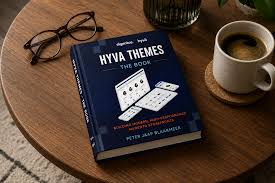
Magento 2 merchants have traditionally approached storefront development through several paths:
- Magento Luma/Blank.
- Commercial themes such as Argento and other marketplace themes.
- Custom Magento themes.
- Hyvä.
- Hyvä child themes.
- Custom proprietary themes and component systems.
The emergence of the open-source Hyvä Theme materially changes the economics and architecture of the fifth and sixth approaches.
Hyvä describes its frontend as a Magento frontend built using Magento's familiar layout, blocks, ViewModels and PHTML mechanisms while replacing much of the traditional frontend stack with Tailwind CSS and Alpine.js. (Hyvä Docs)
The official documentation now provides a specific Build Your Own Theme workflow based on child themes. Hyvä recommends child themes because they inherit templates, layouts and styles while allowing customization to remain separated from vendor code. (Hyvä Docs)
This creates an opportunity for KeenComputer, IAS-Research and KeenDirect to move beyond conventional website development.
The strategic proposition should not simply be:
"Build our own Magento theme."
It should be:
Build a reusable AI-assisted Magento commerce engineering platform using Hyvä as an open-source foundation, a proprietary KeenDirect design system, reusable ecommerce components, automated testing, DevOps and AI development skills.
The resulting platform can support:
Research → Architecture → Development → Testing → Deployment → Ecommerce operation → Feedback → Productization.
Strategic Research White Paper
Building a Proprietary Magento 2 Commerce Theme and AI-Assisted Ecommerce Engineering Platform
Strategic Analysis of Argento, Commercial Themes, Hyvä, Open-Source Child Themes, Claude, OpenClaw, and the KeenDirect Model
Prepared for:
KeenComputer.com | IAS-Research.com | KeenDirect.com
Technology focus:
Magento 2 / Adobe Commerce, Hyvä, Tailwind CSS, Alpine.js, PHP, Docker/Warden, Git, AI-assisted software engineering, OpenClaw, Claude, ecommerce UX, SEO, security and DevOps
Research perspective:
SME ecommerce, software engineering, product strategy and technology commercialization
Executive Summary
Magento 2 merchants have traditionally approached storefront development through several paths:
- Magento Luma/Blank.
- Commercial themes such as Argento and other marketplace themes.
- Custom Magento themes.
- Hyvä.
- Hyvä child themes.
- Custom proprietary themes and component systems.
The emergence of the open-source Hyvä Theme materially changes the economics and architecture of the fifth and sixth approaches.
Hyvä describes its frontend as a Magento frontend built using Magento's familiar layout, blocks, ViewModels and PHTML mechanisms while replacing much of the traditional frontend stack with Tailwind CSS and Alpine.js. (Hyvä Docs)
The official documentation now provides a specific Build Your Own Theme workflow based on child themes. Hyvä recommends child themes because they inherit templates, layouts and styles while allowing customization to remain separated from vendor code. (Hyvä Docs)
This creates an opportunity for KeenComputer, IAS-Research and KeenDirect to move beyond conventional website development.
The strategic proposition should not simply be:
"Build our own Magento theme."
It should be:
Build a reusable AI-assisted Magento commerce engineering platform using Hyvä as an open-source foundation, a proprietary KeenDirect design system, reusable ecommerce components, automated testing, DevOps and AI development skills.
The resulting platform can support:
Research → Architecture → Development → Testing → Deployment → Ecommerce operation → Feedback → Productization.
KeenDirect can serve as the real-world ecommerce laboratory, KeenComputer can provide implementation and managed services, and IAS-Research can provide research, architecture, innovation and intellectual-property development.
1. Research Objectives
This paper investigates whether a proprietary Magento storefront platform should be developed using:
- Magento Open Source
- Hyvä
- Hyvä child themes
- Tailwind CSS
- Alpine.js
- open-source components
- commercial theme concepts as reference implementations
- Claude
- OpenClaw
- AI development skills
- Git/GitHub
- Docker/Warden
- automated testing
- security testing
- SEO engineering
- performance engineering
The research also evaluates the strategic role of:
KeenComputer.com
Engineering, implementation, DevOps, cybersecurity and managed ecommerce.
IAS-Research.com
Research, architecture, white papers, AI, software engineering and technology strategy.
KeenDirect.com
Reference ecommerce platform, product laboratory and eventual commercial demonstration platform.
2. The Magento Theme Ecosystem
Magento themes can be divided into several strategic categories.
|
Category |
Primary Purpose |
|---|---|
|
Luma/Blank |
Traditional Magento development |
|
Commercial theme |
Rapid merchant deployment |
|
Argento-type theme |
Feature-rich ecommerce storefront |
|
Custom Magento theme |
Maximum control |
|
Hyvä |
Modern Magento frontend foundation |
|
Hyvä child theme |
Customized modern storefront |
|
Proprietary theme system |
Reusable commercial IP |
Each has a different economic model.
The strategic mistake would be to evaluate them solely as visual designs.
The real questions are:
- How much code must be maintained?
- How easily can Magento be upgraded?
- How many extensions are compatible?
- How much frontend technical debt exists?
- How reusable is the work?
- Who owns the intellectual property?
- How easily can AI assist development?
- Can the storefront become a product?
- Can it support recurring services?
3. Luma/Blank
Magento's traditional frontend architecture has historically used technologies such as:
- RequireJS
- Knockout
- UI Components
- LESS
- Magento layout XML
- PHTML
This architecture remains important because of Magento's enormous extension ecosystem.
Strengths
- Mature ecosystem
- Large installed base
- Extensive documentation
- Broad historical compatibility
- Familiarity among Magento developers
- Large number of existing modules
Weaknesses
- Frontend complexity
- Larger JavaScript footprint
- More complicated customization
- More frontend dependency management
- Higher learning curve
- Greater potential for extension conflicts
Strategic position
Luma should remain in the KeenDirect knowledge base as a compatibility and migration reference, rather than necessarily being selected as the foundation for a new proprietary storefront.
4. Argento and Commercial Themes
Argento represents the broader commercial-theme model:
Purchase a sophisticated storefront foundation and customize it for the merchant.
This model has obvious advantages for SMEs.
Typical capabilities
Commercial Magento themes may provide:
- Homepage layouts
- Mega menus
- Product grids
- Product pages
- Category layouts
- Search interfaces
- Responsive layouts
- Mobile navigation
- Product labels
- Swatches
- Promotional blocks
- Blog integration
- Checkout styling
- UX components
- Marketing blocks
5. Commercial Theme SWOT Analysis
|
Strengths |
Weaknesses |
|---|---|
|
Rapid deployment |
Vendor dependency |
|
Mature design |
Potentially excessive features |
|
Professional appearance |
Deep customization can be difficult |
|
Lower initial development effort |
Theme-specific technical debt |
|
Large feature set |
Upgrade complexity |
|
Existing documentation |
Vendor roadmap dependency |
|
Opportunities |
Threats |
|---|---|
|
Prototype new UX |
Vendor abandonment |
|
Benchmark UX patterns |
Extension conflicts |
|
Accelerate SME deployments |
Magento changes |
|
Study successful components |
Licensing restrictions |
|
Migrate concepts to Hyvä |
Performance limitations |
|
Use as competitive research |
Theme commoditization |
Strategic interpretation
Argento and similar themes should not necessarily be viewed as competitors to a proprietary KeenDirect theme.
They can instead become:
competitive reference architectures.
The team can study their:
- navigation
- product presentation
- merchandising
- category UX
- mobile UX
- promotional components
- ecommerce workflows
without copying proprietary code or violating licenses.
6. Hyvä
Hyvä takes a substantially different architectural approach.
The official documentation describes Hyvä as a Magento frontend using:
- Magento templating
- Layout XML
- Blocks
- ViewModels
- PHTML
- Tailwind CSS
- Alpine.js
while removing or avoiding much of the traditional frontend stack such as:
- UI Components
- Knockout
- RequireJS
- LESS. (Hyvä Docs)
This creates an attractive foundation for a modern proprietary theme strategy.
7. Hyvä SWOT Analysis
|
Strengths |
Weaknesses |
|---|---|
|
Modern frontend architecture |
Requires Hyvä knowledge |
|
Tailwind CSS |
Some extensions need compatibility work |
|
Alpine.js |
Different from Luma development |
|
Reduced frontend complexity |
Migration effort |
|
Performance-oriented architecture |
Ecosystem knowledge required |
|
Child-theme architecture |
Some Hyvä products are commercial |
|
Open-source theme foundation |
Licensing must be managed carefully |
|
Opportunities |
Threats |
|---|---|
|
Proprietary child themes |
Fast ecosystem evolution |
|
Vertical ecommerce themes |
Poor AI-generated code |
|
AI-assisted development |
Compatibility gaps |
|
Reusable components |
Licensing errors |
|
SME ecommerce platform |
Competing agencies |
|
AI commerce |
Theme commoditization |
8. Why the Hyvä Child Theme Model Is Strategically Important
The official Hyvä documentation explicitly recommends a child-theme architecture.
A Hyvä child theme inherits the parent theme's templates, layouts and styles while allowing selected components to be customized. (Hyvä Docs)
The architecture should therefore be:
Magento Open Source │ ▼ Hyvä Default Theme │ ▼ KeenDirect Core Child Theme │ ├── Design System ├── Components ├── SEO ├── Accessibility ├── Security └── Commerce UX │ ▼ Vertical Child Themes │ ├── Computer ├── Electronics ├── Industrial ├── Automotive ├── Solar └── B2B │ ▼ Merchant Child Theme
This is preferable to modifying vendor code directly.
9. Upgradeability
Hyvä's documentation specifically explains that customized files in a custom theme need to be maintained when the default theme changes, while unmodified files are inherited through Magento's fallback mechanism. It also notes that the more files customized, the greater the upgrade workload. (Hyvä Docs)
Therefore:
The proprietary theme should minimize overrides.
This becomes a core engineering principle.
Preferred approach
Reuse ↓ Extend ↓ Compose ↓ Override only when necessary
rather than:
Copy everything ↓ Modify everything ↓ Create upgrade nightmare
10. Proposed KeenDirect Theme Architecture
The proposed architecture should be called a theme platform, not simply a theme.
Layer 1 — Magento
Magento provides:
- Catalog
- Customers
- Orders
- Pricing
- Inventory
- APIs
- Checkout
- Admin
Layer 2 — Hyvä
Hyvä provides:
- Frontend foundation
- Tailwind
- Alpine
- Magento integration
Layer 3 — KeenDirect Core
KeenDirect provides:
- Design system
- Components
- Ecommerce UX
- SEO
- Accessibility
- Performance conventions
- Security conventions
Layer 4 — Vertical Themes
Examples:
- Computer Store
- Electronics
- Industrial
- Automotive
- Solar/Energy
- B2B
Layer 5 — Merchant Theme
Customer-specific branding and business requirements.
11. KeenDirect Design System
The proprietary intellectual property should be concentrated in the design system.
Design tokens
Brand ├── Primary ├── Secondary ├── Accent └── Neutral Typography ├── Heading ├── Body ├── Caption └── Price Spacing ├── XS ├── SM ├── MD ├── LG └── XL
Components
Button Card Modal Tabs Accordion Forms Product Card Product Gallery Navigation Mega Menu Search Mini Cart
This allows multiple storefronts to share engineering while having different visual identities.
12. Ecommerce Components
The KeenDirect Core should provide reusable:
Navigation
- Mega menu
- Mobile menu
- Breadcrumbs
- Search
- Category navigation
Product
- Product cards
- Configurable products
- Swatches
- Product gallery
- Pricing
- Stock
- Wishlist
- Comparison
- Quick view
Commerce
- Cart
- Mini cart
- Promotions
- Cross-sell
- Upsell
- Checkout integration
Content
- Hero
- Feature grids
- Testimonials
- Brand blocks
- FAQ
- Video
- Blog cards
13. SEO Engineering
SEO should be built into the component system.
Potential components include:
- Semantic HTML
- Product structured data
- Breadcrumb structured data
- Organization structured data
- FAQ structured data where appropriate
- Canonical controls
- OpenGraph metadata
- Twitter/social metadata
- SEO-friendly navigation
- Crawl-friendly product architecture
This turns SEO from a post-development activity into an engineering requirement.
14. Accessibility
Accessibility should also become part of the component specification.
Each component should define:
- keyboard behavior
- focus state
- semantic elements
- ARIA requirements where appropriate
- color contrast
- screen-reader behavior
- mobile behavior
The goal should be:
Accessibility by component design, rather than accessibility remediation after launch.
15. Performance Engineering
Performance should be measurable.
Track:
- LCP
- INP
- CLS
- TTFB
- JavaScript size
- CSS size
- image size
- HTTP requests
- cache behavior
- DOM complexity
Create performance budgets.
Component ↓ Performance Budget ↓ Automated Test ↓ Regression Detection
16. Security Engineering
The theme platform should incorporate:
- CSP
- secure output escaping
- input validation
- secure cookies
- security headers
- dependency scanning
- Composer auditing
- Magento security patches
- secrets management
- HTTPS
- rate limiting
- bot controls
Hyvä provides a CSP-compatible default-theme option, and its documentation describes using Hyva/default-csp as the parent for a CSP-compatible child theme. (Hyvä Docs)
This makes CSP an architectural consideration rather than something added at the end.
17. Open-Source Child Themes
The project should research other open-source child themes and components.
But the methodology should be:
Discover ↓ Evaluate ↓ Check License ↓ Check Quality ↓ Check Compatibility ↓ Reimplement or Reuse ↓ Document Provenance ↓ Test
Do not blindly copy an open-source theme into the proprietary product.
18. Open-Source License Governance
Every third-party component should have metadata:
Component Source Repository Author License Version Modification Attribution Compatibility
The project should maintain an:
Open Source Software Bill of Materials
or OSSBOM.
This should include:
- Magento dependencies
- Hyvä dependencies
- PHP libraries
- JavaScript libraries
- Tailwind dependencies
- Alpine dependencies
- Composer packages
- npm packages
- GitHub components
This becomes particularly important if the KeenDirect platform is later commercialized.
19. Important Hyvä Licensing Distinction
The project should distinguish between:
Hyvä Theme
The current Hyvä documentation states that the Hyvä Theme is open source. (Hyvä Docs)
Commercial Hyvä products
Other products, such as Hyvä Checkout and Hyvä Commerce, are commercial products and have separate licensing requirements. (Hyvä Docs)
Hyvä's current licensing documentation also explains that licenses are associated with individual end products/installations and that license credentials must be protected. (Hyvä Docs)
Therefore, KeenComputer should maintain a license matrix before commercial deployment.
20. AI-Assisted Theme Development
The next major opportunity is combining the Hyvä architecture with AI-assisted engineering.
The proposed technology stack is:
Magento + Hyvä + Tailwind + Alpine.js + Git + Warden/Docker + Claude + OpenClaw + Automated Testing
The important distinction is:
AI is the development accelerator, not the architectural authority.
21. Claude Engineering Skills
A reusable Claude skill library could include:
Magento Architecture Magento Modules Magento Layout XML Magento PHTML Magento ViewModels Hyvä Theme Development Tailwind CSS Alpine.js Magento SEO Ecommerce UX Accessibility Security PHP Composer Git Docker Warden Testing Performance Documentation
Each skill should contain:
- coding standards
- architecture rules
- examples
- anti-patterns
- test requirements
- security requirements
- documentation requirements
22. Hyvä AI Tools
This strategy is increasingly aligned with the direction of the Hyvä ecosystem itself.
The current Hyvä GitHub ecosystem includes AI-related repositories and tooling, including Hyvä AI Tools, alongside the default theme and other Hyvä projects.
This means the strategic concept can evolve from:
Hyvä + Claude + OpenClaw
to:
Hyvä AI Skills + Claude + OpenClaw + KeenDirect Engineering Skills
23. OpenClaw as Orchestration Layer
OpenClaw should be positioned as an orchestration mechanism.
It can potentially coordinate:
- research
- repository inspection
- requirements
- code generation
- testing
- documentation
- issue generation
- Git workflows
- deployment preparation
The architecture becomes:
Business Requirement │ ▼ OpenClaw │ ┌──────┼────────┐ ▼ ▼ ▼ Research UX SEO Agent Agent Agent │ │ │ └────────┼───────┘ ▼ Claude Coding │ ▼ Git Branch │ ▼ Automated Tests │ ┌─────┼─────┐ ▼ ▼ ▼ Unit Browser Security │ │ │ └─────┼─────┘ ▼ Human Review │ ▼ Staging │ ▼ Production
24. AI Governance
The fundamental rule should be:
AI generates; automated tests verify; humans approve.
Never make production deployment depend solely on AI-generated code.
The development lifecycle should be:
Requirement ↓ AI Research ↓ Architecture ↓ AI Implementation ↓ Automated Testing ↓ Security Testing ↓ Human Review ↓ Staging ↓ Performance Test ↓ Production
25. Automated Testing
The project should combine:
Unit testing
PHPUnit.
Static analysis
PHPStan or equivalent.
Coding standards
PHP CodeSniffer.
Hyvä's development guidelines explicitly reference Magento coding standards and tools such as PHP CodeSniffer and PHP Mess Detector. (Hyvä Docs)
Browser testing
Playwright or similar.
Visual regression
Screenshot comparison.
Accessibility
Automated accessibility testing plus human review.
Performance
Lighthouse/PageSpeed and real-world measurements.
26. AI Theme Factory
The long-term objective should not be a single theme.
It should be a:
KeenDirect Theme Factory
KeenDirect Core │ ┌──────────────┼──────────────┐ ▼ ▼ ▼ Computer Electronics B2B Theme Theme Theme │ │ │ ▼ ▼ ▼ Merchant Merchant Merchant Theme Theme Theme
AI can accelerate the creation of the variations.
27. Productized Component Factory
Each component can become reusable intellectual property.
Requirement ↓ UX Research ↓ Specification ↓ Claude Implementation ↓ Hyvä Component ↓ Testing ↓ Documentation ↓ Component Library
Successful components become part of the core platform.
28. Git Repository Architecture
A proposed repository:
keendirect-magento-theme/ │ ├── docs/ ├── design-system/ ├── theme/ ├── components/ ├── modules/ ├── compatibility/ ├── seo/ ├── security/ ├── tests/ ├── e2e/ ├── visual-tests/ ├── scripts/ ├── skills/ ├── examples/ │ ├── .github/ │ └── workflows/ │ └── README.md
AI-specific skills:
skills/ ├── magento.md ├── hyva.md ├── tailwind.md ├── alpine.md ├── seo.md ├── accessibility.md ├── security.md ├── testing.md ├── performance.md └── ecommerce-ux.md
29. Recommended Books
29.1 Magento 2 Development Quick Start Guide
Branko Ajzele — Packt Publishing
This book provides a foundation in Magento extension development, including plugins, events, models, controllers, layouts, UI components and storefront/admin customization. Packt currently lists the first edition as published in 2018. (Packt)
Strategic use
Use it to understand Magento's architecture.
Do not treat its older implementation details as authoritative for current Magento/Hyvä versions.
30. Magento 2 Developer's Guide
Packt Publishing
This book covers Magento architecture, environments, Composer, service contracts, code generation, coding standards, testing and deployment concepts. Packt lists the book as a 2015 first edition. (Packt)
Strategic use
Useful for understanding:
- Magento architecture
- modules
- Composer
- coding conventions
- testing
- deployment concepts
Again, current documentation must take precedence over version-specific examples.
31. Magento 2 Theme Design
Fernando J. Miguel and Richard Carter — Packt
Packt describes this book as covering Magento theme structure, templates, inheritance, customization, performance and theme development. It is a useful historical reference for Magento theme architecture. (Packt)
Strategic use
Use it to understand:
- theme inheritance
- template overrides
- theme structure
- frontend design
- Magento theme concepts
The implementation should then be translated into the modern Hyvä architecture.
32. Magento 2 Development Essentials
Packt Publishing
This book covers Magento installation, themes, extensions, SEO and performance. Packt lists it as a 2016 publication. (Packt)
Strategic use
Use selectively for:
- Magento fundamentals
- ecommerce architecture
- theme concepts
- extension concepts
- SEO
- performance
33. Udemy — Magento 2 Theme Development
The Udemy course Magento 2 Theme Development teaches theme customization and creation, including:
- theme files
- layouts
- PHTML
- theme skeletons
- layout debugging
- design-to-Magento workflow.
However, the current listing shows that it was last updated in June 2018. (Udemy)
Therefore:
Use it for foundational Magento theme concepts, not as a current Hyvä implementation course.
34. Udemy — Kickstart Your Hyvä Adventure
This is significantly more relevant to the proposed KeenDirect architecture.
The current course listing shows an update in February 2026 and covers:
- Hyvä
- child themes
- Tailwind
- Alpine.js
- ViewModels
- reusable components
- layout handles
- JavaScript events
- SectionData
- forms
- reCAPTCHA
- product sliders
- Hyvä patterns
- product attributes
- GraphQL
- Tailwind v4. (Udemy)
The course currently lists 86 lectures and approximately 10.5 hours of material. (Udemy)
Strategic use
This should be part of the KeenDirect Hyvä developer training program.
35. Udemy — Complete Hyvä Checkout Guide
The Complete Hyvä Checkout Guide – From Zero to Hero is another relevant resource.
The current course covers:
- Hyvä Checkout installation
- checkout fields
- checkout customization
- layout XML
- Magewire
- Alpine-related interactions
- lifecycle events
- forms
- dynamic checkout behavior.
The listing shows it was updated in February 2026. (Udemy)
Strategic use
Use this in the checkout engineering curriculum, subject to the applicable Hyvä product license.
36. Official Hyvä Documentation
The official documentation should be the primary reference for current Hyvä implementation.
It covers:
- installation
- theming
- child themes
- Tailwind
- Alpine.js
- compatibility
- checkout
- CMS
- upgrading
- architecture. (Hyvä Docs)
Principle
Current official documentation overrides older books and courses for implementation decisions.
37. Hyvä GitHub Ecosystem
The development team should study the official Hyvä repositories, including:
- Default Theme
- CSP Default Theme
- Theme Module
- AI-related tooling
- compatibility modules
- other open-source ecosystem projects.
The objective is not simply to copy code.
It is to understand:
- architecture
- coding conventions
- component patterns
- upgrade mechanisms
- compatibility design
- contribution practices.
38. Learning Architecture
The training program should be organized into six tracks.
Track A — Magento
- Magento architecture
- PHP
- modules
- layouts
- PHTML
- ViewModels
- Composer
- APIs
Track B — Hyvä
- Hyvä architecture
- child themes
- Tailwind
- Alpine
- components
- compatibility
- checkout
Track C — Frontend
- HTML
- CSS
- Tailwind
- JavaScript
- Alpine
- responsive design
- accessibility
Track D — Ecommerce
- navigation
- product UX
- search
- merchandising
- product comparison
- recommendation
- checkout
Track E — DevOps
- Docker
- Warden
- Linux
- Nginx
- PHP-FPM
- Redis
- OpenSearch
- Varnish
- CI/CD
Track F — AI
- Claude
- OpenClaw
- MCP
- AI coding
- repository analysis
- test generation
- code review
- documentation
39. Knowledge-to-IP Pipeline
Books and courses should not simply sit in a reference library.
The process should be:
Book/Course ↓ Concept ↓ KeenDirect Requirement ↓ Implementation ↓ Test ↓ Documentation ↓ AI Skill ↓ Reusable IP
For example:
Theme inheritance
↓
KeenDirect child-theme architecture
↓
AI skill:
keendirect-theme-customization
↓
Automated tests
↓
Documentation
↓
Reusable implementation.
40. Three-Company Strategic Model
The most important strategic element is the integration of the three organizations.
IAS-Research
Research:
Technology Architecture AI Security Performance UX Strategy
KeenComputer
Engineering:
Magento Hyvä DevOps Docker Security Hosting Migration Integration Managed Services
KeenDirect
Commerce:
Products Customers Ecommerce UX Search Pricing Inventory AI Commerce
41. Three-Company Flywheel
IAS-Research │ Research/IP │ ▼ KeenComputer │ Engineering/DevOps │ ▼ KeenDirect │ Real Ecommerce │ ▼ Feedback │ └──────────► IAS-Research
This is strategically stronger than treating each organization as an isolated business.
42. KeenDirect as Reference Laboratory
KeenDirect should become the real-world test platform.
For example:
Magento ↓ Hyvä ↓ KeenDirect Theme ↓ Computer Hardware Store ↓ Real Customers ↓ Analytics ↓ UX Feedback ↓ Performance Data ↓ Engineering Improvements
The resulting improvements can then be transferred to external customers.
43. KeenComputer Commercial Role
KeenComputer can package the technology as:
Magento modernization
Migration from:
- Luma
- commercial themes
- obsolete themes
- heavily customized legacy storefronts
to a modern Hyvä-based architecture.
Development
- custom themes
- extensions
- integrations
- performance
- SEO
- security
DevOps
- Warden
- Docker
- VPS
- CI/CD
- backups
- monitoring
Managed services
- updates
- security
- performance
- backups
- support
44. IAS-Research Commercial Role
IAS-Research can develop:
- white papers
- architecture studies
- Magento security research
- ecommerce AI research
- performance research
- AI commerce research
- RAG research
- agentic commerce research
- technical feasibility studies
This establishes a research layer around the implementation business.
45. KeenDirect Commercial Role
KeenDirect can become:
- reference store
- ecommerce laboratory
- demonstration platform
- product catalog
- AI commerce laboratory
- theme showcase
- merchant case study
The resulting platform can eventually become the demonstration environment for external Magento customers.
46. Productization Model
The technology can eventually become several offerings.
Product 1 — KeenDirect Theme
For Magento developers.
Product 2 — KeenDirect Commerce Starter
Magento + Hyvä + KeenDirect Theme + SEO + Security + Performance
Product 3 — Managed Magento
Commerce + Hosting + Backups + Security + Monitoring + Updates + Support
Product 4 — AI Commerce
Magento + AI Search + Recommendations + RAG + Agentic Workflows
47. Theme-as-a-Service
A recurring revenue model could be created around:
Magento storefront engineering as a managed service.
Instead of selling only a theme:
Theme + Updates + Compatibility + Security + Performance + New Components + AI-assisted Enhancements
becomes the commercial product.
48. Build-vs-Buy Framework
Before implementing any component:
Existing solution? │ YES │ ▼ Check license │ ▼ Check quality │ ▼ Check compatibility │ ▼ Check upgrade path │ ▼ Reuse/adapt
If no suitable solution exists:
Build ↓ Test ↓ Document ↓ Add to Core
This prevents unnecessary development.
49. Major Strategic Risks
Risk 1 — Overbuilding
Do not recreate Magento.
Use Magento for:
- catalog
- order
- customer
- pricing
- inventory
- APIs.
Focus proprietary development on the storefront and merchant experience.
Risk 2 — AI Technical Debt
AI can create code faster than engineers can understand it.
Controls:
- code review
- tests
- architecture documents
- static analysis
- Git
- pull requests
- security scanning
Risk 3 — Licensing
Every external component must have provenance.
Risk 4 — Compatibility
Magento extensions may depend on frontend technologies not used by Hyvä.
Therefore compatibility engineering becomes a core competency.
Risk 5 — Vendor Dependency
Avoid excessive customization of commercial vendor products.
Risk 6 — Becoming a Theme Vendor Too Soon
The theme should initially support:
KeenComputer services + KeenDirect ecommerce + IAS-Research IP.
Only after proving the system should it become a standalone product.
50. Recommended Development Roadmap
Phase 1 — Research
1–2 months
Study:
- Luma
- Argento
- commercial themes
- Hyvä
- open-source themes
- ecommerce UX
- AI development
- Tailwind
- Alpine
Deliver:
KeenDirect Commerce Theme Architecture Specification
51. Phase 2 — Foundation
Build:
Hyvä + KeenDirect Child Theme + Design System
Components:
- typography
- buttons
- cards
- navigation
- forms
- product cards
- product gallery
52. Phase 3 — Ecommerce
Implement:
- category
- product
- search
- cart
- wishlist
- comparison
- promotions
- recommendation
- checkout integration
53. Phase 4 — Engineering Automation
Implement:
- Git
- Warden
- Docker
- CI/CD
- PHPUnit
- PHPStan
- PHPCS
- browser testing
- visual regression
- security scanning
54. Phase 5 — AI Engineering
Build:
Magento Skill Hyvä Skill Tailwind Skill Alpine Skill SEO Skill Security Skill Testing Skill Performance Skill
Then integrate:
Claude + OpenClaw + Git
55. Phase 6 — KeenDirect Production
Deploy the platform on KeenDirect.
Measure:
- conversion
- performance
- search
- product engagement
- checkout
- mobile UX
- SEO
- Core Web Vitals
56. Phase 7 — Commercialization
Create:
KeenDirect Magento Commerce Starter
and offer:
- implementation
- customization
- migration
- hosting
- security
- support
- performance optimization.
57. Proposed Engineering Governance
Every change should have:
Requirement ↓ Issue ↓ Architecture ↓ Git Branch ↓ AI Implementation ↓ Tests ↓ Security Review ↓ Human Review ↓ Staging ↓ Production
This creates an auditable engineering process.
58. Proposed Repository Governance
The Git repository should include:
README ARCHITECTURE CONTRIBUTING SECURITY LICENSE CHANGELOG OSSBOM DOCUMENTATION TESTING DEPLOYMENT AI-SKILLS
The AI skill directory should itself be version controlled.
59. Strategic SWOT of the Complete Platform
|
Strengths |
Weaknesses |
|---|---|
|
Hyvä open-source foundation |
New platform requires investment |
|
Proprietary design system |
Requires ongoing maintenance |
|
AI-assisted engineering |
AI-generated defects |
|
Reusable components |
Compatibility work |
|
KeenDirect real-world testbed |
Small initial ecosystem |
|
KeenComputer engineering capability |
Documentation burden |
|
IAS-Research research capability |
Need disciplined governance |
|
Potential recurring revenue |
Commercialization requires validation |
|
Opportunities |
Threats |
|---|---|
|
Magento modernization |
Competing agencies |
|
SME ecommerce |
Theme commoditization |
|
Vertical themes |
Magento changes |
|
AI commerce |
Security vulnerabilities |
|
Managed ecommerce |
Open-source licensing errors |
|
Theme-as-a-service |
AI-generated technical debt |
|
International services |
Vendor/ecosystem dependency |
60. Strategic Comparison
|
Strategy |
Speed |
Control |
Customization |
Proprietary IP |
AI Potential |
|---|---|---|---|---|---|
|
Luma |
Medium |
High |
High |
High |
Medium |
|
Commercial theme |
High |
Medium |
Medium/High |
Low |
Medium |
|
Argento-style |
High |
Medium |
High |
Low/Medium |
Medium |
|
Hyvä default |
Medium |
High |
High |
High |
Very High |
|
Hyvä child theme |
High |
Very High |
Very High |
Very High |
Very High |
|
KeenDirect platform |
Medium initially |
Very High |
Very High |
Very High |
Very High |
These are strategic characteristics, not a ranking of products.
61. The Central Strategic Thesis
The most important conclusion of this research is:
KeenDirect should not attempt to compete by creating another isolated Magento theme.
Instead, it should create:
A Reusable Magento Commerce Engineering Platform
built around:
Magento + Hyvä + KeenDirect Design System + Open-Source Components + Claude + OpenClaw + Automated Testing + DevOps + Security + SEO + Performance
62. The Long-Term Vision
The platform can eventually evolve into:
KeenDirect Commerce Platform │ ┌───────────────┼────────────────┐ ▼ ▼ ▼ Magento AI DevOps │ │ │ ▼ ▼ ▼ Hyvä Claude/OpenClaw Warden │ │ │ └───────────────┼────────────────┘ ▼ Design System │ ┌────────────┼────────────┐ ▼ ▼ ▼ Computer Electronics B2B Theme Theme Theme │ │ │ └────────────┼────────────┘ ▼ SME Customers
63. Research-to-Commercialization Flywheel
The complete business model becomes:
Research ↓ IAS-Research ↓ Architecture ↓ KeenComputer ↓ Engineering ↓ KeenDirect ↓ Real Ecommerce ↓ Measurement ↓ AI Analysis ↓ Improvement ↓ Reusable Components ↓ Commercial Product ↓ SME Customers ↓ New Research
This creates a continuous innovation cycle.
64. Recommended Reference Library
Magento
- Magento 2 Development Quick Start Guide — Branko Ajzele, Packt.
- Magento 2 Developer's Guide — Packt.
- Magento 2 Theme Design — Fernando J. Miguel and Richard Carter, Packt.
- Magento 2 Development Essentials — Packt.
Hyvä
- Official Hyvä Documentation.
- Official Hyvä Default Theme repository.
- Hyvä CSP Default Theme.
- Hyvä compatibility-module documentation.
- Hyvä upgrade documentation.
- Hyvä AI Tools / AI-related ecosystem repositories.
Udemy
- Kickstart Your Hyvä Adventure: Crafting Lightweight Magento.
- The Complete Hyvä Checkout Guide – From Zero to Hero.
- Magento 2 Theme Development.
Engineering
- PHP development references.
- Modern JavaScript references.
- Tailwind CSS documentation.
- Alpine.js documentation.
- Docker documentation.
- Git/GitHub documentation.
- Warden documentation.
AI
- Claude development documentation.
- OpenClaw documentation.
- MCP documentation.
- AI-assisted software engineering practices.
65. How the Resources Should Be Used
The project should establish a hierarchy of authority.
Level 1 — Current official documentation
Used for current implementation.
Level 2 — Current source repositories
Used to understand actual implementation.
Level 3 — Current courses
Used for practical learning.
Level 4 — Books
Used for architecture, principles and historical context.
Level 5 — AI
Used for:
- explanation
- implementation
- refactoring
- test generation
- documentation
- research assistance.
This prevents an old Magento book from becoming an accidental specification for a modern Hyvä project.
66. Final Strategic Recommendations
Recommendation 1
Do not build the new theme from Magento Luma/Blank unless a specific compatibility requirement demands it.
Recommendation 2
Use Hyvä as the modern foundation.
Recommendation 3
Use a Hyvä child theme rather than modifying vendor code. Hyvä explicitly documents child themes as its recommended customization approach. (Hyvä Docs)
Recommendation 4
Build a proprietary KeenDirect design system above Hyvä.
Recommendation 5
Study Argento and other commercial themes as competitive UX references.
Recommendation 6
Use open-source child themes and components selectively, with license and provenance tracking.
Recommendation 7
Create a formal Claude/KeenDirect AI skill library.
Recommendation 8
Use OpenClaw as an orchestration layer rather than giving an AI agent uncontrolled production access.
Recommendation 9
Make automated testing mandatory for AI-generated code.
Recommendation 10
Use KeenDirect.com as the production laboratory.
Recommendation 11
Use KeenComputer.com as the implementation and managed-services organization.
Recommendation 12
Use IAS-Research.com to create research, architecture, technical publications and IP around the platform.
Recommendation 13
Start with one strong computer/electronics ecommerce implementation rather than immediately attempting a generic theme marketplace.
Recommendation 14
Productize only after the platform has been proven in production.
67. Final Conclusion
The strategic opportunity is significantly larger than creating a Magento theme.
The combination of Magento + open-source Hyvä + child-theme architecture + reusable design systems + open-source ecosystem components + Claude + OpenClaw + automated testing + DevOps creates the possibility of developing an internal AI-assisted ecommerce engineering platform.
The economic model changes from:
Sell hours to customize themes
to:
Build reusable ecommerce engineering IP and use it to deliver projects faster, more consistently and with recurring managed-service opportunities.
The resulting organization can operate as:
IAS-Research
Research + Architecture + AI + Innovation + IP
↓
KeenComputer
Engineering + DevOps + Security + Implementation + Managed Services
↓
KeenDirect
Ecommerce + Product + UX + Real-world Validation
↓
KeenDirect Commerce Platform
Reusable Magento/Hyvä technology
↓
SME Customers
Implementation + customization + hosting + security + support + AI commerce
The central strategic model is therefore:
Research → Build → Deploy → Measure → Learn → Automate → Productize → Scale
This is the basis for transforming Magento theme development from a project-by-project activity into a repeatable software-engineering and ecommerce product platform.
Selected Verified Reference Sources
The current Hyvä documentation confirms the child-theme architecture, Tailwind/Alpine foundation, upgrade considerations, CSP theme, compatibility practices and current product/licensing structure. (Hyvä Docs)
The current Packt catalog verifies the Magento development and theme-development books discussed above. (Packt)
The current Udemy listings verify the Magento theme course, the February 2026 Hyvä course, and the February 2026 Hyvä Checkout course. (Udemy)
For implementation, the official Hyvä documentation should be treated as the primary current technical authority, with books and older courses used for foundational knowledge and historical architecture rather than as version-specific instructions. (Hyvä Docs)