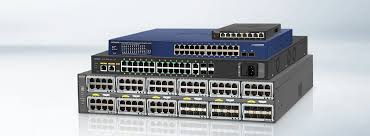
Small and medium-sized enterprises (SMEs) increasingly depend on scalable and secure network infrastructures to support business operations, digital services, employee productivity, and customer engagement. As enterprises deploy both internal wired networks and guest/public Wi-Fi, the risk of unauthorized access and security breaches grows. Virtual Local Area Networks (VLANs), implemented through managed switches and modern network architectures, provide an effective mechanism for logically segmenting network traffic, isolating critical internal resources, and securing public access points. This white paper examines VLAN principles, security benefits, implementation strategies in SMEs, real-world use cases, challenges and best practices, and how KeenComputer.com and IAS-Research.com can help organizations design, deploy, and manage enterprise-grade secure networks.
Research White Paper
**Application of VLANs in Managed Switches for SME Network Security:
Separating Wired LAN and Public Wi-Fi**
Abstract
Small and medium-sized enterprises (SMEs) increasingly depend on scalable and secure network infrastructures to support business operations, digital services, employee productivity, and customer engagement. As enterprises deploy both internal wired networks and guest/public Wi-Fi, the risk of unauthorized access and security breaches grows. Virtual Local Area Networks (VLANs), implemented through managed switches and modern network architectures, provide an effective mechanism for logically segmenting network traffic, isolating critical internal resources, and securing public access points. This white paper examines VLAN principles, security benefits, implementation strategies in SMEs, real-world use cases, challenges and best practices, and how KeenComputer.com and IAS-Research.com can help organizations design, deploy, and manage enterprise-grade secure networks.
Table of Contents
- Introduction
- Network Segmentation Challenges in SMEs
- VLAN Fundamentals
3.1 What is a VLAN?
3.2 VLAN Types
3.3 How VLANs Work - Managed Switches and VLAN Support
- Security Benefits of VLAN-Based Segmentation
- Use Case: Separating Wired LAN and Public Wi-Fi
6.1 Threat Landscape
6.2 VLAN Strategy for Security
6.3 Sample Architecture - Implementation Considerations
7.1 Planning and Design
7.2 Configuration Best Practices
7.3 Monitoring and Maintenance - Integration with Wireless Infrastructure
- Compliance and Regulatory Considerations
- Operational Benefits Beyond Security
- Challenges and Limitations
- How KeenComputer.com Can Help
- How IAS-Research.com Can Help
- Conclusion
- References (Illustrative)
1. Introduction
Modern SMEs face dual pressures: deploying flexible services such as Wi-Fi for employees and guests while protecting confidential data and internal network resources. Traditional flat network topologies make it difficult to isolate services, meaning a compromised device on public Wi-Fi can threaten internal servers, client machines, and business systems.
Virtual Local Area Networks (VLANs) provide logical partitioning of traffic within the same physical infrastructure. By segregating traffic flows — such as internal wired LAN and public Wi-Fi — SMEs can reduce attack surfaces, enforce security policies, and maintain performance.
This paper explores VLAN technology, associated security benefits, design paradigms for SMEs, and how specialized services from KeenComputer.com and IAS-Research.com can support secure, scalable network deployments.
2. Network Segmentation Challenges in SMEs
2.1 Flat Networks and Risks
In flat network designs common in smaller organizations, all devices share the same broadcast domain. This results in:
- Lack of isolation between different user groups (e.g., staff vs visitors)
- Easy lateral movement for attackers once inside
- No traffic prioritization or policy enforcement
- Higher broadcast traffic and performance degradation
2.2 Rise of Bring-Your-Own-Device (BYOD)
BYOD trends amplify the challenge: unmanaged personal devices connecting to internal networks risk introducing malware or unauthorized access.
2.3 Limited IT Resources
Many SMEs lack dedicated network security expertise and often use consumer–grade network equipment without VLAN capabilities, compounding exposure to attacks.
3. VLAN Fundamentals
3.1 What is a VLAN?
A Virtual Local Area Network (VLAN) is a logical segmentation of a network at the data link layer (Layer 2). Devices within the same VLAN behave as if they are on the same physical LAN but can be geographically dispersed.
3.2 VLAN Types
- Port-based VLANs: Segments traffic based on physical switch ports.
- Tag-based VLANs: Uses IEEE 802.1Q tags within Ethernet frames to identify VLAN membership.
- Protocol-based VLANs: Assigns VLANs based on network protocol types.
3.3 How VLANs Work
When using 802.1Q tagging:
- Frames are tagged with a VLAN ID (VID) at ingress.
- Switches forward frames based on membership rules.
- Trunk links between switches carry multiple VLANs.
- Access links serve a single VLAN.
This enables multiple, isolated networks over a shared physical infrastructure.
4. Managed Switches and VLAN Support
Managed switches allow administrators to configure and manage VLANs, Quality of Service (QoS), port security, and advanced features such as:
- Access Control Lists (ACLs)
- Spanning Tree Protocol (STP)
- Link Aggregation (LACP)
- Port Mirroring
- SNMP Monitoring
These features support both security and performance enhancements.
5. Security Benefits of VLAN-Based Segmentation
5.1 Isolation of Broadcast Domains
By separating traffic, VLANs contain broadcast storms, reducing unnecessary traffic for sensitive systems.
5.2 Reduced Attack Surface
VLAN segmentation ensures that traffic from a less trusted network (e.g., public Wi-Fi) cannot reach critical internal resources directly.
5.3 Policy Enforcement
ACLs and VLAN policies can enforce network access control, restricting service access to authorized VLANs only.
5.4 Enhanced Monitoring
Segmented traffic is easier to monitor, log, and audit for anomalies.
6. Use Case: Separating Wired LAN and Public Wi-Fi
6.1 Threat Landscape
Public Wi-Fi and guest access points expose networks to:
- Rogue access attempts
- Unauthorized device connections
- Lateral movement post-breach
- Malware propagation across segments
Without VLAN isolation, a malicious actor connected to the guest Wi-Fi could exploit vulnerabilities on internal systems.
6.2 VLAN Strategy for Security
An effective VLAN strategy for SMEs should:
- Assign internal workstations and servers to a secure VLAN (e.g., VLAN 10)
- Assign Wi-Fi guest traffic to a separate VLAN (e.g., VLAN 50)
- Enforce firewall policies between VLANs
- Use DHCP scopes and IP addressing per VLAN
- Restrict VLAN routing except via controlled firewalls or routers
6.3 Sample Architecture
|
VLAN |
Purpose |
Access Level |
|---|---|---|
|
VLAN 10 |
Internal Wired LAN |
Full trust, restricted access |
|
VLAN 20 |
Employee Wi-Fi |
Medium trust, limited access |
|
VLAN 50 |
Guest/Public Wi-Fi |
Low trust, internet-only |
Key Elements:
- Managed Switches: Supporting multiple VLANs with 802.1Q tagging.
- Wireless Controller / APs: Broadcasting SSIDs mapped to separate VLANs.
- Firewall: Enforcing traffic filtering between VLANs.
- DHCP Server: Serving IPs per VLAN scope.
7. Implementation Considerations
7.1 Planning and Design
Key steps include:
- Assessment of Requirements: Identify device groups, access policies, trust levels.
- IP Scheme Design: Allocate distinct IP subnets for each VLAN.
- Equipment Selection: Choose managed switches with adequate throughput and VLAN support.
- Network Topology Mapping: Diagram link and VLAN flows across devices.
7.2 Configuration Best Practices
- Use meaningful VLAN names and standardized IDs.
- Enable 802.1Q tagging on trunk ports only.
- Apply ACLs on Layer 3 boundaries.
- Disable unused ports and apply port security (e.g., MAC filtering).
- Implement strong authentication for employee Wi-Fi (WPA2/WPA3).
7.3 Monitoring and Maintenance
- Use SNMP and syslog monitoring for performance and security alerts.
- Regularly review VLAN assignments and policies.
- Conduct quarterly audits of VLAN utilization and security.
8. Integration with Wireless Infrastructure
Wireless Access Points (APs) and Controllers must support VLAN tagging:
- Map SSIDs to corresponding VLAN IDs
- Use RADIUS authentication for employee Wi-Fi
- Apply WPA3 where possible for improved encryption
9. Compliance and Regulatory Considerations
Certain industries require segmentation for compliance (PCI DSS, HIPAA, GDPR):
- Firewall rules and logs provide audit trails.
- VLAN segmentation can reduce scope of audits and controls.
10. Operational Benefits Beyond Security
10.1 Improved Performance
By segmenting traffic, VLANs reduce unnecessary broadcast traffic and improve throughput.
10.2 Simplified Troubleshooting
Segmentation delineates traffic boundaries, aiding faster root cause analysis.
10.3 Scalability
New services (guest Wi-Fi, VoIP, IoT) can be segmented without additional physical networks.
11. Challenges and Limitations
11.1 Complexity
VLAN configuration adds layers of complexity; misconfigurations can lead to outages or security gaps.
11.2 Management Overhead
Ongoing management and monitoring require expertise.
11.3 Single Point of Failure
Switch failures without redundancy can impact multiple VLANs.
11.4 Inter-VLAN Routing Risks
Allowing routing between VLANs without strict policies defeats security goals.
12. How KeenComputer.com Can Help
KeenComputer.com offers comprehensive network and IT solutions tailored to SMEs that include:
12.1 Network Assessment & Security Audit
- Evaluate existing infrastructure
- Identify segmentation and access control gaps
- Provide detailed reports with remediation strategies
12.2 Design and Deployment of VLAN Architectures
- Design IP addressing, VLAN plans, and policy enforcement
- Configure managed switches and integration with firewalls
- Map SSIDs to secure VLANs with best-practice authentication
12.3 Managed Services & Remote Monitoring
- 24/7 monitoring of network health (SNMP, logs, alerts)
- Proactive issue resolution
- Firmware and configuration management
12.4 Security Policy Definition and Implementation
- Define ACLs between VLANs based on business needs
- Configure firewall rules and intrusion detection/prevention (IDS/IPS)
- Provide documentation and SOPs for network operations
12.5 Training and Support
- Train IT teams on VLAN basics, troubleshooting, and security practices
- Provide remote or onsite support
Value Proposition: KeenComputer.com brings practical expertise, reducing deployment risk and enhancing secure network performance for SMEs.
13. How IAS-Research.com Can Help
IAS-Research.com provides specialized research, consulting, and advanced engineering services that complement VLAN and network deployments.
13.1 Security Architecture Research
- Deep-dive analysis of enterprise network security threats
- Development of segmentation models tailored to industry
13.2 Technology Evaluation and Proof-of-Concepts
- Evaluate best-in-class managed switches, firewalls, and controllers
- Conduct pilot deployments to validate designs in real environments
13.3 Risk Assessment and Compliance Mapping
- Assess compliance requirements (PCI DSS, data privacy regimes)
- Map VLAN and network policies to regulatory controls
13.4 Data Analytics and Threat Intelligence
- Leverage logs and telemetry for anomaly detection
- Provide actionable insights on intrusion patterns
13.5 Strategic Advisory Services
- Long-term roadmaps for secure infrastructure growth
- Integration strategies with cloud environments and hybrid networks
Value Proposition: IAS-Research.com bridges the gap between academic research and practical network security engineering, empowering SMEs with data-driven decision support and future-proof architecture planning.
14. Conclusion
For SMEs balancing internal network needs and public Wi-Fi access, VLAN-based segmentation via managed switches is a foundational strategy to strengthen network security and performance. By logically isolating internal systems from less trusted traffic, organizations can significantly reduce exposure to breaches, enforce access policies, support compliance requirements, and optimize operational effectiveness.
When combined with professional support from KeenComputer.com and IAS-Research.com, SMEs can accelerate deployment, improve security posture, and maintain scalable, resilient network infrastructure.
15. References (Illustrative)
Note: In a fully published white paper, this section would include citations from academic sources, vendor documentation (Cisco, Juniper, Aruba), IEEE standards (802.1Q), and industry best practices.
- IEEE Standard 802.1Q – VLAN Tagging
- Network Segmentation Best Practices – SANS Institute
- SMB Network Security Frameworks – NIST
- VLAN Implementation Guides – Major Switch Vendors
- Security Impacts of Network Segmentation – Academic Research