Small and medium enterprises (SMEs) are experiencing structural disruption driven by digital platforms, artificial intelligence, automation, and global competition. Research by McKinsey (2023) and the World Economic Forum (2024) shows that over 70% of value creation in the next decade will be digitally enabled. Yet most SMEs remain trapped in legacy operating models that depend on manual sales, fragmented IT, and intuition-based decision making.
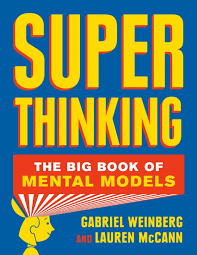
This white paper integrates mental model theory from Super Thinking (Weinberg & McCann, 2019), digital transformation research, and systems-based business development to propose a scalable framework for SME competitiveness. It also demonstrates how KeenComputer.com and IAS-Research.com provide an integrated execution and intelligence platform.
Business Development, Growth, and Digital Transformation
A Research White Paper Integrating Super Thinking (Weinberg & McCann)
With Implementation Frameworks by KeenComputer.com & IAS-Research.com
Abstract
Small and medium enterprises (SMEs) are experiencing structural disruption driven by digital platforms, artificial intelligence, automation, and global competition. Research by McKinsey (2023) and the World Economic Forum (2024) shows that over 70% of value creation in the next decade will be digitally enabled. Yet most SMEs remain trapped in legacy operating models that depend on manual sales, fragmented IT, and intuition-based decision making.
This white paper integrates mental model theory from Super Thinking (Weinberg & McCann, 2019), digital transformation research, and systems-based business development to propose a scalable framework for SME competitiveness. It also demonstrates how KeenComputer.com and IAS-Research.com provide an integrated execution and intelligence platform.
1. Decision Failure as the Root Cause of SME Underperformance
Weinberg & McCann (2019) demonstrate that most failures result not from lack of effort, but from systematic decision errors—what they call unforced errors. Kahneman (2011) similarly shows that human decision-making is dominated by cognitive bias, overconfidence, and short-term thinking.
In SMEs, this manifests as:
- Technology purchases without ROI analysis
- Hiring before process design
- Marketing without data
- Growth without systems
OECD (2023) reports that over 50% of SME digital investments fail due to poor planning and lack of integration.
IAS-Research addresses this by applying:
- Systems thinking (Meadows, 2008)
- Decision science (Kahneman, 2011)
- Mental model analysis (Weinberg & McCann, 2019)
KeenComputer then converts this intelligence into working digital infrastructure.
2. First Principles Business Development
First-principles thinking—popularized by Elon Musk and formalized in cognitive science—requires breaking problems down to their fundamental truths (Weinberg & McCann, 2019).
Traditional Assumption:
“We need more salespeople to grow.”
First Principles:
- Customers search before they buy (Chaffey, 2022)
- Trust is created through content and reputation (Kotler et al., 2021)
- Sales is now software-driven (HubSpot Research, 2023)
Therefore:
Business development is no longer a sales function — it is a digital system.
KeenComputer builds this system using:
- WordPress / Joomla / Magento
- CRM and automation
- Cloud hosting and security
IAS-Research ensures it is strategically correct and data-driven.
3. Digital Transformation as a Strategic System
According to Westerman et al. (MIT Sloan, 2014), digital transformation is not IT adoption — it is the redesign of business models using digital capabilities.
McKinsey (2023) found digitally mature SMEs grow revenue 2–3× faster than non-digital competitors.
Digital transformation requires four layers:
- Digital presence
- Digital operations
- Digital intelligence
- Digital innovation
KeenComputer implements layers 1–3
IAS-Research designs layer 4
4. MVP, Lean Strategy, and Risk Reduction
The Minimum Viable Product (MVP) concept (Ries, 2011) aligns with Weinberg & McCann’s principle of de-risking decisions.
IAS-Research applies MVP logic to:
- New markets
- AI deployment
- Ecommerce platforms
KeenComputer rapidly deploys MVPs on:
- WordPress
- Magento
- Cloud infrastructure
This avoids the #1 cause of SME failure: overbuilding before validation (CB Insights, 2023).
5. Systems Thinking and Growth Loops
Meadows (2008) shows that sustainable growth comes from feedback loops, not one-time actions.
Digital businesses operate on:
- Data → Insight → Action → Feedback → Improvement
IAS-Research builds:
- Analytics
- AI forecasting
- Business intelligence
KeenComputer builds:
- CRM
- Marketing automation
- Website tracking
- Ecommerce data pipelines
This creates a self-learning business.
6. AI as the New Growth Engine
AI adoption increases productivity by 20–40% (McKinsey, 2023). But SMEs fail to deploy AI due to lack of architecture.
IAS-Research develops:
- RAG-LLM systems
- Predictive analytics
- Knowledge graphs
KeenComputer integrates AI into:
- Websites
- Ecommerce
- Customer service
- CRM
Your SME becomes algorithmically competitive.
7. Knowledge Capital as a Strategic Asset
Drucker (1993) predicted that the future economy would be driven by knowledge workers and information systems.
Today, companies like Amazon and Google dominate because they own:
- Data
- Models
- Feedback loops
IAS-Research builds SME knowledge capital
KeenComputer operationalizes it
8. Real-World SME Case
A consulting firm using KeenComputer + IAS-Research gains:
- SEO-based lead flow
- Automated proposals
- AI customer profiling
- Data-driven pricing
This aligns with Porter’s (2008) competitive strategy theory: differentiation through systems and insight.
9. Why SMEs Need an Integrated Partner
Most SMEs use:
- Web designers
- IT vendors
- Marketing agencies
But none provide:
- Strategic research
- Systems architecture
- AI intelligence
IAS-Research = Strategic Brain
KeenComputer = Digital Execution Engine
Conclusion
SMEs are no longer competing with local businesses — they are competing with global digital platforms.
Success now depends on:
- Better thinking (Super Thinking)
- Better systems (Digital Transformation)
- Better execution (KeenComputer + IAS-Research)
Those who adopt mental-model-driven digital strategy will dominate their industries.
References
Weinberg, G., & McCann, L. (2019). Super Thinking. Portfolio.
Kahneman, D. (2011). Thinking, Fast and Slow. Farrar, Straus and Giroux.
Meadows, D. (2008). Thinking in Systems. Chelsea Green.
Westerman, G., Bonnet, D., & McAfee, A. (2014). Leading Digital. Harvard Business Review Press.
McKinsey & Company. (2023). The State of AI in Business.
OECD. (2023). SME Digitalization Report.
Chaffey, D. (2022). Digital Marketing Strategy. Pearson.
Kotler, P., Kartajaya, H., & Setiawan, I. (2021). Marketing 5.0. Wiley.
Ries, E. (2011). The Lean Startup. Crown Publishing.
CB Insights. (2023). Why Startups Fail.
Porter, M. (2008). The Five Competitive Forces That Shape Strategy. Harvard Business Review.
Drucker, P. (1993). Post-Capitalist Society. Harper Business.