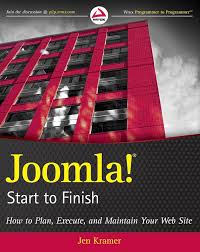
Small and Medium Enterprises (SMEs) increasingly rely on digital platforms for customer acquisition, branding, and operational efficiency. However, many SME websites fail to generate measurable business outcomes due to poor integration between technology, content, marketing, and business strategy. This research white paper examines how Joomla CMS, deployed on Ubuntu Linux (24.04 LTS), can serve as a robust, scalable, and cost-effective foundation for SME websites when combined with structured content strategy, modern digital marketing frameworks, and business development principles. Drawing from authoritative literature on Joomla development, content strategy, digital marketing, and SME growth, this paper presents practical use cases, architectural best practices, and a strategic implementation framework aligned with the service offerings of KeenComputer.com.
Professional Joomla CMS Website Design on Ubuntu
From Joomla! Start to Finish to Integrated Content, Digital Marketing, and SME Business Growth
A Research White Paper
Abstract
Small and Medium Enterprises (SMEs) increasingly depend on digital platforms to generate leads, establish credibility, and scale operations. However, many SME websites fail to deliver tangible business outcomes because CMS implementation, content creation, marketing execution, and business strategy are treated as isolated activities. This research white paper presents a holistic, end-to-end approach to Joomla CMS website development on Ubuntu Linux (24.04 LTS), integrating technical foundations from Jen Kramer’s Joomla! Start to Finish with professional template design, content strategy, digital marketing, and SME business development frameworks.
By combining beginner-to-intermediate Joomla operational knowledge with advanced design, governance, and growth strategies, this paper demonstrates how Joomla can evolve from a “website tool” into a strategic digital growth platform. Practical SME use cases and the service capabilities of KeenComputer.com are highlighted throughout.
1. Introduction
The modern SME operates in a digitally mediated economy, where customer journeys begin with search engines, websites, and online content long before direct sales interaction occurs. In this environment, a website must function simultaneously as:
- A brand communication channel
- A content publishing system
- A lead generation engine
- A trust-building platform
- A business development asset
Despite this reality, many SMEs deploy websites with minimal planning, using generic templates and fragmented marketing tactics. The result is often high cost, low return, and poor long-term scalability.
This paper argues that Joomla CMS, deployed professionally on Ubuntu Linux, offers SMEs a balanced alternative between simplicity and enterprise capability. Joomla! Start to Finish by Jen Kramer provides a practical, structured foundation for understanding Joomla’s architecture, administration, and content workflows. When this foundation is extended with professional design practices, content strategy, and digital marketing frameworks, Joomla becomes a strategic enabler of SME growth.
2. Joomla CMS: From Start to Finish
2.1 Core Joomla Concepts (Kramer)
Jen Kramer’s Joomla! Start to Finish is widely recognized as one of the most accessible and structured introductions to Joomla. The book emphasizes:
- Joomla’s content model (articles, categories, menus)
- Component, module, and plugin architecture
- User and access control management
- Administrative workflows
- Real-world site-building logic
For SMEs and consultants, this “start to finish” perspective ensures that Joomla is understood not as a collection of features, but as a coherent publishing and management system.
2.2 Why This Foundation Matters for SMEs
Many Joomla projects fail due to:
- Poor understanding of content structure
- Over-reliance on extensions
- Weak menu and navigation planning
Kramer’s approach encourages:
- Logical site planning before development
- Clear separation between content and presentation
- Maintainable site architectures
These principles are critical for SMEs that must manage websites with limited resources but long operational lifespans.
3. Ubuntu Linux as a Professional Joomla Platform
3.1 Ubuntu 24.04 LTS for Stability and Security
Ubuntu 24.04 LTS offers:
- Long-term security updates
- Stable PHP and database ecosystems
- Enterprise-grade tooling
- Strong cloud and on-premise compatibility
For Joomla deployments, Ubuntu provides a predictable, professional environment suitable for development, staging, and production.
3.2 LAMP and Modern Joomla Workflows
A standard Joomla deployment includes:
- Linux (Ubuntu)
- Apache or Nginx
- MySQL or MariaDB
- PHP 8.x
Ubuntu also supports:
- SSH-based administration
- Git version control
- Composer dependency management
- Dockerized Joomla environments
These workflows align with modern DevOps and remote development practices used by professional service providers such as KeenComputer.com.
4. Professional Joomla Template Design
4.1 From Default Templates to Custom Design
Kramer focuses primarily on functional site building, while books such as Joomla! Templates (Radtke) and Joomla 4 Templates (Keiflin) extend this foundation into professional frontend development.
Custom Joomla templates enable:
- Brand differentiation
- Performance optimization
- Accessibility compliance
- Conversion-focused layouts
4.2 Modern Joomla Template Architecture
Professional Joomla templates incorporate:
- HTML5 semantics
- CSS Grid and Flexbox
- Responsive and mobile-first design
- Template overrides for upgrade safety
For SMEs, this ensures that websites evolve without costly rebuilds.
5. Content Strategy: Extending Joomla’s Core Strengths
5.1 Structured Content as a Strategic Asset
Joomla’s structured content model aligns naturally with content strategy principles outlined by Halvorson and Rach:
- Right content
- Right time
- Right audience
- Right channel
Kramer’s emphasis on categories and menus provides a practical entry point for SMEs to adopt content governance, not just content publishing.
5.2 Editorial Workflows in Joomla
Joomla supports:
- Role-based publishing
- Version control
- Scheduled content
- Metadata management
This allows SMEs to maintain consistency even as teams grow.
5.3 Writing for Joomla Platforms
Ann Handley’s Everybody Writes reinforces:
- Clear headlines
- Scannable content
- Audience-focused language
When applied to Joomla articles, service pages, and landing pages, these principles significantly improve usability and engagement.
6. Digital Marketing Integration
6.1 SEO Foundations in Joomla
Joomla provides native support for:
- Clean URLs
- Page titles and meta descriptions
- Structured navigation
- SEO extensions
Combined with Kingsnorth’s digital marketing frameworks, Joomla websites can support:
- Organic growth
- Local SEO
- Authority building
6.2 Content Marketing and Thought Leadership
Joe Pulizzi’s Epic Content Marketing demonstrates that consistent, audience-centric content builds trust over time. Joomla’s category system enables SMEs to create:
- Knowledge hubs
- Resource libraries
- Blog-driven lead funnels
6.3 Analytics and Continuous Optimization
Ubuntu-hosted Joomla sites integrate seamlessly with:
- Google Analytics
- Search Console
- Marketing automation platforms
This supports data-driven improvement cycles.
7. Business Development Alignment
7.1 Messaging and Clarity
Donald Miller’s Building a StoryBrand framework helps SMEs:
- Clarify value propositions
- Reduce cognitive load
- Increase conversion rates
Joomla templates and modules can be structured to reflect this narrative hierarchy.
7.2 Growth Marketing for SMEs
Jim Huffman’s growth marketing principles emphasize:
- Experimentation
- Funnel optimization
- Cross-functional collaboration
Joomla’s modular architecture supports rapid landing page creation and campaign iteration.
7.3 Operational Scaling
Gino Wickman’s Traction highlights the importance of systems. A Joomla website becomes part of the SME’s operating system, supporting marketing, sales, and communication workflows.
8. Use Cases
Use Case 1: SME Services Firm (Start to Finish Approach)
Challenge:
No internal CMS expertise; inconsistent content updates.
Solution:
- Joomla implementation following Joomla! Start to Finish
- Simple, logical content structure
- Role-based editing
- Ubuntu-hosted environment
Outcome:
- Faster updates
- Reduced dependency on developers
- Improved consistency
Use Case 2: Manufacturing SME with Complex Content
Challenge:
Product documentation scattered across formats.
Solution:
- Joomla category-driven documentation system
- Multilingual configuration
- Structured navigation
Outcome:
- Reduced support costs
- Improved partner engagement
Use Case 3: Knowledge-Based SME
Challenge:
Difficulty establishing authority online.
Solution:
- Content hub using Joomla categories
- SEO-optimized articles
- Analytics-driven refinement
Outcome:
- Increased inbound leads
- Higher trust and credibility
9. Role of KeenComputer.com
KeenComputer.com bridges:
- Joomla CMS expertise
- Ubuntu Linux infrastructure
- Content strategy and SEO
- Digital marketing execution
- SME business development consulting
By combining technical foundations (Start to Finish) with strategic growth frameworks, KeenComputer helps SMEs turn Joomla websites into long-term growth assets.
10. Conclusion
Joomla! Start to Finish provides the operational backbone for understanding Joomla CMS. When this foundation is extended with professional design, content strategy, digital marketing, and business development frameworks, Joomla becomes a strategic platform for SME growth. Deployed on Ubuntu Linux, Joomla offers stability, flexibility, and scalability—qualities essential for SMEs navigating competitive digital markets.
References
- Kramer, J. Joomla! Start to Finish. Wrox/Wiley.
- Radtke, A. Joomla! Templates. Packt Publishing.
- Keiflin, C. Joomla 4 Templates. Packt Publishing.
- Halvorson, K., & Rach, M. Content Strategy for the Web. New Riders.
- Handley, A. Everybody Writes. Wiley.
- Pulizzi, J. Epic Content Marketing. McGraw-Hill.
- Kingsnorth, S. Digital Marketing Strategy. Kogan Page.
- Dib, A. The 1-Page Marketing Plan. Page Two.
- Miller, D. Building a StoryBrand. HarperCollins.
- Huffman, J. The Growth Marketer’s Playbook. Wiley.
- Wickman, G. Traction. BenBella Books.
- Joomla Documentation: https://docs.joomla.org
- Ubuntu Server Documentation: https://ubuntu.com/server/docs