Small and Medium Enterprises (SMEs) in Canada and the United States are under increasing pressure to digitally transform their businesses through modern websites, ecommerce platforms, analytics, and automation. While digital transformation is often positioned as a growth enabler, for many SMEs it becomes a source of financial strain, operational disruption, regulatory exposure, and strategic failure.
This white paper presents a comprehensive, SME-specific Pre-Mortem Analysis Framework for Digital Transformation, explicitly focused on websites and ecommerce systems. It combines research-based pre-mortem theory with real-world SME constraints, Canada- and US-specific regulatory environments, and practical execution models. The paper further demonstrates how KeenComputer.com and IAS-Research.com help SMEs reduce—and in many cases eliminate—digital transformation risks through architecture-first design, compliance-by-design, cybersecurity, analytics, and knowledge transfer.
Rather than asking why digital transformation fails after the fact, this paper equips SME leaders to anticipate failure before capital is committed, ensuring resilience, compliance, and measurable ROI from day one.
Pre-Mortem Analysis for SME Digital Transformation
Executive Summary
Small and Medium Enterprises (SMEs) in Canada and the United States are under increasing pressure to digitally transform their businesses through modern websites, ecommerce platforms, analytics, and automation. While digital transformation is often positioned as a growth enabler, for many SMEs it becomes a source of financial strain, operational disruption, regulatory exposure, and strategic failure.
This white paper presents a comprehensive, SME-specific Pre-Mortem Analysis Framework for Digital Transformation, explicitly focused on websites and ecommerce systems. It combines research-based pre-mortem theory with real-world SME constraints, Canada- and US-specific regulatory environments, and practical execution models. The paper further demonstrates how KeenComputer.com and IAS-Research.com help SMEs reduce—and in many cases eliminate—digital transformation risks through architecture-first design, compliance-by-design, cybersecurity, analytics, and knowledge transfer.
Rather than asking why digital transformation fails after the fact, this paper equips SME leaders to anticipate failure before capital is committed, ensuring resilience, compliance, and measurable ROI from day one.
1. Introduction: Digital Transformation Risk in SMEs
Websites and ecommerce platforms have become mission-critical infrastructure for SMEs. They now serve as:
- Primary sales and lead-generation channels
- Customer service and engagement platforms
- Data collection and analytics engines
- Compliance and trust surfaces
Despite this importance, SME digital transformation initiatives fail at alarming rates. Failure is rarely spectacular; instead, it manifests as underperforming websites, abandoned ecommerce systems, compliance violations, cybersecurity incidents, or leadership disengagement due to unclear ROI.
The root cause is not lack of effort or ambition—but misaligned planning methods borrowed from large enterprises that fail to account for SME realities.
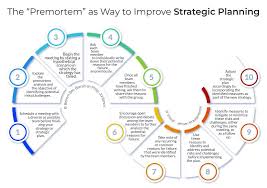
2. The Pre-Mortem Analysis Method
Pre-mortem analysis, originally articulated by Gary Klein, reverses traditional risk management. Instead of identifying risks incrementally, teams imagine a future where the project has failed and work backward to identify the causes.
Core Question:
“It is 12–18 months after launch. The digital transformation has failed. Why?”
For SMEs, pre-mortem analysis is especially valuable because:
- Decision-making is centralized
- Optimism bias is high
- Risk tolerance is low due to limited cash reserves
However, generic pre-mortem methods are insufficient. SME digital transformation requires domain-specific, region-aware pre-mortem questions.
3. Why Traditional Pre-Mortems Fail SMEs
Most pre-mortems focus on:
- Budget overruns
- Schedule delays
- Vendor performance
For SMEs, these are secondary risks. Primary risks are structural.
3.1 Structural SME Vulnerabilities
|
Area |
SME Reality |
|---|---|
|
Regulation |
No in-house compliance teams |
|
Talent |
Chronic shortages, high turnover |
|
Cash Flow |
Limited runway, front-loaded costs |
|
Technology |
Legacy CMS and fragmented tools |
|
Cybersecurity |
Reactive, not preventive |
|
Governance |
Founder-led, intuition-driven |
Ignoring these realities leads to false confidence and fragile execution.
4. Overlooked Pre-Mortem Questions in North America
4.1 Regulatory and Data Protection Failure
Pre-Mortem Question:
What if our website or ecommerce system violates PIPEDA (Canada) or CCPA (US) due to poor data handling?
SME websites routinely collect personal data, analytics, and payment information. Compliance is often assumed to be handled by platforms or plugins—an assumption that frequently proves false.
Failure Mode: Regulatory penalties, forced remediation, reputational damage.
4.2 Talent and Knowledge Concentration Risk
Pre-Mortem Question:
What happens if the one person who understands the system leaves?
SMEs often rely on a single developer, marketer, or agency. Undocumented systems create existential risk.
4.3 Cash-Flow and Timing Collapse
Pre-Mortem Question:
What if setup costs exhaust cash flow before revenue materializes?
Custom development, integrations, security hardening, and post-launch optimization are routinely underestimated.
5. Canada-Specific Digital Transformation Risks
5.1 Skills Gaps and Cost Pressure
Canadian SMEs face pronounced digital skills shortages and high software costs.
Pre-Mortem Questions:
- Do bilingual, accessibility (AODA/WCAG), and tax requirements increase scope unexpectedly?
- Does regional variation (Quebec, BC, Alberta) complicate vendor selection?
5.2 Cybersecurity and Trust Failure
Cyber incidents impact a large share of Canadian SMEs.
Pre-Mortem Prompt:
What if our ecommerce launch becomes our first data breach?
5.3 Cross-Border Ecommerce Fragility
Many Canadian SMEs rely on US markets.
Pre-Mortem Question:
Which revenue assumptions fail if cross-border duties, taxes, or de minimis rules change?
6. US-Specific Digital Transformation Risks
6.1 Legacy CMS Integration Failure
US SMEs frequently operate on outdated WordPress or custom CMS platforms.
Pre-Mortem Question:
What breaks when ecommerce, CRM, analytics, and accounting must integrate in real time?
6.2 ROI Credibility Collapse
Pre-Mortem Question:
What if leadership withdraws support before ROI becomes visible?
Lack of KPIs and attribution models makes projects politically fragile.
6.3 Adoption Resistance to AI and Automation
Pre-Mortem Question:
What if advanced features work—but staff do not adopt them?
7. The Four-Lens SME Pre-Mortem Framework
Lens 1: Regulatory and Trust Risk
- What regulation shuts us down?
- Where is customer trust most fragile?
Lens 2: Skills and Knowledge Decay
- Who leaves?
- What knowledge disappears?
Lens 3: Cash Flow and Timing
- What cost hits before value appears?
- What assumption fails first?
Lens 4: Integration and Adoption
- What system fails to integrate?
- What feature goes unused?
8. Applying Pre-Mortem Analysis to Website Transformation
Failure Scenario: Website launches successfully but generates no leads.
Root Causes Identified:
- Poor information architecture and UX assumptions
- SEO migration errors
- Accessibility and privacy non-compliance
- Analytics misconfiguration
Preventive Actions:
- SEO and analytics baselining
- Compliance-by-design CMS architecture
- Clear post-launch ownership
9. Applying Pre-Mortem Analysis to Ecommerce Transformation
Failure Scenario: Ecommerce launches, but margins collapse and complaints rise.
Root Causes Identified:
- Hidden transaction and integration costs
- Tax, duty, and shipping miscalculations
- Payment security gaps
- CRM and accounting integration failures
Preventive Actions:
- End-to-end process mapping
- Privacy, PCI-DSS, and security embedded at design stage
- Phased rollout aligned with cash flow
10. How KeenComputer Reduces SME Digital Transformation Risk
KeenComputer mitigates pre-mortem-identified risks through:
- Integration-first website and ecommerce architecture
- Modernization of WordPress, Joomla, and Magento
- SEO, analytics, and performance monitoring at launch
- Secure hosting, backups, and disaster recovery
Risks Reduced: Legacy integration failure, vendor lock-in, post-launch blindness.
11. How IAS-Research Eliminates Structural SME Risk
IAS-Research strengthens governance and resilience through:
- Privacy-by-design and regulatory compliance frameworks
- Cybersecurity threat modeling and audits
- Data governance and AI-readiness assessments
- Documentation, training, and knowledge transfer
Risks Eliminated: Regulatory non-compliance, cyber incidents, talent concentration risk.
12. Joint Value Proposition: From Pre-Mortem to Execution
Together, KeenComputer and IAS-Research enable SMEs to:
- Identify failure modes before investment
- Convert pre-mortem insights into enforceable controls
- Align leadership expectations with measurable ROI
- Sustain transformation beyond launch
13. Conclusion
For SMEs, digital transformation is unavoidable—but failure is not. A tailored pre-mortem analysis method enables SME leaders to surface hidden risks, challenge assumptions, and design resilience into websites and ecommerce platforms before capital and credibility are lost.
By combining pre-mortem discipline with execution and governance support from KeenComputer and IAS-Research, SMEs in Canada and the United States can transform digital initiatives from fragile experiments into durable competitive assets.
14. References
- Klein, G. (2007). Performing a Project Premortem. Harvard Business Review.
- ActiveCollab. Project Pre-Mortem Analysis.
- CFIB. SMEs Digital Transformation Journey in Canada (2025).
- Government of Canada. PIPEDA Compliance Guidelines.
- State of California. California Consumer Privacy Act (CCPA).
- Technology Decisions. Pre-Mortem Analysis for IT Deployments.
- Ecommerce Canada. Cross-Border Ecommerce and De Minimis Rules.
- KeenComputer.com. Digital Transformation for SMEs.
- IAS-Research.com. Digital Governance and Cybersecurity for SMEs.
- LinkedIn Pulse. Questions to Ask Before Digital Transformation.