Small and Medium Enterprises (SMEs) face a structurally different growth challenge than large enterprises. Limited budgets, small teams, fragmented digital capabilities, and intense competition require approaches that are disciplined, data-driven, and capital-efficient. Traditional marketing—campaign-centric, intuition-led, and siloed—no longer delivers sustainable results for most SMEs.
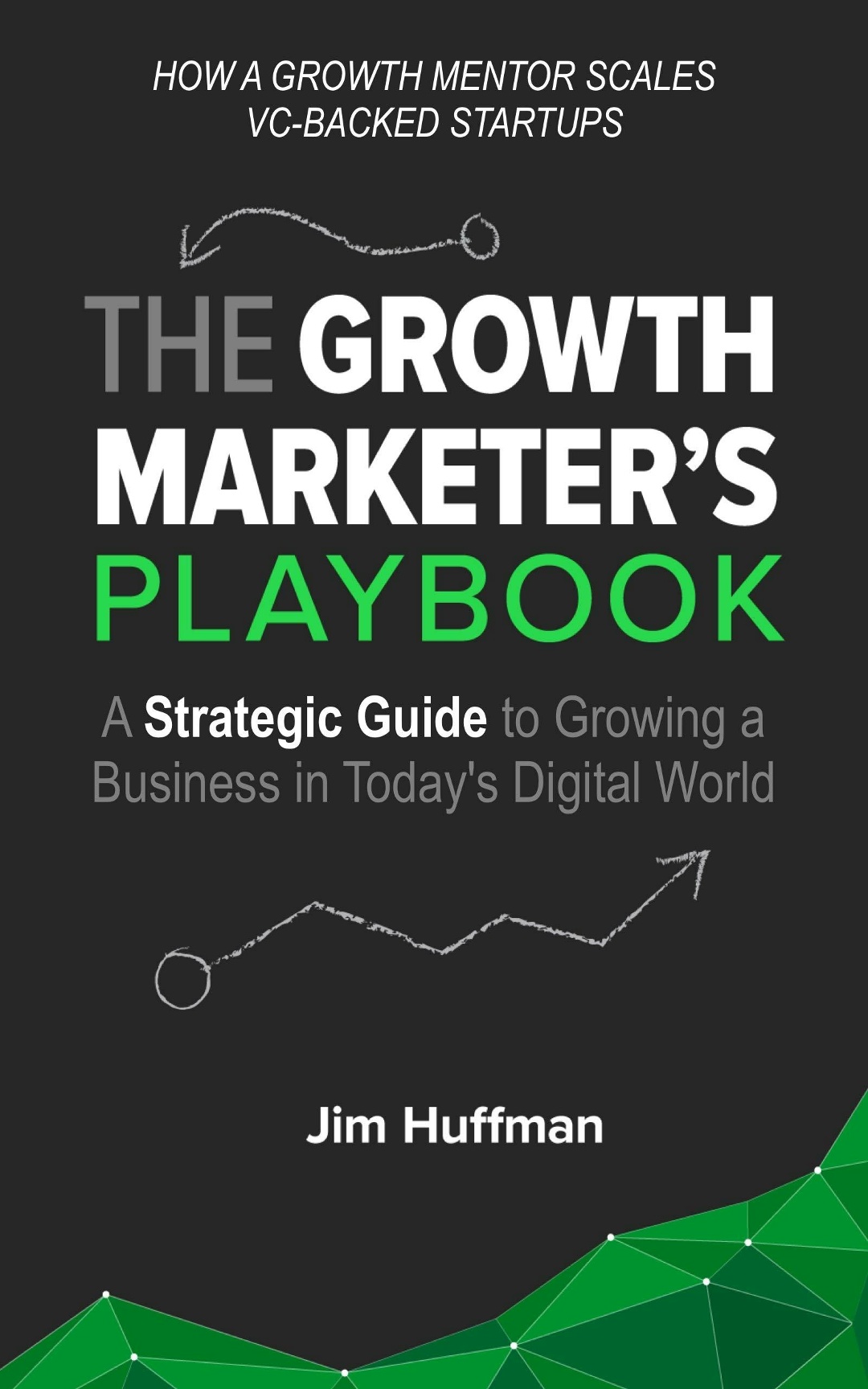
This white paper presents a comprehensive framework for accelerating SME business development using structured growth marketing and growth hacking principles derived from Jim Huffman’s The Growth Marketer’s Playbook and leading growth literature. It further demonstrates how these principles can be operationalized through the combined capabilities of KeenComputer.com and IAS-Research.com, enabling SMEs to move from stagnant websites and ad hoc promotion to experimentation-led, scalable growth systems.
By integrating growth strategy, digital platforms, analytics, and system-level engineering innovation, this paper provides SME owners, founders, and technical leaders with a practical roadmap to build resilient, defensible growth engines across web, ecommerce, SaaS, and industrial domains.
Accelerating SME Business Development Through Growth Marketing and Digital Transformation
Executive Summary
Small and Medium Enterprises (SMEs) face a structurally different growth challenge than large enterprises. Limited budgets, small teams, fragmented digital capabilities, and intense competition require approaches that are disciplined, data-driven, and capital-efficient. Traditional marketing—campaign-centric, intuition-led, and siloed—no longer delivers sustainable results for most SMEs.
This white paper presents a comprehensive framework for accelerating SME business development using structured growth marketing and growth hacking principles derived from Jim Huffman’s The Growth Marketer’s Playbook and leading growth literature. It further demonstrates how these principles can be operationalized through the combined capabilities of KeenComputer.com and IAS-Research.com, enabling SMEs to move from stagnant websites and ad hoc promotion to experimentation-led, scalable growth systems.
By integrating growth strategy, digital platforms, analytics, and system-level engineering innovation, this paper provides SME owners, founders, and technical leaders with a practical roadmap to build resilient, defensible growth engines across web, ecommerce, SaaS, and industrial domains.
1. Introduction: The SME Growth Imperative
SMEs form the backbone of national economies across India, North America, the UK, and Europe. Despite their importance, most SMEs struggle to scale beyond early traction. Common constraints include limited access to specialized talent, underinvestment in digital infrastructure, and marketing practices that prioritize activity over outcomes.
In many cases, SME websites function as static brochures, ecommerce platforms are under-optimized, and marketing decisions are driven by intuition rather than evidence. This leads to wasted spend, inconsistent lead flow, and fragile growth.
Growth marketing provides a fundamentally different paradigm. Rather than focusing narrowly on awareness or lead generation, it optimizes the entire customer lifecycle through structured experimentation and learning. When combined with robust digital execution and, where applicable, advanced engineering innovation, growth marketing becomes a powerful lever for SME business development.
2. Growth Marketing Foundations for SMEs
2.1 Growth Marketing vs. Traditional Marketing
Traditional marketing emphasizes campaigns, channels, and brand visibility. Metrics often include impressions, clicks, and reach—signals that do not necessarily correlate with revenue or retention.
Growth marketing, by contrast, is:
- Lifecycle-oriented, optimizing acquisition, activation, retention, revenue, and referral (AARRR).
- Experimentation-led, relying on rapid hypothesis testing rather than large, irreversible bets.
- Data-driven, prioritizing cohort analysis, attribution, and behavioral metrics.
- Cross-functional, integrating marketing, product, sales, and technology.
For SMEs, this shift replaces guesswork with a repeatable system for discovering and scaling what actually works.
2.2 Core Principles from Growth Literature
Across Jim Huffman, Sean Ellis, Morgan Brown, Ryan Holiday, and other growth thinkers, several consistent principles emerge:
- Customer-centric discovery: Growth begins with deep understanding of customer problems and decision drivers.
- Funnel discipline: Every stage of the customer journey must be mapped, measured, and optimized.
- Small, fast experiments: Incremental tests outperform large campaigns in constrained environments.
- Compounding learning: Documented experiments build institutional knowledge over time.
These principles align closely with SME realities, where speed and focus matter more than scale.
3. Jim Huffman’s FACT Framework Applied to SMEs
Jim Huffman’s The Growth Marketer’s Playbook introduces the FACT framework—Find, Acquire, Convert, Turn—as a practical organizing system for growth marketing.
3.1 Find
The goal of the Find stage is to identify where ideal customers already spend time and how they articulate their needs. For SMEs, this requires narrowing focus to a small number of high-leverage channels such as:
- Search queries and SEO niches
- Industry forums and professional communities
- LinkedIn groups and B2B networks
- Partner ecosystems and local directories
3.2 Acquire
Acquisition tactics must align tightly with customer intent. Effective SME tactics include:
- SEO-driven content targeting specific problems
- Paid search and social campaigns with narrow targeting
- Partnerships and referral arrangements
- Lead magnets and gated educational assets
3.3 Convert
Conversion optimization is often the weakest link for SMEs. Growth marketing emphasizes:
- Clear and differentiated value propositions
- Trust signals such as case studies and testimonials
- Reduced friction in forms, checkout, and onboarding
- Transparent qualification or pricing cues
3.4 Turn
The Turn stage focuses on retention and advocacy. Referral loops, reviews, lifecycle communication, and communities reduce acquisition costs and increase lifetime value.
FACT reframes marketing as a systemic growth process, not a collection of disconnected tactics.
4. Growth Playbooks and Experimentation Discipline
Huffman outlines several playbooks that SMEs can adapt effectively:
- Uncovering Growth Opportunities: Customer research, competitor analysis, and positioning.
- Marketing Infrastructure: Analytics, CRM, automation, and testing tools.
- Running Growth: A weekly cadence of hypothesis generation, prioritization, testing, and review.
- Acquire, Convert, and Scale: Channel-specific execution tied to funnel metrics.
SMEs benefit most by starting with one primary metric per quarter and one dominant channel, expanding discipline incrementally.
5. Insights from Leading Growth Hacking Books
Complementary growth hacking literature reinforces Huffman’s framework:
- Hacking Growth emphasizes cross-functional growth teams and structured experimentation.
- Growth Hacker Marketing demonstrates how creativity and product-led loops can outperform budgets.
- 100 Days of Growth provides libraries of small, executable experiments.
- The Paper Plane Plan adapts growth hacking for B2B services and consulting firms.
The unifying insight is that sustainable growth is driven by process and learning velocity, not isolated hacks.
6. Applying Growth Marketing to SME Websites and Ecommerce
6.1 Websites as Growth Platforms
Growth-oriented SME websites differ fundamentally from brochure sites. They include:
- SEO-optimized content for awareness
- Case studies, comparisons, and FAQs for consideration
- Clear service or product pages for conversion
- Onboarding, help centers, and content hubs for retention
Comprehensive analytics and event tracking enable continuous optimization.
6.2 Ecommerce and Subscription Growth
For ecommerce SMEs, growth marketing focuses on full-funnel optimization:
- Email capture and lifecycle automation
- Cart recovery and upsell mechanisms
- A/B testing of product pages, images, and pricing
- Loyalty programs and referral incentives
Platforms such as WooCommerce and Magento enable experimentation when properly architected.
7. KeenComputer.com: Growth Execution and Digital Infrastructure
KeenComputer.com serves as a digital transformation and execution partner for SMEs. Its capabilities align directly with growth marketing infrastructure requirements:
- Scalable WordPress, Joomla, and Magento development
- SEO, performance optimization, and technical content architecture
- VPS and cloud hosting with DevOps practices
- Analytics, CRM, marketing automation, and dashboards
- Cybersecurity, compliance, and reliability engineering
By implementing these foundations, KeenComputer enables SMEs to operationalize growth frameworks without building large internal teams.
8. IAS-Research.com: System-Level Innovation and Engineering Excellence
IAS-Research.com extends growth beyond marketing into product, system, and operational innovation, particularly for engineering and industrial SMEs.
Key capabilities include:
- Advanced simulation and system studies (PSCAD, EMTP, MATLAB/Simulink)
- Digital twins for diagnostics and predictive maintenance
- AI-driven analytics, edge computing, and control systems
- MVP acceleration and DevSecOps pipelines
These capabilities strengthen differentiation, reliability, and credibility—critical enablers of sustainable growth.
9. Integrated Value Proposition: KeenComputer + IAS-Research
Together, KeenComputer and IAS-Research provide an end-to-end growth solution spanning:
- Growth strategy and experimentation
- Digital platforms and analytics
- Product, system, and engineering innovation
This integration ensures growth is driven by coordinated improvements across marketing, technology, and operations.
10. Action Plan for SME Implementation
Phase 1: Strategy and Discovery (0–60 Days)
- Define one primary growth metric
- Conduct customer interviews and competitor analysis
- Map the AARRR funnel and identify bottlenecks
Phase 2: Infrastructure and Foundation (60–120 Days)
- Upgrade website or ecommerce platform
- Implement analytics, CRM, and automation
- Define experimentation backlog and cadence
Phase 3: Experimentation and Optimization (3–9 Months)
- Run weekly growth experiments
- Optimize acquisition, conversion, and retention
- Document learnings and standardize wins
Phase 4: Scale and Innovation (9–24 Months)
- Focus on top-performing channels
- Introduce referral and community loops
- Invest in advanced digital twins, AI, or SaaS extensions
Conclusion
Growth marketing frameworks from Jim Huffman and leading growth authors offer SMEs a disciplined alternative to intuition-driven marketing. However, real impact emerges only when these frameworks are operationalized through robust digital infrastructure and reinforced by product and system-level innovation.
By combining the growth execution capabilities of KeenComputer.com with the advanced engineering and AI expertise of IAS-Research.com, SMEs can build resilient, experimentation-led growth engines capable of scaling sustainably in competitive digital and industrial markets.
References
Ellis, S., & Brown, M. (2017). Hacking Growth. Crown Business.
Huffman, J. (2023). The Growth Marketer’s Playbook. Gumroad.
Holiday, R. (2014). Growth Hacker Marketing. Portfolio.
Patel, S., & Wormley, R. (2018). 100 Days of Growth. Independently published.
Davies, R. (2021). The Paper Plane Plan. Open Books.
Kotler, P., Kartajaya, H., & Setiawan, I. (2017). Marketing 4.0. Wiley.
KeenComputer.com. (2024). Digital Transformation and Growth Enablement for SMEs. Keen Computer Publications.
IAS-Research.com. (2024). Advanced Engineering and AI-Driven Innovation for Industrial Systems. IAS Research Publications.