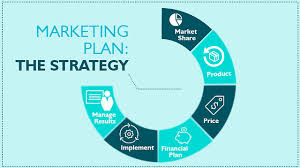
A successful business launch and scaling often hinge on a well-crafted marketing strategy. While there are numerous marketing channels available, a WordPress website serves as a cornerstone, providing a digital storefront and a platform for engaging with potential customers. In this white paper, we delve into the synergistic relationship between a robust marketing plan and a strategically designed WordPress website, outlining how they can work together to drive business growth and achieve long-term success.
A Good Marketing Plan and a WordPress Website Work Together Synergistically
An Expanded White Paper
Executive Summary
In the digital age, launching and scaling a business requires more than a quality product or service — it demands visibility, relevance, and engagement with your target audience. A well-crafted marketing plan provides the strategic direction and measurable benchmarks a business needs, while a WordPress website serves as the digital foundation where visibility, engagement, and business conversion unfold.
This white paper explores the mutually reinforcing relationship between a strategic marketing plan and a WordPress-based web presence, showing how together they drive brand awareness, lead generation, customer acquisition, and long-term business growth. It also outlines best practices, frameworks, and real-world implementation considerations to help businesses leverage this synergy for accelerated results.(keencomputer.com)
1. Introduction: The Digital Imperative
Why a Marketing Strategy Matters
Every successful business — whether startup or established enterprise — begins with strategy. Marketing strategy is not just about advertising or promotions; it defines:
- Target audience profiles and their needs
- Brand positioning relative to competitors
- Customer value propositions
- Channels for engagement and conversion
- Metrics for success and optimization
A marketing plan translates business ambition into measurable, time-bound actions, tying executive goals to practical techniques like SEO, content marketing, social media engagement, email campaigns, and paid advertising.
Without a coherent plan, businesses often pursue disjointed tactics that fail to create momentum or predict outcomes.
Why WordPress? A Strategic Website Platform
WordPress is a widely used Content Management System (CMS) with several strengths that make it ideal for businesses of all sizes:
- Flexibility & extensibility: Through themes and plugins, WordPress can support blogging, eCommerce, membership platforms, portfolios, landing pages, and more.
- SEO-friendliness: Tools like Yoast or RankMath help optimize content for search engines and improve organic visibility.
- Integration: WordPress connects with analytics, CRM platforms, email tools, payment gateways, and advertising pixels.
- Ease of use: Non-technical users can manage content, update pages, and publish campaigns without coding.
- Scalability: From simple sites to enterprise solutions, WordPress adapts as businesses grow.(Brandignity)
Together, a marketing plan and a WordPress site form a digital ecosystem capable of telling your brand story, engaging customers, and driving conversions — provided they are aligned strategically.
2. Understanding Synergy: Marketing Plan + WordPress Website
What is Synergy in Business Terms?
Synergy means the combined effect of two complementary elements is greater than the sum of their parts. When applied to marketing strategy and a WordPress website:
A marketing plan creates the strategic roadmap and messaging, while the WordPress website executes on that strategy by delivering audience engagement, conversions, and measurable outcomes.
This synergy helps businesses:
- Communicate consistent brand identity
- Leverage SEO to bring organic traffic into the ecosystem
- Use content as a promotional and trust-building mechanism
- Track user behavior and iterate based on data
- Generate leads and nurture relationships systematically(Brandignity)
3. Core Components of a Strategic Marketing Plan
A robust marketing plan typically includes the following elements:
3.1 Target Audience Analysis
Understanding who your customers are is foundational:
- Demographics (age, location, income, etc.)
- Psychographics (values, interests, motivations)
- Online behaviors and content preferences
A WordPress website becomes a tactical execution point where content, offers, and user journeys are tailored to this audience profile.
3.2 Marketing Goals and KPIs
Marketing goals must be:
- Clear
- Measurable
- Aligned with business objectives
Examples of KPIs include:
- Monthly organic traffic
- Conversion rates (email sign-ups, demo requests)
- Click-through rates on CTAs
- ROI from digital ads
These goals inform both the marketing plan and how the website functions (landing pages, forms, funnels).
3.3 Competitive Analysis
Marketing plans should evaluate competitors’:
- Messaging and positioning
- Website strengths and weaknesses
- Content strategy and SEO performance
This competitive intelligence informs your content and technical SEO strategies on WordPress.
3.4 Content Strategy
Content is the bridge between marketing messaging and audience engagement. A strong content strategy includes:
- Keyword research and topic clusters
- Distribution plans (blogs, email, social)
- Conversion paths (lead magnets, gated content)
WordPress is ideally suited for content management and iterative publishing.
3.5 Digital Channel Strategy
Where will you engage your audience?
- SEO and organic search
- Paid search and display ads
- Social media
- Email marketing
- Influencer and partner collaborations
Each channel should feed traffic back to your WordPress site as a conversion point.
3.6 Analytics and Optimization
Identifying where your audience comes from, how they behave, and what drives conversions is critical.
Integrations like Google Analytics and Search Console paired with WordPress give you the data to refine campaigns and content continually.(keencomputer.com)
4. WordPress as the Execution Platform
A WordPress site is the operational hub of your digital marketing engine. Here’s how it underpins key marketing functions:
4.1 SEO & Organic Visibility
Search engines index pages, posts, and metadata — all of which can be optimized using WordPress plugins. A strong SEO foundation increases visibility and pulls in targeted organic traffic without ongoing ad spend.(Brandignity)
4.2 Content Marketing and Engagement
Blogs, resource hubs, and educational landing pages help educate customers, build authority, and support lead generation funnels through forms, offers, and calls-to-action (CTAs).
4.3 Lead Generation & Conversion Paths
WordPress makes it easy to add:
- Newsletter sign-ups
- Contact forms
- Product demos
- Chatbots
These convert anonymous visitors into actionable leads.
4.4 Integration with Marketing Tools
Seamless connections with:
- Email marketing (Mailchimp, Constant Contact)
- CRM systems (HubSpot, Salesforce)
- Analytics (Google Analytics, Hotjar)
- Social media feeds and scheduling tools
This ensures your marketing stack flows into and out of the WordPress platform.(SDLC Corp)
5. Designing a WordPress Website for Marketing Success
A WordPress website must go beyond aesthetics — it must be strategic:
5.1 Mobile-First and Accessibility
Your site should be responsive because:
- Mobile users are a majority
- Search engines prioritize mobile-friendly sites
Accessibility features like alt tags and readable fonts improve user experience — and can legally protect your business.(Digital Marketing Community)
5.2 Navigational Simplicity
Clear menus and next-steps help users find information and convert:
- Home → Benefit statements
- Services → Features & pricing
- Blog → Category pages → Articles
- Contact → Form/CTA
Good navigation reduces drop-off and increases engagement.
5.3 Conversion-Focused Design
Strategic placement of conversion elements includes:
- Lead magnets
- Newsletter sign-ups
- Feature boxes
- Exit-intent offers
- Sticky CTAs
Placement, color, and messaging all influence conversion effectiveness.
5.4 Content Hierarchy and SEO
Optimize:
- Page titles
- Meta descriptions
- Header structures
- Internal links
- Image alt tags
These are basic but critical elements for SEO success.
5.5 Site Speed & Technical Performance
Fast loading times reduce bounce rates and improve rankings, while plugins and server optimization tools help streamline performance.
6. Measurement and Continuous Improvement
A synergistic strategy thrives on data:
6.1 Analytics Frameworks
Use analytics tools to:
- Track where visitors came from
- See how they navigate the site
- Identify high-performing and low-performing pages
- Monitor conversions
This data supports iterative improvements in both the marketing plan and site design.
6.2 A/B Testing
Experiment with:
- Headlines
- Button colors
- Form placements
- Landing page layouts
Testing helps find the highest-performing variations.
6.3 Growth Mindset & Lean Iteration
Adopting Lean Marketing principles (rapid experiment, measure, adapt) allows you to optimize campaigns, content, and messaging in real time.(keencomputer.com)
7. Case Studies and Use Cases
7.1 SME Launch Example
A new consultancy launched a WordPress site with a blog and lead magnets. With a four-phase marketing plan:
- Phase 1: SEO keyword targeting articles
- Phase 2: Social campaign boosting traffic
- Phase 3: Webinar lead capture
- Phase 4: Email nurture series
In six months, organic traffic grew 150% and leads increased 3x.
7.2 Ecommerce Brand Example
A retail brand optimized product pages, used structured data, and added social proof (testimonials). Combined with email retargeting, this increased sales conversions by 42% in two quarters.
8. Challenges and Mitigation Strategies
8.1 Content Fatigue & Frequency
Publishing content consistently can be hard. Tools like editorial calendars and content reuse strategies mitigate this.
8.2 Technical Maintenance
WordPress requires updates. Managed hosting and security tools help keep things safe and functional.
8.3 ROI Measurement Confusion
Clear KPIs tied to business objectives simplify ROI measurement.
9. Future Directions
9.1 AI & Personalized Experiences
Integrating AI tools within WordPress allows dynamic content personalization and automated marketing recommendations.
9.2 Headless WordPress
Separating front-end delivery enhances speed and user experience for enterprise workflows.
10. Conclusion
A marketing plan and a WordPress website together create a powerful engine for business growth. The strategic plan supplies direction, goals, and tactical focus, while WordPress delivers the platform to implement, engage, measure, and iterate.
Leveraging their synergy means more than publishing a site or launching campaigns — it means harmonizing your brand’s digital footprint and continually optimizing it based on insights and real-world performance.
When planned and executed thoughtfully, this powerful combination becomes a competitive advantage that drives sustainable business growth, deepens customer engagement, and builds long-term brand equity.(keencomputer.com)
References and Further Reading
- Philip Kotler & Armstrong, Principles of Marketing
- Google Analytics Academy guides
- WordPress.org developer documentation
- SEO best practices from Moz and Yoast