Global economic volatility, rapid technological change, and structural shifts in labor markets have intensified employment challenges for science, technology, engineering, and mathematics (STEM) graduates worldwide. India, in particular, produces a large volume of technically trained graduates each year, yet many face underemployment, skills mismatch, and repeated career setbacks. This 3000‑word research white paper examines how innovation‑driven job creation can emerge from adversity by integrating engineering rigor, research‑led entrepreneurship, Zen practice, and the Toyota Method (Toyota Production System and Toyota Kata).
Resilience, Zen Practice, Toyota Method, and Innovation‑Driven Job Creation
Abstract
Global economic volatility, rapid technological change, and structural shifts in labor markets have intensified employment challenges for science, technology, engineering, and mathematics (STEM) graduates worldwide. India, in particular, produces a large volume of technically trained graduates each year, yet many face underemployment, skills mismatch, and repeated career setbacks. This 3000‑word research white paper examines how innovation‑driven job creation can emerge from adversity by integrating engineering rigor, research‑led entrepreneurship, Zen practice, and the Toyota Method (Toyota Production System and Toyota Kata).
The paper argues that sustainable job creation and scientific advancement require more than technical competence alone. Inner disciplines such as Zen cultivate resilience, focus, and non‑reactive learning, while outer disciplines such as Toyota Kata, failure analysis, and lean systems provide structured pathways for continuous improvement and innovation. By synthesizing these perspectives, the paper proposes a practical framework for bootstrapping science, engineering, and innovation ecosystems—particularly relevant for Indian STEM graduates navigating a complex global economy. The role of IAS‑Research and KeenComputer.com is highlighted as an enabling ecosystem that bridges research, capability building, and digital infrastructure.
1. Introduction: Adversity as the New Normal
Economic history shows that periods of disruption—industrial revolutions, technological paradigm shifts, and geopolitical realignments—often coincide with anxiety, job displacement, and social uncertainty. The current era is no exception. Artificial intelligence, automation, digital platforms, and global supply‑chain restructuring have altered the nature of work itself. Traditional career pathways, especially for early‑career engineers and scientists, are increasingly unstable.
For many STEM graduates, setbacks are no longer episodic but structural: rejected job applications, stalled research funding, startup failures, and rapid obsolescence of skills. Conventional responses focus narrowly on reskilling or placement, often ignoring the psychological, systemic, and innovation‑oriented dimensions of employment.
This paper reframes adversity not as a failure of individuals, but as a signal that new models of learning, work, and value creation are required. Drawing from Zen philosophy, engineering failure analysis, and the Toyota Method, it proposes that sustainable job creation emerges when individuals and institutions learn how to think, experiment, and adapt under constraint.
2. Global Economic Context and the Indian STEM Graduate Situation
2.1 Global STEM Labor Dynamics
Globally, STEM employment is shaped by several converging forces:
- Automation reducing demand for routine technical roles
- Artificial intelligence augmenting or replacing analytical tasks
- Capital concentration in a few technology hubs
- Growth of contract‑based, project‑oriented work
These trends reward adaptability, interdisciplinary thinking, and entrepreneurial capability rather than narrow specialization alone.
2.2 The Indian STEM Paradox
India produces one of the world’s largest cohorts of engineers and science graduates annually. While this represents a significant human capital advantage, it also creates systemic challenges:
- Oversupply in certain engineering disciplines
- Curriculum–industry mismatch
- Limited exposure to applied research and innovation
- Cultural stigma associated with failure and non‑linear careers
As a result, many capable graduates struggle to translate education into meaningful employment or research impact.
2.3 Opportunity Within Constraint
Paradoxically, these constraints create fertile ground for innovation. Frugal engineering, open‑source collaboration, applied research for local problems, and bootstrapped startups can generate both employment and societal value—if supported by the right cognitive and organizational frameworks.
3. Failure as Knowledge: An Engineering and Research Perspective
Engineering disciplines treat failure not as a moral judgment but as data. Established methodologies such as:
- Root Cause Analysis (RCA)
- Failure Mode and Effects Analysis (FMEA)
- Fault‑tree analysis
are designed to extract learning from breakdowns and prevent recurrence.
In research and innovation, similar logic applies:
- Failed experiments refine hypotheses
- Negative results sharpen research questions
- Market rejection clarifies unmet needs
However, outside formal engineering contexts, failure is often personalized and stigmatized. This cultural gap inhibits experimentation and risk‑taking—both essential for job creation and innovation.
4. Zen Practice and the Inner Dimension of Innovation
4.1 Zen as a Discipline of Attention
Zen practice emphasizes direct experience, present‑moment awareness, and disciplined attention. Core elements include:
- Zazen (seated meditation)
- Breath awareness
- Non‑attachment to thoughts and outcomes
From a cognitive standpoint, these practices strengthen concentration, emotional regulation, and tolerance for uncertainty—critical skills for researchers, engineers, and entrepreneurs.
4.2 Responding to Setbacks
Zen reframes setbacks as impermanent conditions rather than personal deficiencies. This perspective:
- Reduces fear of experimentation
- Encourages persistence without burnout
- Supports long‑term inquiry over short‑term validation
For STEM graduates facing repeated rejection or stalled progress, this inner stability can determine whether learning continues or collapses.
4.3 Beginner’s Mind and Scientific Inquiry
Zen’s concept of beginner’s mind aligns closely with scientific inquiry: openness, curiosity, and freedom from fixed assumptions. Innovation thrives when individuals can repeatedly return to first principles without ego or defensiveness.
5. Bootstrapping Science, Engineering, and Innovation
5.1 Bootstrapping as a Design Philosophy
Bootstrapping is often misunderstood as merely operating without funding. In reality, it is a disciplined approach to innovation:
- Start with available resources
- Focus on real problems
- Iterate rapidly
- Learn continuously from feedback
Zen practice complements bootstrapping by fostering patience, simplicity, and clarity—counterweights to anxiety‑driven decision‑making.
5.2 Historical Precedents
Many scientific and engineering breakthroughs emerged under constraint:
- Frugal medical devices
- Open‑source software ecosystems
- Grassroots research laboratories
Constraint, when paired with disciplined learning, often accelerates creativity.
6. The Toyota Method: TPS and Toyota Kata
6.1 Overview of the Toyota Production System
The Toyota Production System (TPS) is built on two foundational pillars:
- Continuous Improvement (Kaizen)
- Respect for People
Rather than optimizing short‑term output, TPS focuses on developing human capability and long‑term organizational learning.
6.2 Toyota Kata: Scientific Thinking as Routine
Toyota Kata operationalizes TPS through two structured routines:
Improvement Kata
- Define direction or challenge
- Understand current condition
- Establish target condition
- Experiment toward the target using small steps
Coaching Kata
- Develop problem‑solving capability through guided questioning
- Transfer scientific thinking across generations
6.3 Alignment With Zen Practice
Toyota Kata closely mirrors Zen discipline:
- Focus on the present condition
- Acceptance of uncertainty
- Learning through repeated, mindful practice
Both emphasize process over outcome and growth over instant success.
7. Learning Organizations and Continuous Capability Building
Modern innovation requires organizations that learn faster than their environments change. Research on lean systems highlights:
- Leaders as teachers and learners
- Reflection as a core practice
- Long‑term capability over short‑term metrics
Zen practice strengthens the human capacity to sustain such learning cultures by reducing defensiveness and fostering humility.
8. Integrated Framework for Job Creation Under Adversity
The proposed framework integrates five mutually reinforcing layers:
- Inner Resilience
Zen practice, mindfulness, emotional regulation - Technical Mastery
Strong STEM foundations and applied research skills - Learning From Failure
RCA, FMEA, and reflective practice - Structured Improvement
Toyota Kata, Kaizen, scientific experimentation - Innovation Pathways
Bootstrapped startups, applied research labs, community problem‑solving
This model shifts the focus from job seeking to capability building and value creation.
9. Implications for Education, Industry, and Policy
9.1 Education
- Integrate contemplative practices into STEM curricula
- Teach Toyota Kata alongside engineering fundamentals
- Normalize failure as part of learning
9.2 Industry
- Reward learning agility and problem‑solving capability
- Support apprenticeships and internal innovation labs
9.3 Policy
- Support micro‑grants for applied research
- Encourage open innovation and frugal engineering
10. Role of IAS‑Research and KeenComputer.com
10.1 IAS‑Research
IAS‑Research supports innovation under adversity by:
- Conducting applied research in engineering, AI, systems, and sustainability
- Mentoring STEM graduates in scientific thinking and failure analysis
- Implementing Toyota Kata in R&D and innovation programs
- Integrating reflective and Zen‑informed practices for researcher resilience
10.2 KeenComputer.com
KeenComputer.com enables innovation through:
- Scalable IT and cloud infrastructure
- Open‑source platforms and DevOps support
- Digital transformation for research commercialization
- Support for bootstrapped startups and SMEs
Together, they form an ecosystem where ideas evolve into prototypes, products, and sustainable livelihoods.
11. Conclusion
In an era defined by uncertainty, job creation and innovation depend as much on inner resilience as on external opportunity. By integrating Zen practice, engineering rigor, the Toyota Method, and lean learning systems, individuals and institutions can transform setbacks into pathways for growth.
For Indian STEM graduates—and the global workforce—this integrated approach offers a sustainable path forward: not merely finding jobs, but creating knowledge, value, and meaningful work in the face of adversity.
References (Selected)
- Sekida, K. Zen Training: Methods and Philosophy. Shambhala Publications.
- Grigg, R. The Tao of Zen. Tuttle Publishing.
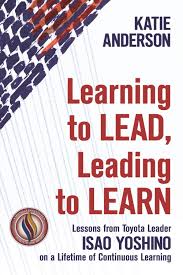
- Anderson, K. Learning to Lead, Leading to Learn. McGraw‑Hill.
- Rother, M. Toyota Kata. McGraw‑Hill.
- Ohno, T. Toyota Production System. Productivity Press.
- Selected literature on STEM workforce economics and lean systems.